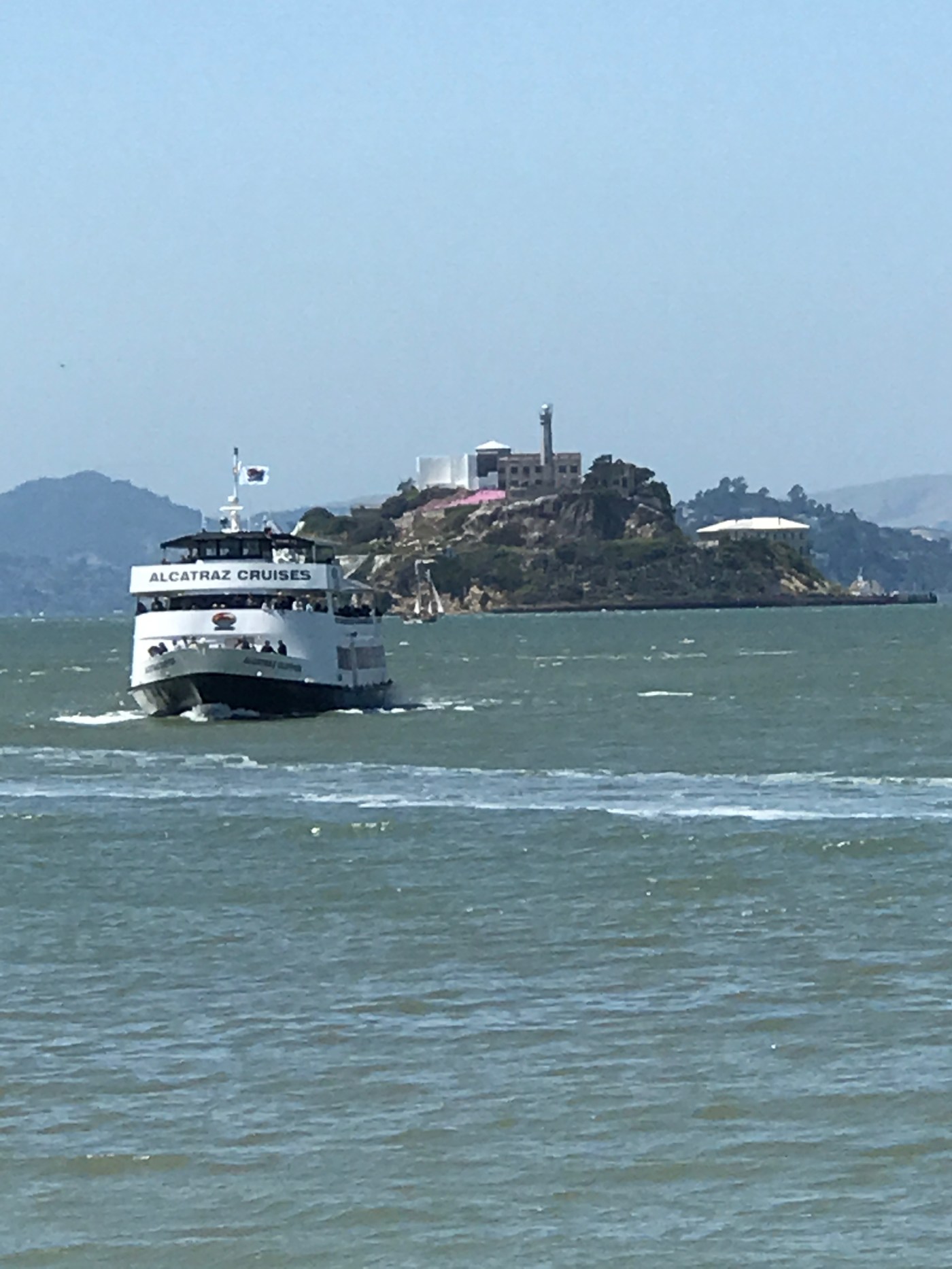
Between 1934 and 1963, Alcatraz Federal Penitentiary hosted 14 separate escape attempts involving 36 inmates. While the official record states no prisoner successfully escaped to freedom, the 1962 disappearance of Frank Morris and the Anglin brothers remains the most credible "successful" breach, sparking decades of investigative mystery and forensic analysis.
The Inescapable Fortress: Engineering a Prison of No Return
Alcatraz Island was designed not just as a prison, but as a psychological deterrent. Before delving into the specific "greatest escapes," it is essential to understand the technical and geographic barriers that made these attempts so legendary. Located 1.25 miles off the coast of San Francisco, the prison was surrounded by the frigid, churning waters of the San Francisco Bay.
The water temperature typically ranges from 50 to 55 degrees Fahrenheit. In these temperatures, the human body begins to experience hypocognition and muscle failure within 20 to 30 minutes, leading to "swim failure" or cardiac arrest. Furthermore, the currents in the Golden Gate strait are notoriously treacherous, often reaching speeds of 6 knots, which can sweep a swimmer out to the Pacific Ocean or pull them under into deep-water eddies.
Inside the cellhouse, the security was equally formidable. The prison featured tool-resistant steel bars, a high guard-to-inmate ratio, and multiple daily headcounts. Despite these hurdles, the drive for freedom led several men to engineer some of the most sophisticated escape plots in penal history.
The 1962 Disappearance of Morris and the Anglins
The escape that continues to define the legacy of "The Rock" occurred on the night of June 11, 1962. This attempt was not a feat of brute force, but a masterpiece of engineering and patience. The protagonists—Frank Morris and brothers John and Clarence Anglin—spent over a year preparing for their departure.
The Engineering of the Breach
The group utilized a discarded vacuum cleaner motor to create a makeshift drill, which they used to widen the ventilation ducts at the back of their cells. To mask the sound of the drilling, Morris would play his accordion during music hour. Because the concrete around the vents had been weakened by the salt air and moisture, they were eventually able to remove the entire sections.
To hide their progress, they created realistic-looking dummy heads made from a mixture of soap, toilet paper, and real hair collected from the prison barbershop. These were placed in their beds to deceive guards during nighttime bed checks.
The "Rubber" Navy
The most impressive technical achievement was the construction of a six-by-fourteen-foot inflatable raft and life vests. These were fashioned from more than 50 "standard issue" rubberized raincoats. The inmates used the heat from the prison’s steam pipes to vulcanize the rubber, effectively sealing the seams to make them airtight. They even built wooden paddles and used a concertina (a small accordion-like instrument) as a bellows to inflate the craft once they reached the roof.
On the night of the escape, they climbed up the utility corridor, exited through a ventilation shaft to the roof, and descended a kitchen vent pipe to the ground. They climbed two 12-foot barbed-wire fences and launched their raft into the bay. While the FBI officially closed the case in 1979, concluding the men drowned, the U.S. Marshals Service keeps the warrants active as of 2026.
The 1946 "Battle of Alcatraz"
While the 1962 attempt was defined by stealth, the 1946 escape attempt was defined by unprecedented violence. Known as the "Battle of Alcatraz," this event transformed the cellhouse into a war zone for three days.
The plot was led by Bernard Coy, a bank robber who had spent weeks observing the routines of the gallery guards. Coy noticed a weakness in the "gun gallery"—a caged walkway where armed guards overlooked the cellblock. By using a handmade "bar spreader" (a device consisting of a nut and bolt that, when turned, forced bars apart), Coy managed to squeeze through the gallery bars and overpower a guard.
The Tactical Breakdown
Coy and his accomplices, including Marvin Hubbard and Joseph Cretzer, gained access to the prison’s arsenal, seizing Springfield rifles, grenades, and clubs. Their plan relied on securing the key to the yard door, which would allow them to flee to the island’s dock and hijack the prison launch.
However, the plan collapsed when the inmates could not find the correct key. In the ensuing chaos, they took several guards hostage and retreated into the cellblock. The standoff became so severe that the U.S. Marines were called in. Under the direction of General "Vinegar Joe" Stilwell, the Marines used fragmentation grenades and rifle fire to suppress the inmates. By the end of the siege, three inmates and two guards were dead, and the cellhouse was riddled with thousands of bullet holes.
The 1937 Escape of Roe and Cole
The first attempt to truly challenge the "escape-proof" label occurred in December 1937. Ralph Roe and Theodore Cole worked in the prison’s mat shop, located in a building near the shoreline. On a day characterized by incredibly dense fog—a common occurrence in the San Francisco Bay—the two men cut through the metal window sashes of the shop and dropped down to the water’s edge.
Unlike the 1962 escape, there were no rafts or elaborate dummies. Roe and Cole simply vanished into the fog. While the warden at the time, James A. Johnston, insisted they had drowned, local newspapers reported sightings of the men for years afterward. Their bodies were never recovered, making this the first instance where the "perfect record" of Alcatraz was brought into serious question.
The 1945 Escape of John Giles
The escape of John Giles is often cited as the most "resourceful" attempt. Giles worked in the prison laundry, which frequently handled uniforms for the U.S. Army personnel stationed at nearby Fort McDowell on Angel Island. Over many months, Giles stole a complete Army sergeant’s uniform, piece by piece.
On July 31, 1945, Giles put on the uniform and simply walked onto the Army transport boat that was docked at the island. He believed he had successfully escaped, but his math was slightly off. The boat was headed for Angel Island, not the mainland. Furthermore, his absence was noticed during a headcount while the boat was still in transit. When the boat docked at Angel Island, Giles was met by prison officials who had already phoned ahead. He was returned to Alcatraz within the hour, having technically "escaped" the island but not the custody of the law.
Statistical Analysis of Alcatraz Escape Attempts
The following table summarizes the most notable attempts and the methods used by the inmates to bypass the prison's high-security environment.
| Year | Inmates | Method | Result |
|---|---|---|---|
| 1937 | Roe & Cole | Cut window bars in Mat Shop | Missing; presumed drowned |
| 1938 | Lucas, Franklin, & Limerick | Attacked guards with hammers in woodwork shop | Stopped; 1 guard and 2 inmates died |
| 1941 | Cretzer, Shockley, Thompson, & Barkdoll | Held guards hostage in tool shop | Surrendered; bars were too strong to cut |
| 1945 | John Giles | Stole Army uniform; boarded transport boat | Captured on Angel Island |
| 1946 | Coy, Hubbard, Cretzer, et al. | Seized gun gallery and took hostages | Failed; "Battle of Alcatraz" |
| 1962 | Morris & Anglin Brothers | Widened vents; rubber raincoat raft | Missing; investigation still open |
| 1962 | Scott & Parker | Squeezed through window; swam to shore | Captured; Scott found at Fort Point |
Modern Investigative Findings and Forensic Science
In the decades since the prison closed in 1963, modern science has been applied to the 1962 escape mystery. These findings provide a more nuanced look at whether "The Rock" was truly defeated.
Hydrological Modeling
In 2014, a team of Dutch researchers used sophisticated computer modeling to simulate the bay's currents on the night of June 11, 1962. Their findings suggested that if the inmates launched their raft between 11:00 PM and midnight, the tide would have actually assisted them. The model showed that the raft could have landed near the North end of the Golden Gate Bridge at Horseshoe Bay. However, if they launched even 30 minutes later, the current would have swept them out to sea.
The 2013 Letter
In 2018, the FBI revealed they had received a letter in 2013 purportedly written by John Anglin. The letter claimed that all three men survived the escape, but that he was the only one still living. It stated that Frank Morris died in 2005 and Clarence Anglin died in 2011. While the FBI’s crime lab analyzed the letter for DNA and fingerprints, the results were "inconclusive," neither proving nor disproving the claim.
DNA and Facial Recognition
In 2022, investigators used facial recognition software on a photograph allegedly taken in Brazil in 1975, which many believe shows the Anglin brothers. The software indicated a high probability of a match, though it was not considered definitive enough to close the case. DNA samples from the Anglin family have also been compared to unidentified remains found along the California coast over the years, but no matches have been confirmed as of 2026.
Why the Greatest Escapes Led to the Prison's Closure
The frequent and increasingly sophisticated escape attempts contributed to the decision to close Alcatraz. By the early 1960s, the prison was becoming a liability for several reasons:
- Structural Integrity: The salt-saturated air had caused the concrete to deteriorate and the steel bars to corrode. To make the prison truly secure again would have required millions of dollars in renovations.
- Operational Costs: Alcatraz was nearly three times more expensive to run than other federal prisons. Because it was an island, all food, water, and fuel had to be shipped in by boat.
- Public Image: The 1962 escape embarrassed the Federal Bureau of Prisons. The idea that three men could vanish from the "ultimate" prison undermined the government’s message of total control.
Attorney General Robert F. Kennedy officially ordered the closure of the prison on March 21, 1963. The remaining inmates were transferred to the new maximum-security facility in Marion, Illinois.
Visiting Alcatraz in 2026: What to Know
For those interested in the history of these escapes, Alcatraz is now managed by the National Park Service (NPS) as part of the Golden Gate National Recreation Area.
- Access: Transportation is provided by private ferry from Pier 33 in San Francisco. It is highly recommended to book tickets at least several weeks in advance, especially during the summer months.
- The Cellhouse Tour: The "Doing Time" audio tour is the primary way to experience the prison. It features the voices of actual former inmates and guards describing the escape attempts in the very locations where they occurred.
- Special Programs: NPS frequently hosts "Night Tours," which offer a more atmospheric look at the facility and often include presentations on the 1962 escape and the 1946 battle.
- Verification: For the most accurate and up-to-date information on visiting hours and regulations, refer to the official National Park Service Alcatraz website.
Frequently Asked Questions
Has anyone ever successfully swam from Alcatraz?
Yes, multiple people have successfully swam from Alcatraz to the San Francisco shoreline. The first recorded instance was in 1912 by a teen named Paul Chappe. However, doing so without a wetsuit in the 1930s-1960s, while carrying gear and under the cover of night, was significantly more difficult and dangerous for inmates who were often malnourished or out of shape.
What happened to the inmates who were captured after escape attempts?
Most inmates who were captured were placed in solitary confinement (D-Block) for extended periods. For those involved in the 1946 battle, the consequences were more severe. Miran Thompson and Sam Shockley were executed in the gas chamber at San Quentin for their roles in the deaths of the guards.
Are there still active warrants for Frank Morris and the Anglin brothers?
Yes. As of 2026, the U.S. Marshals Service maintains active warrants for all three men. Their policy is to keep the case open until the individuals are either captured, proven dead, or would have reached the age of 100.
Did the movie "Escape from Alcatraz" accurately portray the 1962 escape?
The 1979 film starring Clint Eastwood is considered remarkably accurate regarding the technical details of the escape, such as the dummy heads and the raincoat raft. However, like most films, it takes some creative liberties with character dialogue and the timeline of certain events for dramatic effect.
Practical Recommendation for History Enthusiasts
If you are researching the "greatest escapes" of Alcatraz, start by examining the official FBI records available through the FBI Vault. These primary documents provide the most detailed look at the physical evidence found on the island following the 1962 disappearance. For a more tactile understanding, a visit to the island remains the best way to grasp the sheer scale of the barriers those men faced and the ingenuity they used to overcome them.