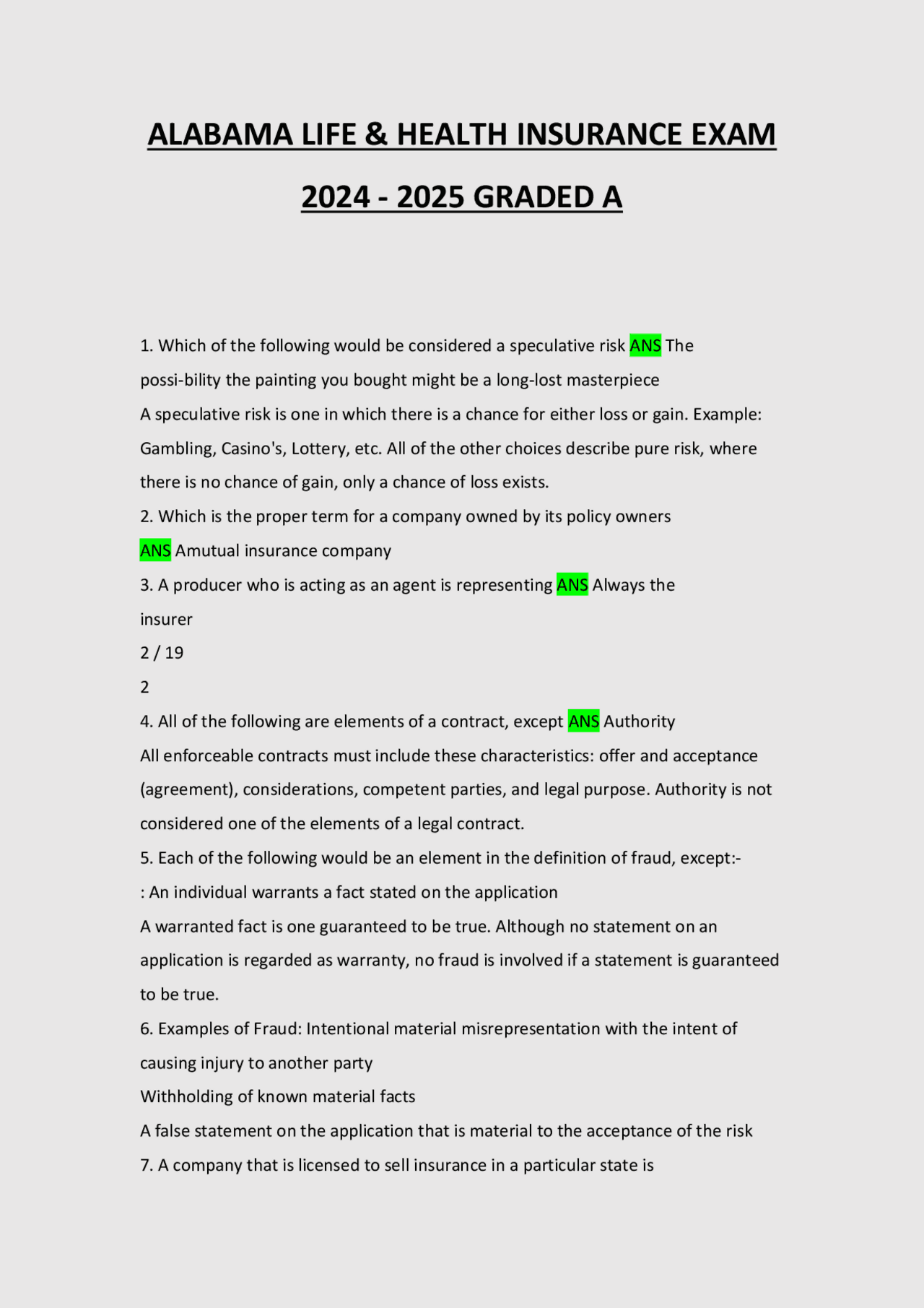
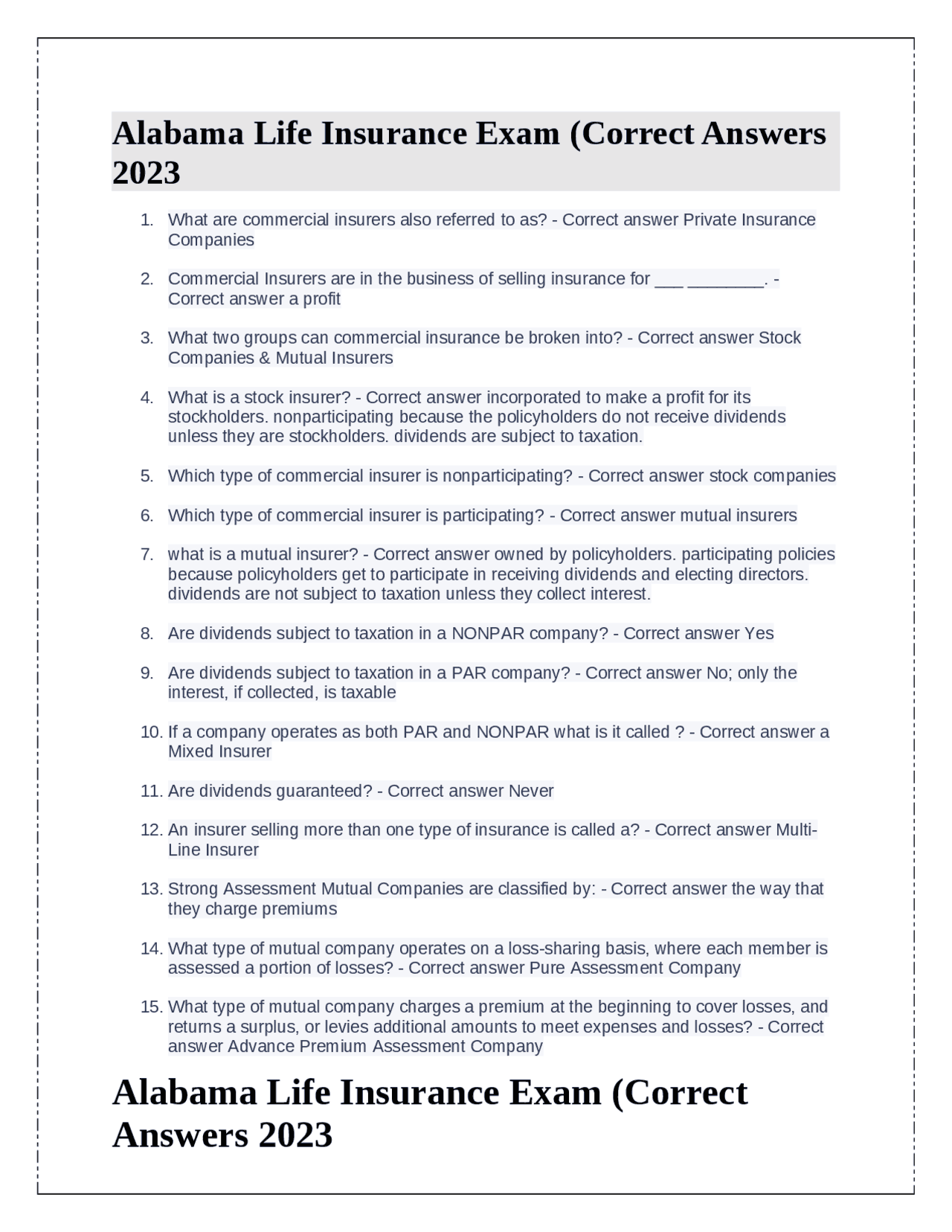
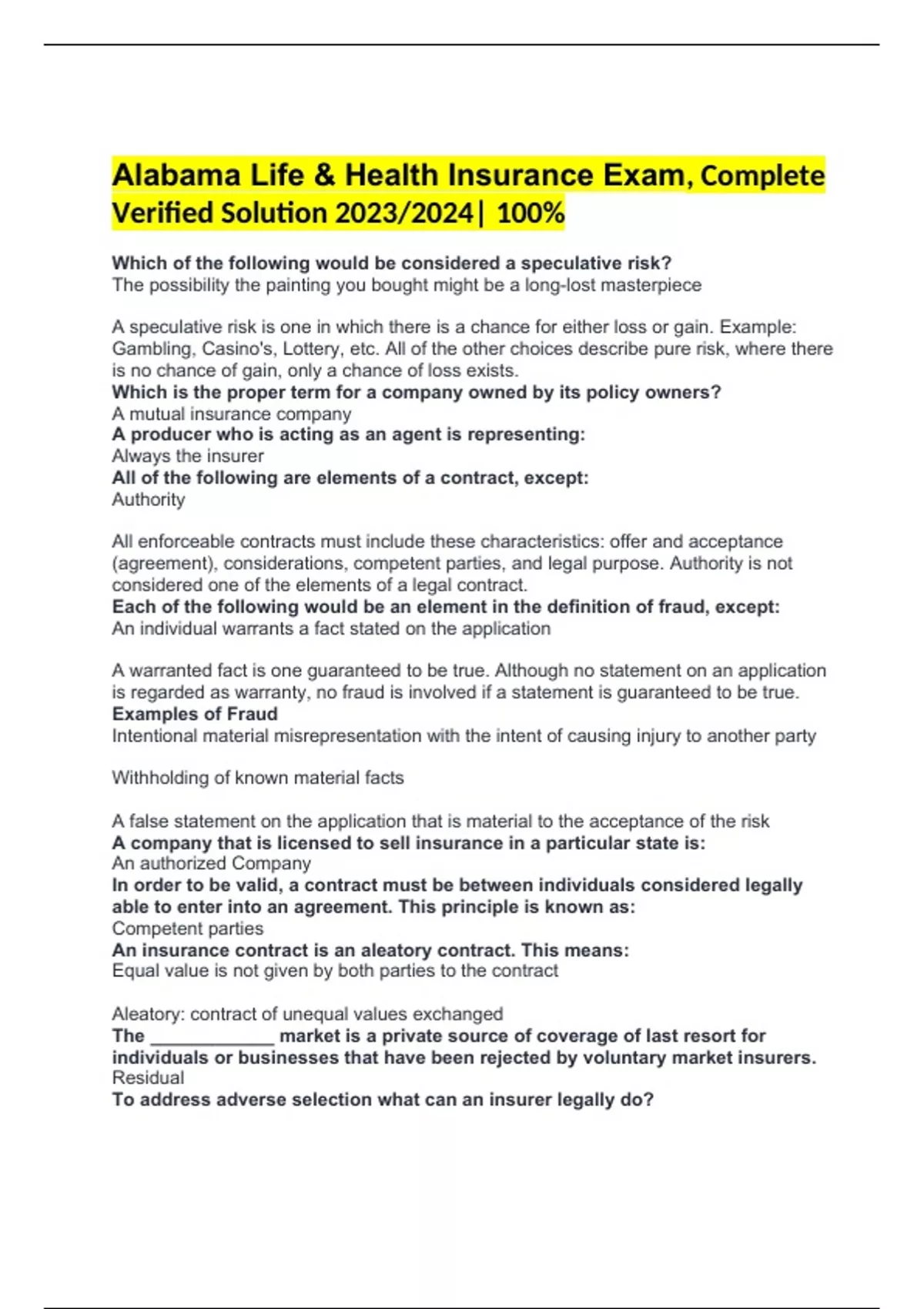
Passing the Alabama State Insurance License Exam for Life and Health lines requires a firm grasp of state-specific insurance regulations, federal laws, and core insurance principles. Managed by the Alabama Department of Insurance (ALDOI) and administered by a designated testing vendor like Prometric, this examination evaluates whether a candidate possesses the minimum technical knowledge and ethical grounding necessary to protect consumers and operate lawfully within the state.
Understanding the Alabama Life and Health Insurance License
The Alabama state insurance license exam life and health is a comprehensive evaluation designed for individuals seeking to enter the insurance industry as licensed producers. In Alabama, insurance is regulated at the state level to ensure that consumers are served by knowledgeable, ethical professionals who understand the intricate financial products they sell. The life and health license is actually a combined credential—or a single examination covering two major pillars of personal lines insurance: life insurance and health insurance.
Life insurance products protect financial dependents against income loss resulting from the insured's premature death, providing mechanisms for estate planning, wealth accumulation, and retirement security. Health insurance products, including medical expense coverage, disability income, long-term care, and Medicare supplements, shield policyholders from catastrophic medical expenses and income interruption due to injury or illness. Because these products directly affect the financial well-being and health security of Alabama residents, the state enforces strict prerequisites, educational mandates, and examination standards before granting a license.
Navigating this licensing process successfully requires understanding that the exam is only one component of a multi-step regulatory framework. Candidates must balance pre-licensing education hours, fingerprinting, background checks, application submissions, and exam preparation. By approaching the process systematically, prospective producers can minimize delays and position themselves for a successful career in the insurance sector.
Regulatory Framework and Prerequisites
Before sitting for the Alabama life and health insurance exam, candidates must satisfy specific administrative and educational requirements established by the Alabama Department of Insurance and governed by the Alabama Insurance Code.
Pre-Licensing Education Requirements
Alabama mandates that candidates complete a specific number of approved pre-licensing education hours before they are permitted to take the licensing examination. For a combined Life and Health qualification, candidates typically must complete classroom or online instruction through an approved provider.
- Life Line: Generally requires approximately 20 to 40 hours of approved instruction, depending on the specific curriculum guidelines.
- Health Line: Also requires a parallel set of hours, though combined courses streamline this requirement.
- Combined Life and Health Course: Many approved providers offer a unified course that satisfies the educational prerequisites for both lines simultaneously, saving candidates time and ensuring comprehensive preparation.
Upon completing the pre-licensing course, candidates receive a certificate of completion. This certificate is electronically transmitted or presented at the testing center as proof of eligibility, and it carries an expiration date—usually valid for a limited window of time during which the candidate must pass the state exam.
Background Checks and Fingerprinting
As part of the producer licensing process, the Alabama Department of Insurance requires a thorough criminal history background check. Candidates must submit fingerprints through the state's designated vendor (such as IdentoGO by MorphoTrust) to facilitate checks through both the Alabama Law Enforcement Agency (ALEA) and the Federal Bureau of Investigation (FBI). Disqualifying criminal offenses, particularly those involving financial dishonesty, fraud, or breach of trust, can result in the denial of a license application unless a formal waiver or review process is successfully navigated.
Structure and Content of the Examination
The Alabama Life and Health Insurance Exam is administered via computer at secure testing centers. Understanding the format, question types, and core domain weightings helps candidates allocate their study time effectively.
Exam Format and Logistics
The exam is closed-book and delivered on a computer terminal. It is divided into two primary sections: the National section, which covers general insurance concepts, policy provisions, and legal principles applicable across most jurisdictions; and the State section, which focuses exclusively on Alabama insurance statutes, administrative rules, and regulations.
| Exam Section | Focus Area | General Content |
|---|---|---|
| National Life | Life Insurance Principles | Types of policies, policy provisions, riders, options, annuities, and federal tax considerations. |
| National Health | Health Insurance Principles | Medical expense plans, disability income, long-term care, group insurance, and social insurance (Medicare/Medicaid). |
| State Specific | Alabama Regulations | ALDOI rules, licensing procedures, unfair trade practices, ethics, and state-specific statutory requirements. |
Candidates are allotted a set amount of time to complete the entire examination (often around two and a half hours for a combined exam). A passing score—typically 70% or higher—is required to pass each individual section or the unified exam, depending on how the test is structured during registration. If a candidate fails one section, Alabama rules dictate whether both or only the failed portion must be retaken.
Core Study Topics for the Life Section
Mastering the life insurance portion of the exam requires deep familiarity with policy structures, legal contract elements, and specialized financial products.
General Insurance Concepts and Contract Law
An insurance policy is a legally binding contract. Candidates must understand the four essential elements of a legal contract:
- Agreement (offer and acceptance)
- Consideration (the premium payment and statements made in the application)
- Competent parties (legal capacity)
- Legal purpose
Furthermore, insurance contracts possess unique legal characteristics that frequently appear on the exam:
- Aleatory: Unequal exchange of value (small premium paid for a large potential payout).
- Adhesion: "Take-it-or-leave-it" contracts drafted by the insurer; ambiguities are usually interpreted in favor of the insured.
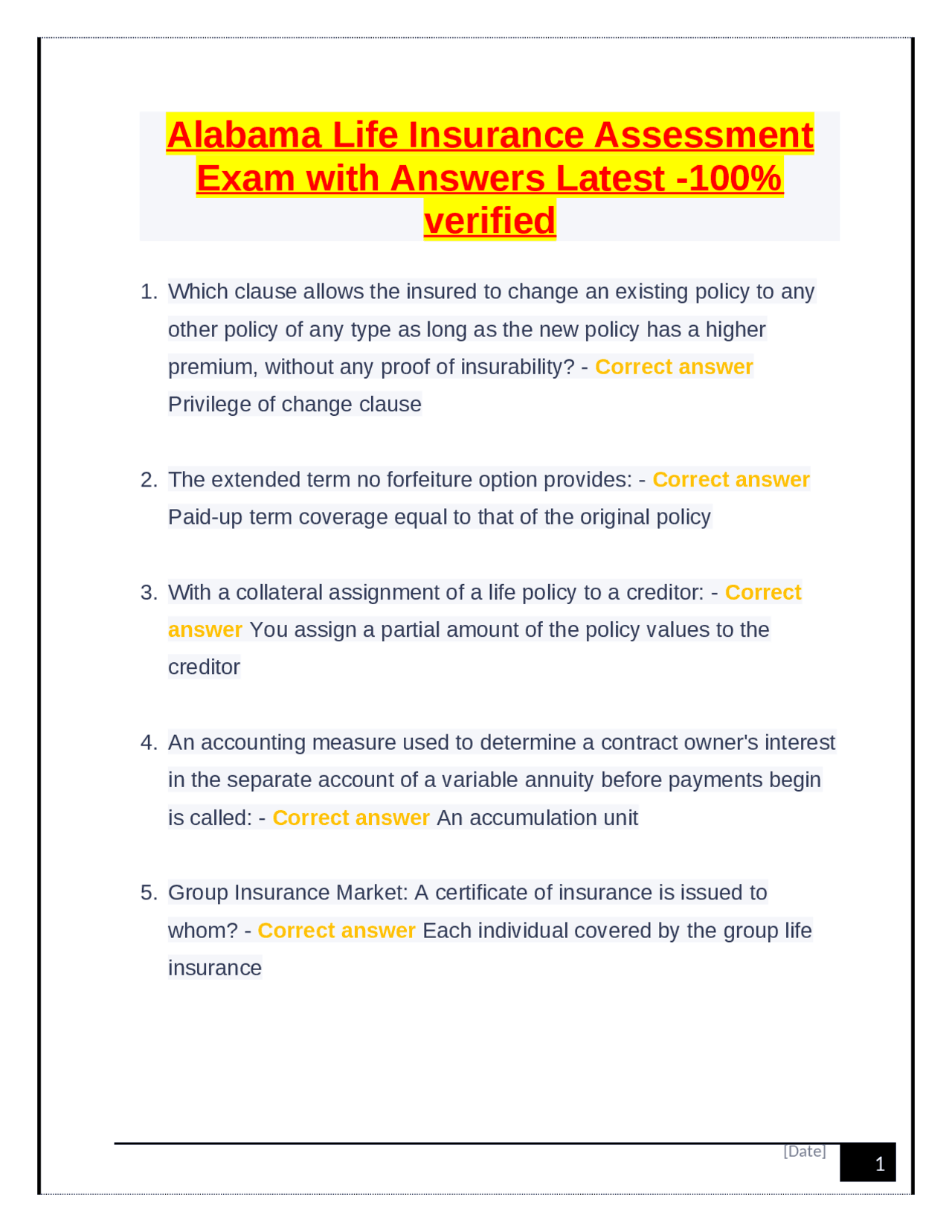
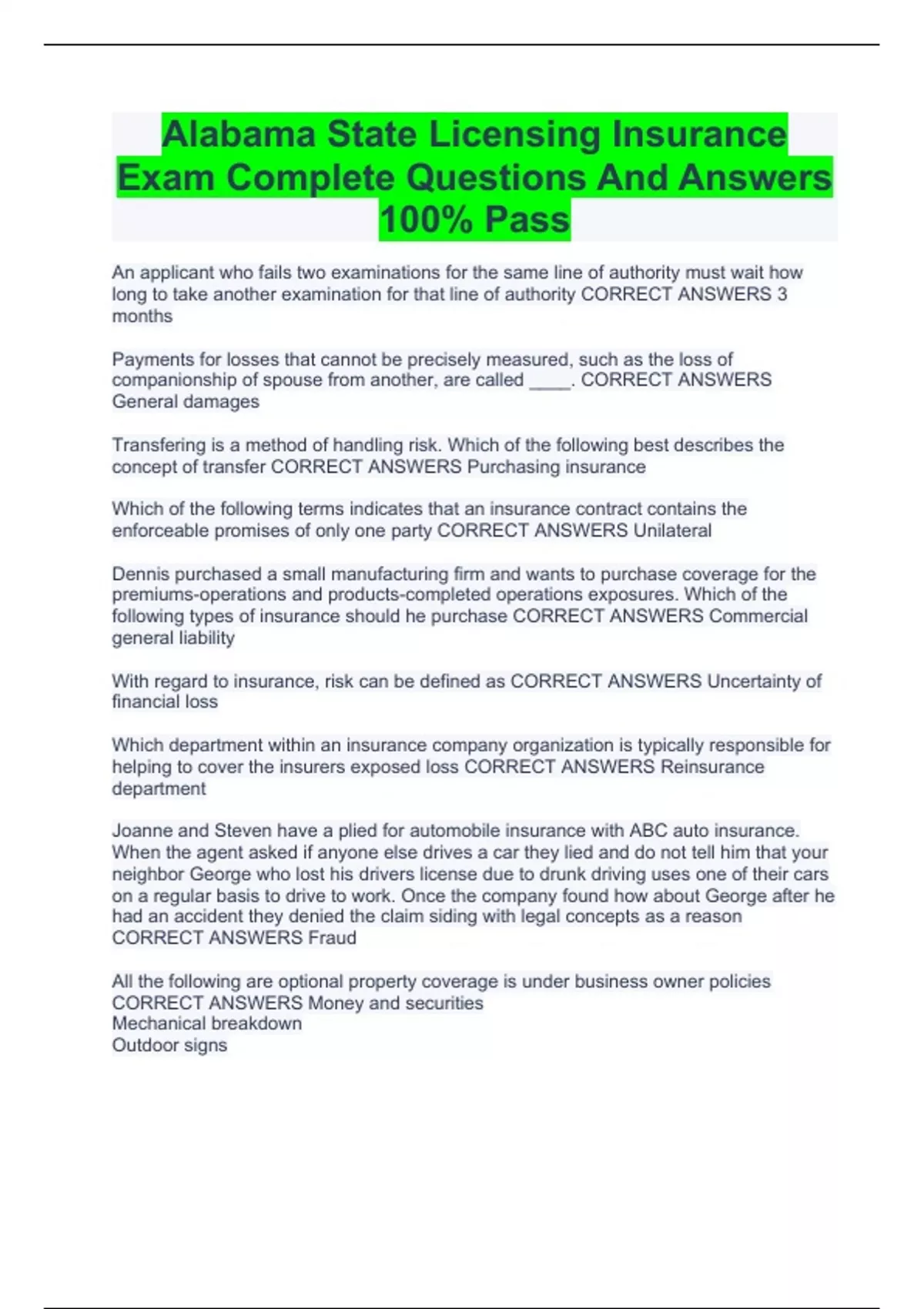
- Unilateral: Only the insurer makes a legally enforceable promise to pay.
- Conditional: Both parties must perform certain duties for the contract to remain in force (e.g., paying premiums and filing proofs of loss).
Types of Life Insurance Policies
Candidates must be able to compare and contrast various permanent and temporary life insurance vehicles:
- Term Life Insurance: Provides pure protection for a specified period (e.g., 10, 20, or 30 years). It features no cash value accumulation and expires at the end of the term unless renewed or converted.
- Whole Life Insurance: Provides lifetime protection, level premiums, and a guaranteed cash value account that grows tax-deferred. Variations include ordinary whole life, limited-pay life, and single-premium life.
- Flexible Life Products: Includes Universal Life (UL) and Variable Universal Life (VUL), which uncouple the protection element from the cash value, allowing adjustable premium payments and fluctuating death benefits tied to equity investments or interest crediting strategies.
Core Study Topics for the Health Section
The health insurance segment evaluates a candidate's knowledge of medical expense indemnification, income protection, and specialized senior insurance markets.
Medical Expense Insurance
Candidates are tested on individual and group health insurance mechanics, including fee-for-service plans, Health Maintenance Organizations (HMOs), Preferred Provider Organizations (PPOs), and High-Deductible Health Plans (HDHPs) paired with Health Savings Accounts (HSAs). Key terminology includes:
- Deductibles: The initial amount of covered expenses the insured must pay before the insurer begins paying benefits.
- Coinsurance: The percentage-based cost-sharing mechanism between the insurer and the insured after the deductible is met.
- Copayments: A flat dollar amount paid by the insured at the time of a medical service.
- Out-of-Pocket Maximum: A cap on total cost-sharing during a policy year, protecting consumers from catastrophic financial loss.
Disability Income and Long-Term Care
Income replacement is a critical function of health insurance. Candidates must understand short-term and long-term disability policies, elimination periods (waiting periods before benefits begin), and benefit periods. Additionally, long-term care (LTC) insurance rules—covering assistance with Activities of Daily Living (ADLs) such as bathing, dressing, and eating—are heavily regulated in Alabama to protect elderly consumers from predatory sales practices.
Alabama State-Specific Regulations
A significant percentage of the examination tests knowledge of Alabama insurance law, overseen by the Alabama Department of Insurance and commissioner mandates.
Licensing and Appointment Rules
To legally transact insurance in Alabama, a producer must not only hold an active license for the appropriate line of authority but must also be appointed by an authorized insurance company. Key state rules include:
- Continuing Education (CE): Licensed producers must complete mandatory continuing education hours every reporting period (typically 24 hours every two years, including ethics requirements) to maintain active licensure.
- Address and Name Changes: Producers are legally required to notify the ALDOI of any change in residential address, business address, or legal name within a strict statutory timeframe (usually 30 days).
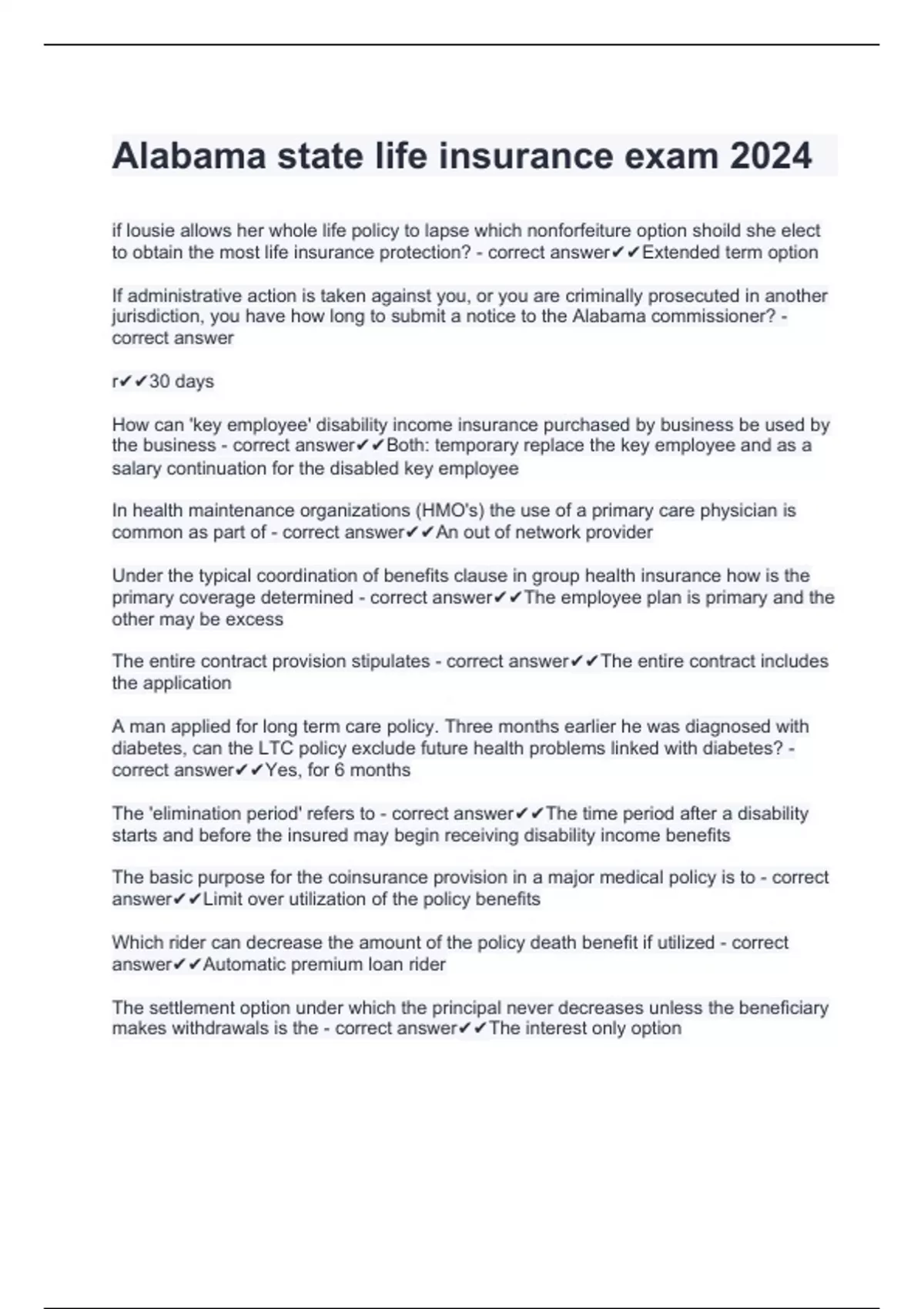
- Reporting of Actions: Administrative actions taken against a producer in other states, or criminal prosecutions, must be reported to the Alabama Commissioner of Insurance within specified legal deadlines.
Unfair Trade Practices and Ethics
The Alabama Insurance Code strictly prohibits deceptive, coercive, or unfair practices within the insurance marketplace. Candidates must study these definitions thoroughly, as ethical compliance questions make up a core portion of the state exam:
- Rebating: Offering any valuable consideration, discount, or inducement not specified in the policy as an incentive to purchase insurance.
- Twisting: Making misrepresentations or incomplete comparisons of policies to induce a policyholder to lapse, forfeit, surrender, or exchange an existing policy for personal gain.
- Defamation: Publishing or circulating false, maliciously critical, or derogatory statements intended to injure any person engaged in the insurance business.
- Coercion and Intimidation: Using physical or mental force, or economic pressure, to compel a consumer to purchase insurance from a specific entity or producer.
Step-by-Step Registration and Examination Process
Securing an Alabama insurance license follows a structured pathway from education completion to passing the exam and submitting the formal application.
- Complete Pre-Licensing Education: Enroll in and successfully complete an approved Alabama pre-licensing course for Life and Health, securing your certificate of completion.
- Schedule the Exam: Register with the state's official testing vendor (such as Prometric). Pay the required examination fee and select a testing center location in Alabama or an approved remote proctoring option if available.
- Submit Fingerprints: Complete the required background check and fingerprint submission through the approved state vendor prior to or immediately following exam completion.
- Take and Pass the Exam: Arrive at the testing center with proper identification. Complete the computer-based examination and receive your passing score report immediately upon completion.
- Apply for the License: Submit your formal producer license application through the National Insurance Producer Registry (NIPR) or the state portal, paying all applicable state licensing and application fees.
- Secure Appointment: Once the ALDOI reviews your background check and application, your license will be issued. You must then secure an appointment with an insurance carrier before actively writing business.
Common Mistakes to Avoid During Preparation
Candidates preparing for the Alabama state insurance license exam life and health frequently encounter pitfalls that jeopardize their passing score. Avoiding these common errors can dramatically improve outcomes:
- Neglecting State-Specific Rules: Many candidates focus exclusively on national product concepts while ignoring Alabama insurance statutes. Because the state portion carries substantial weight, failing to study ALDOI regulations, commissioner powers, and local ethics rules often leads to a failing score.
- Relying Solely on Memorization: Simply memorizing practice exam questions without understanding underlying concepts (such as how cash value accumulates or how coordination of benefits works) leaves candidates vulnerable to unfamiliar phrasing on the actual exam.
- Ignoring Time Management During the Test: The exam requires sustained focus. Spending too early time on complex calculation or policy provision questions can lead to rushed answers in the final sections.
- Overlooking Application Prerequisites: Delaying fingerprint submission or background checks can stall the final issuance of a license even after the examination has been successfully passed.
Frequently Asked Questions
What is a passing score for the Alabama Life and Health Insurance Exam?
The passing score for each section of the Alabama insurance license examination is typically set at a scaled score of 70. Candidates must meet or exceed this threshold on all required sections to qualify for license issuance by the Alabama Department of Insurance.
How long is the Alabama pre-licensing education certificate valid?
Pre-licensing education certificates of completion carry a specific expiration window determined by state guidelines and course providers, usually valid for 6 to 12 months. Candidates must schedule and pass their examination before this certificate expires, or retake the educational coursework.
Can I take the Alabama insurance exam online from home?
Depending on current administrative rules set by the Alabama Department of Insurance and the testing vendor, remote proctored testing options may be available. Candidates should verify current testing delivery formats directly through the official testing vendor's portal when scheduling their exam.
What happens if I fail the Alabama insurance exam?
If a candidate fails the exam or one of its sections, they are permitted to retake it. Testing vendors typically enforce a waiting period before a subsequent attempt can be scheduled, and retaking the exam requires paying an additional registration fee. Check specific vendor guidelines for current retest policies.
Do I need to be appointed by an insurance company immediately after passing?
You do not need an appointment to take the exam or apply for your license. However, you cannot legally solicit, negotiate, or sell insurance products in Alabama until your license is active and you are formally appointed by an authorized insurance carrier.
Next Actions and Strategic Recommendations
To maximize your chances of passing the Alabama state insurance license exam life and health on your first attempt, establish a disciplined study schedule that balances national product mechanics with Alabama-specific regulations. Utilize comprehensive study manuals, take timed practice exams to build test endurance, and ensure all administrative prerequisites—such as pre-licensing course completion certificates and background check submissions—are managed well in advance of your test date. Once licensed, maintain your professional standing by tracking your continuing education requirements closely through the Alabama Department of Insurance portal.