Choosing between the AirPods Pro and the AirPods 3 depends primarily on your preference for ear-tip fit and your need for Active Noise Cancellation. The AirPods Pro features a customizable in-ear design with silicone tips and industry-leading noise isolation, while the AirPods 3 offers a universal "open-ear" fit that prioritizes long-term comfort and situational awareness without sealing the ear canal.
Understanding the Core Philosophy: Isolation vs. Awareness
The fundamental difference between these two models lies in how they interact with your ear and your environment. When Apple designed the AirPods 3, the goal was to evolve the "classic" earbud shape—a design that rests in the concha of the ear without entering the ear canal. This "open" design is intentionally non-sealing. It allows for a natural degree of ambient sound to enter, making it a favorite for users who feel claustrophobic with earplugs or who need to remain aware of their surroundings, such as runners or office workers.
Conversely, the AirPods Pro is built around isolation. By using interchangeable silicone ear tips (available in XS, S, M, and L sizes), the Pro creates an acoustic seal. This seal is the prerequisite for Active Noise Cancellation (ANC), as it physically blocks high-frequency noises while the software handles the rest. In 2026, even as newer iterations have entered the market, the distinction between the "open" feel of the AirPods 3 and the "sealed" feel of the Pro remains the most significant factor in user satisfaction.
Design and Ergonomics: The Fit Factor
The ergonomics of these two devices dictate how long you can wear them before experiencing "ear fatigue." The AirPods 3 features a shorter stem compared to the original AirPods but lacks the flexible tips of the Pro. Because it relies on the shape of the human ear to stay in place, its stability varies significantly from person to person. For those whom the AirPods 3 fits well, it often feels "invisible" because there is no pressure inside the ear canal.
The AirPods Pro utilizes a sophisticated vent system for pressure equalization. One of the common complaints about in-ear monitors (IEMs) is the "thumping" sound of your own footsteps or the "underwater" feeling caused by air pressure trapped in the canal. Apple’s H2 chip and internal venting minimize this effect, but the physical presence of a silicone tip remains a dealbreaker for a specific subset of the population. However, the Pro’s fit is technically more "secure" for vigorous activity because the friction of the silicone against the ear canal prevents the buds from shaking loose.
Audio Engineering and Sound Profiles
While both models support Computational Audio and Adaptive EQ, the hardware driving the sound is notably different. The AirPods Pro (2nd Generation, which remains the standard Pro reference) is powered by the H2 chip, whereas the AirPods 3 utilizes the older H1 chip.
Drivers and Transducers
Both models feature a custom high-excursion Apple driver and a high dynamic range amplifier. However, the AirPods Pro benefits from the acoustic seal. Bass response is heavily dependent on a seal; without it, lower frequencies "leak" out. Therefore, the AirPods Pro offers a significantly richer, more controlled low-end. The AirPods 3 uses Adaptive EQ to compensate for this leakage by using an inward-facing microphone to monitor what the user is hearing and adjusting the mid and low frequencies in real-time, but it can never quite match the sub-bass extension of the Pro.
Spatial Audio and Dynamic Head Tracking
Both devices support Personalized Spatial Audio with dynamic head tracking. This technology uses the accelerometers and gyroscopes in the buds to track your head movement relative to your iPhone, iPad, or Mac, creating a theater-like surround sound experience for movies and music. In 2026, this has become a standard feature for Dolby Atmos content on Apple Music and Apple TV+. While the effect is immersive on both, the AirPods Pro’s noise-free floor allows for a greater perception of "space" and detail in the soundstage.
Active Noise Cancellation and Transparency Modes
The most compelling technical reason to opt for the Pro is Active Noise Cancellation (ANC). The AirPods Pro uses dual beamforming microphones and an inward-facing microphone to cancel out up to twice as much noise as the original version. This is particularly effective against low-frequency drones, such as airplane engines, air conditioners, and city traffic.
Adaptive Audio and Transparency
The AirPods Pro also features "Adaptive Audio," a hybrid mode that dynamically blends Transparency mode and ANC based on the noise levels in your environment. For example, if you are walking past a construction site, the Pro will instantly increase cancellation, then dial it back once you reach a quiet park.
The AirPods 3 has no ANC. It has no "Transparency Mode" because, by design, it is always "transparent." You hear the world through the gaps around the earbud. For users who work in quiet environments or who only use their earbuds at home, the lack of ANC is a non-issue. For commuters or frequent flyers, the AirPods 3 often forces the user to turn the volume up to dangerous levels just to hear their media over the ambient noise.
Battery Life and Charging Infrastructure
In 2026, battery longevity and charging standards are critical for daily-use electronics. Both models have converged on USB-C as the primary wired charging standard, following global regulatory shifts, though many older units still in circulation utilize Lightning.
| Feature | AirPods 3 | AirPods Pro (2nd Gen) |
|---|---|---|
| Listening Time (Single Charge) | Up to 6 hours | Up to 6 hours (with ANC) |
| Total Time with Case | Up to 30 hours | Up to 30 hours |
| Charging Case Connector | Lightning or USB-C / MagSafe | USB-C / MagSafe / Apple Watch |
| Quick Charge | 5 mins = 1 hour | 5 mins = 1 hour |
| Spatial Audio Battery Impact | Reduces to ~5 hours | Reduces to ~5.5 hours |
| Noise Cancellation | None | Active / Adaptive |
A unique advantage of the AirPods Pro 2nd Gen case is its compatibility with the Apple Watch charger. This allows users to declutter their nightstands by using the same magnetic puck for their watch and their earbuds. Furthermore, the Pro case includes a built-in speaker for "Find My" alerts and a lanyard loop, features absent from the standard AirPods 3 case.
The Ecosystem Advantage: Software Integration
Both models are deeply integrated into the Apple ecosystem, offering features that third-party headphones struggle to replicate.
- Automatic Switching: If you are watching a movie on your Mac and receive a call on your iPhone, the AirPods will automatically switch the audio source.
- "Hey Siri": Always-on voice activation for hands-free control of volume, playback, and smart home devices.
- Precision Finding: The AirPods Pro case contains a U1 (or U2) chip, allowing for directional guidance via the Find My app. The AirPods 3 supports Find My but lacks the "Directional Arrow" precision found in the Pro.
- Audio Sharing: Two sets of AirPods (any model) can listen to the same audio source from one iPhone or iPad, which is ideal for traveling couples.
Durability and Environmental Resistance
Both the earbuds and the charging cases for the AirPods 3 and AirPods Pro are rated IPX4 for sweat and water resistance. This makes both suitable for workouts and light rain. It is important to note that IPX4 does not mean "waterproof"; they should never be submerged in water or worn in the shower.
From a long-term durability perspective, the silicone tips on the AirPods Pro are a "wear item." They can tear or become discolored over time, requiring replacement. Fortunately, these are inexpensive and widely available. The AirPods 3, being a solid plastic shell, is easier to clean with a simple microfiber cloth but is more susceptible to "earwax buildup" in the fine mesh grilles, which can permanently lower the volume if not maintained properly.
Connectivity and Bluetooth Standards
By 2026, Bluetooth 5.3 has become the baseline for stable, low-latency audio. The AirPods Pro (2nd Gen) fully utilizes Bluetooth 5.3, which offers better power efficiency and improved connection stability in crowded areas like train stations. The AirPods 3 typically utilizes Bluetooth 5.0. While 5.0 is perfectly functional for high-quality audio, it lacks some of the advanced interference-mitigation protocols found in the Pro. If you frequently experience "audio cutouts" in busy urban environments, the Pro’s H2-driven connection is measurably more robust.
Making the Decision: Use-Case Analysis
Choose the AirPods 3 if:
- You dislike in-ear pressure: You find silicone or foam tips uncomfortable or painful over long periods.
- You need total awareness: You want to hear your surroundings (cars, colleagues, family) naturally without relying on microphones and "Transparency Mode."
- Budget is a priority: You want the core Apple features (Siri, Switching, Spatial Audio) at the lowest entry price for current-generation hardware.
- You have "average" ear anatomy: The fixed shape of the AirPods 3 fits you securely without needing adjustment.
Choose the AirPods Pro if:
- You commute or travel: The ability to silence an airplane cabin or a subway car is indispensable for your mental health and hearing safety.
- You are an audiophile: You want the best possible frequency response and bass extension available in the AirPods lineup.
- You need a secure fit for exercise: The friction of the silicone tips ensures the buds stay put during high-intensity interval training or long runs.
- You value "Find My" features: You frequently misplace your items and want the precision-finding capabilities of the MagSafe/USB-C case.
Final Summary of Technical Differences
The AirPods Pro is a professional-grade tool designed for high-performance audio and environment control. It excels in noisy settings and provides a tailored fit. The AirPods 3 is a lifestyle-oriented device that prioritizes convenience and "frictionless" wear, making it the superior choice for users who want a casual, non-intrusive listening experience.
In 2026, the price gap between these two models has often narrowed on the secondary and refurbished markets, making the AirPods Pro a high-value proposition. However, no amount of technical superiority can overcome personal comfort; if your ears reject silicone tips, the AirPods 3 remains the best-engineered open-ear earbud in its class.
Frequently Asked Questions
Can I use AirPods Pro silicone tips on the AirPods 3?
No. The AirPods 3 is designed as a "tip-less" earbud. There is no mounting flange on the AirPods 3 to attach silicone tips. While some third-party manufacturers sell "covers" that slip over the AirPods 3, these often prevent the buds from fitting into the charging case and do not provide the same acoustic seal as the Pro.
Is the noise cancellation on the AirPods Pro safe for my hearing?
Yes. In fact, ANC can protect your hearing. In loud environments like airplanes or gymnasiums, users with non-canceling earbuds (like the AirPods 3) often turn their volume up to 90-100% to drown out the noise. With the AirPods Pro, you can keep your music at a safe 50% volume because the ANC has already eliminated the background competition.
Do both models work with Android devices?
Yes, but with significant limitations. While both will pair as standard Bluetooth headphones, you will lose access to Automatic Switching, "Hey Siri," Find My tracking, and the Ear Tip Fit Test. Spatial Audio is also generally unavailable on Android. If you are not in the Apple ecosystem, the technical advantages of these earbuds are significantly diminished.
How do I know which ear tip size to use with the AirPods Pro?
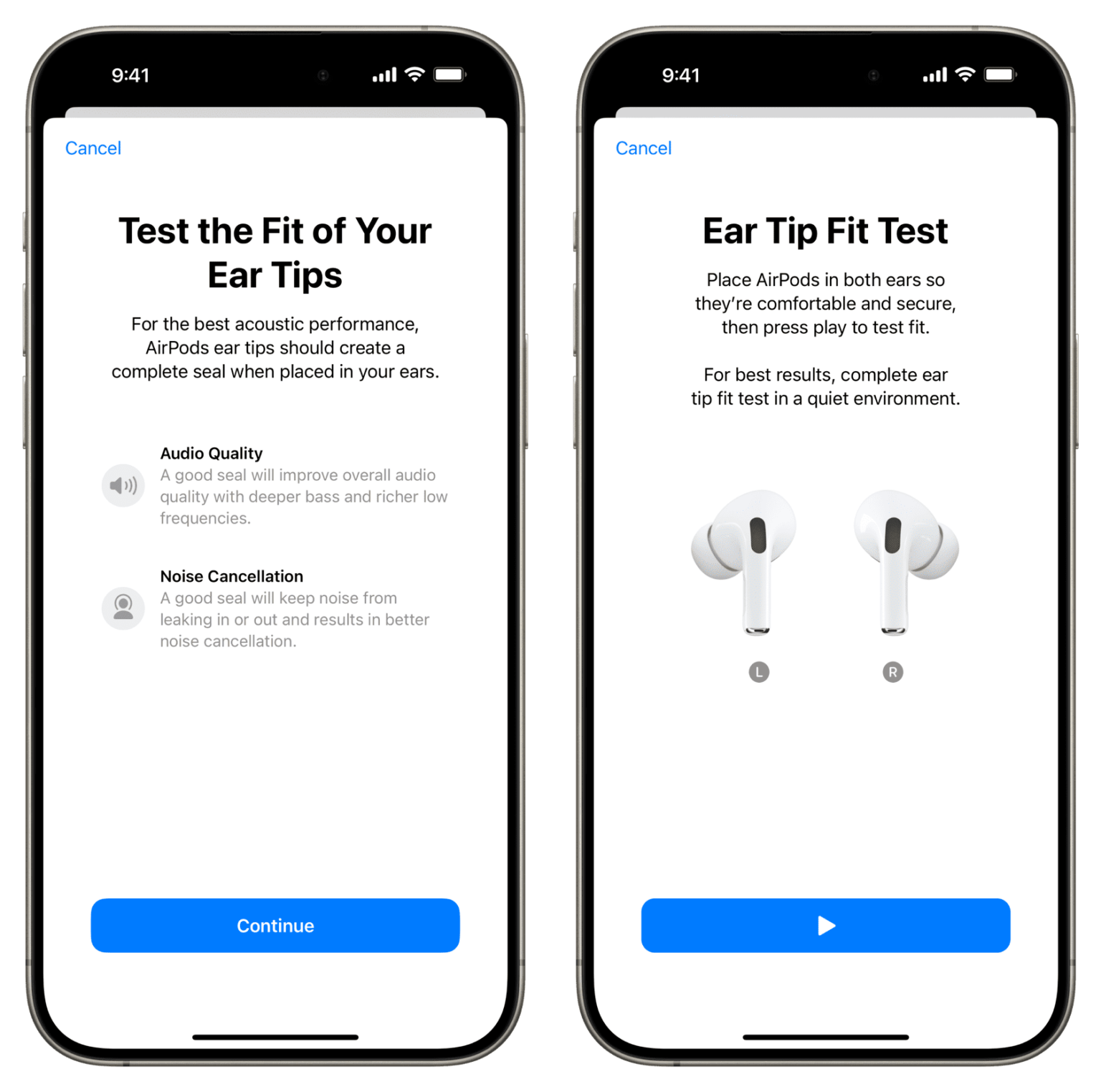
Apple provides an "Ear Tip Fit Test" within the Bluetooth settings on iOS. This test uses the internal microphones to measure the sound pressure level inside your ear. If it detects a leak, it will suggest trying a different size. This is a critical step to ensure you are getting the full benefit of the ANC and bass response.
Which model has better microphone quality for calls?
Both models utilize dual beamforming microphones and acoustic mesh to reduce wind noise. However, the AirPods Pro (2nd Gen) features improved voice-pickup algorithms driven by the H2 chip. In windy or noisy environments, the Pro generally does a better job of isolating your voice from the background clutter compared to the AirPods 3.