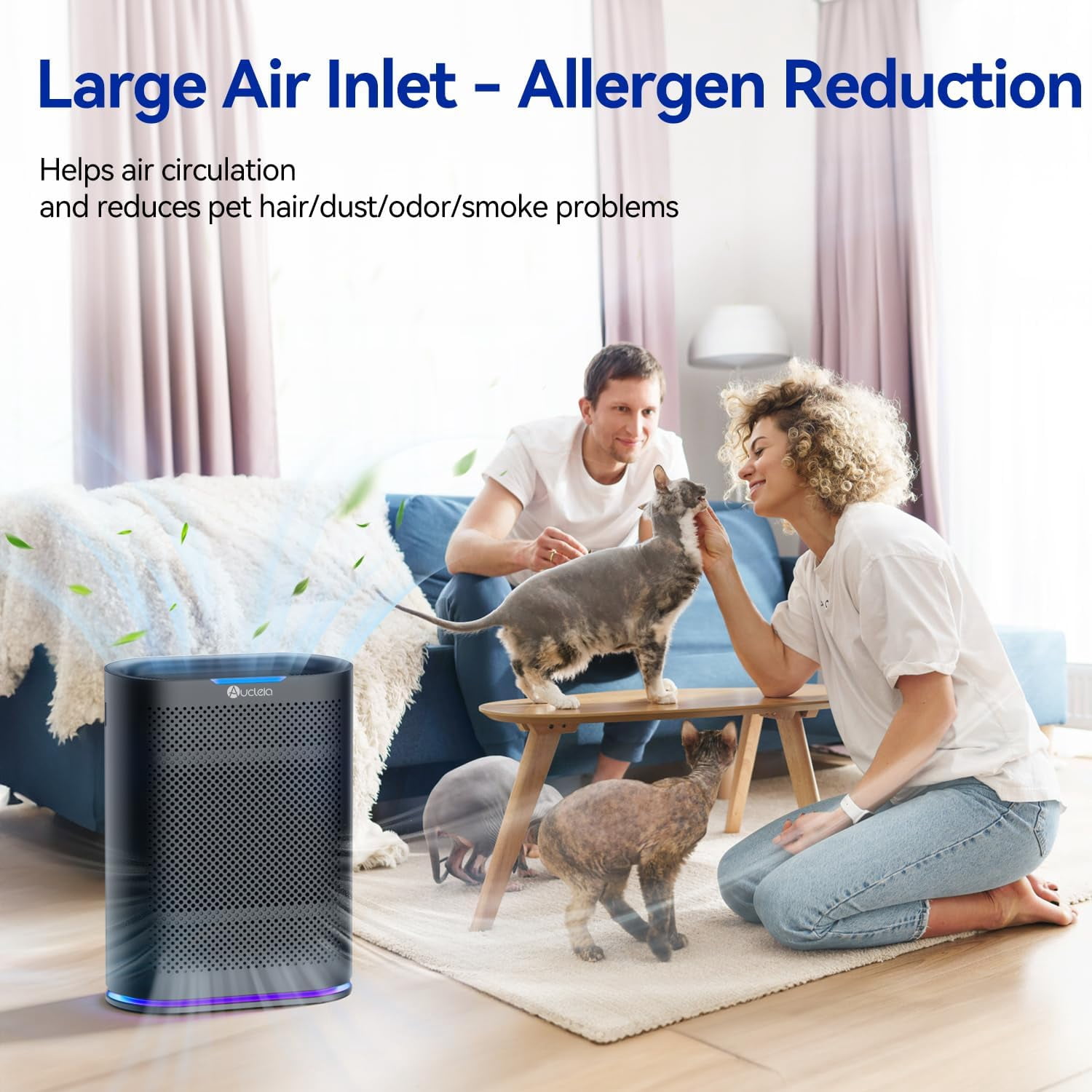
To effectively remove pet dander, hair, and odors, a home air purifier must feature a True HEPA filter (H13 or higher) and a robust activated carbon stage. These devices capture 99.97% of microscopic allergens while neutralizing volatile organic compounds, ensuring a healthier respiratory environment for both humans and their animal companions.
Maintaining high indoor air quality is a significant challenge for pet owners. Whether you share your living space with a shedding golden retriever, a self-grooming tabby, or even smaller animals like rabbits or birds, the biological load on your home’s air is substantially higher than in pet-free environments. In 2026, air purification technology has evolved to provide more than just basic filtration; modern units now integrate laser-based particulate sensors and specialized media designed specifically to tackle the unique chemical signatures of pet odors.
Understanding the Pet Pollutant Spectrum
Before selecting a filtration system, it is vital to understand exactly what you are trying to remove from the air. Pet-related pollutants fall into three primary categories: macro-particulates, microscopic allergens, and gaseous odors.
Pet Hair and Fur (Macro-Particulates)
Large visible clumps of fur are the most obvious byproduct of pet ownership. While these are often too heavy to remain suspended in the air for long, they quickly clog standard filters. This is why a high-quality pre-filter is non-negotiable. The pre-filter acts as the first line of defense, capturing large fibers and preventing them from reaching the more expensive, delicate HEPA material.
Dander and Saliva (Microscopic Allergens)
Dander consists of tiny flakes of skin that pets shed naturally. Unlike fur, dander is microscopic and can remain airborne for hours. Furthermore, many people are not allergic to the fur itself but to specific proteins found in animal saliva and urine (such as the Fel d 1 protein in cats). When a pet grooms itself, these proteins dry on the fur and eventually become airborne as "dried saliva" dust. These particles often measure between 0.3 and 10 microns, making them perfectly sized to enter the lower respiratory tract.
Volatile Organic Compounds and Odors (Gases)
The "wet dog" smell or the scent of a litter box is not a particle; it is a gas. HEPA filters are physically incapable of stopping gases. To address these, an air purifier must utilize Activated Carbon. This material is treated with oxygen to open up millions of tiny pores between the carbon atoms, which then "adsorb" (chemically bond with) the odorous molecules as they pass through.
The Core Technologies of Pet-Specific Air Purifiers
To address the pollutants mentioned above, a multi-stage filtration approach is required. In 2026, the standard for pet-friendly homes involves at least three distinct stages of treatment.
True HEPA Filtration (H13 and H14)
The term "HEPA-like" or "HEPA-type" is a marketing designation with no legal performance requirement. For pet owners, only True HEPA should be considered. This standard requires the filter to capture 99.97% of particles as small as 0.3 microns. By 2026, many premium units have moved to H13 Medical Grade HEPA, which increases the efficiency to 99.95% at even smaller scales, or H14, which reaches 99.995%. This level of filtration is essential for removing the finest dander particles that trigger asthma and allergy symptoms.
Advanced Activated Carbon Stages
Not all carbon filters are created equal. Many budget air purifiers use a thin "carbon-coated" sponge. For effective pet odor removal, look for a filter containing several pounds of granular activated carbon. The more carbon weight the machine has, the more odor it can absorb before the filter becomes saturated. Some specialized pet filters also include additives like potassium permanganate to specifically target the ammonia found in pet urine.
Specialized Pre-Filters
In a pet-heavy household, the pre-filter should be either vacuumable or washable. Some modern 2026 models feature a "pet pro" pre-filter made of a mesh that prevents fur from weaving into the fabric, making it much easier to clean. If the pre-filter is not maintained, the airflow of the entire unit will drop, rendering the HEPA stage useless.
Technical Metrics: CADR and ACH
When evaluating an air purifier, the physical size of the machine is less important than its technical performance ratings. Two metrics define how well a unit will perform in your specific living space.
Clean Air Delivery Rate (CADR)
The Association of Home Appliance Manufacturers (AHAM) provides the CADR rating, which measures the volume of filtered air an air purifier delivers. It is typically divided into three categories: Smoke, Dust, and Pollen. For pet owners, the Pollen and Dust CADR are the most relevant, as dander behaves similarly to these particles. A higher CADR means the unit can clean a larger room or clean a smaller room more frequently.
Air Changes per Hour (ACH)
For allergy sufferers, the goal is not just to clean the air once, but to keep it clean. For a home with pets, a rating of 5 ACH is the gold standard. This means the unit cycles the entire volume of air in the room every 12 minutes. If you have a room that is 400 square feet, ensure the machine you choose is rated to provide at least 4.5 to 5 ACH for that specific square footage.
Strategic Placement for Maximum Effectiveness
An air purifier is only effective if it can pull air from the areas where pollutants are most concentrated.
- The "Source" Placement: Place a unit in the room where the pet spends most of its time (e.g., the living room or near the litter box).
- The "Protective" Placement: Keep an air purifier in the bedroom. Since humans spend roughly one-third of their lives sleeping, ensuring the air in the bedroom is free of dander can significantly reduce morning congestion and improve sleep quality.
- Avoid Obstructions: Do not place the unit in a corner or behind furniture. Most air purifiers require at least 12 to 18 inches of clearance on all sides to allow for proper air intake and exhaust.
- Elevation: For dander, which tends to stay airborne, placing the unit on a side table can sometimes be more effective than placing it on the floor, where it might mostly suck up heavy dust and floor-level fur.
Comparison of Air Purifier Tiers for Pet Owners (2026)
| Feature | Entry-Level | Mid-Range | Premium / Professional |
|---|---|---|---|
| Filter Type | True HEPA (H11/H12) | True HEPA (H13) | Medical Grade (H14) |
| Odor Control | Thin Carbon Sheet | 1-2 lbs Granular Carbon | 5+ lbs Treated Carbon |
| Ideal Room Size | 150 - 250 sq. ft. | 300 - 600 sq. ft. | 800+ sq. ft. |
| Smart Sensors | Basic Infrared | PM2.5 Laser Sensor | VOC + PM2.5 + NO2 Sensors |
| Maintenance | Monthly Vacuuming | Filter Life Indicator | App-Based Tracking & Auto-Order |
| Noise Level (Low) | 25-30 dB | 20-24 dB | <20 dB (Near Silent) |
The Role of Smart Technology in 2026
In 2026, "smart" air purifiers have moved beyond simple Wi-Fi connectivity. They now utilize integrated laser particle counters to monitor air quality in real-time. When your dog runs through the living room or shakes its coat, the sensor detects the spike in PM2.5 (fine particulate matter) and automatically ramps up the fan speed to clear the air before the allergens can settle into carpets and upholstery.
Furthermore, many units now integrate with home automation systems to correlate air quality with HVAC usage. For example, if the air purifier detects a high level of VOCs (volatile organic compounds), it can signal the smart thermostat to increase ventilation or trigger a whole-house air exchange.
Safety Considerations: Ozone and Ionizers
When shopping for an air purifier for a home with pets, it is crucial to avoid units that produce significant amounts of ozone. While ozone is effective at killing mold and neutralizing odors, it is a known respiratory irritant for humans and can be particularly dangerous for small animals like birds, who have extremely sensitive respiratory systems.
Many modern units feature an "Ionizer" or "Plasma" function. While these can help particles clump together so they are easier to trap, ensure the unit is certified by the California Air Resources Board (CARB) as ozone-safe. In 2026, the best practice for pet owners is to stick to mechanical filtration (HEPA and Carbon) and only use electronic enhancements that have been strictly verified as "Zero Ozone."
Maintenance: The Key to Longevity
An air purifier in a pet-filled home works twice as hard as one in a pet-free home. To maintain performance, follow this specialized maintenance schedule:
- Weekly: Vacuum the exterior of the unit and the pre-filter. This prevents pet hair from restricting airflow and keeps the internal motors from overheating.
- Monthly: Check the carbon filter. If you notice the "pet smell" returning even when the machine is running, the carbon may be saturated, even if the HEPA filter still looks clean.
- Bi-Annually: Wipe down the internal laser sensors with a dry cotton swab. Dust buildup on the sensor can lead to "false positives," causing the machine to run on high speed unnecessarily.
- Annually: Replace the True HEPA filter. While some filters claim to last two years, the high biological load of pet dander usually requires a 12-month replacement cycle to ensure optimal air hygiene.
Frequently Asked Questions
Can an air purifier help with pet urine smells?
Yes, but only if it contains a significant amount of activated carbon. Standard HEPA filters do nothing for smells. Look for filters specifically labeled for "VOC" or "Pet Odor" removal, which often contain treated carbon designed to break down ammonia molecules.
Is it safe to leave an air purifier on 24/7 with pets?
Yes, and it is actually recommended. Most modern air purifiers are designed for continuous operation and use energy-efficient DC motors. Running the unit constantly ensures that dander is captured as soon as it is shed, preventing it from accumulating on surfaces.
Will an air purifier reduce the amount of vacuuming I need to do?
While an air purifier will capture airborne fur and dust, it will not remove hair that has already settled on the floor or furniture. It is a supplement to, not a replacement for, regular vacuuming and surface cleaning.
Are air purifiers noisy for pets' sensitive ears?
Most pets habituate to the "white noise" of an air purifier quickly. However, some units produce high-pitched electronic hums or "coil whine" that humans can't hear but pets can. In 2026, premium brands prioritize "quiet-mark" certification to ensure their fan frequencies remain outside the sensitive range of canine and feline hearing.
Do I need an air purifier in every room?
Not necessarily. You should prioritize the rooms where you and your pets spend the most time. A large, high-CADR unit can often manage the air in an open-concept living area, but separate, smaller units are usually required for closed-off bedrooms.
Final Recommendation for Pet Owners
If you are looking to resolve pet-related air quality issues in 2026, prioritize a system that offers a washable pre-filter, at least two pounds of activated carbon, and a True HEPA H13 filter. For a standard living room, aim for a device with a Smoke CADR of at least 250.
Begin by placing the unit in the area where your pet sleeps or where the litter box is located. Run the machine on "Auto Mode" to allow the laser sensors to respond to activity levels, but consider switching to a manual medium-high setting during peak shedding seasons (spring and fall). This proactive approach will significantly reduce the allergen load in your home, providing a cleaner, fresher environment for every member of the household.