In 2026, the average cost for air conditioning repair in Charleston, SC, typically ranges from $150 to $2,500, with most homeowners spending approximately $350 to $900 per visit. These costs are driven by the Lowcountry’s unique coastal environment, high humidity levels, and the ongoing industry-wide transition toward modern, eco-friendly refrigerants and high-efficiency SEER2 standards.
The Unique Realities of HVAC Maintenance in the Lowcountry
Charleston is not merely a hot climate; it is a corrosive one. Homeowners in areas like Mount Pleasant, West Ashley, James Island, and the historic downtown peninsula face environmental factors that significantly accelerate the wear and tear on HVAC systems. Understanding these factors is the first step in assessing repair costs and the long-term viability of your cooling system.
Coastal Corrosion and Salt Air
For homes within five miles of the Atlantic Ocean or the various tidal creeks and rivers, salt air is a constant adversary. Salt spray can settle on the delicate aluminum fins of an outdoor condenser unit, leading to a chemical reaction known as galvanic corrosion. This process eats away at the metal, reducing the unit's ability to dissipate heat and eventually leading to refrigerant leaks in the coils. By 2026, many Charleston residents are opting for specialized "coastal coatings" or units specifically designed with corrosion-resistant materials, though these carry a higher upfront cost.
Extreme Humidity and Microbial Growth
Charleston’s relative humidity often exceeds 80% during the summer months. Your air conditioner does double duty: it lowers the temperature and removes moisture. When a system is slightly oversized or under-maintained, it may "short cycle," cooling the air quickly without running long enough to dehumidify. This leaves moisture in the ductwork and on the evaporator coil, creating a breeding ground for biological growth. Repairing these issues often involves more than just a mechanical fix; it may require deep cleaning or the installation of UV germicidal lights.
The 2026 Labor Market in South Carolina
The Charleston metropolitan area continues to see rapid population growth, which has sustained high demand for skilled trades. In 2026, HVAC labor rates in the region generally range from $100 to $180 per hour. Because of the technical complexity of modern Variable Refrigerant Flow (VRF) systems and the certification requirements for handling new A2L refrigerants, specialized labor remains a premium expense.
Breakdown of AC Repair Costs in Charleston (2026)
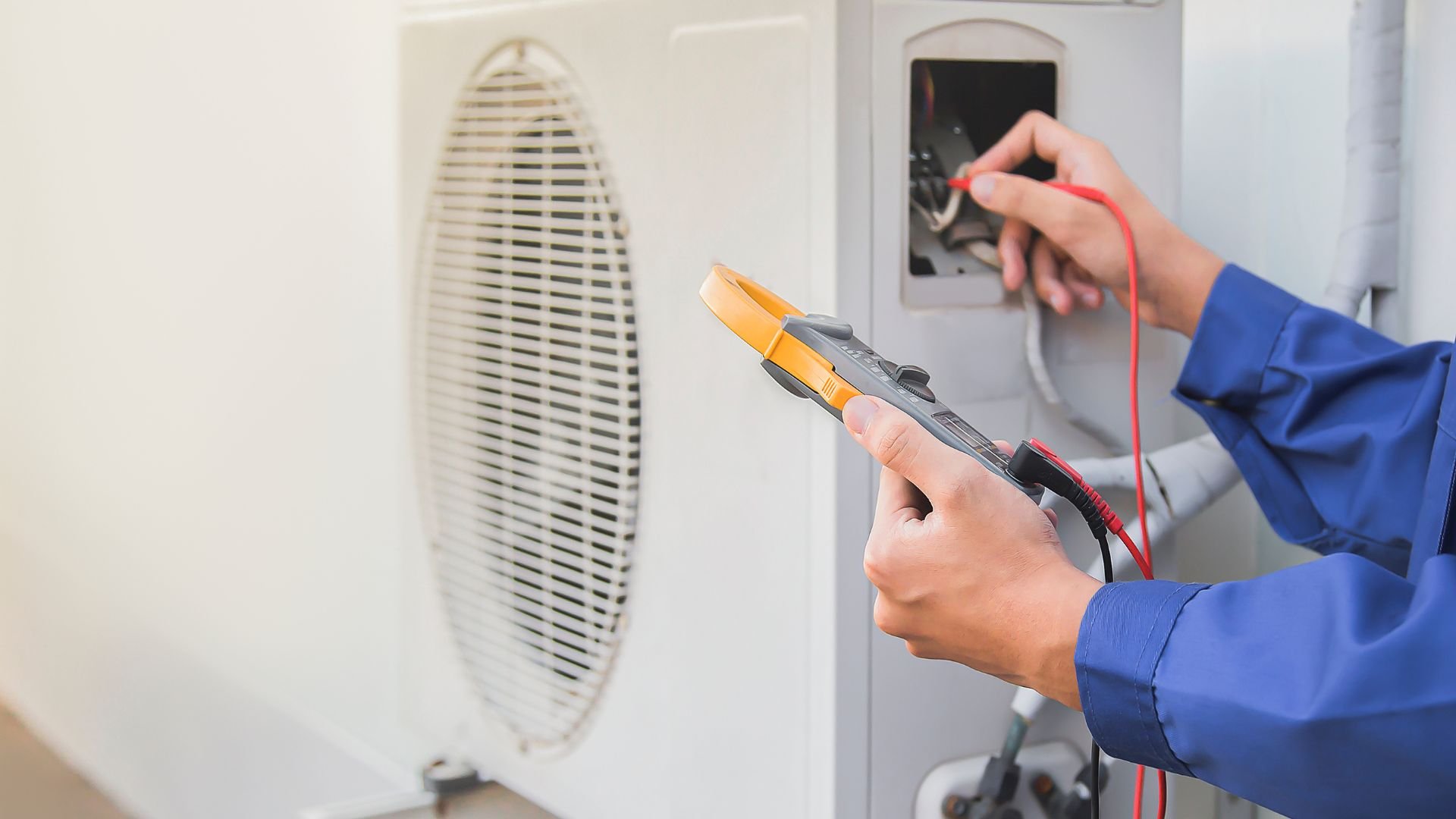
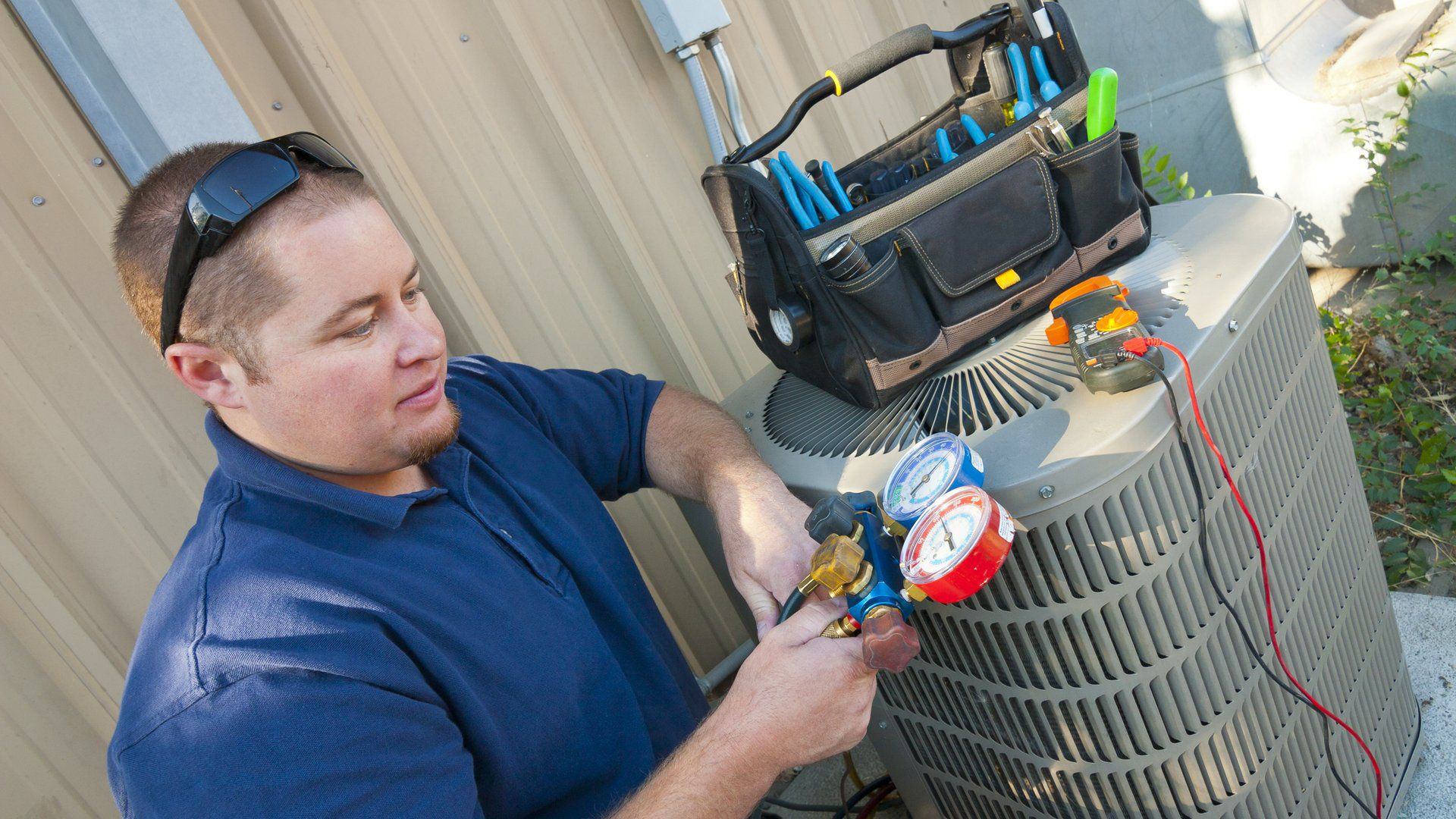
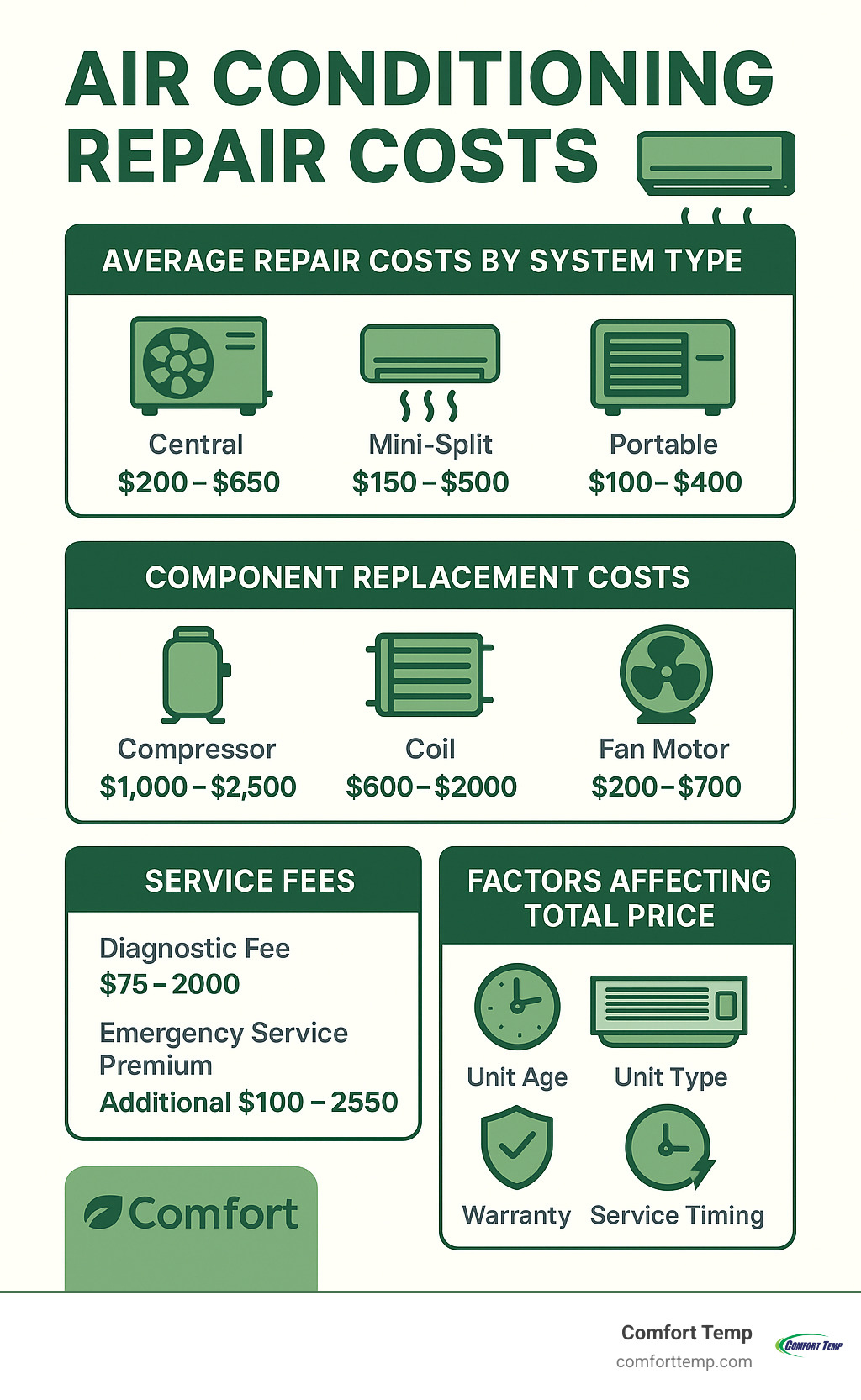
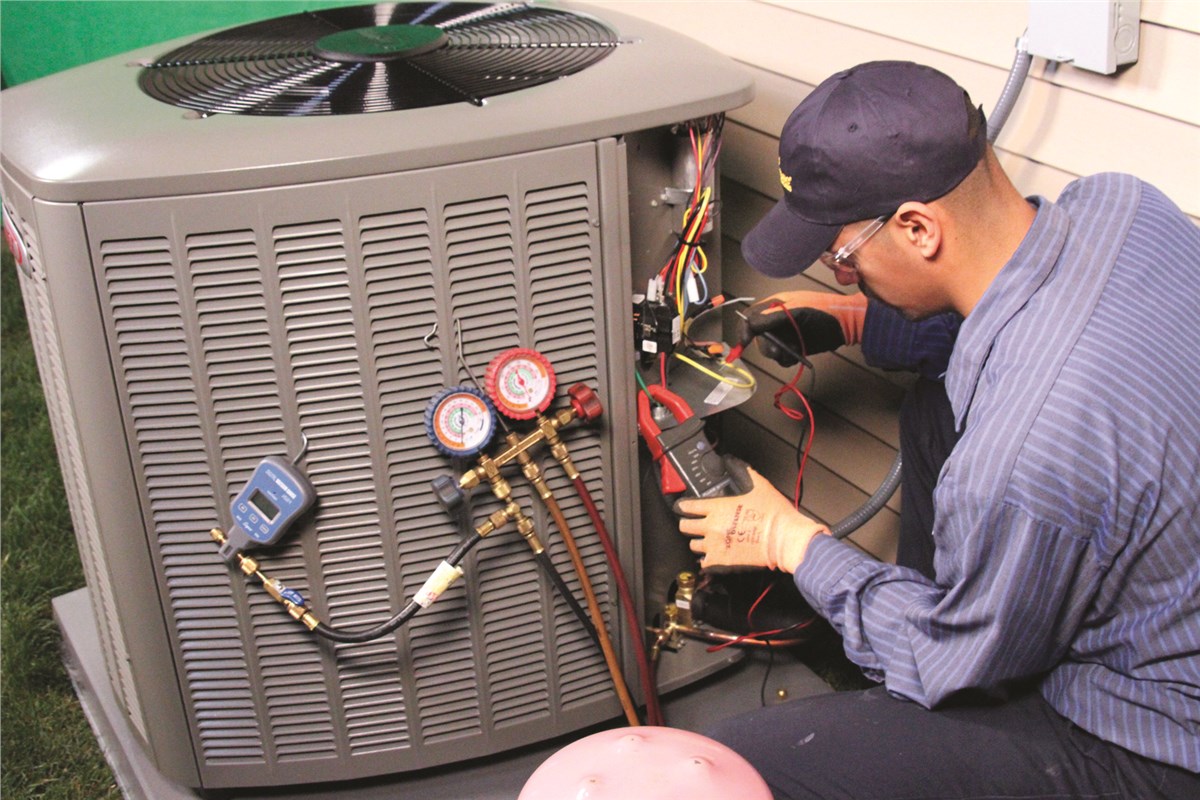
When an HVAC technician arrives at a Charleston home, the initial "diagnostic" or "service call" fee usually covers the travel and the first 30 to 60 minutes of troubleshooting. In 2026, this fee typically falls between $95 and $150. Below is a detailed breakdown of common repair costs for residential systems.
| Repair Category | Estimated Cost (Parts & Labor) | Primary Cause of Failure |
|---|---|---|
| Capacitor Replacement | $200 – $450 | Heat stress, power surges, or age. |
| Contactors/Relays | $150 – $350 | General wear or insect infiltration (ants). |
| Condenser Fan Motor | $500 – $950 | Salt air corrosion or motor burnout. |
| Evaporator Coil Repair | $800 – $1,800 | Pitting from salt air or formicary corrosion. |
| Refrigerant Leak Detection | $300 – $700 | Vibrations or corrosive environmental factors. |
| Refrigerant Recharge (R-410A) | $150 – $400 per lb | Result of an unresolved leak. |
| Refrigerant Recharge (A2L/R-454B) | $100 – $250 per lb | Newer, more stable pricing for 2026 units. |
| Blower Motor Replacement | $600 – $1,400 | Dust buildup or electrical failure. |
| Circuit Board Replacement | $450 – $1,100 | Power surges or humidity-driven shorts. |
| Thermostat Replacement | $200 – $650 | Mechanical failure or smart home upgrades. |
Note: Costs are estimates based on 2026 market trends in the Charleston, SC region. Prices may vary based on specific brand requirements and emergency after-hours rates.
The Technical Shift: Refrigerants and SEER2 Standards
By 2026, the HVAC landscape in South Carolina has undergone a significant transformation. If your system was installed prior to 2023, you are likely using R-410A refrigerant. While still available, the U.S. Environmental Protection Agency (EPA) has phased out the production of new equipment using this refrigerant to reduce global warming potential.
The Cost of R-410A Repairs
As the supply of R-410A tightens, the cost to "recharge" an older system increases. If your Charleston home has a 10-year-old unit with a significant leak, the cost of the refrigerant alone could exceed several hundred dollars. In many cases, technicians will recommend against a simple recharge, as leaks in the coastal environment are often indicative of systemic coil failure.
Transition to A2L Refrigerants
Systems installed since 2025 primarily use A2L refrigerants like R-454B or R-32. These refrigerants are mildly flammable compared to their predecessors, requiring technicians to use specialized, spark-proof tools and sensors. While the refrigerants themselves may be more affordable in 2026 than the dwindling supply of R-410A, the labor involved in servicing these newer systems requires advanced training, which is reflected in the service price.
SEER2 Compliance
The Department of Energy's SEER2 (Seasonal Energy Efficiency Ratio 2) regulations, which became effective in early 2023, changed how efficiency is measured. In Charleston’s hot-humid climate (Region SE), the minimum requirement for split systems is effectively 14.3 SEER2. If a major component like a compressor or coil fails in an older, non-compliant unit, finding a compatible replacement part that meets current efficiency standards can be difficult and expensive.
Major Repairs: The Compressor and the Coil
The two most expensive components to repair are the compressor (the "heart" of the system) and the evaporator/condenser coils (the "lungs").
Compressor Failure
In 2026, replacing a compressor in Charleston costs between $1,800 and $3,500. The compressor is located in the outdoor unit and is responsible for circulating refrigerant. In the Lowcountry, compressors often fail prematurely due to "slugging" (liquid refrigerant entering the compressor) or because the outdoor unit is choked by pine straw, dirt, or salt-corroded fins, causing it to overheat. Given the high cost, if your unit is more than 10 to 12 years old, most experts suggest a full system replacement rather than a compressor swap.
Coil Leaks and Pitting
The evaporator coil (inside) and the condenser coil (outside) are both vulnerable to Charleston’s air. Evaporator coils often suffer from formicary corrosion—tiny, microscopic holes caused by the interaction of moisture and VOCs (volatile organic compounds) found in household cleaners. Condenser coils suffer from salt pitting. Replacing a coil in 2026 generally costs $800 to $2,200. Because the labor involves cutting copper lines, brazing (welding) new joints, and vacuum-sealing the system, it is a time-intensive process.
Considerations When Choosing a Charleston HVAC Contractor
Not all HVAC companies are equipped to handle the specific demands of the South Carolina coast. When evaluating a repair service, consider the following technical and legal requirements.
Licensing and Certification
In South Carolina, HVAC contractors must be licensed by the South Carolina Department of Labor, Licensing and Regulation (LLR). Always verify that the contractor holds a valid Mechanical Contractors license. Furthermore, ensure the specific technician is Section 608 Certified by the EPA to handle refrigerants. In 2026, it is also beneficial to ask if they have specific training in A2L refrigerant safety.
Local Expertise and "Coastal Packages"
Ask the contractor about their experience with coastal-specific issues. Reputable Charleston companies often offer:
- Adsil or Heresite Coatings: Protective layers applied to coils to prevent salt corrosion.
- Elevated Stands: Mounting the outdoor unit higher to protect it from localized flooding or heavy rain splash-back.
- Humidity-Focused Controls: Calibrating thermostats to prioritize dehumidification over simple temperature drops.
Maintenance Agreements
Because of the harsh environment, many Charleston residents utilize annual or bi-annual maintenance agreements. These typically cost $180 to $300 per year and include two inspections (one for cooling, one for heating). These visits are critical for rinsing salt from the condenser coils and ensuring the "P-trap" (the drain line) isn't clogged with algae, which is a leading cause of water damage in Lowcountry attics.
Troubleshooting Before You Call a Professional
Before committing to a service fee, Charleston homeowners can perform several basic checks that often resolve "failure to cool" issues.
- Check the Drain Line: High humidity produces a significant amount of condensate. If the drain line clogs, the safety float switch will trip, cutting power to the AC to prevent a flood. Look for the white PVC pipe near your indoor unit; if the tray is full of water, the line needs clearing.
- Inspect the Air Filter: In the dusty, pollen-heavy Charleston springs, filters can clog in as little as 30 days. A clogged filter restricts airflow, which can cause the evaporator coil to freeze into a block of ice.
- Reset the Breaker: Coastal thunderstorms can cause power surges that trip the HVAC breaker. Check your electrical panel to see if the "AC" or "Air Handler" switches have moved to the middle position.
- Verify Thermostat Batteries: If the screen is blank, it may simply need two AA batteries.
The "Repair vs. Replace" Decision in 2026
The "Rule of 5,000" is a common industry benchmark: multiply the age of the unit by the cost of the repair. If the result exceeds $5,000, replacement is usually the more economical choice. In 2026, this calculation is skewed by two factors:
- Energy Savings: Newer SEER2 systems are significantly cheaper to operate than the 10 SEER units common in Charleston’s older homes. Replacing a 15-year-old unit can often reduce summer electric bills by 30-40%.
- Incentives: The Inflation Reduction Act (and subsequent 2026 extensions) provides federal tax credits (Energy Efficient Home Improvement Credit - 25C) for high-efficiency heat pumps, which are becoming the standard in South Carolina due to their ability to both heat and cool efficiently.
Frequently Asked Questions
Why is my AC freezing up even when it's 95 degrees in Charleston?
An AC unit freezes when the temperature of the evaporator coil drops below freezing, causing the condensation on the coil to turn to ice. In Charleston, this is usually caused by restricted airflow (dirty filters or closed vents) or a refrigerant leak. Even in extreme heat, the system cannot transfer heat effectively if the air isn't moving or if the "medium" (refrigerant) is missing.
How often should I wash my outdoor unit if I live near the beach?
If you live on Sullivan's Island, Folly Beach, or Isle of Palms, it is recommended to gently rinse your outdoor condenser unit with fresh water from a garden hose once a month. This helps remove salt deposits before they can bond with the aluminum fins. Warning: Do not use a pressure washer, as the high pressure will bend the delicate fins and ruin the unit.
Is a "Heat Pump" better than a "Central Air" system for Charleston?
In the 2026 market, most "central air" systems sold in Charleston are actually heat pumps. Because Charleston rarely sees sustained temperatures below freezing, heat pumps are incredibly efficient at providing both cooling and heating. They move heat rather than creating it, which is ideal for the South Carolina climate.
Why is the repair cost higher for my historic downtown home?
Homes in the Charleston Historic District often have "tight" spaces, such as crawlspaces or small attics, which make labor more difficult. Additionally, if the home has older ductwork that doesn't meet modern airflow requirements, a simple repair might not solve the underlying issue without more extensive (and expensive) modifications to the ventilation system.
What is the average lifespan of an AC unit in Charleston?
While the national average is 15-20 years, the harsh coastal environment of Charleston typically reduces this to 10-14 years. Units within a mile of the ocean may only last 7-10 years without proactive maintenance and specialized coatings.
Final Recommendation
When facing air conditioning issues in Charleston, SC, prioritize a technician who understands the interplay between salt, humidity, and efficiency. If your repair quote exceeds $1,000 and the system is more than 10 years old, request a quote for a new SEER2-compliant heat pump. The combination of federal tax credits available in 2026 and the long-term energy savings often makes replacement a more financially sound decision than repairing a failing, corrosive system in the Lowcountry environment.