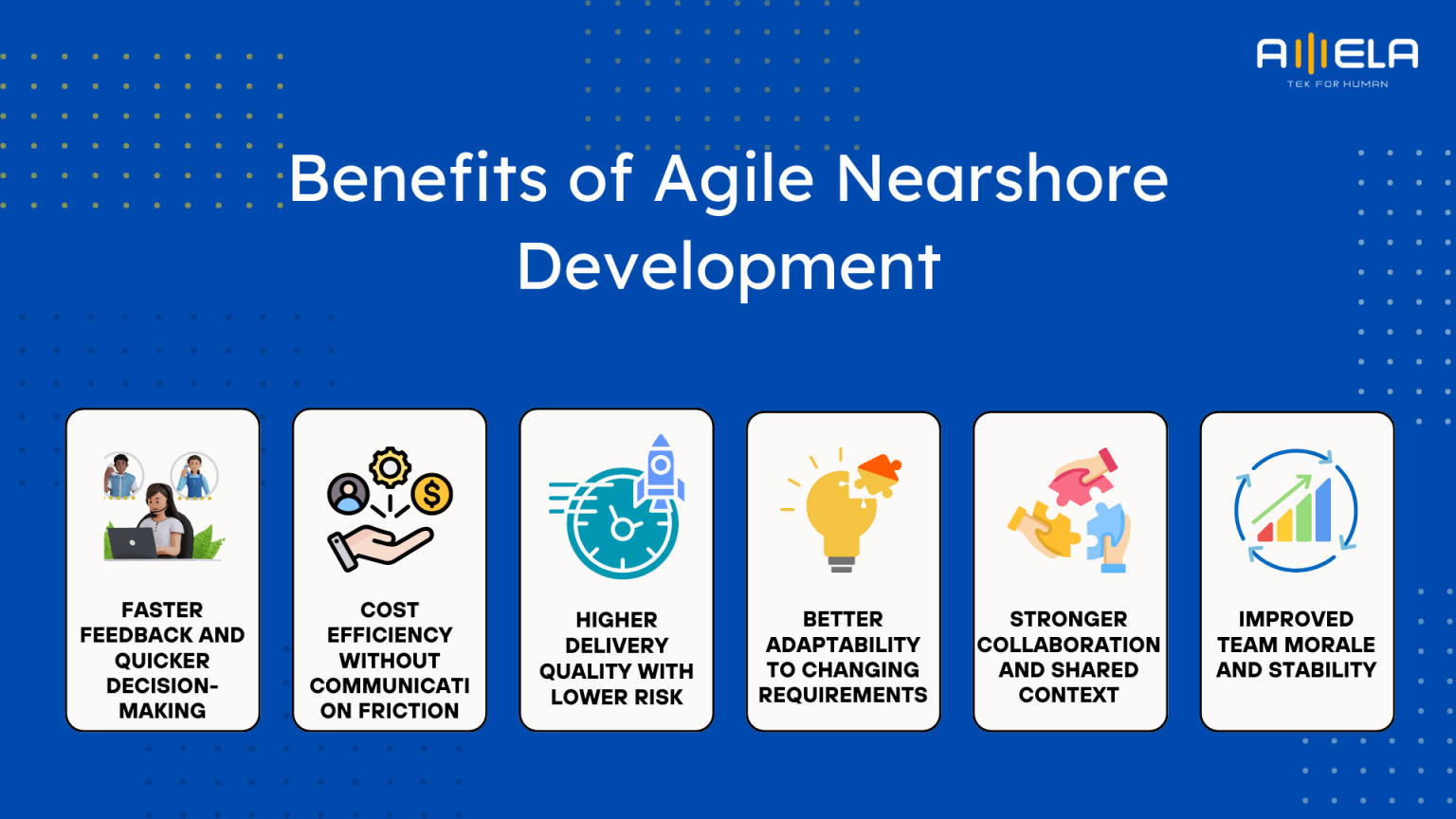
Agile software development offers significant advantages by prioritizing iterative delivery, stakeholder collaboration, and rapid response to change. By breaking complex projects into manageable increments, teams reduce risk and improve product quality. This approach ensures that the final software aligns with evolving market demands and user needs, providing a distinct competitive edge in today's fast-paced digital economy.
Understanding the Shift to Agile Methodologies
The landscape of software engineering has undergone a fundamental transformation over the last few decades. In 2026, the dominance of Agile is no longer a matter of debate but a baseline requirement for any organization aiming for digital resilience. Historically, the "Waterfall" model governed development, relying on a linear, sequential phase-gate process. While Waterfall provided a clear structure, it often failed in environments where requirements were volatile or technological advancements moved faster than the development cycle.
Agile software development emerged as a direct response to these limitations. It is grounded in the Agile Manifesto, which prioritizes individuals and interactions, working software, customer collaboration, and responding to change. In the current 2026 technological ecosystem—characterized by complex AI integrations, distributed cloud architectures, and hyper-personalized user experiences—the flexibility of Agile is more critical than ever.
The advantages of Agile extend beyond simple "speed." They encompass economic efficiency, psychological safety for developers, and a superior alignment between business goals and technical execution. To understand why Agile remains the gold standard, we must examine its impacts across several key dimensions: business value, product quality, team dynamics, and risk management.
1. Accelerated Business Value and Faster Time-to-Market
One of the primary agile software development advantages is the ability to deliver functional software much earlier in the lifecycle. In a traditional model, the business might wait twelve to eighteen months to see a working product. In 2026, a market window can open and close in a fraction of that time.
The Minimum Viable Product (MVP) Strategy
Agile encourages the development of a Minimum Viable Product (MVP). By focusing on the core features that provide the most value, teams can launch a version of the software to actual users early. This generates immediate ROI and provides a stream of real-world data that informs future development. Instead of guessing what users want, businesses use the MVP to validate assumptions and refine the product roadmap based on evidence.
Time-Boxed Iterations
Agile frameworks like Scrum utilize Sprints—fixed periods of time, typically two to four weeks, at the end of which a "Potentially Shippable Product Increment" is produced. This cadence creates a predictable rhythm for the business. Stakeholders know exactly when new features will be ready for review, allowing marketing and sales teams to plan their activities with higher precision. This predictability is a cornerstone of strategic planning in modern enterprise environments.
2. Superior Product Quality Through Continuous Improvement
Quality is often sacrificed in traditional models when deadlines loom. In Agile, quality is not a phase at the end of the project; it is baked into every iteration.
Iterative Testing and Feedback
Because software is developed in small increments, testing occurs simultaneously with development. This "Shift Left" approach means that bugs are identified and remediated days after they are introduced, rather than months later. In 2026, the integration of Automated Testing and Continuous Integration/Continuous Deployment (CI/CD) pipelines has further amplified this advantage. When a developer checks in code, automated suites run thousands of tests to ensure no regressions have occurred.
Technical Debt Management
Agile teams place a high value on maintaining a clean codebase. Through regular Refactoring and the adherence to a strict Definition of Done (DoD), teams prevent the accumulation of "technical debt"—the long-term cost of choosing an easy, messy solution over a better, more sustainable one. By addressing technical debt in every sprint, the software remains maintainable and scalable as it grows in complexity.
3. Enhanced Flexibility and Adaptability
The only constant in modern software development is change. Market shifts, competitor moves, and new regulatory requirements can render a static project plan obsolete overnight.
Pivot with Ease
Agile allows organizations to pivot without the massive sunk costs associated with Waterfall. If a high-priority requirement emerges mid-project, the Product Backlog can be re-prioritized. At the start of the next sprint, the team simply picks up the new most-important task. This responsiveness ensures that the development team is always working on the highest-value items, maximizing the utility of every dollar spent.
Embracing Uncertainty
In 2026, many software projects involve high levels of uncertainty, particularly those involving machine learning models or novel user interfaces. Agile treats this uncertainty as a known factor. Instead of trying to predict the unpredictable at the start of a project, Agile teams use Empiricism—making decisions based on what is actually observed during the development process.
4. Improved Stakeholder Engagement and Transparency
A common failure in software projects is a "disconnect" between the people paying for the software and the people building it. Agile bridges this gap through radical transparency and frequent collaboration.
The Role of the Product Owner
The Product Owner serves as a bridge between the business and the technical team. By being involved in daily activities and backlog grooming, they ensure that the team’s output consistently matches the business vision. This eliminates the "Big Bang" surprise at the end of a project where the client realizes the delivered product isn't what they needed.
Visible Progress
Stakeholders have constant visibility into the project's progress. Sprint Reviews provide a platform for stakeholders to see the working software and provide immediate feedback. Tools like Burndown Charts and Kanban boards offer real-time data on team velocity and potential bottlenecks, replacing opaque status reports with objective, data-driven insights.
5. Increased Team Morale and Productivity
Software development is a creative, intellectual endeavor. Agile recognizes that motivated, autonomous teams produce better work.
Empowerment and Autonomy
Agile teams are typically self-organizing. They are given a goal and the autonomy to decide how best to achieve it. This sense of ownership leads to higher engagement and job satisfaction. In 2026, as the "War for Talent" in the tech sector continues, the cultural advantages of Agile are a key factor in retaining high-performing engineers.
Sustainable Pacing
Agile discourages the "death march" culture of long hours and burnout. By using velocity (the amount of work a team can realistically complete in a sprint) to plan future work, teams maintain a Sustainable Pace. This leads to higher long-term productivity and fewer errors caused by fatigue.
Comparison of Methodologies: Agile vs. Traditional
To better understand the agile software development advantages, it is helpful to compare it directly against the traditional Waterfall approach across several metrics relevant to the 2026 landscape.
| Metric | Agile Methodology | Waterfall Methodology |
|---|---|---|
| Requirements | Evolving; refined throughout the project. | Fixed; defined at the start. |
| Delivery Model | Iterative; multiple functional releases. | Linear; one final release. |
| Risk Profile | Low; risks identified and mitigated early. | High; risks often emerge during integration. |
| User Feedback | Continuous; gathered at the end of every sprint. | Late; gathered only after the final delivery. |
| Quality Control | Integrated; testing is part of development. | Sequential; testing is a separate phase. |
| Change Management | Welcomed; easy to change priorities. | Discouraged; requires formal change requests. |
| Cost Predictability | Variable; focus is on value per sprint. | Fixed; but prone to "scope creep" costs. |
6. Financial and Strategic Risk Mitigation
Agile is essentially a risk-management framework. By delivering in small increments, the financial risk is capped at the cost of a single iteration.
Failing Fast
If a project is fundamentally flawed or a product-market fit cannot be found, an Agile team will discover this within the first few months. This allows the organization to "Fail Fast" and reallocate resources elsewhere, rather than spending millions on a project that was doomed from the start.
Cost Control and ROI
Because Agile focuses on high-value features first, the project often achieves a positive ROI long before the entire backlog is completed. In some cases, a business may decide to stop development early because the software already provides 80% of the value for 20% of the cost. This level of financial control is impossible in rigid, all-or-nothing development models.
Implementing Agile: Key Frameworks and Practices
While "Agile" is a philosophy, it is implemented through specific frameworks. In 2026, the most common frameworks include:
- Scrum: Focused on time-boxed iterations (Sprints) and specific roles like the Scrum Master and Product Owner. It is ideal for complex projects requiring high levels of collaboration.
- Kanban: A flow-based system that visualizes work on a board. It is excellent for operational work or teams that need to respond to a constant stream of incoming requests.
- ScrumBan: A hybrid approach combining the structure of Scrum with the flexibility of Kanban.
- Scaled Agile Framework (SAFe): Designed for large enterprises that need to coordinate multiple Agile teams toward a single strategic goal.
For more information on the foundational principles, the Agile Manifesto remains the definitive source for understanding the core values that drive these advantages. Additionally, the Scrum Guide provides the specific rules for the most popular implementation of Agile.
Common Pitfalls and How to Avoid Them
Despite the clear agile software development advantages, implementation can fail if not approached correctly. The most common mistake is "Agile in name only"—where a team adopts the ceremonies (like daily standups) but maintains a rigid, Waterfall mindset.
- Lack of Stakeholder Commitment: If business leaders do not participate in reviews or provide feedback, the feedback loop breaks.
- Incomplete Testing Automation: Without robust automated testing, the speed of Agile will lead to a mountain of bugs and regressions.
- Scope Creep without Discipline: While Agile welcomes change, it must be balanced by removing lower-priority items to maintain the timeline.
- Neglecting Cultural Change: Agile requires a shift from "command and control" management to "servant leadership."
Frequently Asked Questions
Does Agile mean there is no documentation?
No. While the Agile Manifesto values "working software over comprehensive documentation," it does not advocate for no documentation. Agile teams produce "just-in-time" documentation that is relevant and useful, such as API specifications, user stories, and architectural diagrams, rather than massive upfront requirement documents that quickly become outdated.
Is Agile more expensive than Waterfall?
Initially, Agile might appear more expensive because it requires dedicated involvement from stakeholders and a high-caliber, cross-functional team. However, when considering the cost of rework, the risk of building the wrong product, and the speed of ROI, Agile is generally more cost-effective for complex software projects.
Can Agile work for fixed-price contracts?
Yes, but it requires a shift in how the contract is structured. Instead of fixing the scope, the contract should fix the capacity and quality, allowing the scope to be prioritized based on the business value delivered within the budget.
How does Agile handle large-scale systems?
Agile scales through frameworks like SAFe (Scaled Agile Framework) or LeSS (Large-Scale Scrum). These frameworks provide the coordination necessary to align multiple teams while maintaining the core principles of autonomy and iterative delivery at the local team level.
Is Agile only for software development?
While it originated in software, Agile principles are now applied in marketing, human resources, and even hardware engineering. Any environment characterized by high uncertainty and the need for rapid feedback can benefit from an Agile mindset.
Final Recommendation: Transitioning to Agile
For organizations looking to leverage the advantages of Agile software development in 2026, the transition should be treated as a strategic shift rather than a simple process change. Start by identifying a single, high-impact project to serve as a pilot. Ensure this team has a dedicated Product Owner, a skilled Scrum Master, and the necessary tools for automated testing and CI/CD.
Focus first on the cultural shifts—transparency, trust, and collaboration—before worrying about the perfect execution of ceremonies. As the pilot team demonstrates success through faster delivery and higher quality, use those results to build momentum for a broader organizational rollout. For deeper guidance on professional standards, the Project Management Institute (PMI) offers extensive resources and certifications for Agile practitioners.