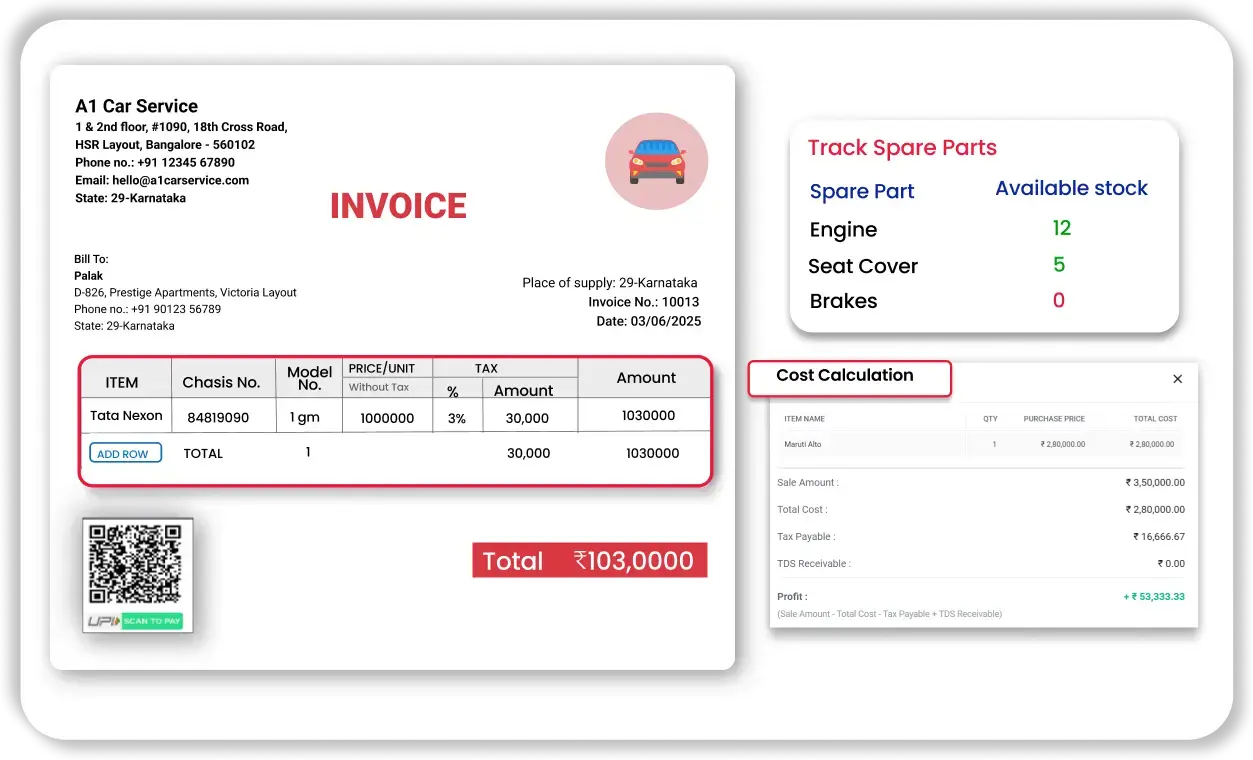
Accounting for auto dealerships requires specialized financial management that accommodates multi-faceted revenue streams, floor plan financing, complex inventory valuation, and rigorous regulatory compliance. Dealership accounting is fundamentally different from standard retail or service business accounting because it handles high-value asset transactions, manufacturer incentives, and diverse department operations including new and used vehicle sales, parts, and service.
Operating an automobile dealership successfully demands a sophisticated approach to tracking capital, managing debt obligations, and maintaining accurate records to satisfy both internal stakeholders and external entities such as franchise manufacturers, floor plan lenders, and tax authorities. Dealership operators must navigate unique financial challenges, including the management of floor plan interest expenses, manufacturer holdbacks, warranty reimbursements, and complex sales tax jurisdictions.
Mastering dealership accounting practices helps protect profit margins, ensures compliance with industry standards, and provides the clear financial transparency required to secure and maintain credit lines from automotive lenders.
The Unique Structure of Dealership Accounting
Unlike traditional businesses that track a straightforward inventory and point-of-sale transaction cycle, an automotive dealership operates as a collection of distinct profit centers under one roof. Each department—new vehicle sales, pre-owned vehicle sales, parts, service, and the finance and insurance (F&I) office—functions with its own revenue models, expense structures, and inventory turnover rates.
To manage these moving parts, the industry relies heavily on standardized reporting formats established by organizations like the National Automobile Dealers Association (NADA). These frameworks ensure consistency across franchises and help management teams analyze financial statements against national benchmarks.
Departmental Revenue and Expense Tracking
A primary objective of dealership accounting is isolating the profitability of each department. Blending these figures obscures inefficiencies and makes it difficult to pinpoint where margins are eroding.
- New Vehicle Department: Generates revenue from direct unit sales, manufacturer incentives, and holdbacks. Expenses include floor plan interest, advertising, and sales commissions.
- Used Vehicle Department: Involves variable acquisition costs via trade-ins, auctions, and private purchases. Reconditioning costs must be accurately captured and added to the vehicle's cost basis.
- Parts Department: Manages high-volume inventory with thousands of distinct SKUs. Accounting must account for obsolescence reserves, scrap, and internal parts transfers to the service and body shop departments.
- Service Department: Operates primarily on labor hours and shop supplies. Key metrics include technician efficiency, effective labor rates, and work-in-process (WIP) tracking for repair orders not yet closed.
- Finance and Insurance (F&I): Generates high-margin income through vehicle financing reserves, extended service contracts, GAP insurance, and credit life products. Chargebacks from early loan payoffs require meticulous reserve accounting.
Managing Floor Plan Financing and Inventory
Vehicle inventory represents the largest asset and the greatest liability on a dealership's balance sheet. Floor plan financing—a specialized revolving line of credit used to purchase vehicle inventory—dictates the cash flow dynamics of virtually every dealership.
How Floor Plan Accounting Works
When a dealership acquires a vehicle, the manufacturer or a commercial lender finances the purchase. This creates a liability known as a floor plan note payable. As each vehicle is sold, the dealership is contractually obligated to pay off the specific floor plan advance associated with that unit, usually within a few days of the transaction.
Accounting for floor plans requires strict reconciliation between the physical inventory, the dealership management system (DMS), and the lender's statements. Key accounting considerations include:
- Interest Expense Allocation: Floor plan interest is a major operating expense. It must be tracked daily and allocated accurately to the specific vehicle or department to determine true gross profit per vehicle retailed (PVR).
- Manufacturer Credits and Incentives: Floor plan assistance (FP A) or interest credits provided by manufacturers offset the cost of carrying inventory. These must be correctly credited against interest expense rather than standard vehicle gross.
- Unit Payoff Deadlines: Missing a payoff deadline after a vehicle is sold triggers penalties and can jeopardize the dealership's credit standing with the floor plan lender.
Dealership Financial Statement Preparation
Dealership financial statements are typically prepared on a monthly basis and must be submitted to the franchise manufacturer (OEM) according to strict deadlines, often within 5 to 10 days following the close of the month.
The Factory Statement vs. The GAAP Financial Statement
Dealerships generally maintain two sets of financial reports, or variations of the same underlying data, tailored to different audiences:
- Manufacturer (Factory) Statements: Formatted according to OEM guidelines, these reports allow manufacturers to evaluate dealership performance, compliance with franchise agreements, and financial stability. They emphasize departmental gross profits, sales volume, and specific operational ratios.
- GAAP/Tax Financial Statements: Prepared in accordance with Generally Accepted Accounting Principles for external stakeholders, tax compliance, and commercial lenders. These statements focus on accurate asset valuation, depreciation schedules, deferred tax liabilities, and true net income.
Core Metrics Monitored in Dealership Accounting
| Metric | Description | Importance |
|---|---|---|
| Gross PVR | Gross Profit Per Vehicle Retailed | Measures the profitability of individual vehicle sales before expenses. |
| Days Supply in Inventory | Average number of days vehicles sit on the lot before selling. | Indicates inventory health and carrying cost exposure from floor plan financing. |
| Effective Labor Rate | Total service labor revenue divided by total billable hours. | Evaluates pricing strategy and labor productivity in the service department. |
| Absorption Rate | The percentage of fixed overhead expenses covered by gross profit from parts, service, and F&I. | A higher rate (approaching 100% or more) means fixed operations cover the dealership's operating costs. |
Internal Controls and Fraud Prevention
Because auto dealerships handle large volumes of cash, high-value assets, and sensitive customer personally identifiable information (PII), robust internal controls are non-negotiable. Segregation of duties is the cornerstone of dealership fraud prevention.
High-Risk Areas Requiring Strict Oversight
- Cash and Check Handling: Cashiers, cash receipts, and daily bank deposits must be reconciled independently by someone who does not have access to accounts receivable ledger adjustments.
- Deal Jacket Audits: Every vehicle sale generates a "deal jacket" containing the contract, title work, odometer statement, and financing details. Independent audits verify that all transactions are recorded accurately and that customer payoffs are remitted promptly.
- Parts Inventory Adjustments: Unchecked write-offs or adjustments to parts inventory can mask theft or shrinkage. Physical inventory counts should be conducted regularly by third-party auditors or unbiased internal staff.
- Payroll and Commissions: Sales commissions, especially in F&I and vehicle sales, can be complex. Independent verification of commission calculations prevents overpayments and fraudulent claims.
Tax Considerations for Auto Dealerships
Automotive accounting involves complex tax nuances at the federal, state, and local levels. Managing these liabilities requires proactive planning and adherence to industry-specific tax rules.
LIFO Inventory Valuation
Many dealerships utilize the Last-In, First-Out (LIFO) method for valuing vehicle and parts inventory. During periods of inflation, LIFO allows dealerships to match current, higher-cost inventory against current revenues, thereby reducing taxable income. Calculating LIFO reserves requires specialized software and adherence to IRS conformity requirements, making CPA expertise essential.
Sales and Use Tax Compliance
Dealerships collect and remit significant amounts of sales tax. Rules vary substantially by jurisdiction regarding trade-ins, manufacturer rebates, doc fees, and out-of-state sales. Failing to collect the correct tax or maintaining improper documentation for exempt sales can result in severe state tax audits and penalties.
Franchise and Blue Sky Valuations
When buying or selling a dealership, the transaction involves tangible assets (real estate, equipment, parts inventory) and intangible assets, commonly referred to as "Blue Sky"—the value of the franchise agreement and market goodwill. Proper accounting and tax allocation for Blue Sky are critical for compliance with IRS Section 197 and for structuring buy-sell agreements correctly.
Choosing the Right Dealership Management System (DMS) and Accounting Software
General-purpose accounting software like QuickBooks is rarely sufficient for a franchise or large independent auto dealership. Dealerships require industry-specific software integration that connects sales, service, parts, and accounting in real time.
Key Features Required in Dealership Software
- Integrated DMS: Platforms such as CDK Global, Reynolds and Reynolds, Dealertrack, and AutoSoft integrate front-end operations with back-end general ledgers.
- Schedule Reconciliations: Automated tools to reconcile clearing accounts, such as bank contracts in transit and factory holdbacks.
- CRM and F&I Integration: Seamless data flow from customer relationship management and financing platforms directly into accounting journals.
Common Accounting Mistakes to Avoid
- Delayed Deal Jacket Processing: Waiting days or weeks to post completed vehicle sales distorts month-end figures and delays floor plan payoffs.
- Neglecting Work-in-Process (WIP) Reviews: Failing to regularly review open repair orders leads to unbilled labor and parts, skewing monthly revenue recognition.
- Inadequate Reserve for Chargebacks: Failing to maintain a reserve account for F&I product chargebacks can result in sudden, unexpected cash flow crunches when customers cancel financing or warranties.
- Mixing Personal and Business Expenses: Particularly in independent pre-owned dealerships, commingling funds compromises financial reporting and invites IRS scrutiny.
Frequently Asked Questions
What is floor plan financing in auto dealership accounting?
Floor plan financing is a revolving line of credit used by dealerships to purchase vehicle inventory from manufacturers or auctions. In accounting, it is recorded as a liability (notes payable) and must be paid off immediately when the specific vehicle is sold. The interest accrued on these loans is a major operating expense tracked daily.
Why do dealerships use specialized accounting software instead of standard programs?
Dealerships operate multiple distinct departments—new sales, used sales, parts, service, and F&I—each with unique inventory valuation methods, regulatory requirements, and revenue cycles. Standard accounting software cannot handle complex automotive-specific functions like floor plan schedules, manufacturer incentives, and integrated DMS data feeds.
What is the dealership absorption rate and why does it matter?
The absorption rate measures the percentage of a dealership's total fixed overhead expenses (such as rent, utilities, and administrative salaries) that are covered by the combined gross profits of the parts, service, and F&I departments. A healthy absorption rate (typically 80% to 100% or higher) means the dealership can cover its fixed costs even if vehicle sales fluctuate due to market conditions.
How are manufacturer holdbacks accounted for?
Manufacturer holdbacks are amounts withheld by the manufacturer and paid back to the dealership at a later date, usually quarterly or annually, as an incentive for selling vehicles. In accounting, holdbacks are typically tracked as a receivable and credited to gross profit or offset against vehicle cost when earned according to manufacturer terms.
How often should a dealership reconcile its vehicle inventory?
Dealerships should perform physical inventory counts and reconcile physical lots against the general ledger and floor plan lender statements at least monthly. Frequent reconciliations prevent discrepancies, catch missing units immediately, and ensure accurate floor plan interest reporting.
Conclusion and Next Actions
Effective accounting for auto dealerships is the backbone of long-term profitability, risk management, and regulatory compliance. Dealership operators should prioritize establishing rigorous internal controls, ensuring timely monthly financial statement preparation, and utilizing industry-specific DMS software. To optimize financial performance, management teams should partner with certified public accountants (CPAs) or specialized financial advisory firms that possess deep expertise in automotive retail, taxation, and floor plan management.