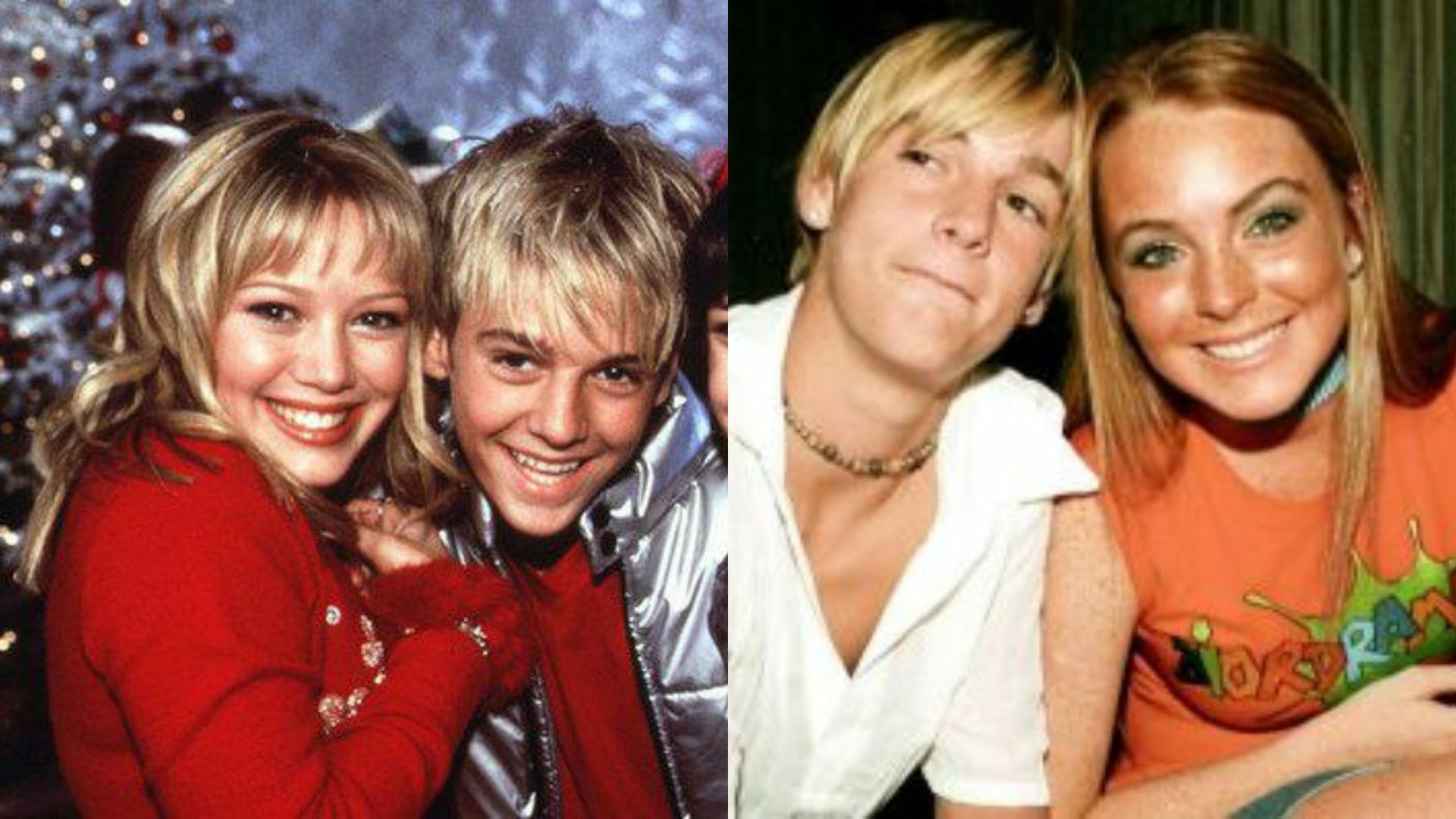
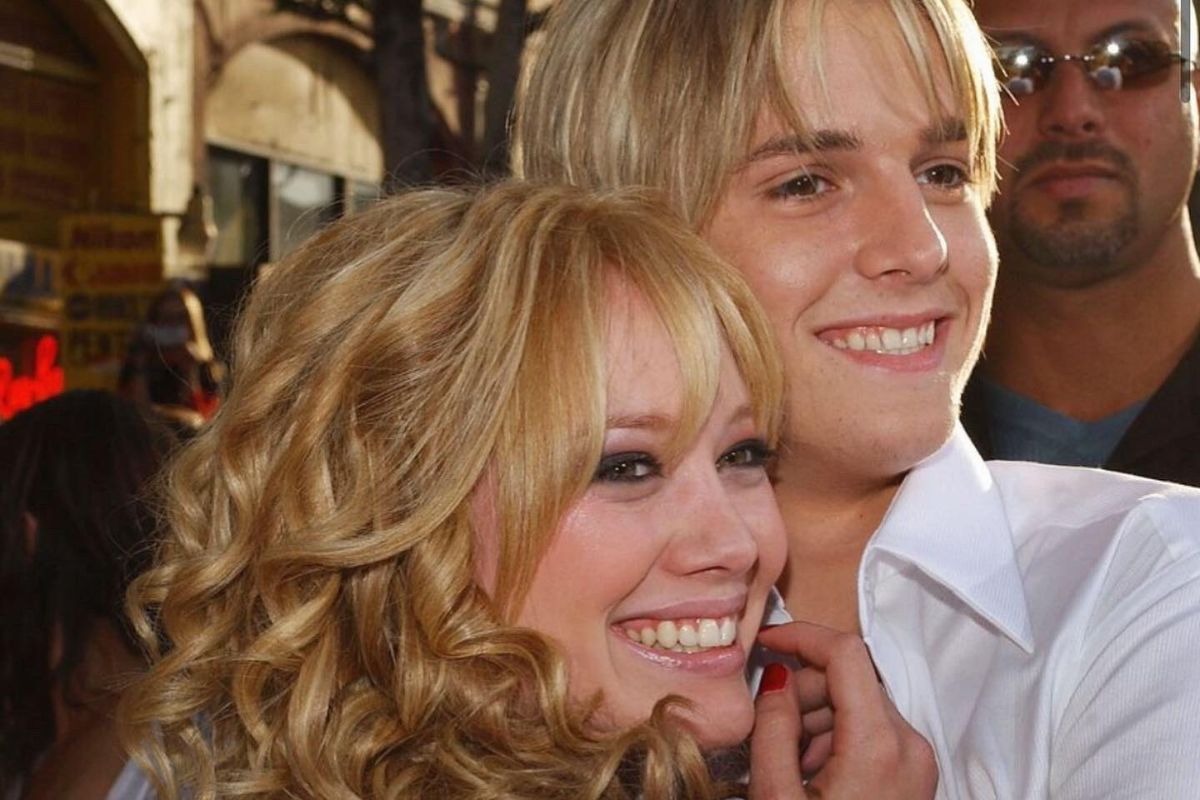
The high-profile love triangle between Aaron Carter, Hilary Duff, and Lindsay Lohan defines the peak of early 2000s teen idol culture. Initiated in 2002 when Carter began dating Lohan while still involved with Duff, the conflict fueled years of tabloid headlines, red-carpet confrontations, and a defining era of "Team Hilary" versus "Team Lindsay" pop culture discourse.
The Genesis of the Teen Idol Era
To understand the friction between Aaron Carter, Hilary Duff, and Lindsay Lohan, one must look at the specific media landscape of the early 2000s. This was an era before social media, where teen magazines like J-14, Tiger Beat, and Bop dictated the narratives of young stardom. In 2001, Aaron Carter was the reigning "Prince of Pop" for the pre-teen demographic, while Hilary Duff was the face of Disney Channel’s massive hit, Lizzie McGuire.
The two began dating on Duff’s 13th birthday in 2001. Their relationship was viewed as the ultimate Hollywood "puppy love" success story. For nearly two years, they were the industry’s "it" couple, appearing in music videos together—most notably Carter’s guest appearance on Lizzie McGuire in the episode "Here Comes Aaron Carter." However, the stability of this relationship began to fracture as Carter’s fame grew and the pressures of teen superstardom intensified.
The Intersection: Enter Lindsay Lohan
The conflict began in earnest in late 2002. While still sporadically linked to Hilary Duff, Aaron Carter began dating Lindsay Lohan, who was then a rising star following her success in The Parent Trap and was preparing for her breakout roles in Freaky Friday and Mean Girls.
In a 2005 interview with Donny Deutsch on The Big Idea, Carter candidly admitted his role in the drama. He stated that he began dating Duff but "got a little bored" and proceeded to "get to know" Lindsay Lohan. This admission solidified the timeline: Carter had essentially "double-dated" the two stars, alternating his attention between them and creating a rift that would last for years.
The Overlap and the Fallout
The overlap was not just a private matter; it became a public spectacle. The media capitalized on the perceived rivalry between the "Disney Girl" (Duff) and the "Cool Girl" (Lohan).
- Late 2002: Carter begins seeing Lohan while Duff believes they are still together or in the process of reconciling.
- Early 2003: The relationship with Lohan becomes official in the eyes of the tabloids, leading to a public falling out between the two young actresses.
- Late 2003: Carter attempts to reconcile with Duff, leading to further confusion and animosity from Lohan.
By the time the Cheaper by the Dozen premiere arrived in December 2003, the tension was palpable. Hilary Duff, the star of the film, was famously "snubbed" by Lohan, who reportedly showed up to the event uninvited or made her presence known in a way that the media interpreted as a direct challenge.
The 2003–2005 Feud and Media Frenzy
The mid-2000s were characterized by "feud culture." The dispute between Lohan and Duff was one of the first major examples of the "celebrity versus celebrity" narrative that would later dominate the social media age.
The SNL Incident
In 2004, Lindsay Lohan hosted Saturday Night Live. During her monologue and various sketches, there were perceived jabs at the teen-pop landscape. While not always naming names, the public and the press were quick to link any disparaging remark to Duff. At this point, the two women were no longer just arguing over a boy; they were competing for the same roles, the same magazine covers, and the same radio airplay.
Aaron Carter’s Public Reflections
Aaron Carter’s role in the feud shifted over time from the center of affection to a figure of regret. Throughout the 2010s, Carter frequently expressed his remorse for how he treated Duff. He famously took to Twitter (now X) in 2014, declaring that he would spend the rest of his life trying to get back to her. While Duff had long since moved on—marrying, having children, and establishing a successful adult career—Carter’s inability to let go of their 2002-era romance became a recurring theme in his public life until his passing in 2022.
Comparative Overview of the Three Stars (2000–2026)
The following table outlines the career trajectories and major milestones of the three individuals involved in this historic pop culture moment, reflecting their status as of 2026.
| Feature | Aaron Carter | Hilary Duff | Lindsay Lohan |
|---|---|---|---|
| Peak Early Era Project | Oh Aaron (Album) | Lizzie McGuire (TV) | Mean Girls (Film) |
| Nature of Involvement | The shared romantic interest | The initial girlfriend | The "other" woman |
| Public Resolution | Expressed lifelong regret | Moved on by 2007 | Reconciled with Duff in 2021 |
| 2026 Status | Deceased (2022) | Established Author & Producer | Career Resurgence & Entrepreneur |
| Legacy Contribution | Pop icon of the Y2K era | Definer of the "Wholesome" Disney Brand | Icon of the "Brat Pack" of the 2000s |
The Cultural Impact of the Love Triangle
The Carter-Duff-Lohan triangle was more than just a teenage disagreement; it was a blueprint for how the industry marketed young female celebrities. It established the "good girl vs. bad girl" trope that persisted for over a decade. Duff was marketed as the girl-next-door, while Lohan was increasingly portrayed as the rebellious starlet.
The Role of Paparazzi Culture
This feud coincided with the rise of aggressive paparazzi agencies like X17 and TMZ. For the first time, these stars were being followed 24/7. Every time Carter was seen with one girl, the other was immediately sought out for a reaction. This constant surveillance amplified the drama, making it impossible for any of the three parties to move on privately.
The Shift to Empowerment
By the late 2010s, the narrative began to change. As the public grew more aware of the mental health struggles faced by child stars and the misogyny inherent in "catfights," the focus shifted from the feud to the reconciliation. Both Duff and Lohan eventually spoke about the absurdity of their past rivalry, blaming their youth and the intense pressure of the industry rather than each other.
Long-term Consequences and the 2022 Tragedy
The story of this triangle took a somber turn with the passing of Aaron Carter in November 2022. His death at the age of 34 brought a definitive and tragic end to any hopes of a final, private three-way reconciliation.
Hilary Duff’s tribute to Carter was widely praised for its grace. She wrote, "I'm deeply sorry that life was so hard for you and that you had to struggle in-front of the whole world... Boy did my teenage self love you deeply." This statement effectively closed the chapter on the "feud" for the public, reframing the early 2000s as a time of genuine connection despite the tabloid noise.
Lindsay Lohan also expressed her condolences, noting that they had many memories from their youth. In 2026, looking back, the feud is viewed less as a battle and more as a symptom of a systemic culture that pitted young women against each other for the benefit of entertainment news cycles.
Frequently Asked Questions
Did Hilary Duff and Lindsay Lohan ever officially make up?
Yes. Over the years, both women have made supportive comments about each other. By the 2020s, they had both matured and publicly moved past their teenage rivalry. In interviews, Lindsay Lohan has mentioned that the "feud" was largely a product of being young and in the public eye.
When did Aaron Carter date Lindsay Lohan?
Aaron Carter dated Lindsay Lohan primarily between late 2002 and early 2003. This occurred shortly after or during his initial breakup with Hilary Duff, leading to the infamous "overlap" that sparked the celebrity feud.
What was the "Cheaper by the Dozen" premiere incident?
In December 2003, at the premiere of Hilary Duff’s movie Cheaper by the Dozen, Lindsay Lohan appeared on the red carpet. Given the tension over Aaron Carter, the media portrayed this as Lohan "crashing" Duff’s big night, which significantly escalated the public's perception of their rivalry.
How did Aaron Carter feel about the drama in his later years?
In his later years, Aaron Carter was very vocal about his regrets. He frequently cited Hilary Duff as "the love of his life" and expressed deep remorse for the way he handled his relationships in the early 2000s. He often blamed his youth and the lack of guidance during his peak fame.
Why was this love triangle so famous compared to others?
It was famous because it involved the three biggest teen stars of the moment. Hilary Duff and Lindsay Lohan were the "queens" of the teen movie industry, and Aaron Carter was the top male solo artist for that demographic. The combination of Disney fame and pop music success created a "perfect storm" for tabloid coverage.
What happened to the "feud" after 2005?
By 2005, the feud began to fizzle out as the stars moved into different phases of their careers. Hilary Duff focused on her music and adult acting roles, while Lindsay Lohan transitioned into more mature (and often more controversial) film roles. While the media occasionally brought it up, the stars themselves had mostly stopped interacting by 2007.
Practical Recommendation for Pop Culture Historians
For those researching the evolution of celebrity media or the psychological impact of child stardom, the Aaron Carter, Hilary Duff, and Lindsay Lohan triangle serves as a primary case study. It is recommended to view this event through the lens of pre-social media tabloid dynamics.
When analyzing this era, look for original interviews from the 2003–2005 period to see how journalists often "baited" the stars into disparaging one another. Understanding this context is essential for recognizing how modern celebrity management has evolved to prevent similar public relations disasters. Additionally, the 2022 tributes provide a necessary "full-circle" perspective on how time and maturity eventually overshadow teenage conflict.