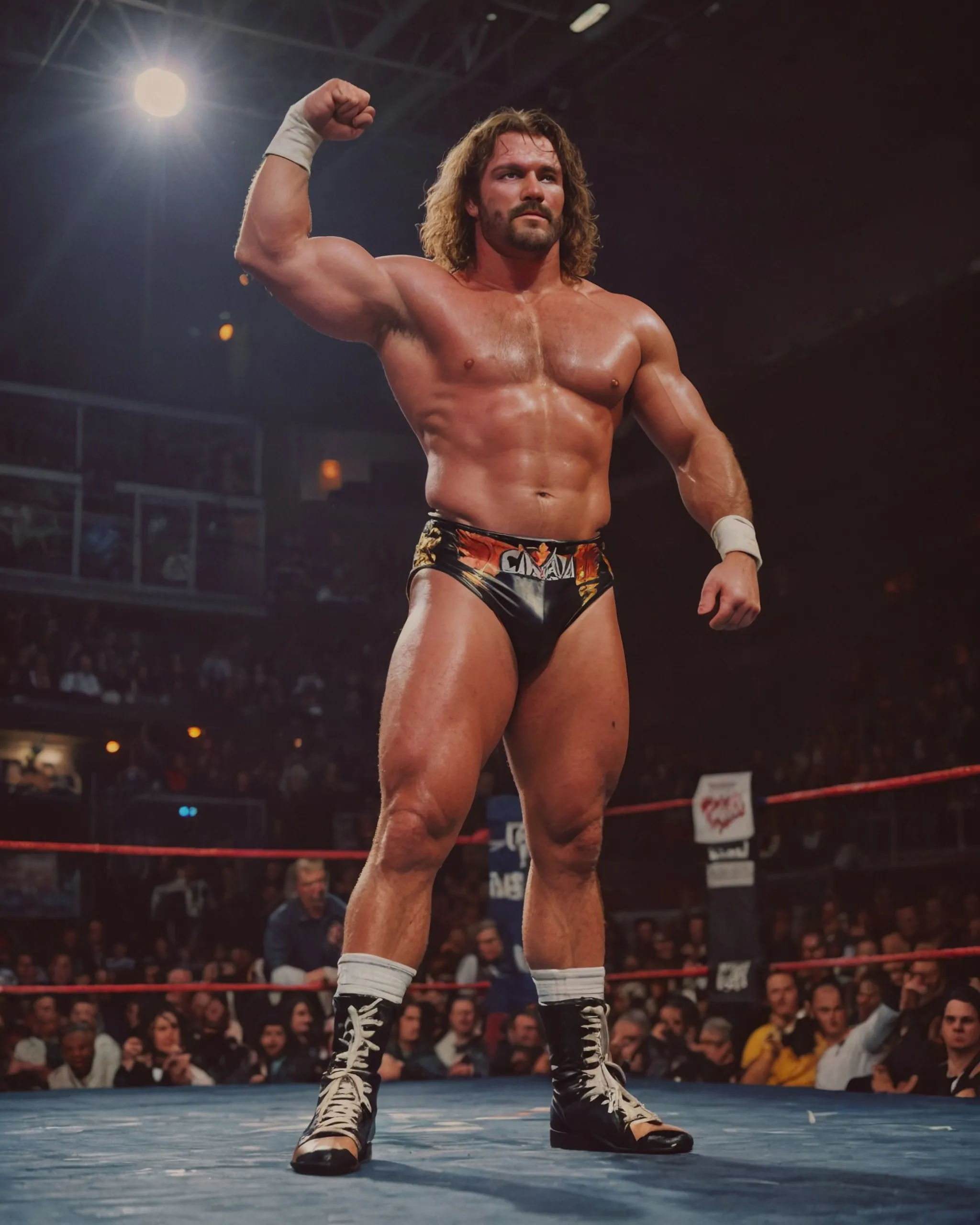
The 1990s represent the most influential decade in professional wrestling, marked by the fierce rivalry between the WWF and WCW. This era birthed global icons like Stone Cold Steve Austin and The Rock while revolutionizing storytelling through the nWo and the Attitude Era, forever changing the industry’s cultural and financial trajectory.
The professional wrestling landscape of the 1990s was a decade of two distinct halves. It began as a colorful, almost caricatured extension of the 1980s "Rock 'n' Wrestling" era and ended as a gritty, boundary-pushing cultural phenomenon that dominated cable television ratings. For fans and historians looking back from 2026, the 90s remain the benchmark for star power, creative volatility, and the "Monday Night Wars"—a period where the World Wrestling Federation (WWF, now WWE) and World Championship Wrestling (WCW) battled weekly for viewership supremacy.
The Early 1990s: Transition and the New Generation
The decade opened with the industry in a state of flux. The massive success of the 1980s, driven by Hulk Hogan’s mainstream appeal, was beginning to wane. By 1992 and 1993, the WWF faced federal investigations and a changing public appetite. This forced a transition from the "bodybuilder" physique to smaller, more technically proficient athletes.
The Rise of Bret "Hitman" Hart and Shawn Michaels
Bret Hart and Shawn Michaels were the foundational pillars of what the WWF dubbed "The New Generation." Hart brought a level of technical realism and international appeal that the company desperately needed. His matches were clinics in storytelling and psychological depth, moving away from the simple power-move sets of the previous decade.
Shawn Michaels, conversely, introduced a high-flying, charismatic, and often controversial edge. As the leader of "The Kliq," a backstage group of influential friends, Michaels pushed the limits of what a "bad boy" character could do in the ring. Their rivalry, both on-screen and off-screen, culminated in the infamous Montreal Screwjob at Survivor Series 1997—an event that blurred the lines between scripted entertainment and reality so thoroughly that its echoes are still felt in the industry today.
The WCW Identity Crisis
While the WWF was pivoting to youth, WCW was struggling to find its footing under various management regimes. Early 90s WCW featured incredible talent like Sting, Lex Luger, and a young "Stunning" Steve Austin, but it lacked the cohesive production value of its rival. It wasn't until the mid-90s, when Eric Bischoff took the reins, that WCW began to aggressively poach WWF talent, setting the stage for the most explosive period in wrestling history.
The Monday Night Wars: A Battle for the Soul of Wrestling
Starting in September 1995, WCW launched Monday Nitro to compete directly with WWF's Monday Night Raw. This "Monday Night War" forced both companies to innovate at a breakneck pace. No longer could stories be told over months of taped squash matches; every week required a "must-see" moment.
The nWo and the Heel Turn of Hulk Hogan
The single most important moment for WCW occurred at Bash at the Beach 1996. Hulk Hogan, the ultimate hero of the 80s, shocked the world by turning "heel" (a villain) and joining Kevin Nash and Scott Hall to form the New World Order (nWo). This faction didn't just play villains; they acted like "cool" outsiders taking over the company. The nWo made wrestling fashionable for teenagers and young adults, leading WCW to dominate the ratings for 83 consecutive weeks.
The Birth of the Attitude Era
Facing potential bankruptcy, Vince McMahon and the WWF responded with the "Attitude Era." This shift moved away from "Good Guys vs. Bad Guys" toward morally ambiguous characters, mature themes, and unpredictable "crash TV" segments. The central figure of this movement was Stone Cold Steve Austin.
Austin’s "Rattlesnake" persona—an anti-authority, beer-drinking Texan who frequently attacked his boss, Mr. McMahon—struck a chord with the blue-collar workforce of the late 90s. This storyline is widely considered the greatest rivalry in pro wrestling history because it tapped into the universal fantasy of standing up to a corporate superior.
Key Icons of the 1990s
To understand the 90s, one must analyze the specific wrestlers who defined the era's aesthetic and success. Each brought a unique element to the table that expanded the industry's reach.
| Wrestler | Primary Promotion | Key Characteristic | Iconic Finisher | Legacy Impact |
|---|---|---|---|---|
| Stone Cold Steve Austin | WWF | Anti-authority rebel | Stone Cold Stunner | Highest merchandise seller in history. |
| The Rock | WWF | High charisma / "The People's Champ" | Rock Bottom / People's Elbow | Successfully transitioned to Hollywood. |
| Hulk Hogan | WCW (90s) | Leader of the nWo | Leg Drop | Redefined the "heel" archetype for a new age. |
| Sting | WCW | The "Crow" / Silent vigilante | Scorpion Deathlock | The face of the WCW resistance against nWo. |
| The Undertaker | WWF | Supernatural / The Deadman | Tombstone Piledriver | Provided the locker room leadership and longevity. |
| Goldberg | WCW | Raw power / The Streak | Jackhammer | Proved that a simple "destroyer" gimmick could work. |
| Mick Foley | WWF | Extreme / Multi-persona | Mandible Claw | Proved that unconventional looks could main-event. |
The Rock: The Great One
Dwayne "The Rock" Johnson entered the 90s as Rocky Maivia, a generic hero who was initially rejected by the fans. By 1998, he reinvented himself as "The Brahma Bull," a narcissistic yet incredibly charismatic orator. His ability to control a crowd with a microphone was unprecedented. The Rock and Steve Austin’s dual dominance in the late 90s provided the WWF with a "1A and 1B" star power that WCW could not match.
Sting: The Icon of WCW
While the nWo was the driving force of WCW, Sting was its heart. In 1996, he transformed from a neon-clad "surfer" into a brooding, face-painted figure inspired by The Crow. He spent a year in the rafters of arenas, silent and mysterious, before finally facing Hogan at Starrcade 1997. This slow-burn storytelling was a hallmark of the decade's creative peaks.
The Technical Revolution and the Cruiserweights
While the main events featured heavyweights and brawlers, the undercards of 90s wrestling—specifically in WCW and the Philadelphia-based Extreme Championship Wrestling (ECW)—were revolutionizing the actual "work-rate" of the sport.
The Mexican and Japanese Influence
WCW’s Cruiserweight division, led by talents like Rey Mysterio Jr., Eddie Guerrero, Dean Malenko, and Chris Jericho, introduced American audiences to "Lucha Libre" and "Strong Style." These matches were faster, more athletic, and technically superior to the main events. Rey Mysterio, in particular, changed the perception of what a "small" wrestler could achieve, paving the way for future stars like AJ Styles and Seth Rollins.
The ECW Factor
ECW, run by Paul Heyman, was the "underground" laboratory of the 90s. It emphasized "hardcore" wrestling (barbed wire, tables, and chairs) but also featured incredible technical matches. Many 90s stars, including Mick Foley (Cactus Jack), Steve Austin, and the nWo’s core members, spent time in ECW or were heavily influenced by its "us against the world" mentality. The WWF and WCW eventually poached ECW’s best ideas and talent to fuel their own growth.
The Decline of WCW and the End of an Era
As the decade drew to a close, the momentum shifted decisively back to the WWF. Internal politics, creative stagnation, and a failure to build new stars (with the exception of Goldberg) began to rot WCW from within. While the WWF was creating stars like Triple H and Kurt Angle, WCW relied heavily on aging stars from the 80s.
In March 2001, the 90s era effectively ended when Vince McMahon purchased WCW. The "war" was over, leaving a monopoly that would last for nearly two decades. However, the 90s remains the most scrutinized and beloved decade because it was the last time wrestling felt truly unpredictable and culturally essential.
Legacy and Perspective in 2026
Standing in 2026, the influence of 90s pro wrestlers is more visible than ever. Most of the icons from that era are now in their late 50s or 70s. While some have unfortunately passed away due to the physical toll of the business, those who remain serve as the "Elder Statesmen" of the industry.
- The Hall of Fame Culture: The WWE Hall of Fame is now dominated by 90s legends, with induction ceremonies serving as the primary way modern fans connect with these icons.
- Streaming and Archives: The availability of the entire 90s library on streaming services (like Peacock/WWE Network) has allowed a new generation of fans to experience the Monday Night Wars in chronological order, maintaining the relevance of stars like Stone Cold and The Rock.
- The Business Model: The 90s taught the industry that "characters" matter more than "moves." Modern wrestling in 2026 continues to struggle with the balance between the high-flying athleticism of the cruiserweights and the larger-than-life personas of the Attitude Era.
Frequently Asked Questions
Who was the highest-paid wrestler in the 90s?
During the height of the Monday Night Wars, Hulk Hogan and Kevin Nash were among the highest earners due to their "favored nations" clauses in WCW, which guaranteed they would be paid as much as any other top star the company signed. In the WWF, Stone Cold Steve Austin and The Rock eventually reached similar heights through massive merchandise royalties and pay-per-view bonuses.
Why was the 90s called the "Attitude Era"?
The term was a marketing brand created by the WWF to describe their shift toward more "edgy" content. It officially began around late 1997 and lasted until early 2001. The era was defined by a move away from PG-rated family entertainment toward TV-14 content featuring swearing, violence, and provocative storylines.
What happened to WCW's wrestlers after the 90s?
When the WWF bought WCW in 2001, many top stars like Goldberg, Hulk Hogan, and Sting had "guaranteed contracts" with WCW's parent company, AOL Time Warner. They chose to sit home and collect their salaries rather than join the WWF immediately. Most eventually made their way to WWE in the mid-2000s, but the initial "Invasion" storyline was seen by many as a missed opportunity.
How did the "Montreal Screwjob" change wrestling?
The event, where Vince McMahon legitimately manipulated the outcome of a match to take the title from Bret Hart, effectively "killed" the secret of Kayfabe (the illusion that wrestling is real). It also led to the creation of the "Mr. McMahon" character—the evil billionaire boss—which became the perfect foil for Stone Cold Steve Austin and catalyzed the WWF's ratings comeback.
Which 90s wrestler had the best technical skills?
While subjective, most historians and peers cite Bret "The Hitman" Hart and Kurt Angle (who debuted in late 1999) as the pinnacle of technical wrestling. Bret Hart was famously nicknamed "The Excellence of Execution" for his ability to make every movement look realistic and safe for his opponent.
Are any 90s pro wrestlers still active in 2026?
By 2026, very few wrestlers who were stars in the 90s remain active in the ring. Most have transitioned to ambassador roles, podcasting, or Hollywood. However, occasional "Legends" matches occur, and some stars like Chris Jericho or Dustin Rhodes (Goldust) showed remarkable longevity well into the 2020s, proving that the training and psychology of the 90s era were built to last.
Practical Recommendation for Fans
For those looking to relive the 90s era in 2026, the best approach is a "dual-timeline" watch. Start with the debut of Monday Nitro in September 1995 and watch both Raw and Nitro episodes in chronological order. This provides the necessary context to understand how each company reacted to the other's successes and failures. Focus specifically on the period from King of the Ring 1996 (the birth of "Austin 3:16") through WrestleMania X-Seven, which is widely regarded as the creative and commercial peak of the industry.