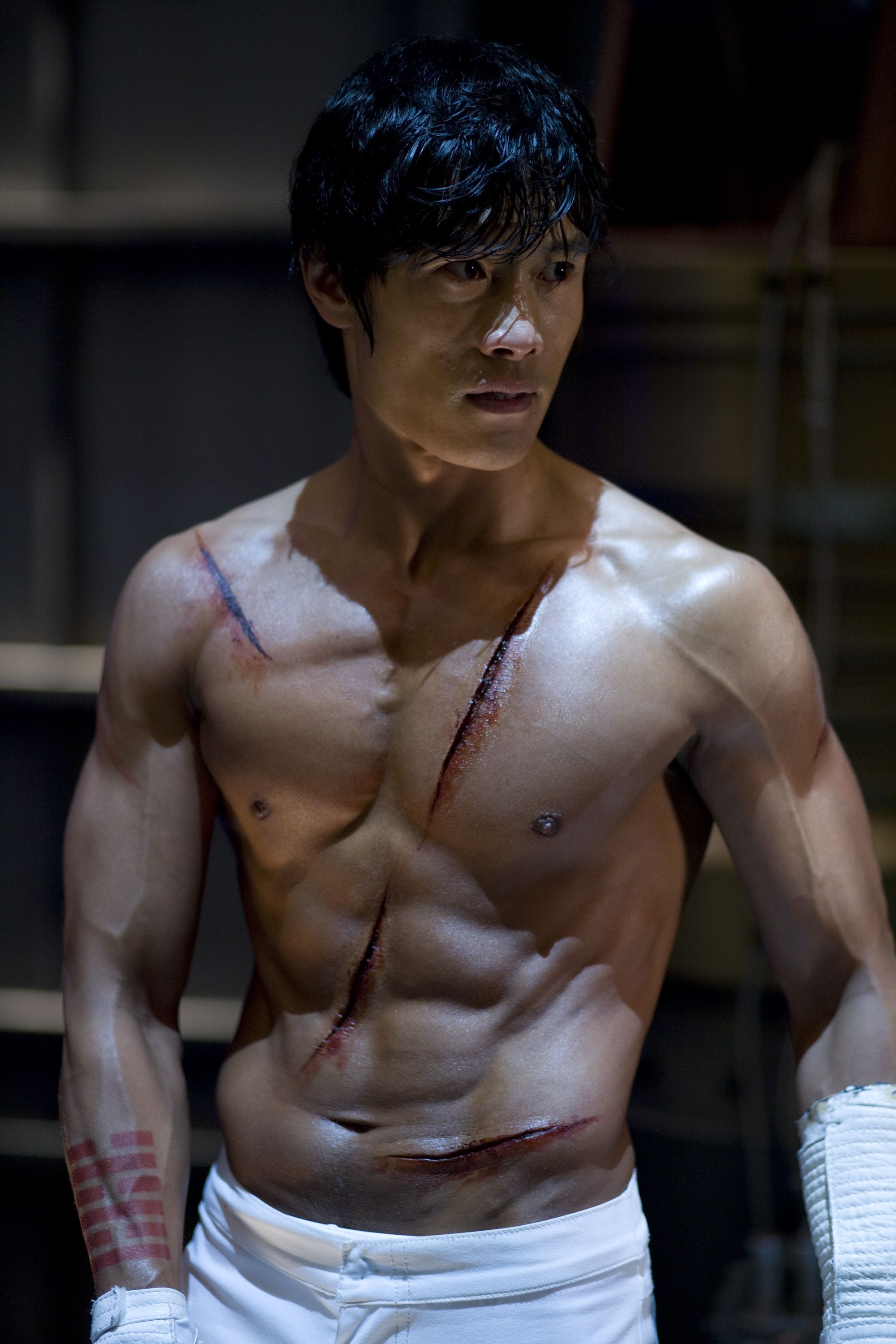
In the 1990s, Lee Byung-hun emerged as a definitive face of South Korean entertainment, transitioning from a 1991 KBS open-recruit rookie to a national heartthrob. Through iconic television dramas like Tomorrow Love and Asphalt Man, and his pivotal 1999 film The Harmonium in My Memory, he established the intense emotional range and "macho" charisma that would eventually propel him to global stardom.
The Genesis of a Star: The 1991 KBS Debut
Lee Byung-hun’s journey began in 1991 when he participated in the 14th KBS open recruitment auditions. In the early 90s, the "Open Recruitment" (Gong-chae) system was the primary gateway for aspiring actors. Major networks held rigorous talent searches, and those selected were essentially "contracted" to that network for a set period, receiving training and small roles to sharpen their craft.
His debut role came in the drama Asphalt My Hometown (1991). While his initial appearance was modest, his sharp features and distinctively deep voice immediately caught the attention of producers. Unlike many of his contemporaries who relied solely on "flower boy" aesthetics, Lee possessed a rugged, grounded quality that felt both modern and classic.
During these first two years, Lee was a workhorse, appearing in several productions including Family and Days of Sunshine. These roles allowed him to navigate the transition from a newcomer to a lead actor, learning the technicalities of multi-camera television sets and the demanding pace of Korean broadcast schedules.
1992–1994: The "Tomorrow Love" Phenomenon and Youth Stardom
The true turning point for Lee Byung-hun in the early 90s was the campus drama Tomorrow Love (Nae-il-eun Sarang), which aired from 1992 to 1994. In this series, he played Shin Beom-soo, a charismatic and talented university student. The show became a massive cultural hit, capturing the optimism and changing social dynamics of Korean youth in the post-democratization era.
Tomorrow Love did more than just make Lee a household name; it established him as a "Youth Icon." His chemistry with co-star Ko So-young and later Park So-hyun became the talk of the nation. During this era, Lee Byung-hun’s fashion—characterized by oversized college sweaters, denim jackets, and his signature grin—influenced a generation of young men.
Following this success, he starred in Police (1994), where he began to pivot toward more masculine, action-oriented roles. Playing a dedicated officer, Lee showcased the "steely gaze" that would later become his trademark in noir films. This period was crucial because it proved he could carry a show not just as a romantic lead, but as a serious dramatic actor capable of physical intensity.
The Mid-90s: Defining the "Macho" Archetype in Asphalt Man
By 1995, the Korean television landscape was evolving, with bigger budgets and more ambitious storytelling. Lee Byung-hun became the centerpiece of this evolution with Asphalt Man (also known as The Dream Racers). This drama was a landmark production, filmed partially in the United States and featuring an elite cast including Jung Woo-sung, Choi Jin-sil, and Lee Young-ae.
In Asphalt Man, Lee played Kang Dong-woo, a man driven by ambition and a passion for car design. The role required a blend of stubbornness, vulnerability, and raw ambition. The series is often remembered for the dynamic between Lee Byung-hun and a young Jung Woo-sung, who played his rebellious brother. The contrast between Lee’s calculated intensity and Jung’s wild energy defined the "cool" aesthetic of the mid-90s.
During this time, Lee also began his first serious forays into cinema. While his television career was soaring, his early films like Who Drives Me Mad? (1995) and Runaway (1995) met with mixed commercial results. In the 90s, there was a significant cultural divide between "TV stars" and "Movie stars," and Lee spent the middle of the decade fighting to prove that his charisma could translate to the big screen.
1997–1999: The Transition to Emotional Depth
As the decade drew to a close, Lee Byung-hun’s acting style began to mature significantly. He moved away from the "rebellious youth" trope and began exploring complex, flawed characters.
The 1997 drama Beautiful My Lady saw him playing a boxer, a role that required significant physical transformation. This commitment to "method" acting—long before it was a common buzzword in the Korean industry—set him apart. He wasn't just appearing on screen; he was inhabiting characters with a level of grit that was rare for top-tier Hallyu stars.
In 1999, Lee starred in the SBS drama Happy Together. This series is now viewed as a legendary ensemble piece, featuring future superstars like Song Seung-heon, Jun Ji-hyun, Cha Tae-hyun, and Kim Ha-neul. Lee played the eldest brother trying to reunite his fractured family. His performance was lauded for its restraint and emotional gravity, proving he could anchor a heavy family melodrama just as easily as a high-octane action series.
The Turning Point: The Harmonium in My Memory (1999)
The most significant cinematic achievement for Lee in the 90s came in late 1999 with the film The Harmonium in My Memory (Nae Maeumui Punggeum). Set in the 1960s, Lee played Kang Soo-ha, a young teacher from Seoul who takes a job in a rural village.
This role was a complete departure from his "urban macho" image. He played Soo-ha with a sense of clumsy innocence and intellectual naivety. Starring alongside a young Jeon Do-yeon, Lee proved to critics that he possessed incredible range. This film was a critical success and earned him his first major accolades in the film industry, effectively breaking the "TV actor" stigma and setting the stage for his 2000s dominance in films like Joint Security Area.
90s Lee Byung-hun: Key Works and Milestones
The following table summarizes the most influential projects that defined Lee Byung-hun's career trajectory throughout the 1990s.
| Year | Title | Medium | Role | Significance |
|---|---|---|---|---|
| 1991 | Asphalt My Hometown | TV (KBS) | Supporting | Official debut via KBS Open Recruitment. |
| 1992 | Tomorrow Love | TV (KBS) | Shin Beom-soo | Established him as a premier "Youth Star." |
| 1994 | Police | TV (KBS) | Oh Hye-sung | Transitioned into more masculine, action-heavy roles. |
| 1995 | Asphalt Man | TV (SBS) | Kang Dong-woo | High-budget blockbuster that solidified his "macho" image. |
| 1995 | Runaway | Film | Lee Dong-ho | Early attempt at establishing a cinematic presence. |
| 1997 | Beautiful My Lady | TV (SBS) | Hwang Joon-ho | Demonstrated physical commitment to roles (boxing). |
| 1999 | Happy Together | TV (SBS) | Seo Tae-poong | Showcased emotional depth in a legendary ensemble cast. |
| 1999 | The Harmonium in My Memory | Film | Kang Soo-ha | Critical breakout film proving his range as a serious actor. |
Cultural Impact and 90s Visual Identity
Lee Byung-hun’s impact in the 90s extended beyond his acting credits. He was a central figure in the "Visual Revolution" of Korean male leads. Before the 90s, many male actors followed a very traditional, patriarchal image. Lee, alongside peers like Jang Dong-gun and Jung Woo-sung, introduced a more nuanced masculinity.
His 90s aesthetic was a mix of Western influences and Korean sensibilities. He often sported the "slicked-back" hair look, leather jackets, and fitted suits that emphasized his athletic build. However, it was his expressive eyes that fans and critics cited most often. In an era where television acting could sometimes be hyperbolic, Lee’s ability to convey internal conflict through subtle facial movements was ahead of its time.
Furthermore, Lee briefly explored a music career in the late 90s, a common trend for "multi-entertainers" of that era. He released the album To Me in 1999, featuring the hit ballad "Tears," which utilized his deep, resonant singing voice. While he eventually focused solely on acting, this musical venture highlighted his immense popularity—he was a brand that could sell across multiple media formats.
Challenges and Industry Shifts
The 90s were not without challenges for Lee. The Korean film industry (Chungmuro) was undergoing a massive structural shift. The "Screen Quota" system was a hot-button issue, and the "Korean New Wave" was just beginning to take shape. Lee’s early struggle to find box-office success reflected the difficulty many TV actors faced when trying to enter the prestige-driven world of cinema.
Additionally, the 1997 IMF financial crisis hit the entertainment industry hard. Budgets were slashed, and many planned projects were canceled. Lee’s ability to remain a top-billed star during this economic downturn was a testament to his reliable "star power." He became a "blue-chip" actor that advertisers and networks could trust even in a volatile market.
Frequently Asked Questions
What was Lee Byung-hun's first major breakout role?
While he debuted in 1991, his massive breakout role was in the campus drama Tomorrow Love (1992). This show made him a national idol and the face of the early 90s youth generation. It ran for nearly two years due to its immense popularity.
Was Lee Byung-hun popular in movies during the 90s?
Lee was significantly more popular on television than in movies for most of the 90s. While he starred in several films, they did not reach the same level of commercial success as his dramas. It wasn't until The Harmonium in My Memory (1999) and later Joint Security Area (2000) that he was fully embraced as a powerhouse film actor.
Did Lee Byung-hun have a rivalry with other actors in the 90s?
The media often portrayed a friendly rivalry between the "Big Three" of the 90s: Lee Byung-hun, Jang Dong-gun, and Jung Woo-sung. Each represented a different "type" of masculinity. Lee was often seen as the most versatile and emotionally intense of the three, while Jung was the ultimate rebel and Jang was the "perfectly handsome" lead.
What kind of characters did he play most in the 90s?
His 90s characters evolved from the idealistic college student (Tomorrow Love) to the ambitious, hardworking young man (Asphalt Man) and eventually to the emotionally scarred but resilient "tough guy" (Police, Beautiful My Lady). By the end of the decade, he was known for playing "men with stories"—characters with hidden depths or tragic pasts.
Why is his 1990s period considered so important for his career?
The 1990s served as Lee Byung-hun's "training ground." It was during this decade that he mastered the nuances of camera acting, built a massive domestic fanbase, and survived the transition from a network-contracted rookie to an independent superstar. Without the foundation laid in the 90s, his later international success in Hollywood and major Korean films would not have been possible.
Legacy and Next Steps for Fans
Reviewing Lee Byung-hun’s 1990s filmography offers a fascinating look at the "pre-Hallyu" era of Korean entertainment. For those looking to explore his roots, starting with Asphalt Man provides the best look at his classic 90s charisma, while The Harmonium in My Memory offers a glimpse into the sophisticated actor he would become in the 21st century.
As of 2026, many of these 90s classics have been digitally remastered and are available on major Korean streaming platforms such as Wavve or TVING. Watching these early works allows viewers to appreciate the sheer longevity of Lee’s career—a career that has spanned over 35 years without losing its relevance. For a deeper dive into the technical evolution of Korean cinema during this period, researchers should look into the "Chungmuro Renaissance" of the late 90s, which Lee was a primary beneficiary of.