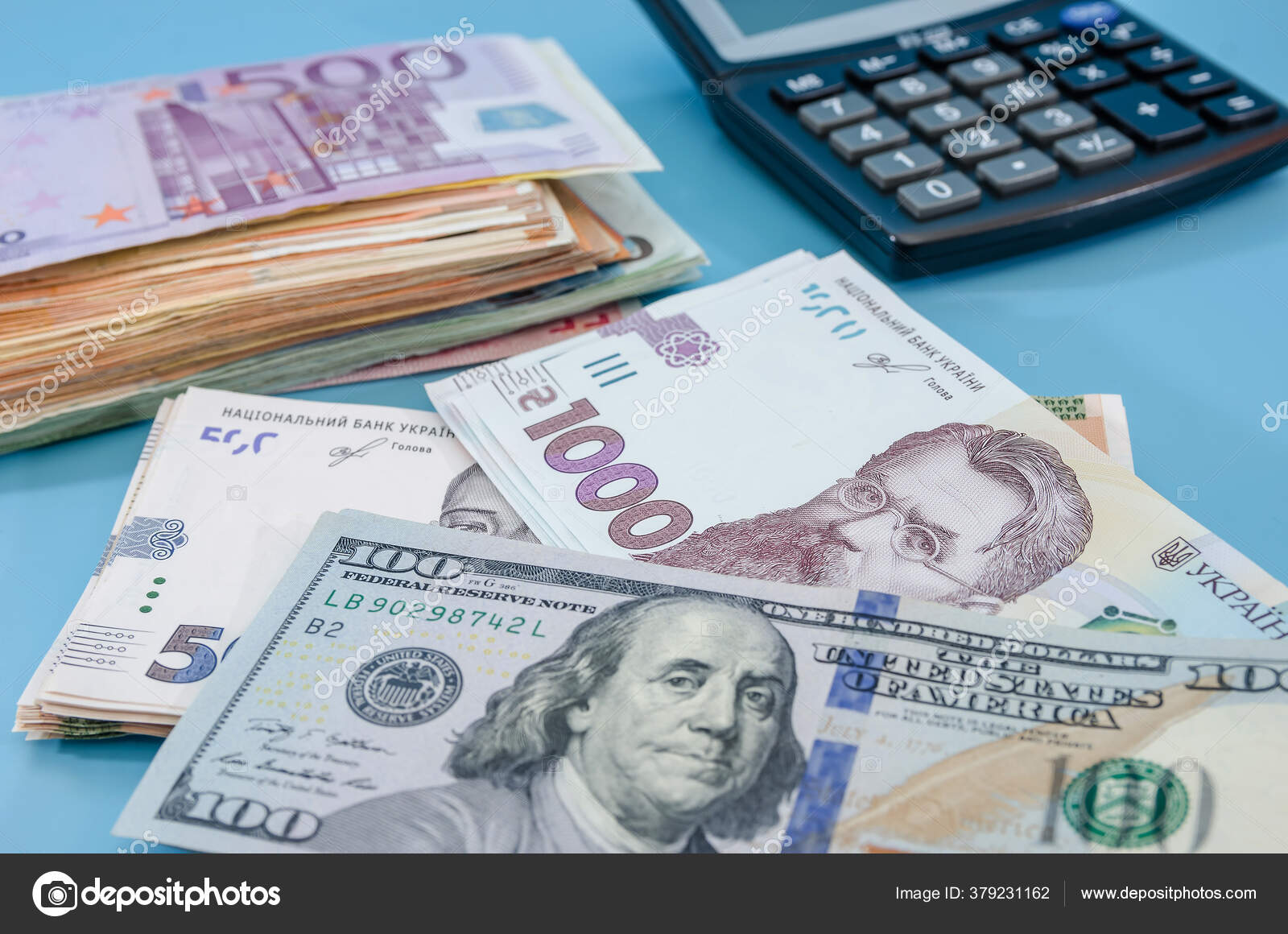
In 2026, 90 US Dollars converts to approximately €82.80, while 90 British Pounds converts to roughly €106.20, based on current mid-market exchange rates. However, the "real" value you receive depends on transaction fees, currency spreads, and the specific conversion method used, which can reduce your final amount by 3% to 12%.
Understanding the value of 90 in Euros requires more than a simple Google search. Currency exchange is a multi-layered process involving global market fluctuations, institutional markups, and the local purchasing power of the Eurozone. Whether you are a traveler, an international freelancer, or a business owner, knowing the difference between the "sticker price" of a currency and the actual cash in your hand is essential for financial planning.
Understanding the Mid-Market Rate vs. Retail Rates
When you search for "90 in Euros" on a search engine, the number you see is typically the mid-market rate. This is the midpoint between the "buy" and "sell" prices of two currencies on the global treasury markets. It is the "real" exchange rate used by large banks to trade with one another, but it is rarely the rate offered to individual consumers.
Retail rates—the ones you find at airports, local banks, or through credit card processors—include a "spread." A spread is a hidden fee where the provider adds a percentage to the exchange rate to ensure they make a profit on the transaction. For example, if the mid-market rate for 1 USD is €0.92, a bank might only offer you €0.88. Over a transaction of 90 units, these small differences begin to accumulate, affecting the total "real" value of your money.
The Mechanics of the "Spread"
The spread is essentially the cost of convenience. Currency exchange bureaus take on the risk of holding foreign cash, which fluctuates in value every second. To mitigate this risk and cover overhead costs like rent and staffing, they bake their profit into the rate. In 2026, digital fintech platforms have narrowed these spreads significantly, but traditional brick-and-mortar institutions often maintain spreads as high as 5% to 10% above the mid-market rate.
Converting 90 US Dollars to Euros in 2026
As of 2026, the economic landscape has seen the US Dollar and the Euro maintain a relatively stable corridor, though impacted by varying interest rate cycles from the Federal Reserve and the European Central Bank (ECB).
If you are converting 90 USD, you can expect the following outcomes based on different exchange environments:
- Mid-Market Projection: Approximately €82.80. This is your baseline. If you use a transparent platform like Wise or Revolut, you will get very close to this number, minus a small, transparent service fee (usually under €1.00).
- Credit Card Transaction: If your card has a "Foreign Transaction Fee" (often 3%), you might effectively pay €85.00 worth of USD for €82.80 worth of value. If your card has no foreign transaction fees, you will usually get the network rate (Visa or Mastercard), which is very close to the mid-market rate.
- Airport Currency Kiosk: These are the least efficient methods. With a typical 10% markup, your 90 USD might only yield €74.52. You have "lost" nearly €8 simply by choosing an inconvenient location for exchange.
Converting 90 British Pounds to Euros in 2026
The relationship between the Pound Sterling (GBP) and the Euro (EUR) remains a critical focal point for trade in 2026. Because the Pound is traditionally stronger than the Euro, your 90 GBP will net you more than 90 EUR.
If you are converting 90 GBP, the breakdown looks like this:
- Mid-Market Projection: Approximately €106.20. This reflects the 2026 trend of the Pound maintaining a steady premium over the Euro due to UK service sector strengths.
- High Street Bank: Traditional UK banks often charge a flat fee plus a spread. You might end up with €101.00 after all costs are deducted.
- Specialized FX Brokers: For those moving money between UK and EU accounts, a broker might deliver €105.50, offering a much tighter margin than a standard bank.
Hidden Costs: Why the "Real" Amount is Often Lower
To answer "how much is it really," we must look at the four primary ways value is siphoned away during a currency conversion.
1. The Service Fee
Many providers advertise "Zero Commission." This is frequently a marketing tactic. While they may not charge a flat $5 or $10 fee, they compensate by offering a significantly worse exchange rate. In the world of 2026 finance, a transparent fee plus a mid-market rate is almost always cheaper than a "no-fee" service with a marked-up rate.
2. Dynamic Currency Conversion (DCC)
When you use a card at a merchant or ATM in Europe, the machine may ask: "Would you like to be charged in your home currency?" Always choose the local currency (Euros). If you choose your home currency, the merchant's bank chooses the exchange rate, which is notoriously poor—often 7% to 12% worse than your own bank’s rate.
3. ATM Withdrawal Fees
Using an ATM to get 90 Euros in cash can be expensive. You may face a fee from your home bank for using an out-of-network machine, a fee from the European bank for the use of the physical ATM, and the aforementioned DCC markup. In 2026, it is common for a €90 withdrawal to actually cost the user the equivalent of €105 in their home currency once all fees are settled.
4. Correspondent Bank Fees
If you are sending 90 USD or GBP to a European bank account via a traditional SWIFT wire transfer, "intermediary" or "correspondent" banks may take a cut of the money as it passes through the system. This can sometimes result in the recipient receiving €10 to €20 less than expected, which is highly significant for a small 90-unit transfer.
Purchasing Power: What Does 90 Euros Buy in 2026?
The "real" value of 90 Euros is ultimately determined by what you can purchase with it. In 2026, inflation has stabilized across the Eurozone, but the cost of living varies drastically between member states.
| Item/Service | Paris, France (Estimated 2026) | Lisbon, Portugal (Estimated 2026) | Berlin, Germany (Estimated 2026) |
|---|---|---|---|
| Three-Course Meal (Mid-range) | €55 - €70 | €35 - €45 | €45 - €60 |
| Museum Entrance (Average) | €18 - €25 | €10 - €15 | €12 - €18 |
| Monthly Public Transport Pass | €86 | €40 | €49 (Deutschlandticket) |
| Espresso at a Cafe | €3.50 - €5.00 | €1.00 - €2.50 | €2.50 - €4.00 |
| Daily Grocery Essentials | €30 | €18 | €22 |
90 Euros in Western Europe
In cities like Paris, Amsterdam, or Dublin, 90 Euros is a "moderate" daily budget. It covers a nice dinner for one with wine, a museum ticket, and local transport. However, it would not cover a high-end hotel night or a luxury shopping experience.
90 Euros in Southern and Eastern Europe
In countries like Portugal, Greece, or Poland, 90 Euros goes significantly further. It could easily cover a full day of expenses for two people, including meals at local tavernas and entry to multiple historical sites. In 2026, the purchasing power of the Euro remains one of its most attractive features for travelers moving from the "Core" EU countries to the "Periphery."
How to Get the Best Rate for Your 90 Units
To ensure that your 90 USD or GBP stays as close to the maximum Euro value as possible, follow these strategic steps:
- Use Digital Wallets: Use platforms like Revolut, Wise, or Monzo. These apps allow you to hold a balance in Euros and convert your home currency at the mid-market rate with minimal, transparent fees.
- Avoid Physical Cash Exchange: Unless absolutely necessary, do not exchange physical cash at kiosks. The logistics of handling paper money are expensive, and those costs are passed on to you.
- Check for "No Foreign Transaction Fee" Cards: In 2026, most travel-focused credit cards have eliminated these fees. Ensure yours is one of them before you spend 90 Euros abroad.
- The "Rule of Local Currency": When paying by card, always select "EUR" on the terminal. Let your own bank handle the conversion, not the merchant's bank.
Economic Factors Influencing the Euro in 2026
The reason your 90 units might be worth more today than it was six months ago lies in macroeconomics. Several factors influence why 90 in Euros "is what it is" right now:
- Interest Rate Parity: If the European Central Bank (ECB) has higher interest rates than the US Federal Reserve, the Euro tends to strengthen, meaning your 90 USD will buy fewer Euros.
- Trade Balances: If the Eurozone is exporting more goods than it imports, demand for the Euro increases, driving up its value.
- Geopolitical Stability: In 2026, the Eurozone's energy security and political cohesion play a major role in investor confidence. A stable Europe leads to a stronger Euro, while uncertainty can lead to "parity" with the USD (where 1 USD equals 1 EUR).
Frequently Asked Questions
Is 90 Euros a lot of money in Europe?
It depends on the location. In 2026, 90 Euros is a substantial amount for a single day’s spending in Eastern Europe (like Krakow or Sofia), covering all meals and entertainment. In expensive hubs like Geneva or Copenhagen, 90 Euros might only cover a modest lunch and a few taxi rides.
Why does the conversion of 90 USD to EUR change every day?
Currency markets are open 24 hours a day, five days a week. The value of the Euro fluctuates based on "forex" (foreign exchange) trading. Factors include employment data, inflation reports, and even political speeches. Even a 0.5% shift can change the value of your 90 units by nearly half a Euro in a single afternoon.
Can I spend US Dollars or British Pounds directly in the Eurozone?
Generally, no. While some very high-traffic tourist shops in major cities might accept USD or GBP, they will do so at an abysmal exchange rate (often 1:1, which is a massive loss for you). It is always more cost-effective to pay in Euros.
What is the cheapest way to send 90 Euros to someone in Europe?
In 2026, the cheapest way is typically an online money transfer service (fintech). These services avoid the heavy "wire transfer" fees charged by traditional banks, which can sometimes exceed $30 for a single transaction—making it nonsensical to send a small amount like 90 Euros through a traditional bank.
Does the "90" refer to the same value across all Eurozone countries?
The currency is the same (the Euro), but the value is not. Due to differing tax rates, labor costs, and supply chains, 90 Euros will buy you three times as many coffees in Athens as it will in Helsinki. This is known as "Purchasing Power Parity."
Final Recommendation
When looking at "90 in Euros," the real answer is that the value is fluid. To maximize your money in 2026, avoid the traps of convenience. Use a digital-first banking solution to access the mid-market rate, and always pay in the local currency. By avoiding a 10% markup at a traditional exchange kiosk, you save roughly €8 to €10 on a 90-unit transaction—enough to buy a nice lunch or several rounds of coffee in many parts of Europe.