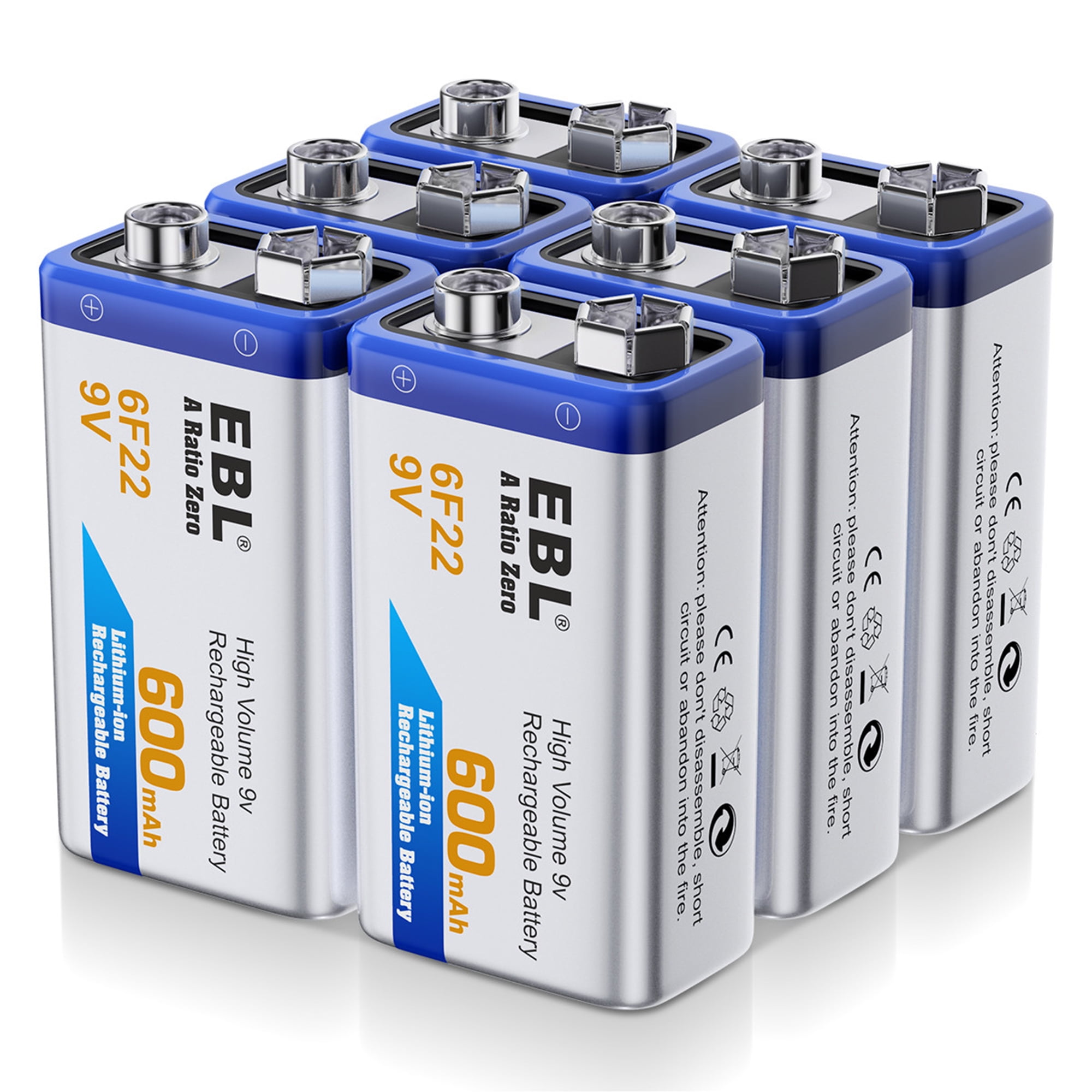
A standard 9 volt battery, commonly known as the PP3 size, features nominal dimensions of 48.5 mm in height, 26.5 mm in width, and 17.5 mm in depth. While its nominal voltage is 9V, actual capacity ranges from 400 mAh for carbon-zinc to 1,200 mAh for lithium-primary chemistries, depending on discharge rates and environmental conditions.
The Physical Architecture of the 9V Battery
The 9 volt battery is one of the most recognizable power sources in consumer electronics due to its unique rectangular prism shape and snap-terminal connectors. Formally standardized by the International Electrotechnical Commission (IEC) and the American National Standards Institute (ANSI), the physical specifications of these batteries are strictly regulated to ensure compatibility across a vast array of devices, from smoke detectors to musical instruments.
The standard designation for this form factor is PP3 (primarily in the UK) or 1604 (in the US). As of 2026, these dimensions remain unchanged to maintain legacy support for millions of devices. The height, including the terminals, is precisely 48.5 mm (1.909 inches). The rectangular footprint measures 26.5 mm (1.043 inches) in width and 17.5 mm (0.689 inches) in depth. However, it is important to note that manufacturing tolerances allow for slight variances, usually within ±0.5 mm. Some high-capacity "industrial" versions may push these tolerances to the limit, occasionally making them a tight fit in very compact battery compartments.
The weight of a 9V battery varies significantly based on its internal chemistry. A standard alkaline 9V typically weighs approximately 45 to 48 grams. In contrast, lithium-primary versions are much lighter, often weighing around 34 to 36 grams, while carbon-zinc "heavy-duty" varieties are the lightest, frequently falling under 35 grams. This weight difference is a primary consideration in weight-sensitive applications like handheld aerospace telemetry or portable medical monitors.
Internal Construction and Chemistry Types
The term "9 volt battery" describes the output voltage, but the internal "engine" providing that power can vary wildly. Most 9V batteries are not a single cell; rather, they are a series of six smaller 1.5V cells connected in sequence to achieve the 9V total.
Alkaline (6LR61)
The alkaline 9V battery is the most common variety found in 2026. It uses a potassium hydroxide electrolyte. Internally, it consists of six cylindrical cells (often looking like AAAA batteries) or six flat rectangular cells stacked vertically. The "6LR61" designation tells us it has six cells (6), uses alkaline chemistry (L), and follows the R61 size standard. Alkaline batteries offer a balanced performance profile, with a shelf life of approximately 5 to 7 years and a relatively stable discharge curve.
Carbon-Zinc (6F22)
Often marketed as "Heavy Duty" or "General Purpose," the carbon-zinc 9V is the older, less expensive alternative. It utilizes a stack of six flat cells (6F22). While they are cost-effective, they have significantly lower capacity—often 50% less than alkaline—and a shorter shelf life (2 to 3 years). They are prone to leaking if left in a device after they have discharged, as the zinc casing is consumed during the chemical reaction.
Lithium Primary (6LP3146)
Lithium 9V batteries (typically Lithium-Manganese Dioxide) are the high-performance tier. Unlike alkaline batteries, they often utilize three 3V cells or specialized internal structures to reach 9V. They offer the highest energy density, a shelf life of up to 10 years, and exceptional performance in extreme temperatures (ranging from -40°C to 60°C). These are the gold standard for smoke detectors, where reliability and longevity are paramount.
Electrical Specifications: Voltage and Capacity
Understanding 9 volt battery specs requires a distinction between nominal voltage and operating voltage. While the label says 9V, a fresh alkaline battery actually measures closer to 9.6V. As the battery discharges, the voltage drops. Most devices are designed to operate until the battery hits a "cut-off voltage," typically between 4.8V and 6.0V.
Capacity (mAh)
Capacity is measured in milliamp-hours (mAh), indicating how much current the battery can deliver over time. However, capacity is not a fixed number; it depends on the "C-rate" or how fast the energy is being pulled out.
- Low Drain (e.g., 2mA): An alkaline 9V might provide 550–600 mAh.
- High Drain (e.g., 100mA): The same battery might only provide 300 mAh because the internal resistance causes heat and chemical inefficiency.
As of 2026, advancements in electrode surface area have pushed premium alkaline 9V batteries toward the 620 mAh mark, while lithium versions routinely achieve 1,200 mAh. This makes lithium batteries ideal for high-drain devices like wireless microphones or high-end medical sensors.
Discharge Profile
Alkaline batteries have a sloping discharge curve; the voltage drops steadily as they are used. Lithium batteries, conversely, maintain a much flatter discharge curve, staying near 9V for the majority of their life before dropping off rapidly at the end. This is why a battery tester might show a lithium battery as "Full" even when it is near the end of its functional life.
Terminal Design and Safety Standards
The 9V battery utilizes a unique "snap" connector system. The female terminal is the larger, hexagonal or flower-shaped socket, which is the negative (-) terminal. The male terminal is the smaller, circular stud, which is the positive (+) terminal.
This design is a deliberate safety feature. Because both terminals are on the same side, it is theoretically possible to short-circuit the battery if it comes into contact with a metallic object like a coin or a paperclip in a pocket. This can lead to rapid heating and fire hazards. To mitigate this, many manufacturers in 2026 include terminal caps or specific packaging instructions.
Furthermore, the snap design ensures reverse-polarity protection. It is physically difficult to connect the battery to a device backwards because the terminals will not "mate" unless oriented correctly. For industrial applications, specialized 9V batteries are available with "shrouded" terminals to prevent accidental contact in high-vibration environments.
Technical Comparison Table
The following table summarizes the core technical 9 volt battery specs for the three most common chemistries available in 2026.
| Specification | Carbon-Zinc (6F22) | Alkaline (6LR61) | Lithium (Li-MnO2) |
|---|---|---|---|
| Nominal Voltage | 9.0V | 9.0V | 9.0V |
| Typical Capacity | 350 - 450 mAh | 550 - 620 mAh | 800 - 1,200 mAh |
| Shelf Life (2026) | 2 - 3 Years | 5 - 10 Years | 10 - 15 Years |
| Weight | ~35 grams | ~46 grams | ~34 grams |
| Internal Structure | 6 Flat Cells | 6 Cylindrical or Flat | 3x 3V Cells |
| Operating Temp | 10°C to 45°C | -18°C to 55°C | -40°C to 60°C |
| Best For | Low-drain clocks | General household | Smoke alarms, Medical |
Rechargeable 9V Alternatives: NiMH and Li-ion
For users who consume batteries frequently—such as guitarists with active pickups or technicians using multimeters—rechargeable 9V batteries are the standard choice in 2026. However, their specifications differ significantly from primary (disposable) cells.
Nickel-Metal Hydride (NiMH)
NiMH rechargeable 9V batteries typically come in two voltage variants: 8.4V and 9.6V.
- 8.4V Versions: These consist of seven 1.2V cells. They are common but may not power some 9V-sensitive devices correctly.
- 9.6V Versions: These consist of eight 1.2V cells. They are preferred for high-performance audio equipment because they provide that "fresh battery" punch.
- Capacity: Usually ranges from 175 mAh to 300 mAh. While lower than alkaline, they can be recharged hundreds of times.
Lithium-Ion (Li-ion) Rechargeables
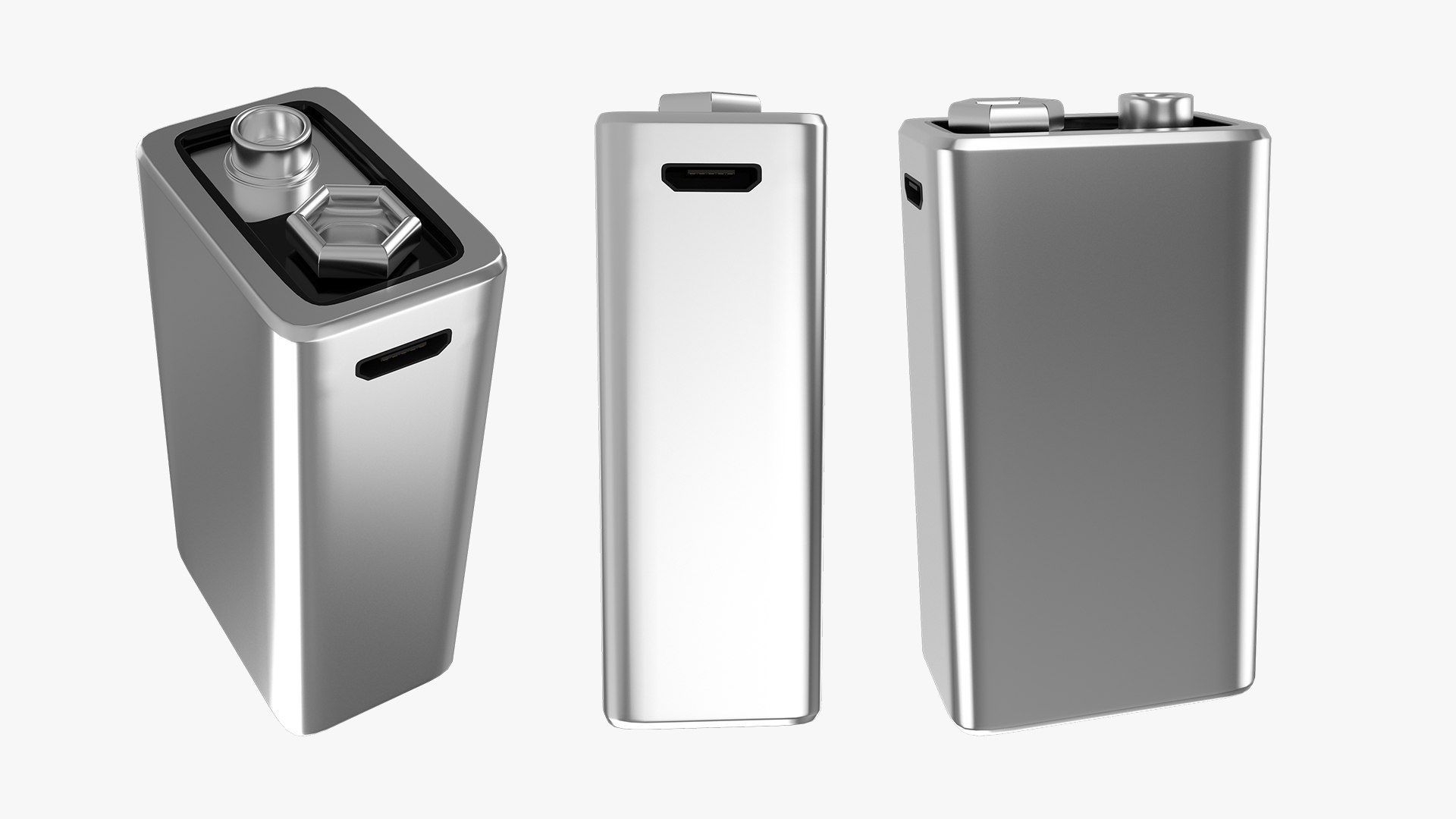
Modern 2026 Li-ion 9V batteries often feature a built-in USB-C charging port directly on the battery casing. These typically use two 3.7V cells in series (yielding 7.4V nominal) or utilize an internal buck/boost converter to provide a steady 9.0V output.
- Advantage: They maintain a consistent 9V until they are empty.
- Disadvantage: The internal conversion circuitry can sometimes introduce electronic "noise" into sensitive audio circuits or radio equipment.
Common Applications and Selection Criteria
Selecting the right 9V battery depends entirely on the discharge requirements of the application.
- Smoke Detectors: These require a battery with extremely low self-discharge and high reliability. Lithium primary batteries are the recommended spec here, as they can last up to a decade in standby mode.
- Guitar Pedals and Active Pickups: Musicians often prefer alkaline batteries because they provide a predictable voltage drop that some feel adds "character" to the sound as the battery wears. However, for clean power, a 9.6V NiMH or a regulated Li-ion rechargeable is more economical.
- Medical Devices (Infusion Pumps, Pulse Oximeters): High-capacity alkaline or lithium batteries are required to ensure the device does not fail during critical monitoring.
- Multimeters and Test Equipment: These are generally low-drain. A standard alkaline 9V is the typical spec, providing years of service due to the intermittent nature of the use.
FAQs About 9 Volt Battery Specs
Why do some 9V batteries feel slightly larger than others?
While the IEC 60086 standard defines the dimensions, manufacturers often use the maximum allowable tolerances to fit more active material (higher capacity) inside the shell. This is particularly common in high-capacity alkaline and some rechargeable Li-ion batteries. If a battery is a tight fit, it likely adheres to the upper limit of the 26.5mm x 17.5mm spec.
Can I use a lithium 9V in my smoke detector?
Yes, and in 2026, it is highly recommended. Most modern smoke detectors are designed to handle the slightly different discharge curve of lithium-primary cells. They provide a much longer service life (up to 10 years) compared to the 1-2 years typically seen with alkaline batteries in the same device.
What is the "cut-off" voltage for a 9V battery?
The cut-off voltage is the point at which a device stops functioning because the battery voltage is too low. For most 9V electronics, the cut-off is between 5.4V and 6.0V. If you measure a battery with a voltmeter and it reads 7.0V, it may seem "okay," but it is actually near the end of its useful life for most high-drain applications.
Is there a difference between 6LR61 and 6F22?
Yes. 6LR61 refers to alkaline chemistry, which has higher capacity and better leak resistance. 6F22 refers to carbon-zinc chemistry, which is cheaper but has lower capacity and a higher risk of leaking. Always check the IEC code on the packaging to ensure you are getting the spec you need.
Why do rechargeable 9V batteries have lower mAh than alkaline?
Rechargeable chemistries like NiMH are less energy-dense than alkaline or lithium-primary chemistries. Additionally, the internal space in a rechargeable 9V is often taken up by safety circuitry (for Li-ion) or the thick walls of the individual cylindrical cells (for NiMH), leaving less room for energy-storing materials.
Practical Recommendation for 2026
When sourcing batteries based on 9 volt battery specs, prioritize the chemistry that matches your device's drain profile. For emergency equipment like smoke alarms or carbon monoxide detectors, always opt for Lithium Primary (Li-MnO2) to maximize reliability and shelf life. For high-frequency use in professional audio or handheld tools, transition to USB-C rechargeable Lithium-ion batteries with regulated 9V output to reduce long-term costs and environmental impact. Always verify that the battery height does not exceed 48.5 mm if your device has a precision-molded battery compartment.