In 2026, the maximum issue age for term life insurance typically ranges between 75 and 80, depending on the carrier and desired term length. While 10-year terms are commonly available until age 75, options narrow significantly at 80. By age 85, traditional term insurance is generally unavailable, necessitating a shift toward permanent or final expense products.
The Landscape of Senior Term Life Insurance in 2026
As of 2026, the life insurance industry has seen a slight expansion in age limits due to increased life expectancy and better medical management of chronic conditions. However, term life insurance remains a product defined by its "temporary" nature. For seniors, the "term" often represents a bridge to cover specific debts like a mortgage, or to provide a safety net until other assets, such as a deferred annuity or a spouse’s pension, become available.
The primary challenge for applicants aged 75 and older is the intersection of high mortality risk and the short "runway" remaining for the insurance company to collect premiums. Consequently, the underwriting process for those in the 75–85 bracket is significantly more rigorous than for younger cohorts.
Why Issue Ages Matter
An issue age is the maximum age at which an insurance company will allow you to start a new policy. This is distinct from the expiration age, which is the age at which the coverage naturally terminates. For example, a company might have a maximum issue age of 75 for a 10-year term, meaning the policy will expire when the insured is 85. Very few carriers are willing to extend term coverage beyond the age of 90 or 95, which is why issue ages are strictly capped.
Maximum Issue Age Breakdown by Term Length
The length of the term you desire is the largest factor in determining whether you meet the age requirements. As a rule of thumb, the longer the term, the lower the maximum issue age.
| Term Length | Typical Max Issue Age (2026) | Common Requirements |
|---|---|---|
| 10-Year Term | 75 to 80 | Full medical exam, cognitive testing, and EKG. |
| 15-Year Term | 70 to 75 | Intensive medical history review; high-tier health preferred. |
| 20-Year Term | 65 to 70 | Often requires "Standard" health class or better. |
| 30-Year Term | 50 to 55 | Generally unavailable for those over age 60. |
| Annually Renewable | 80 to 85 | Premiums increase every year; used for very short-term needs. |
Availability at Age 75
At age 75, several top-tier carriers—including Protective, Banner Life, and Transamerica—continue to offer 10-year level term policies. Some specialty carriers may even offer a 15-year term, provided the applicant is in "Preferred" or "Preferred Plus" health. The goal at this age is usually to cover the remaining years of a mortgage or to provide income replacement for a surviving spouse.
Availability at Age 80
By age 80, the market for traditional level-term insurance shrinks dramatically. Most major carriers cap their issue age at 75 or 77 for a 10-year term. However, a small segment of the market provides 10-year terms to 80-year-olds who can demonstrate exceptional health. These policies are often prohibitively expensive because the carrier is essentially betting on the insured living to 90.
Availability at Age 85
In 2026, finding a traditional level-term policy with an issue age of 85 is nearly impossible. At this age, the cost of a term policy would nearly equal the cost of a permanent policy, but without the benefit of cash value or lifelong coverage. Applicants at 85 are almost exclusively directed toward Final Expense (Whole Life) or Guaranteed Universal Life (GUL) policies, which function similarly to term insurance but can last until age 121.
Underwriting Requirements for Applicants Over 75
When applying for life insurance in your mid-70s or 80s, the "simplified issue" path is rarely an option for significant coverage amounts. Carriers require a deep dive into your physiological and cognitive health.
The Cognitive Assessment
Since 2024, nearly all major insurers have standardized the use of cognitive screenings for applicants over age 70. This often involves a brief "mini-mental" exam or a word-recall test performed by the paramedical examiner. Carriers are looking for early signs of dementia or Alzheimer’s, which would lead to an automatic decline.
Medical Records and APS
The Attending Physician Statement (APS) is the most critical document in senior underwriting. The underwriter will review years of records to see how you manage blood pressure, cholesterol, and any history of cancer or cardiac events. In 2026, underwriters are particularly focused on "frailty markers," such as gait speed and the ability to perform activities of daily living (ADLs).
Laboratory Testing
Expect a comprehensive blood panel and urinalysis. For seniors, underwriters look closely at:
- A1C levels: To monitor diabetes or pre-diabetic trends.
- Albumin levels: A low level can be a marker for underlying chronic illness or malnutrition.
- Creatinine: To assess kidney function.
- NT-proBNP: A protein marker used to detect heart failure or cardiac stress.
Cost Considerations: The "Age 80 Cliff"
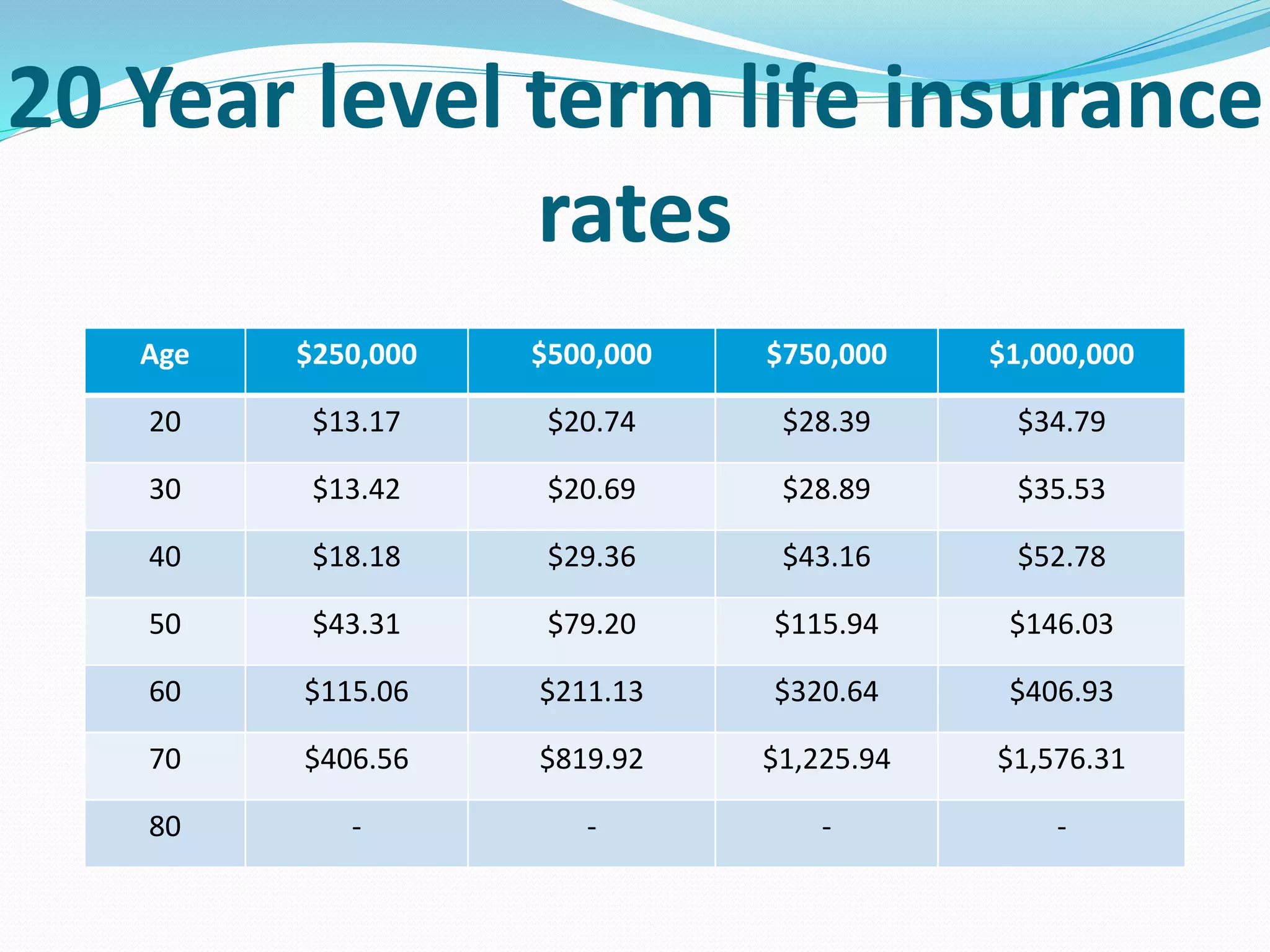
The cost of term insurance does not rise linearly; it accelerates as you age. The difference in premium between age 70 and 75 is significant, but the jump between 75 and 80 is often referred to as the "pricing cliff."
For a $500,000 10-year term policy in 2026, a healthy 75-year-old might pay approximately $600 to $900 per month. By age 80, that same $500,000 policy could easily exceed $2,000 per month, assuming you can find a carrier to write the risk.
At these price points, many seniors find that the "Internal Rate of Return" on the policy makes it a poor financial move unless there is a very specific, high-stakes debt to cover. If you are 80 or older, it is often more cost-effective to purchase a smaller Guaranteed Universal Life policy that provides a $50,000 to $100,000 death benefit for final expenses rather than trying to maintain a large term policy.
Alternatives When You Exceed the Maximum Issue Age
If you are 80 or 85 and cannot secure a term policy, or if the quotes you receive are financially unfeasible, several alternatives serve similar purposes.
Guaranteed Universal Life (GUL)
GUL is often described as "Term to Age 121." It does not build significant cash value like Whole Life, which keeps the premiums lower. However, unlike Term, it will not expire as long as the premiums are paid. Some GUL products allow issue ages up to 85, making them the primary choice for seniors who missed the window for traditional term.
Final Expense Insurance
These are small Whole Life policies (typically $5,000 to $50,000) designed specifically for burial and end-of-life costs. They often have no medical exam requirements and are available up to age 85 or even 90. While the cost per thousand dollars of coverage is high, the absolute monthly cost is manageable because the face amount is low.
Annually Renewable Term (ART)
If you only need coverage for 1 or 2 years—perhaps to cover the final stretch of a business buyout or a short-term loan—ART might be available. The premium starts lower than a 10-year term but increases every single year. Most ART policies still have a "cease fire" age where they can no longer be renewed, usually between 80 and 85.
Strategic Tips for Senior Applicants
- Work with an Independent Agent: Do not apply directly to a single carrier. Independent agents use "trial applications" or "informal inquiries" to see which carrier will look most favorably on your specific health profile without generating a formal rejection on your MIB (Medical Information Bureau) record.
- Verify the Conversion Privilege: If you buy a 10-year term at age 75, ensure it has a conversion rider. This allows you to turn the term policy into a permanent one without a medical exam if your health declines before the term ends.
- Check for "Age Last Birthday" vs. "Age Nearest": Some companies calculate your age based on your last birthday, while others use the birthday you are closest to. If you are 75 and 7 months, an "age nearest" company will rate you as 76, which can significantly increase your premium.
- Prepare for the Cognitive Test: Ensure you are well-rested and hydrated before the paramedical exam. Simple factors like fatigue or stress can negatively impact the cognitive screening results for seniors.
Frequently Asked Questions
Can I get a 20-year term policy at age 75?
No, it is highly unlikely. In the 2026 insurance market, the maximum age for a 20-year term is typically 70. Carriers generally want the policy to expire before the insured reaches age 90 or 95. At 75, you are generally limited to a 10-year term or a permanent product.
What is the absolute oldest age to buy term insurance?
While some niche carriers might consider a 10-year term at age 80, age 80 is the functional ceiling for most of the industry. Beyond 80, "term" insurance effectively ceases to exist, replaced by Guaranteed Universal Life or Final Expense policies.
Is a medical exam always required for seniors over 75?
Yes, for traditional term life insurance. "No-exam" or "Accelerated Underwriting" programs almost always have an age cutoff of 60 or 65. If you are 75 or older, the carrier will require a blood draw, physical measurements, and an EKG to justify the risk.
Why is term insurance so much more expensive at age 80 than age 70?
The mortality rate increases exponentially in this decade of life. According to actuarial tables used in 2026, the probability of a claim being paid on a 10-year policy issued at age 80 is many times higher than one issued at 70, forcing carriers to charge premiums that reflect that near-certainty of payout.
Can I renew my existing term policy when it expires at age 85?
Most term policies allow for "guaranteed renewability," but the cost to renew at age 85 is usually astronomical—often ten to twenty times the original premium. It is almost never a viable financial strategy to renew an expiring term policy at that age.
Summary of Recommendations
If you are age 75, act immediately to secure a 10-year term if that is your goal, as options begin to vanish annually. If you are age 80, focus your search on the few carriers that still offer 10-year terms, but be prepared for premiums that may exceed the value of the coverage over the long term. If you are age 85, pivot your strategy away from term insurance and toward Guaranteed Universal Life or a Final Expense policy to ensure your coverage does not expire before you do.