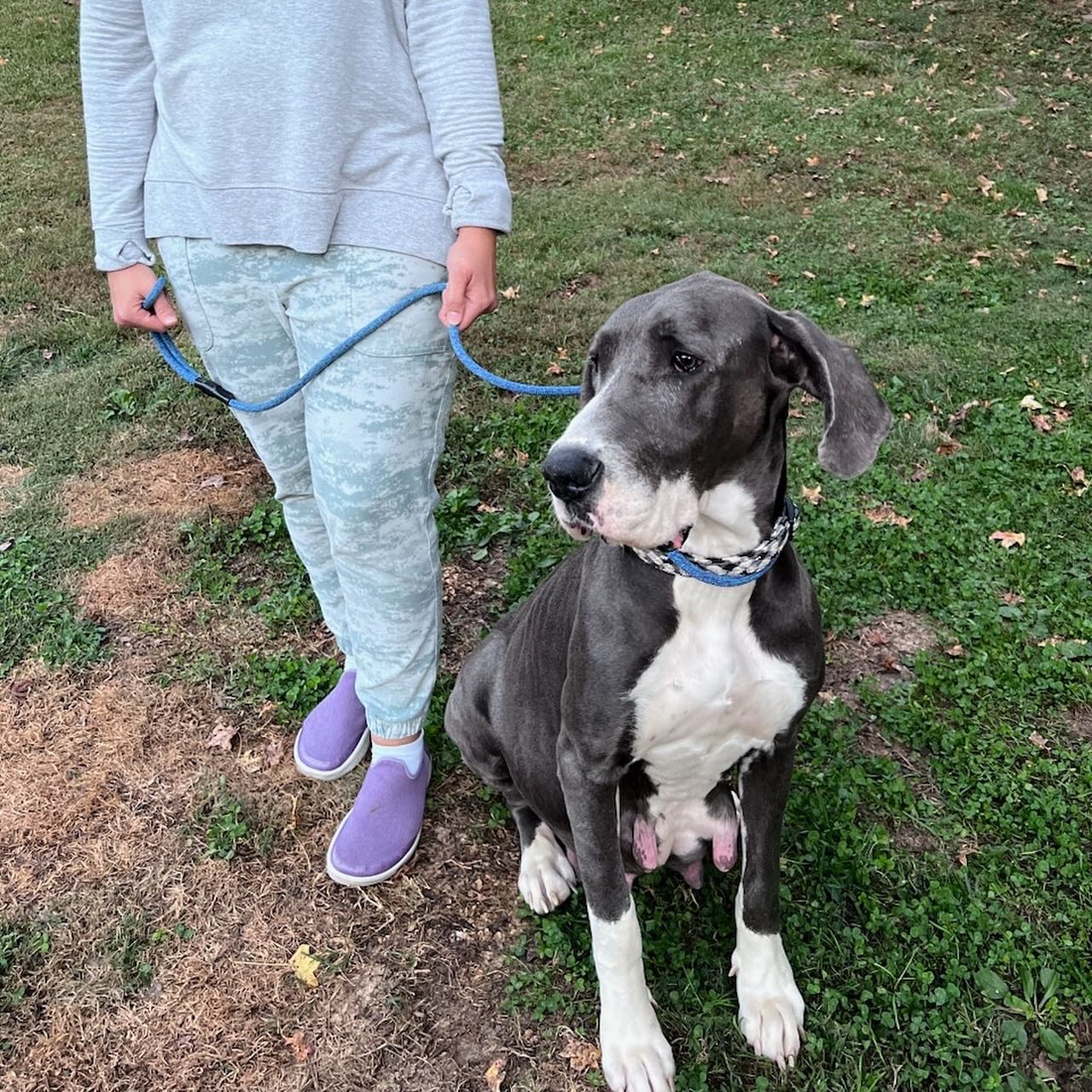
Headlines proclaiming a "7-foot Great Dane" refer to record-breaking dogs whose total length when standing upright on their hind legs exceeds seven feet. However, official Guinness World Records criteria evaluate canine height from the ground to the top of the shoulder withers, where historical record-holders like Zeus have measured an astounding 44 inches tall.
Dissecting the "7-Foot" Title: How Canine Heights Are Officially Measured
Sensational headlines reporting a 7-foot Great Dane often create confusion regarding how canine height is standardized across scientific and veterinary communities. When mainstream news outlets describe a Great Dane as "7 feet tall," they are almost exclusively describing the dog's vertical length when rearing or standing on its hind legs. While this posture vividly demonstrates the immense scale of these animals compared to adult humans, it is not the metric used by official record keepers or breed registries.
Guinness World Records, in alignment with international veterinary standards and purebred registry guidelines such as the American Kennel Club (AKC) and the Fédération Cynologique Internationale (FCI), evaluates a dog's height strictly from a standing quadrupedal stance. The precise measurement is taken from the flat ground surface vertically up to the highest point of the withers—the ridge between the dog's shoulder blades.
Upright Stance (Head-to-Paw): Measured in news headlines (7+ feet) | v /---------\ | Head | | | \---Withers/ <--- Official Guinness World Record Measurement Point | | (Measured vertically to the ground: up to 44 inches) | | | | / \ Paws on Ground
To achieve an official measurement for record verification, strict protocols must be followed:
- Surface Requirements: The dog must stand on a completely firm, flat, and non-compressible surface to prevent paw sinkage.
- Posture: The animal must stand naturally on all four legs, with footpads flat on the ground and legs fully extended, without being braced or held in an unnatural position.
- Equipment: Official measuring sticks fitted with a spirit level and rigid horizontal arm are pressed lightly against the top of the shoulder blades to eliminate fur displacement errors.
- Verification: Multiple measurements are taken by qualified veterinarians and independent witnesses to calculate an undeniable mean height.
When a Great Dane measures 40 to 44 inches at the shoulder withers, its total length—from the tip of its front paws to the tip of its rear paws or head when extended upright—frequently reaches between 7 feet and 7 feet 5 inches. This distinction explains why a dog officially listed at 3 feet 8 inches tall at the shoulder is universally celebrated as a 7-foot canine giant.
Famous Record-Breaking Great Danes in History
Throughout the history of recorded canine achievements, several extraordinary Great Danes have captured global attention by breaking height records. These dogs demonstrate the extreme upper boundaries of canine genetics and biological growth.
Zeus of Otsego, Michigan (Tallest Dog Ever Recorded)
Zeus, a majestic grey-and-black Great Dane owned by Denise Doorlag in Otsego, Michigan, stands as the tallest dog in recorded history. Officially measured by Guinness World Records in October 2011, Zeus registered an unprecedented shoulder height of 44.0 inches (111.8 cm).
When standing on his hind legs, Zeus stretched to an extraordinary 7 feet 4 inches (223.5 cm) in length, easily towering over his owners and comfortably reaching kitchen faucets directly from the floor. Weighing approximately 155 pounds (70 kg), Zeus consumed roughly 30 pounds of food every two weeks. Despite his imposing physical presence, Zeus worked as a certified therapy dog, visiting local hospitals and schools. Zeus passed away in September 2014, just shy of his fifth birthday, leaving behind a world record that remains unbroken.
Freddy of Leigh-on-Sea, Essex, UK
Freddy, a striking harlequin Great Dane raised by Claire Stoneman in Essex, United Kingdom, captured global fame when he was named the world's tallest living dog in 2016. At his official measurement, Freddy measured 40.75 inches (103.5 cm) at the shoulder withers.
When standing fully upright on his hind legs, Freddy measured a staggering 7 feet 5.5 inches (227.3 cm), making his overall extended length one of the longest ever documented in a domestic dog. As a young puppy, Freddy was the runt of his litter, but rapid growth sprees saw him quickly outgrow his littermates and standard household furniture. Freddy lived a pampered life alongside his sister Fleur, consuming significant monthly budgets of roast chicken, tripe, and specialized giant-breed kibble before passing away in early 2021 at the age of eight.
Giant George of Tucson, Arizona
Prior to Zeus's record-setting measurement, Giant George held the title of Tallest Living Dog and Tallest Dog Ever in 2010. Owned by David Nasser in Tucson, Arizona, George was a blue Great Dane who measured 43.0 inches (109.2 cm) at the shoulder withers and stood nearly 7 feet tall when rearing upright.
George weighed a massive 245 pounds (111 kg), making him significantly heavier than most other height record holders. His immense size required a dedicated queen-sized mattress inside the house for sleeping. George gained international celebrity status, appearing on major television talk shows and starring in his own published biography before passing away peacefully in October 2013.
Gibson of Grass Valley, California
Gibson, a famous harlequin Great Dane owned by Sandy Hall, was crowned the World's Tallest Living Dog by Guinness World Records in 2004. Gibson measured 42.2 inches (107.2 cm) at the withers and stretched over 7 feet tall on his hind legs. Gibson became an international ambassador for giant dog breeds, appearing in media across the globe and working extensively as a service and therapy dog. Gibson passed away in 2009 after a battle with bone cancer (osteosarcoma).
Metric Comparison of Historic Giant Dogs
To understand how these legendary Great Danes compare in physical stature, the table below outlines verified measurements recognized by official records and published documentation.
| Dog Name | Location / Origin | Shoulder Height (Withers) | Estimated Upright Height | Approximate Weight | Official Status / Record Title |
|---|---|---|---|---|---|
| Zeus | Otsego, Michigan, USA | 44.0 in (111.8 cm) | 7 ft 4 in (223.5 cm) | 155 lbs (70.3 kg) | Tallest Dog Ever Recorded (Guinness) |
| Giant George | Tucson, Arizona, USA | 43.0 in (109.2 cm) | 7 ft 0 in (213.3 cm) | 245 lbs (111.1 kg) | Tallest Living Dog (2010–2011) |
| Gibson | Grass Valley, California, USA | 42.2 in (107.2 cm) | 7 ft 1 in (215.9 cm) | 180 lbs (81.6 kg) | Tallest Living Dog (2004–2009) |
| Freddy | Leigh-on-Sea, Essex, UK | 40.75 in (103.5 cm) | 7 ft 5.5 in (227.3 cm) | 196 lbs (88.9 kg) | Tallest Living Male Dog (2016–2021) |
| Zeus | Bedford, Texas, USA | 41.18 in (104.6 cm) | 7 ft 0 in (213.3 cm) | 200 lbs (90.7 kg) | Tallest Living Male Dog (2022–2023) |
The Biology and Genetics Behind Extreme Canine Growth
The biological mechanisms that allow a Great Dane to reach heights equivalent to an adult human involve complex genetic expressions, endocrine signaling, and targeted skeletal development.
The IGF1 Gene and Giant Breed Selection
Canine size variation across domestic breeds is largely governed by variations in key growth factor genes. Research into canine genomics has identified the Insulin-like Growth Factor 1 (IGF1) gene as a primary genetic driver of body size in dogs. Specific single nucleotide polymorphisms (SNPs) near the IGF1 locus are strongly associated with large and giant body frame sizes.
Through centuries of selective breeding, the Great Dane breed was developed by crossing ancient mastiff-type war dogs with swift greyhound-type hunting hounds. This combination yielded a breed possessing both massive bone leverage and elongated long bones (radius, ulna, femur, and tibia). In extreme individuals, genetic variations enhance the production and cellular reception of growth hormones, leading to extended growth periods and immense frame scaling.
Delayed Growth Plate Closure
In small and medium-sized dogs, long bone growth plates (epiphyseal plates) typically calcify and close between 8 and 12 months of age. In contrast, giant breeds like the Great Dane undergo delayed epiphyseal closure. Their growth plates remain open and actively synthesizing cartilage into bone for 18 to 24 months.
During peak growth phases—typically between 4 and 10 months of age—a giant Great Dane puppy can gain up to 3 to 5 pounds per week, placing enormous biological stress on the developing endocrine and skeletal systems.
Puppyhood Phase (0-4 Months) --> Rapid structural bone elongation Peak Growth Phase (4-10 Months) --> Gains 3-5 lbs/week; growth plates open Maturation Phase (12-24 Months)--> Growth plates fuse; muscular filling out occurs
Health and Care Challenges of Giant Great Danes
While giant Great Danes command admiration, their monumental size brings severe physiological vulnerabilities. Understanding these medical risks is vital for owners, veterinarians, and canine welfare advocates.
Gastric Dilation-Volvulus (GDV)
Gastric Dilation-Volvulus, commonly called bloat, is the leading cause of non-accidental death in Great Danes. Due to their deep, narrow chest cavities, giant Great Danes possess a high anatomical risk for the stomach to fill with gas and twist along its longitudinal axis.
- Mechanism: When volvulus occurs, gas and fluid become trapped, cutting off blood circulation to the stomach lining and spleen, sending the animal into rapid hypovolemic shock.
- Prevention: Veterinary surgeons widely recommend prophylactic gastropexy—a surgical procedure where the stomach is anchored to the abdominal wall to prevent rotation. Gastropexy is frequently performed concurrently with routine spay or neuter procedures.
- Management Practices: Owners must enforce strict rest periods (no exercise for 60–90 minutes before and after meals), use slow-feeder bowls, and divide daily food intake into multiple smaller meals.
Musculoskeletal Strain and Skeletal Disorders
Supporting 150 to 240 pounds of body weight on long limb levers subjects cartilage, ligaments, and subchondral bone to extreme mechanical wear.
- Osteosarcoma: Malignant bone tumors disproportionately affect giant breeds, particularly in the long bones of the forelimbs and hindlimbs.
- Joint Dysplasia: Hip and elbow dysplasia are prevalent when excessive body weight stresses malformed joint sockets during early growth phases.
- Hypertrophic Osteodystrophy (HOD): A painful inflammatory condition of the long bone metaphyses that can occur during rapid growth sprees in puppyhood.
Cardiac Conditions
Great Danes are predisposed to Dilated Cardiomyopathy (DCM), a disease characterized by the thinning and weakening of the heart muscle walls. As the heart stretches to pump blood through an enormous bodily circulatory network, ventricular enlargement can lead to congestive heart failure or sudden arrhythmia. Regular echocardiographic screenings by veterinary cardiologists are essential for early diagnosis.
Lifespan Realities
While small dog breeds often live 12 to 16 years, giant Great Danes average a lifespan of 6 to 10 years. Record-setting individuals measuring over 40 inches at the shoulder frequently face heightened structural demands that can shorten their life expectancy further, making specialized medical oversight and preventive care mandatory throughout their lives.
Practical Requirements for Managing a Giant Breed
Caring for a dog that stretches over 7 feet long when upright requires significant lifestyle, residential, and financial adaptations. Prospective owners must evaluate these operational demands thoroughly.
Nutrition and Diet Management
Maintaining an adult Great Dane requires substantial dietary calories, but growth must be carefully controlled during puppyhood to prevent skeletal deformities.
- Controlled Caloric Density: Great Dane puppies should never be fed high-energy adult feeds or over-supplemented with calcium and phosphorus, as excessive dietary minerals accelerate premature bone growth without allowing corresponding ligament support to develop.
- Adult Calorie Intake: Fully grown giant Great Danes consume between 2,500 and 3,500 calories daily, translating to approximately 8 to 12 cups of premium giant-breed kibble per day.
Living Space and Household Adjustments
- Furniture and Bedding: Standard dog beds are insufficient; giant Great Danes require thick, orthopedic memory-foam mattresses engineered to prevent pressure sores (hygromas) on elbows and hocks.
- Counter Surfing: A dog standing 40+ inches at the shoulder can effortlessly reach counter tops, tables, and sink basins without raising its paws. Household management requires securing food items, cleaning agents, and fragile objects.
- Transportation: Standard sedans and compact SUVs rarely accommodate giant breeds comfortably. Dedicated rear cargo spaces in full-sized SUVs or vans fitted with low-incline ramps are typically required for safe transport.
Training and Social Handling
A 180-pound dog cannot be physically restrained through leverage alone by an average human handler. Positive reinforcement obedience training must begin during early puppyhood (before 16 weeks of age).
- Leash Manners: Loose-leash walking and strict impulse control are paramount to prevent injury to handlers if the dog reacts to external stimuli.
- Jump Prevention: Greeting behaviors that involve placing front paws on humans must be corrected immediately during puppyhood, as a 7-foot upright giant can easily knock over an adult human.
Frequently Asked Questions
Is there really a dog that stands 7 feet tall on all four legs?
No. No domestic dog has ever measured 7 feet tall on all four legs. The 7-foot measurement describes a giant Great Dane standing on its rear legs in an upright position. The tallest quadrupedal shoulder measurement ever officially recorded is 44 inches (3 feet 8 inches), set by Zeus of Michigan.
How does Guinness World Records officially measure a dog's height?
Guinness World Records requires a certified veterinarian to measure the dog standing naturally on a flat, hard surface. The height is measured vertically from the ground to the top of the withers (the highest point of the shoulder blades) using a rigid measuring device equipped with a spirit level to ensure absolute accuracy.
What is the average lifespan of a giant Great Dane?
The average lifespan of a standard Great Dane ranges from 7 to 10 years. However, unusually large individuals holding world height records often experience greater physical stress on their cardiovascular and skeletal systems, sometimes living between 5 and 8 years.
How much food does a record-holding Great Dane eat each day?
An adult Great Dane of record-breaking height typically consumes between 8 and 12 cups of high-quality giant-breed dog food daily, which translates to approximately 30 to 40 pounds of dry kibble per month, often supplemented with fresh protein sources under veterinary guidance.
What is the main cause of premature death in giant Great Danes?
Gastric Dilation-Volvulus (GDV or bloat) and cardiac conditions such as Dilated Cardiomyopathy (DCM) are the leading medical causes of early mortality in Great Danes. Cancer, specifically osteosarcoma (bone cancer), is also a prevalent concern in giant canine breeds.
Key Takeaways for Prospective Giant Breed Owners
When evaluating the phenomenon of 7-foot record-setting Great Danes, separate media reporting from standard breed requirements:
- Verify Measurements Correctly: Recognize that "7 feet tall" refers to an upright standing stance, whereas true canine height is measured at the shoulder withers (where top records reach 40 to 44 inches).
- Prioritize Health Over Size: Avoid breeders who deliberately breed for excessive size or extreme proportions at the expense of longevity and structural soundness. Responsible breeding focuses on health testing, cardiac clearances, and sound hip scores.
- Budget for Lifetime Maintenance: Ensure financial readiness for giant-breed expenses, including higher food intake, specialized equipment, high-dose medications, and preventive surgeries like gastropexy.
- Implement Early Behavioral Training: Establish strong leash control, social manners, and basic obedience before a puppy reaches its physical maturity and full weight potential.