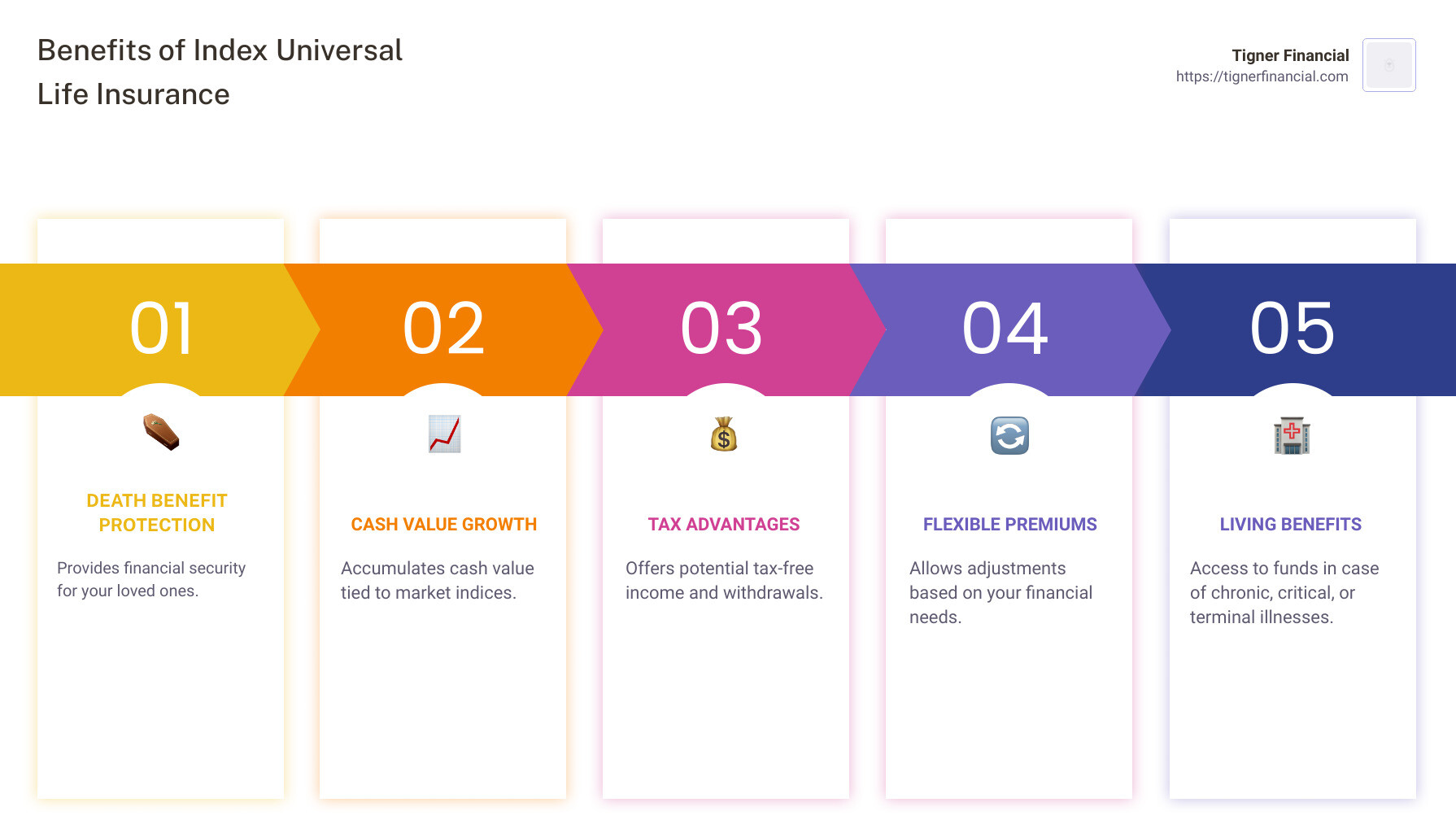
Universal life insurance is a type of permanent life insurance that combines a tax-advantaged cash value component with flexible premiums and adjustable death benefits, allowing policyholders to adapt their coverage and payment structures as their financial circumstances change over time.
Navigating the landscape of permanent life insurance requires a clear understanding of how different policies function, particularly when moving away from traditional whole life contracts. Universal life insurance (UL) stands out due to its flexibility, giving policyholders control over elements that are typically locked in stone under other permanent structures. While this flexibility offers distinct advantages for estate planning, long-term savings, and income replacement, it also introduces complexities that require careful financial oversight. Below are five key facts about universal life insurance that demystify how these policies work, highlight their benefits, and outline the risks involved.
1. Flexibility is the Core Feature of Universal Life Insurance
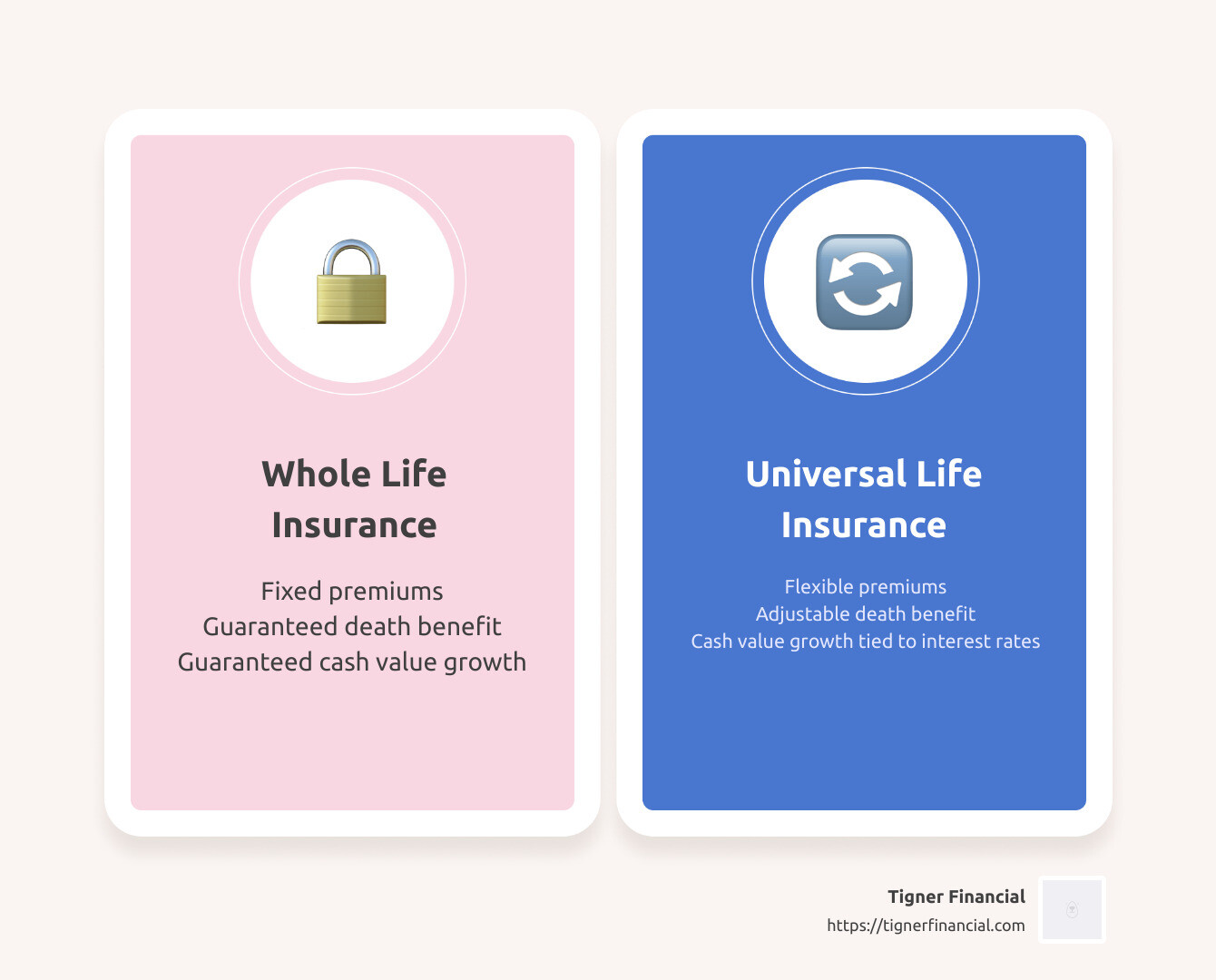
The defining characteristic that separates universal life insurance from traditional whole life insurance is flexibility. In a standard whole life policy, your premium payment, death benefit amount, and cash-value accumulation schedule are fixed from the day you sign the contract until the policy matures or pays out. Failing to make a fixed payment can trigger a lapse or force a policy restructuring.
Universal life insurance introduces adjustable parameters. Depending on the specific terms of your contract, you can generally:
- Adjust Premium Payments: As long as your accumulated cash value is sufficient to cover the monthly cost of insurance (COI) and administrative fees, you can typically skip or reduce a premium payment. Conversely, you can pay more than the target premium—up to Internal Revenue Service (IRS) limits—to accelerate cash value growth.
- Modify the Death Benefit: Most universal life policies allow you to increase or decrease your death benefit. Decreasing it is straightforward, though it may require administrative processing. Increasing it typically requires undergoing a new medical underwriting examination to prove insurability.
This adaptability makes universal life insurance attractive to business owners, freelancers, and individuals whose income fluctuates from year to year. However, this freedom comes with a caveat: treating the policy too casually by underfunding it can lead to unexpected policy lapses later in life when the cost of insurance spikes.
2. It Features a Cash Value Component Tied to Interest Rates
Like other forms of permanent life insurance, universal life includes a cash-value account alongside the death benefit. A portion of your premium payments goes toward the cost of insurance and administrative expenses, while the remaining balance is deposited into the policy's cash-value account.
This cash value grows on a tax-deferred basis, meaning you do not pay taxes on the growth as long as the funds remain inside the policy. Policyholders can typically access this cash value during their lifetimes through policy loans or withdrawals, which can be used to supplement retirement income, pay off debt, or fund major expenses.
The interest credited to the cash value is tied to financial market performance, distinguishing it from traditional whole life policies that offer fixed, guaranteed dividend rates declared by mutual insurance companies. Most universal life policies feature a guaranteed minimum interest rate (often between 1% and 2%), ensuring that your cash value will not drop due to negative market performance, even if the broader economy stumbles.
However, if prevailing market interest rates are low, the actual interest credited to your account will also decline, requiring you to pay higher out-of-pocket premiums to keep the policy active.
3. There Are Several Distinct Types of Universal Life Policies
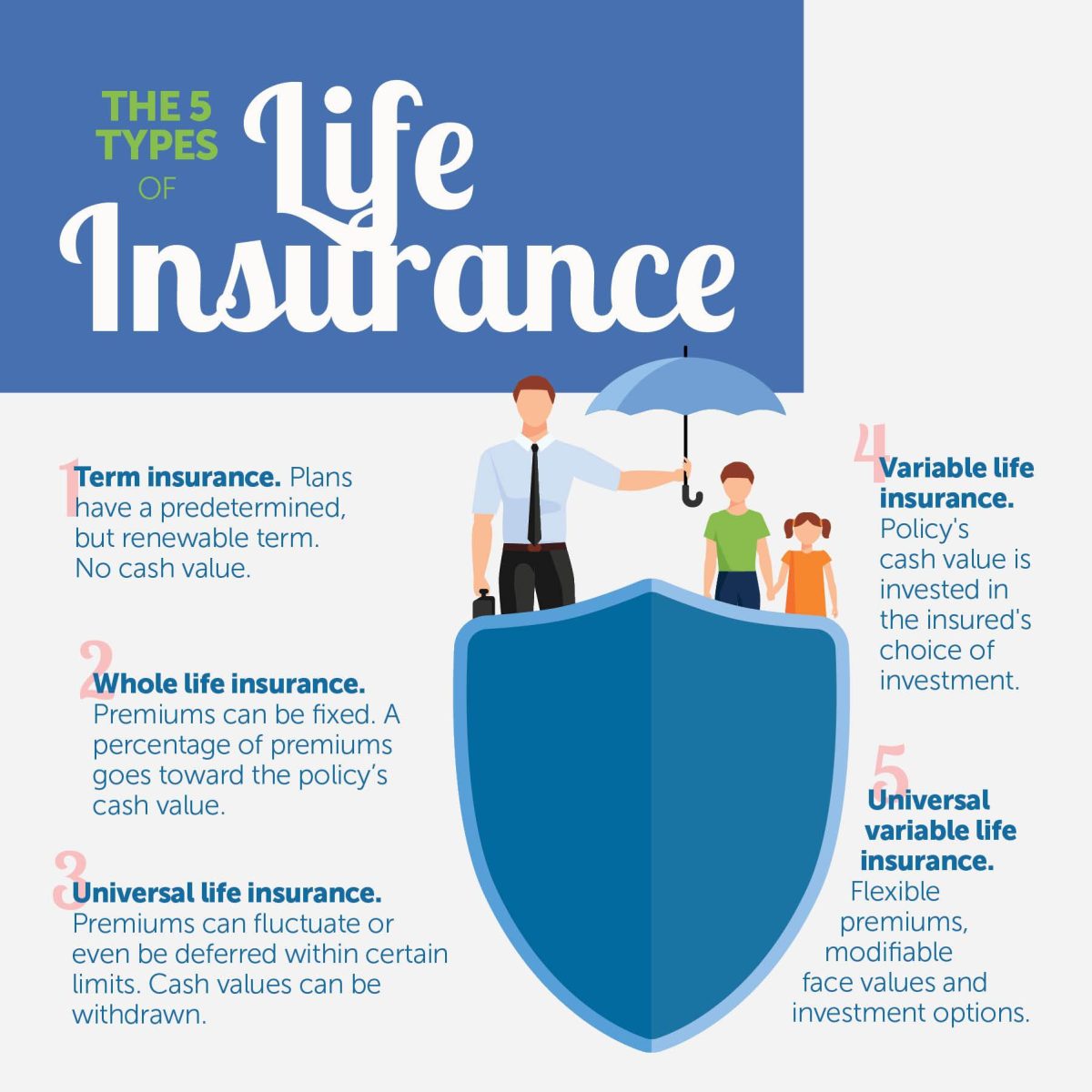
Universal life insurance is not a one-size-fits-all product. Over decades of evolution, insurance carriers have introduced variations designed to cater to different risk tolerances, savings goals, and investment preferences. Understanding these variants is essential before purchasing a policy:
| Type of Universal Life Insurance | Primary Mechanism | Risk Profile | Best Suited For |
|---|---|---|---|
| Standard Universal Life (UL) | Interest credited based on the insurer’s general investment portfolio performance. | Low to Moderate; protected by a guaranteed minimum interest rate. | Individuals seeking maximum flexibility and moderate, stable cash accumulation. |
| Indexed Universal Life (IUL) | Interest credited based on the performance of an external market index (such as the S&P 500). | Moderate to High; features caps and floors on returns. | Those wanting potential for higher growth tied to equity markets without direct market exposure. |
| Variable Universal Life (VUL) | Cash value is invested directly into sub-accounts resembling mutual funds (stocks/bonds). | High; subject to market volatility and potential principal loss. | Financially sophisticated investors comfortable with direct investment risk. |
| Guaranteed Universal Life (GUL) | Designed primarily for lifelong death benefit protection rather than cash accumulation. | Low; minimal cash value growth, but high protection against lapsing. | Individuals seeking permanent coverage at a lower cost than whole life. |
Selecting the appropriate structure depends entirely on your financial objectives. If your primary goal is leaving a guaranteed legacy for your heirs with minimal risk, a Guaranteed Universal Life policy may be appropriate. If you want to leverage market upside while maintaining a safety net, an Indexed Universal Life policy might fit better.
4. Underfunding Can Cause the Policy to Lapse
One of the most critical misunderstood aspects of universal life insurance is the illusion of "free" months. Because premium payments are flexible, policyholders frequently assume they can stop paying premiums indefinitely without negative consequences as long as cash value exists in the account.
Insurance companies deduct monthly charges from your cash value to cover the cost of insurance (COI). As you age, your mortality risk increases, meaning the COI rises significantly—especially when you enter your 70s and 80s.
If you underfund the policy early on and interest rates remain low, your cash value may be completely depleted by rising COI charges. When the cash value hits zero, the policy enters a grace period. If you fail to inject a substantial premium payment within that window, the policy will lapse permanently, terminating your coverage and erasing your life insurance protection after decades of paying into it. Reviewing annual policy statements (often called in-force illustrations) with a qualified financial professional helps prevent this outcome.
5. Tax Advantages Come with Strict IRS Compliance Rules
The tax-favored status of universal life insurance makes it a popular vehicle for wealth transfer and supplemental retirement planning, but these benefits are strictly regulated by the Internal Revenue Service.
To maintain its legal classification as life insurance rather than an investment vehicle, a universal life policy must pass specific IRS compliance tests, such as the Cash Value Accumulation Test (CVAT) or the Guideline Premium and Correlate Test (GPT). These tests ensure that the death benefit maintains a required minimum relationship to the cash value.
If a policy receives too much cash too quickly relative to its death benefit, it can be reclassified by the IRS as a Modified Endowment Contract (MEC).
- Once a policy becomes an MEC, it loses some of its tax advantages.
- Withdrawals and policy loans are subsequently taxed on a Last-In, First-Out (LIFO) basis, meaning earnings are withdrawn first and subjected to ordinary income tax.
- Furthermore, withdrawals or loans taken before age 59½ from an MEC are subject to a 10% IRS penalty tax on the earnings portion.
Working with an experienced insurance producer or fee-only financial planner ensures that your funding schedule stays within safe IRS boundaries, preserving the tax-free status of your policy loans and withdrawals.
Frequently Asked Questions
Can I lose money in a universal life insurance policy?
In a standard or guaranteed universal life policy, your principal and accumulated cash value are generally protected from market downturns by a guaranteed minimum interest rate, meaning you will not lose money due to negative market performance. However, in a Variable Universal Life (VUL) policy, your cash value is invested directly in sub-accounts tied to equities and bonds, exposing you to the possibility of losing principal if those investments perform poorly.
What happens to the cash value when I die?
In most standard universal life policies, the insurance company pays only the face amount (the death benefit) to your beneficiaries upon your passing. The accumulated cash value is typically retained by the insurance company unless you selected a specific policy rider, such as an "increasing death benefit" option (Option B), which pays out both the face amount and the accumulated cash value combined.
How is the cost of insurance calculated in a universal life policy?
The cost of insurance (COI) is a monthly fee deducted directly from your policy's cash value. It is calculated based on your current age, gender, health rating, and the net amount at risk (which is the total death benefit minus your current cash value). As you grow older, the mortality risk increases, causing the monthly COI charge to rise accordingly.
Can I convert a term life insurance policy into a universal life policy?
Many insurance carriers offer a conversion feature on term life insurance policies, allowing policyholders to switch to a permanent policy—such as universal life—without undergoing a new medical exam. You should check your specific term policy contract for conversion windows and deadlines, as most carriers restrict conversions past a certain age (e.g., age 65 or 70).
Are policy loans from a universal life insurance policy taxable?
Generally, policy loans taken against the cash value of a universal life insurance policy are considered tax-free debt, provided the policy remains active and in force until your death. If the policy lapses or is surrendered while a loan is outstanding, the remaining loan balance is treated as taxable income in the year of the lapse, which can trigger a substantial unexpected tax bill.
Next Steps for Prospective Policyholders
Before purchasing a universal life insurance policy, request an in-force ledger or a policy illustration spanning multiple interest-rate scenarios (such as guaranteed minimum rates versus historical average rates). Because universal life performance depends heavily on ongoing maintenance, administrative fees, and crediting rates, consulting an independent insurance broker or a fiduciary financial advisor ensures you select a structure that aligns with your long-term estate planning and protection goals.