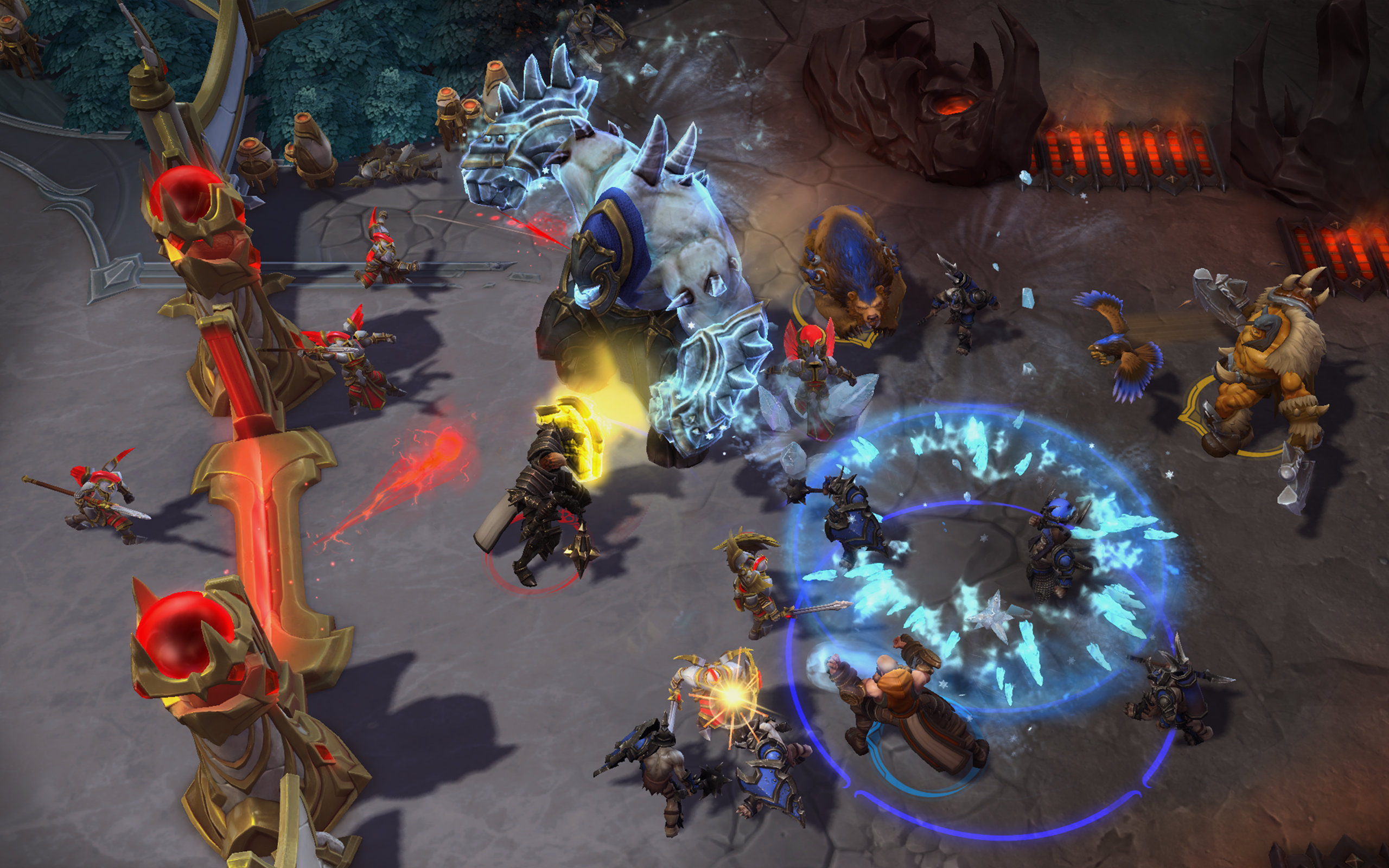
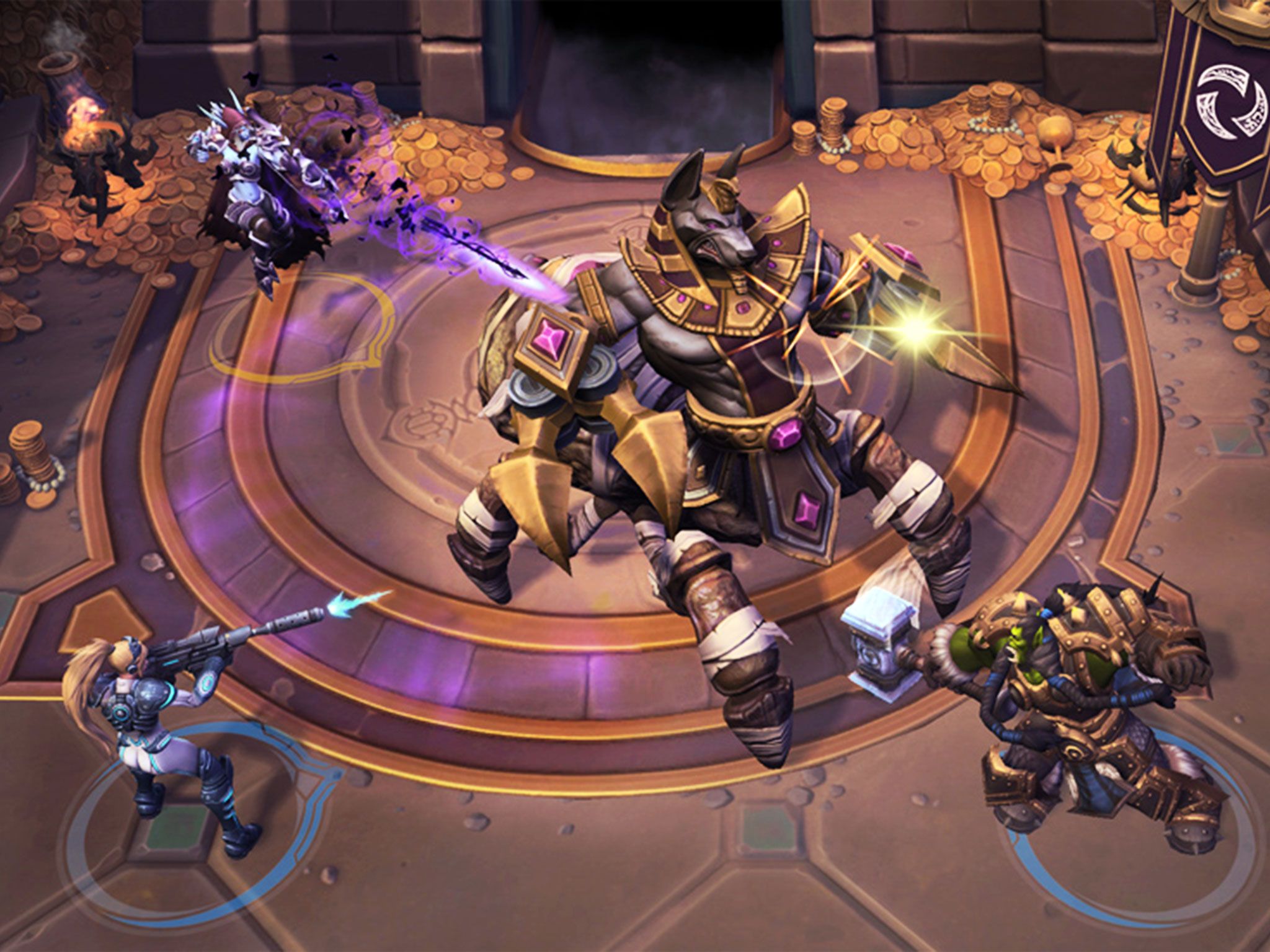
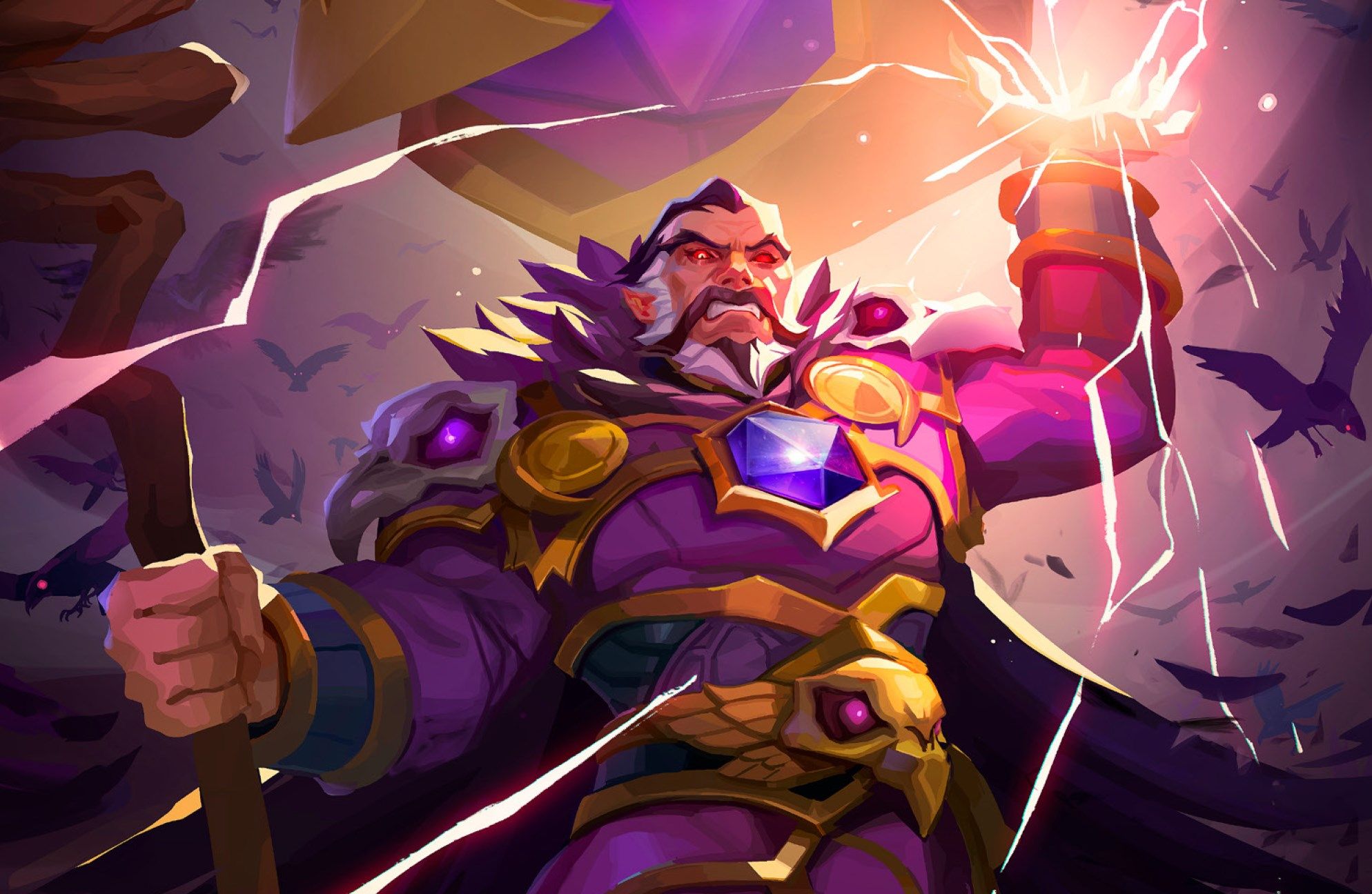
To excel in competitive Heroes of the Storm in 2026, players must prioritize shared experience (XP) soaking, master map-specific mercenary timings, execute cohesive drafts centered on talent power spikes, maintain strict vision control through rotations, and prioritize core-pressure over unnecessary objectives during the late game.
While Heroes of the Storm remains in a long-standing maintenance mode, its competitive community—anchored by grassroots tournaments and the Storm League—continues to thrive on a highly refined meta. Unlike other MOBAs (Multiplayer Online Battle Arenas) where individual gold leads can carry a game, Blizzard’s hero brawler is defined by team-wide progression and objective-based strategy. Success in a high-stakes environment requires a shift from "brawling" to a "macro-first" mindset.
1. Master the Art of Global XP Soaking and Wave Management
In Heroes of the Storm, the most common reason for a loss in competitive play is not a lack of mechanical skill, but a failure to respect the Experience Point (XP) curve. Because XP is shared across the entire team, a single player missing a wave of minions in the early game puts all four teammates at a disadvantage.
The Value of the "Off-Lane"
The competitive standard is the "4-1 split." This involves four players rotating between two lanes (or pushing one) while a dedicated "Solo Laner" or "Off-Laner" manages the furthest lane. In 2026, the meta for off-laning focuses on heroes with high sustain and wave clear, such as Hogger, Blaze, or Malthael.
The goal of the off-laner is not necessarily to kill the opponent, but to ensure every Experience Globe is collected. Missing just two waves of minions is roughly equivalent to giving the enemy team a free kill in terms of XP value. Competitive players must learn to "freeze" lanes near their towers to stay safe from ganks while still being close enough to gather globes.
Respecting Talent Tiers
Competitive matches are often decided by talent tiers. The most critical milestones are levels 4, 7, 10, 13, 16, and 20.
- Level 10 (Heroic Abilities): If the enemy team reaches level 10 first, you must concede the objective. Engaging a team with "Ultimates" when you do not have them results in a team wipe 90% of the time.
- Level 20 (Storm Talents): These are game-ending upgrades. A team that hits level 20 has a massive statistical and functional advantage.
2. Execute Precise Mercenary Camp Timings
Mercenary camps are not just extra damage; they are strategic tools used to create "map pressure." In a competitive setting, taking a camp at the wrong time is a wasted resource. The key is to time the camp so that it reaches the enemy structures exactly when an objective spawns.
Why Timing Matters
If you capture the Siege Giants on Cursed Hollow 30 seconds before a Tribute spawns, the enemy team will be forced to make a choice: send someone to clear the giants (giving your team a 5v4 advantage at the Tribute) or ignore the giants (letting them destroy a fort or keep).
| Camp Type | Best Timing | Strategic Purpose |
|---|---|---|
| Siege Giants | 30s before objective | Long-range structure damage; forces a response. |
| Bruiser/Knight Camp | During objective | High health; provides an aura (on some maps) to soak tower shots. |
| Sapper Camps | Immediate push | High burst damage to structures; must be escorted. |
| Boss (Elite) | Post-team wipe | Used to end the game or force the enemy to defend while you take other lanes. |
The "Safe Invade"
In competitive play, "invading" the enemy’s mercenary camps is a high-risk, high-reward play. This should only be done when you have "lane priority" (meaning your minion waves are pushed deep into enemy territory) or when you have confirmed the location of at least three enemy players on the opposite side of the map.
3. Draft for Synergy and Counter-Picking
The draft is often where the game is won or lost. In Storm League, players often fall into the trap of picking their "main" regardless of the map or team composition. Competitive play requires a more surgical approach.
The Standard Composition
A balanced competitive team almost always consists of:
- The Tank: Controls the engagement, peels for allies, and provides vision (e.g., Johanna, Anub'arak).
- The Healer: Sustains the team and provides utility/CC (e.g., Rehgar, Anduin).
- The Off-Laner: Manages XP and acts as a secondary front line (e.g., Dehaka, Leoric).
- The Sustained DPS: Consistent damage to pressure the enemy tank (e.g., Valla, Greymane).
- The Flex/Burst: A slot for a mage, a second support, or a melee assassin (e.g., Li-Ming, Zeratul).
Identifying Synergies
Look for "blow-up" combos or "sustain" comps. For example, pairing Uther’s Divine Shield with a Genji allows for an unstoppable dive. Alternatively, a "Wobble" comp using Stitches’ Hook and Malfurion’s Entangling Roots can pick off enemies one by one.
Counter-Picking
Competitive players must understand which heroes neutralize others. If the enemy picks a heavy "Auto-Attack" (AA) hero like Valla or Zul'jin, a counter-pick like Cassia or Mei (who provide Blinds) is essential. If the enemy has a high-mobility hero like Tracer, "Point-and-Click" crowd control (CC) like Brightwing’s Polymorph or Taunt Varian is the answer.
4. Vision Control and Rotational Discipline
In Heroes of the Storm, information is just as valuable as damage. Competitive teams use the "Fog of War" to create fear and uncertainty.
The Tank's True Role: Scouting
In high-level play, the Tank should rarely be visible on the map during the "rotational phase." Instead of hitting minions, the Tank should be standing in bushes (bushes provide "Anchor" vision) to spot enemy rotations. If the Tank sees the enemy team moving toward the bottom lane, they can alert their team to retreat or set up an ambush.
Rotational Paths
When moving between lanes, never take the shortest path through the middle of the map if you don't have vision. Competitive players take the "safe route" behind their own structures. Getting "picked" (caught out and killed) while rotating is a primary cause of losing momentum, especially after level 13.
Using Scouting Drones and Abilities
Heroes with vision-granting abilities, such as Hanzo’s Sonic Arrow or Lunara’s Wisp, are highly valued in competitive play. These tools allow a team to check the Boss or a suspicious bush without risking a face-check.
5. Decision Making: Objectives vs. The Core
The most common mistake in mid-tier competitive play is overvaluing the map objective. While objectives are powerful, they are a means to an end: destroying the enemy Core.
When to Skip the Objective
There are several scenarios where a competitive team should ignore the objective:
- Talent Disadvantage: If the enemy is level 10 and you are level 9, do not fight for the objective. Soak lanes to catch up.
- Building Trade: If the enemy is taking a minor objective (like a single Alterac Pass cavalry), but you can take an entire Keep in the bottom lane, the Keep is often more valuable because it generates permanent Catapult pressure.
- The Level 20 Wipe: If you win a team wipe after level 20 and the enemy death timers are 60 seconds, do not go to the objective. Go straight to the Core. Most Cores can be destroyed by 3-4 players in less than 20 seconds.
The "Win Condition" Awareness
Every map has a different "Win Condition." On Blackheart's Bay, it is coin control. On Braxis Holdout, it is winning the 4-man lane to trigger the Zerg wave. Competitive players constantly ask: "What is our fastest path to the Core right now?"
If you have a Sylvanas on your team, your win condition involves using her Black Arrow trait to disable towers and dive deep into enemy territory. If you have an Abathur, your win condition is stalling the game until your level 20 power spike.
Critical Talent Tier Comparison Table
Understanding the power spikes at different levels helps teams decide when to engage or retreat.
| Level Tier | Significance | Competitive Action |
|---|---|---|
| Level 1 | Quest/Baseline | Focus on stacking quests safely; no high-risk brawling. |
| Level 7 | Utility/Synergy | First major power spike; teams often look for a pick-off here. |
| Level 10 | Heroic (Ultimates) | The most dangerous gap. Never fight down an Ultimate. |
| Level 16 | Scaling/Defense | Heroes reach their "final form" for team fighting. |
| Level 20 | Storm Talents | The "End Game." One mistake here usually results in a loss. |
Frequently Asked Questions
Which map is the most "Macro-heavy" in 2026?
Cursed Hollow and Sky Temple remain the most macro-intensive maps. Cursed Hollow requires immense discipline in soaking during the "Tribute" spawns, while Sky Temple forces teams to split their forces effectively to capture multiple altars. Failure to manage lanes on these maps results in a slow, inevitable loss even if you win team fights.
Is the "Double Support" meta still viable in competitive play?
While not as dominant as it was in years past, double support (usually a main Healer plus a Support like Zarya or Medivh) is a viable niche strategy. It is typically used to protect a single "Hyper-carry" like Valla or Illidan. However, it requires the team to have excellent wave clear in the other three slots to make up for the lack of damage.
How do I deal with "Toxic" teammates in Storm League?
In a competitive environment, the best way to handle friction is to focus entirely on "shot-calling" via pings. Use the "On My Way," "Retreat," and "Assist" pings clearly. Avoid typing in chat, as it distracts from XP soaking and map awareness. If a player is intentionally grieving, focus on your own mechanical play to ensure you don't lose more MMR (Matchmaking Rating) than necessary over time.
Should I always follow the "Meta" builds found online?
Standard builds are a great baseline, but competitive play requires "Reactive Talent Choices." If you are a Tank and the enemy has three mages, you must deviate from physical armor talents and pick up Spell Shield. Always analyze the enemy’s damage profile before locking in your level 4, 7, and 13 talents.
What is the most important mechanical skill to master?
Stutter-Stepping (or "Orb Walking"). This involves moving your hero between every basic attack animation. It allows you to maintain optimal positioning while maximizing damage output. For a competitive player, standing still while attacking is a death sentence, as it makes you an easy target for skill-shots.
Practical Recommendation for Improvement
To move from a casual player to a competitive asset, start by watching your own replays—specifically your losses. Focus on the two minutes leading up to your deaths. Were you rotating through un-scouted territory? Did you engage a fight when your team was down a talent tier?
Additionally, use 2026 community resources like Heroes Profile to track your personal win rates with specific heroes on specific maps. Often, players find they have a 60% win rate on "BoE" (Battlefield of Eternity) with Valla but only 40% with Li-Ming. Data-driven hero selection is the fastest way to climb the competitive ranks in the current era of Heroes of the Storm.