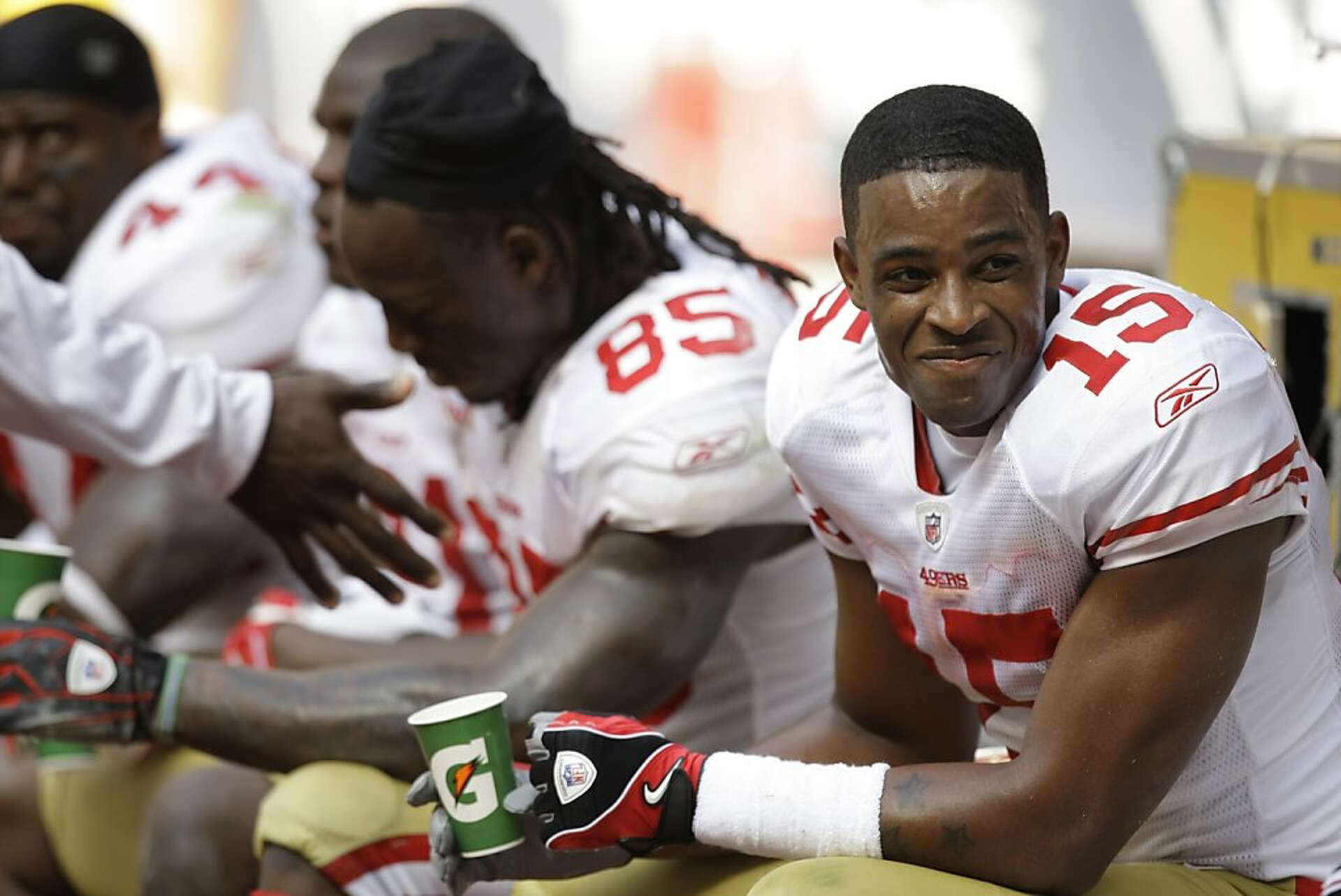
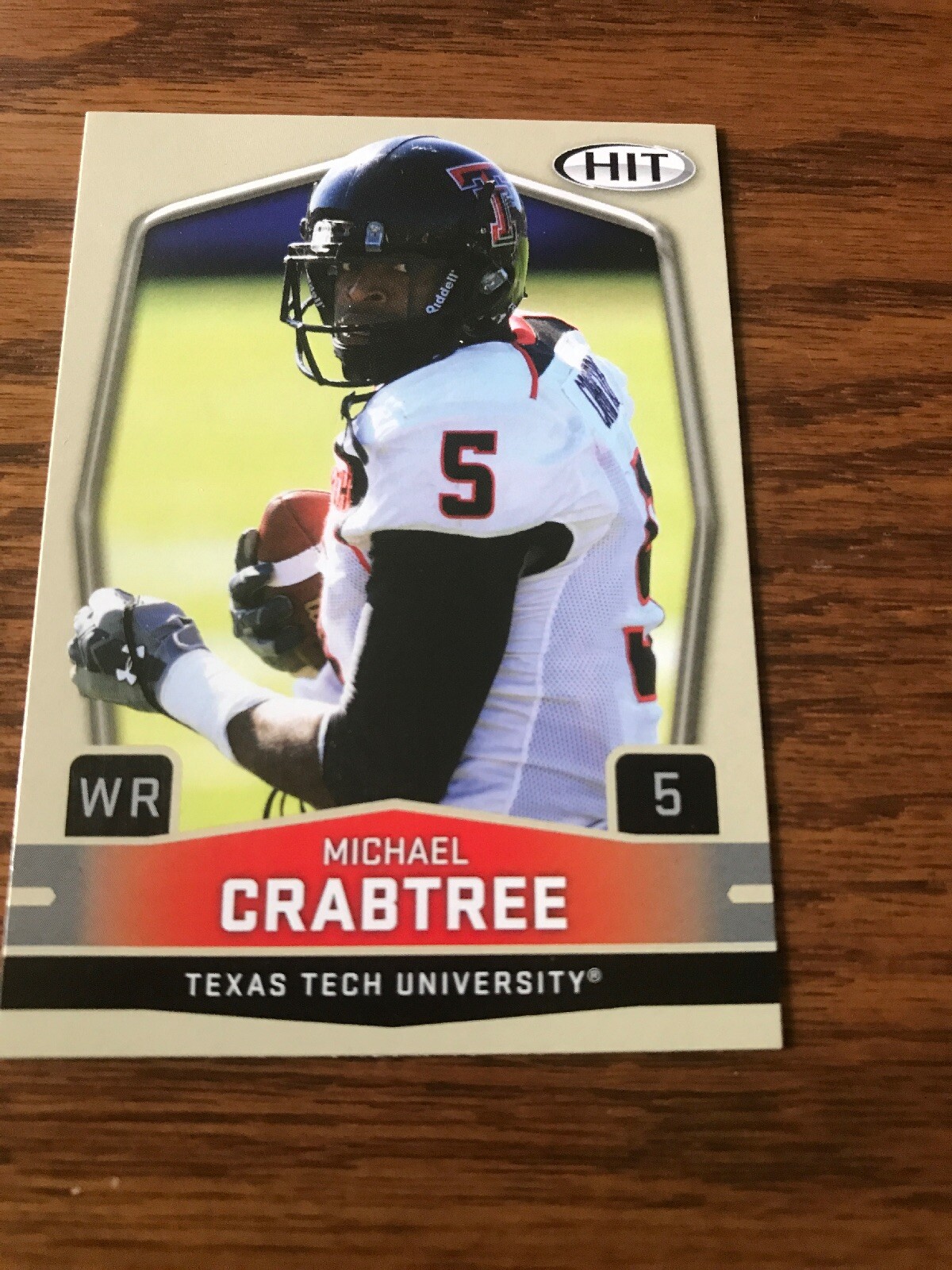
The San Francisco 49ers selected wide receiver Michael Crabtree from Texas Tech with the 10th overall pick in the first round of the 2009 NFL Draft. This selection followed a historic college career and preceded a legendary 71-day contract holdout that fundamentally changed how the NFL approached rookie contracts in subsequent years.
In the nearly two decades since that draft, the 2009 selection of Michael Crabtree remains one of the most debated and analyzed moves in the history of the San Francisco 49ers franchise. As we look back from the vantage point of 2026, the story of Crabtree’s arrival in the NFL serves as a masterclass in draft-day scouting, the complexities of professional sports negotiations, and the evolution of the wide receiver position in the modern era.
The Pre-Draft Hype: A Texas Tech Legend
Before the 49ers ever called his name in April 2009, Michael Crabtree was already a household name among college football enthusiasts. Playing under Mike Leach at Texas Tech, Crabtree redefined what a freshman receiver could achieve. In 2007, he posted a staggering 1,962 yards and 22 touchdowns, winning the Biletnikoff Award as the nation’s best receiver. He became the first player to win the award twice, repeating the feat in 2008.
Scouts were enamored with his ball skills and physical style of play. Unlike the "speed burners" often sought in the first round, Crabtree was praised for his "strong hands," "elite body control," and the ability to win contested catches. However, questions persisted about his top-end speed and whether his production was merely a byproduct of Leach's prolific "Air Raid" offense.
The Injury That Shook the Draft Board
A significant factor in Crabtree falling to the 10th pick was a medical concern. During the 2009 NFL Scouting Combine, it was discovered that Crabtree had a stress fracture in the fifth metatarsal of his left foot (commonly known as a Jones fracture). This injury prevented him from participating in drills at the Combine and necessitated surgery.
The injury created a cloud of uncertainty. Teams in the top five, such as the Seattle Seahawks and the Cleveland Browns, were hesitant to commit high-value capital to a receiver who couldn't perform full pre-draft workouts. This medical red flag, combined with the Raiders' surprising decision to take Darrius Heyward-Bey at pick seven, allowed the San Francisco 49ers to secure a player many considered the most talented prospect in the entire class.
The 2009 NFL Draft Day: The Slide to Number 10
On April 25, 2009, the 49ers front office, led by General Manager Trent Baalke and Head Coach Mike Singletary, watched the board with anticipation. When the Oakland Raiders selected Heyward-Bey, a collective gasp was heard throughout the league. This paved the way for the 49ers to grab Crabtree three picks later.
The 49ers were in desperate need of a primary target for quarterback Alex Smith. The team had spent years searching for a successor to the legendary Terrell Owens, and Crabtree appeared to be the "X-receiver" who could anchor the offense for a decade. The selection was initially met with universal acclaim from San Francisco fans and local media, who viewed the 10th pick as a massive steal.
2009 First Round Wide Receiver Comparison
To understand the context of the 49ers' decision, it is helpful to look at the other wide receivers taken in the first round of the 2009 NFL Draft.
| Player | Team | Draft Pick | College | NFL Career Length |
|---|---|---|---|---|
| Michael Crabtree | San Francisco 49ers | 10 | Texas Tech | 11 Seasons |
| Darrius Heyward-Bey | Oakland Raiders | 7 | Maryland | 10 Seasons |
| Jeremy Maclin | Philadelphia Eagles | 19 | Missouri | 8 Seasons |
| Percy Harvin | Minnesota Vikings | 22 | Florida | 8 Seasons |
| Hakeem Nicks | New York Giants | 29 | North Carolina | 7 Seasons |
| Kenny Britt | Tennessee Titans | 30 | Rutgers | 9 Seasons |
The Infamous 71-Day Holdout
The excitement of draft day quickly soured as the summer of 2009 progressed. Michael Crabtree, represented by the late agent Eugene Parker, entered into a protracted contract dispute with the 49ers. The crux of the disagreement was Crabtree’s slotting. Because he was widely considered a top-three talent who "slid" to pick ten, his camp demanded a contract comparable to those taken in the top five.
The holdout was unprecedented in its length for a rookie in that era. Crabtree missed the entirety of training camp, the preseason, and the first five games of the regular season. There were even credible reports and threats that Crabtree would sit out the entire year and re-enter the 2010 NFL Draft—a move that would have been catastrophic for his career and the 49ers' reputation.
The standoff finally ended on October 7, 2009, when Crabtree signed a six-year contract. The deal was worth approximately $32 million, with $17 million guaranteed. While the holdout remains a blemish on his early career, it served as a primary catalyst for the NFL's 2011 Collective Bargaining Agreement (CBA), which implemented a strict rookie wage scale to prevent such stalemates from ever happening again.
Impact on the 49ers: The Rookie Season and Beyond
Despite missing months of preparation, Crabtree’s impact was immediate once he stepped onto the field. His debut came in Week 7 against the Houston Texans. He finished his rookie campaign with 48 receptions for 625 yards and two touchdowns in just 11 games. His chemistry with Alex Smith began to develop, providing a glimpse of the elite talent that had made him a star in Lubbock.
The Peak Years: 2011–2013
Crabtree’s tenure with the 49ers reached its zenith during the Jim Harbaugh era. Under Harbaugh’s leadership and with the emergence of Colin Kaepernick at quarterback, Crabtree became the focal point of a Super Bowl-caliber offense.
- The 2011 Season: Crabtree helped lead the 49ers to the NFC Championship game, recording 874 yards.
- The 2012 Breakout: This was statistically Crabtree’s finest year. He surpassed the 1,000-yard mark for the first time, finishing with 1,105 yards and 9 touchdowns. He was instrumental in the 49ers' run to Super Bowl XLVII.
- The Achilles Injury: In May 2013, Crabtree suffered a torn Achilles tendon during OTA workouts. This injury proved to be a turning point, as he struggled to regain his elite explosiveness in subsequent years, though he remained a reliable "possession" receiver.
The Richard Sherman Rivalry and the End of an Era
No discussion of Michael Crabtree's 49ers career is complete without mentioning the 2013 NFC Championship Game. In the final seconds, a pass intended for Crabtree in the end zone was tipped by Seahawks cornerback Richard Sherman and intercepted. Following the play, Sherman gave a legendary post-game interview calling Crabtree a "sorry receiver."
This moment crystallized the fierce rivalry between the 49ers and the Seahawks and unfortunately overshadowed much of Crabtree’s technical proficiency. Crabtree played one more season in San Francisco (2014) before moving on to the Oakland Raiders, where he enjoyed a career resurgence alongside Derek Carr.
Technical Analysis: Why the 49ers Drafted Him
From a technical standpoint, the 49ers drafted Crabtree because of his functional strength and radius. While he didn't possess "track speed," he was exceptional at using his body to shield defenders.
- Release at the Line: Crabtree used a "diamond release" and strong hand swipes to beat press coverage, which was vital in the physical NFC West.
- Catching Technique: He was a "natural" catcher, meaning he caught the ball away from his body with his hands rather than letting it get into his chest.
- Yards After Catch (YAC): In his prime, Crabtree was surprisingly elusive for his size, often making the first defender miss with a quick jab step.
Frequently Asked Questions
Why did Michael Crabtree hold out in 2009?
Crabtree held out because he and his agent believed he should be paid according to his perceived talent (top 5) rather than his actual draft slot (10th). He wanted a contract that mirrored the deals given to higher picks like Darrius Heyward-Bey and Tyson Jackson.
Was Michael Crabtree considered a "bust" for the 49ers?
No. While the holdout was controversial, Crabtree provided the 49ers with multiple productive seasons, a 1,100-yard year in 2012, and was a key piece of a team that went to three consecutive NFC Championship games. By any standard of draft value, he was a successful pick.
Who was the 49ers quarterback when Crabtree was drafted?
When Crabtree was drafted in 2009, Shaun Hill was the initial starter, but Alex Smith eventually regained the starting role. Smith and Crabtree developed a strong rapport that lasted until the quarterback transition to Colin Kaepernick in late 2012.
How did the 49ers' 2009 draft class perform overall?
The 2009 class was a foundational one for the 49ers' future success. In addition to Crabtree, the team drafted safety Dashon Goldson and linebacker Scott McKillop. While not every pick was a star, the acquisition of Crabtree gave the team the offensive identity it needed to compete for a championship.
Where is Michael Crabtree now in 2026?
As of 2026, Michael Crabtree has long since retired from the NFL. He is frequently seen at Texas Tech alumni events and has been involved in several business ventures in his native Texas. His legacy remains that of a player who challenged the system and eventually proved his worth on the field.
Final Assessment and Next Actions
The story of the San Francisco 49ers drafting Michael Crabtree in 2009 is a complex narrative of high-level talent meeting the rigid business structures of the NFL. For fans and historians, it remains a pivotal moment that signaled the 49ers' return to relevance in the early 2010s.
Recommended Next Steps for Researchers:
- Review the 2011 CBA: To understand the full impact of the Crabtree holdout, research the changes made to the "Rookie Wage Scale" in 2011.
- Analyze the 2012 Film: Watch the 2012 NFC Divisional Playoff game against the Green Bay Packers to see Crabtree's technical skills at their absolute peak.
- Comparative Study: Compare the career trajectories of the 2009 wide receiver class to see how "physicality" vs. "speed" translated to NFL longevity.