Many consumers encounter marketing terms that conflate cellular generations, leading to the common misconception that "3G LTE" describes an advanced variant of third-generation mobile technology. In reality, LTE—which stands for Long-Term Evolution—is an entirely different, fourth-generation wireless broadband standard that shares no structural radio access architecture with traditional 3G networks.
The Core Distinction: What LTE Actually Means
To understand why 3G LTE is a misnomer, one must examine the foundational architecture of mobile telecommunications standards. The telecommunications industry organizes mobile networks into generations (1G, 2G, 3G, 4G, and 5G), each defined by distinct technical parameters, transmission speeds, and core network architectures established by standardization bodies like the 3rd Generation Partnership Project (3GPP).
Third-generation (3G) technologies, such as UMTS (Universal Mobile Telecommunications System) and CDMA2000, rely on circuit-switched and early packet-switched architectures designed primarily for voice traffic and relatively low-speed data. Conversely, Long-Term Evolution (LTE) was conceived from its inception as an all-IP (Internet Protocol) packet-switched network. LTE discards legacy circuit-switched voice architecture entirely, handling voice calls either via Voice over LTE (VoLTE) or fallback mechanisms to older networks during a transitional phase.
Because of this fundamental architectural divide, LTE is mathematically and structurally a 4G technology. The term "3G LTE" typically arises from carrier marketing departments attempting to bridge consumer understanding during the transition era of the early 2010s, when carriers marketed LTE as an evolution from 3G networks rather than a replacement for them.
Historical Context and the Evolution of Cellular Standards
The naming conventions of mobile technology often create confusion because generational leaps rarely happen overnight. Understanding how 3G evolved into 4G helps clarify why hybrid-sounding terms persist in consumer consciousness.
The 3G Era and Its Limitations
During the late 2000s, 3G networks represented the cutting edge of mobile data, enabling rudimentary web browsing, email synchronization, and application downloads. Technologies like HSDPA (High-Speed Downlink Packet Access) and HSUPA—often branded as "3.5G" or "HSPA+"—pushed 3G theoretical limits toward tens of megabits per second. However, these systems remained bound by the spectral inefficiency and latency inherent to their inherited design frameworks.
The Leap to 4G LTE
Recognizing that legacy architectures could not scale to meet the exploding demand for mobile video and high-speed data, the 3GPP initiated the Long-Term Evolution project. LTE utilized advanced radio access technologies—specifically Orthogonal Frequency-Division Multiple Access (OFDMA) on the downlink and Single-Carrier Frequency-Division Multiple Access (SC-FDMA) on the uplink. These technologies allowed for much wider channel bandwidths (up to 20 MHz natively, and later aggregated much higher), vastly superior spectral efficiency, and round-trip latencies dropping from over 100 milliseconds on 3G down to under 10 milliseconds.
When the International Telecommunication Union (ITU) originally defined 4G standards, strict interpretations required peak speeds of 100 Mbps for mobile stations and 1 Gbps for stationary stations. Early LTE deployments did not always meet these theoretical thresholds out of the box, leading the ITU to officially clarify in 2010 that LTE could be marketed as a 4G technology because it represented a substantial generational advancement over 3G systems.
Comparative Breakdown: 3G vs. LTE (4G) Architecture
To fully grasp the technical gulf separating 3G from LTE, examining core performance indicators and network design metrics side by side clarifies their operational differences.
| Feature / Metric | Third-Generation (3G / HSPA+) | Fourth-Generation (LTE) |
|---|---|---|
| Core Network Architecture | Circuit-switched and Packet-switched hybrid | All-IP, Flat Packet-Switched Architecture (EPC) |
| Radio Access Technology | W-CDMA / CDMA2000 | OFDMA (Downlink) / SC-FDMA (Uplink) |
| Typical Peak Speeds | 3 Mbps to 42 Mbps | 100 Mbps to several hundred Mbps |
| Latency (Round-Trip Time) | 100 ms – 300 ms | 10 ms – 30 ms |
| Voice Handling | Native circuit-switched voice | VoIP / VoLTE (Voice over LTE) |
| Spectral Efficiency | Low to moderate | High (utilizes advanced MIMO) |
Why the "3G LTE" Label Persists
The survival of the phrase "3G LTE" in everyday language stems from commercial positioning rather than technical accuracy. During the rollout of 4G infrastructure, network coverage was sparse. Telecommunications providers needed a way to explain to consumers why their brand-new, expensive LTE smartphones frequently dropped indicator bars back to "3G" or "HSPA" when entering rural or indoor environments.
Carriers frequently displayed network status indicators that grouped technologies together or deployed firmware where early devices showed transitional status notifications. Furthermore, because early LTE networks could not handle voice calls without falling back to 3G circuit-switched networks (a process known as Circuit Switched Fallback, or CSFB), consumers frequently experienced a handshake between 3G and LTE systems during phone calls, reinforcing the mental association between the two standards.
Technical Implications of the Distinction
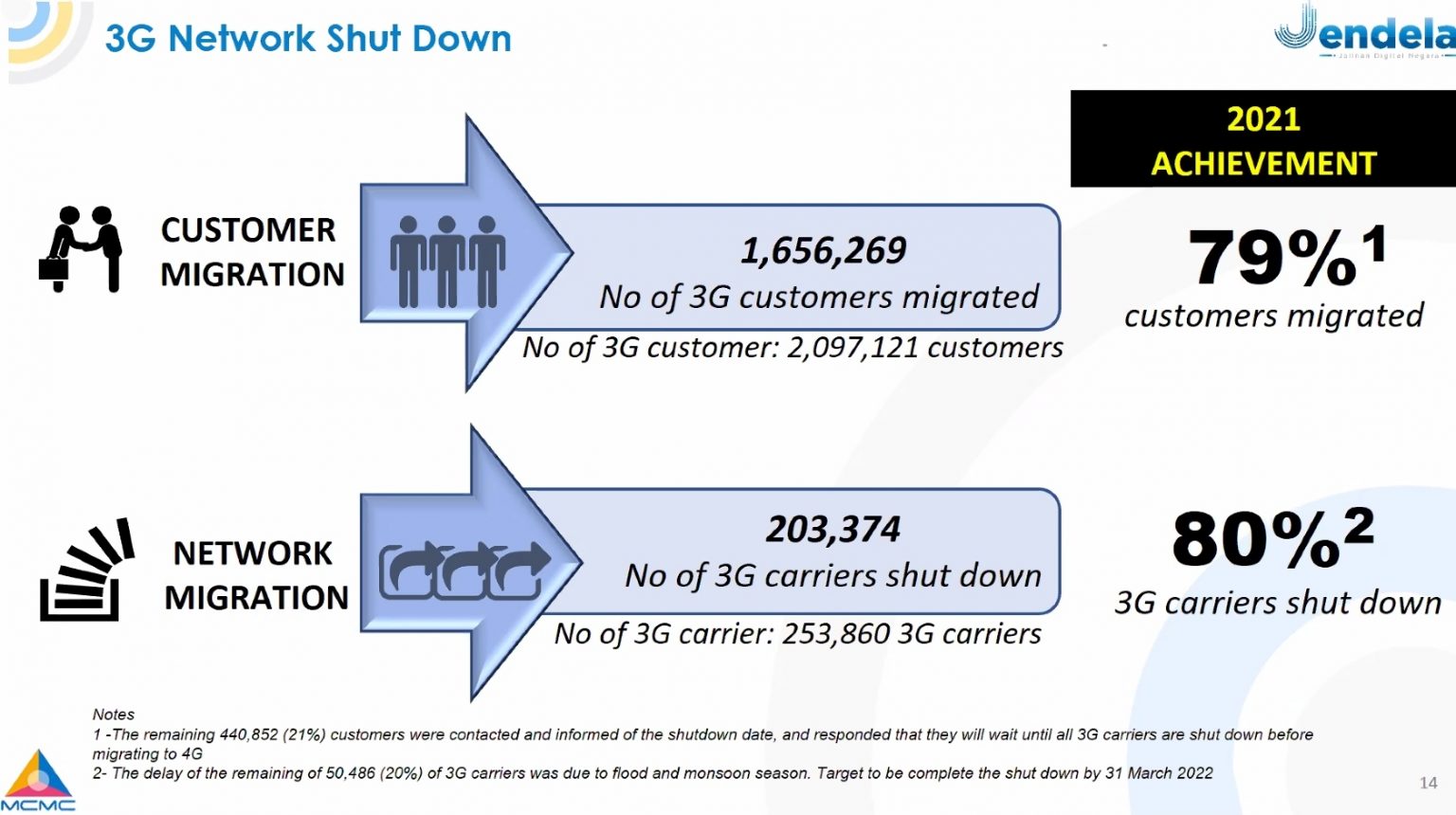
Recognizing that LTE is not a 3G network carries significant practical importance, particularly regarding modern infrastructure changes such as the nationwide shutdown of legacy 3G networks by major global carriers.
When carriers sunset their 3G networks to repurpose valuable radio frequency spectrum for 4G LTE and 5G services, devices that rely strictly on 3G architecture lose all connectivity. However, devices equipped with LTE chipsets remain fully operational, provided they support the specific frequency bands deployed by the carrier.
Confusion arises when consumers assume an older device labeled with mixed-generation terminology will survive a 3G shutdown. If a device relies on 3G for voice fallback via CSFB and lacks modern VoLTE capability, it will fail to make phone calls—including emergency calls—even if its data radio connects to an LTE band. Consequently, verifying the exact technical capabilities of mobile hardware transcends mere semantics; it dictates whether a device will function as legacy networks are decommissioned.
Frequently Asked Questions
Is LTE considered 3G or 4G?
LTE is strictly a 4G technology. While it represents an evolutionary step from 3G networks in terms of deployment and upgrade paths, its underlying radio interface and core network architecture belong entirely to the fourth generation of mobile standards.
Why do some phones display "3G" and "LTE" interchangeably?
Phones typically display these indicators based on the active connection state. If an LTE-capable device drops its high-speed data connection due to weak signal strength or switches to a legacy tower to handle a voice call via fallback protocols, the status bar updates to reflect the active 3G network state.
Will an LTE phone stop working when 3G networks are shut down?
Pure LTE phones that support VoLTE will continue to work normally after 3G shutdowns. However, older hybrid devices that depend on 3G networks for voice call routing may lose voice capabilities unless updated or replaced.
Can a 3G phone be upgraded to LTE through software?
No. LTE requires specialized hardware, including distinct baseband processors, radio frequency transceivers, and antenna configurations designed to handle OFDMA modulation schemes that 3G hardware physically cannot process.
Next Actions and Verification
For users navigating device compatibility or network upgrades, verifying hardware specifications directly with the manufacturer or carrier is essential. Check device settings to confirm whether Voice over LTE (VoLTE) is enabled, and review carrier compatibility lists before traveling or making hardware purchasing decisions to ensure seamless connectivity on modern 4G and 5G infrastructure.