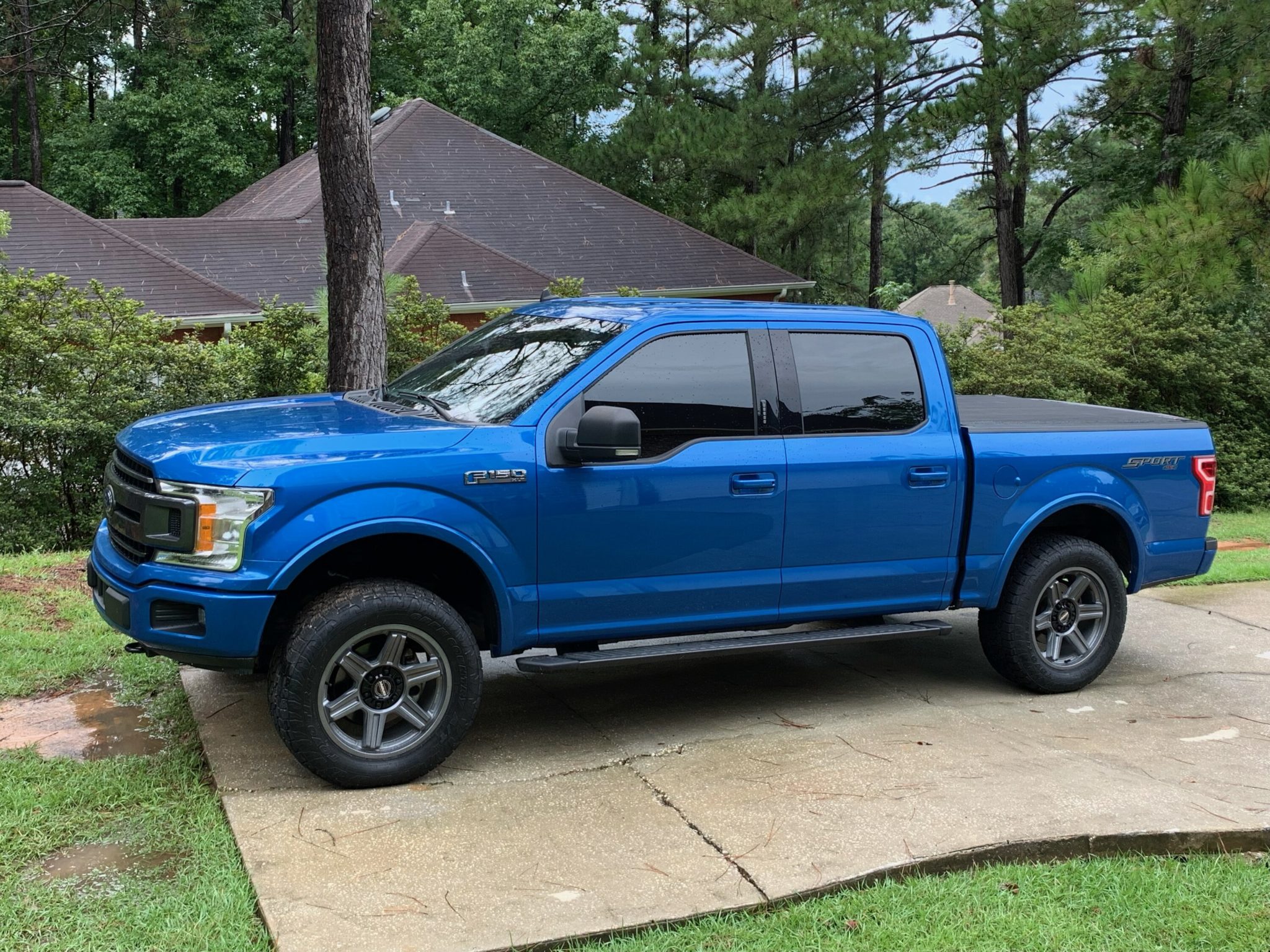
Choosing 275/65R20 tires for a Ford F-150 is a popular "plus-size" upgrade that increases the tire diameter to approximately 34.1 inches. This size provides a more aggressive stance and improved ground clearance compared to stock 275/55R20 or 275/60R20 options. However, successful fitment typically requires a 2-inch to 2.5-inch leveling kit to prevent rubbing on the inner fender liners or crash bars during tight turns.
Understanding the 275/65R20 Dimensions
When a Ford F-150 owner looks at the 275/65R20 specification, they are looking at a tire that is significantly taller than the factory-equipped rubber. To understand why this size is such a common choice in 2026, one must break down the metric measurements into physical dimensions that affect the truck's geometry.
The first number, 275, represents the section width in millimeters. This is the width of the tire from sidewall to sidewall. At roughly 10.8 inches wide, it maintains a footprint similar to many stock F-150 tires, which helps prevent excessive "poke" outside the wheel wells when using factory wheels.
The second number, 65, is the aspect ratio. This indicates that the sidewall height is 65% of the tire's width. This is where the 275/65R20 differs from the stock 275/55R20. By increasing the aspect ratio from 55 to 65, the sidewall grows substantially. Specifically, the sidewall height increases from approximately 5.96 inches to 7.04 inches.
The final number, 20, denotes the wheel diameter in inches. For F-150 trims like the Lariat, King Ranch, and Platinum, 20-inch wheels are standard. The total calculated diameter of a 275/65R20 tire is approximately 34.1 inches. In contrast, the standard 275/55R20 is only 31.9 inches tall. This 2.2-inch increase in diameter effectively lifts the truck's axles by 1.1 inches from the ground, providing a tangible boost in off-road clearance and a much fuller look in the wheel arches.
Fitment Requirements: Stock vs. Leveled vs. Lifted
One of the most critical considerations for F-150 owners is whether this tire size will fit without modification. Because the Ford F-150 (specifically the 13th and 14th generations spanning 2015 through 2026) is designed with relatively tight tolerances for fuel efficiency and aerodynamics, adding a 34-inch tire introduces clearance challenges.
Stock Suspension Performance
On a completely stock F-150, fitting 275/65R20 tires is generally discouraged. While the tires may fit while the truck is stationary and the wheels are pointed straight, you will likely encounter "rubbing" at full steering lock (when the steering wheel is turned all the way to one side). This contact usually occurs against the front crash bars—safety components engineered into the frame—or the plastic inner fender liners. Under suspension compression, such as hitting a pothole while turning, the risk of damage to the tire or the vehicle trim increases.
The Leveling Kit Solution
The vast majority of F-150 owners opting for 275/65R20 tires install a leveling kit. A leveling kit typically consists of spacers or replacement struts that raise the front of the truck by 2 to 2.5 inches. This eliminates the factory "rake" (where the front sits lower than the rear) and provides the necessary vertical clearance for the 34.1-inch tire. With a 2-inch level, the 275/65R20 fits comfortably on factory wheels with high offsets (+44mm). If you use aftermarket wheels with a lower offset (which pushes the wheels further out), you may still need to perform minor trimming of the plastic air dam.
Full Suspension Lifts
For those with a 4-inch or 6-inch suspension lift, the 275/65R20 will fit with ease. However, many enthusiasts find that a 34-inch tire looks slightly undersized on a 6-inch lift, where 35-inch or 37-inch tires are more common. The 275/65R20 is the "goldilocks" size for a leveled truck: it fills the wheel well without requiring the extensive modifications or the significant fuel economy penalties associated with wider 35x12.50 tires.
Mechanical and Performance Impacts
Moving to a larger tire size is not just an aesthetic choice; it changes the mechanical advantage of your drivetrain. When you increase the tire diameter, you are effectively changing the final drive ratio of the vehicle.
Speedometer and Odometer Accuracy
Since the 275/65R20 is roughly 7% larger in circumference than a stock 275/55R20, your speedometer will read slower than your actual speed. For example, when your speedometer shows 65 mph, you may actually be traveling closer to 70 mph. This also affects shift points in the 10-speed automatic transmission. In 2026, most owners correct this using electronic calibration tools like FORScan or aftermarket tuners to update the tire circumference in the Body Control Module (BCM).
Acceleration and Fuel Economy
A larger tire is heavier and requires more energy to rotate. Most 275/65R20 tires are "LT" (Light Truck) rated with an E-load range, meaning they have thicker sidewalls and more robust construction than standard "P-metric" passenger tires. An LT275/65R20 tire can weigh between 55 and 62 pounds, compared to the 40-45 pounds of a stock tire. This increased unsprung weight, combined with the higher wind resistance of a lifted truck, typically results in a loss of 1 to 2 miles per gallon (MPG). Additionally, unless your F-150 is equipped with 3.55 or 3.73 rear-end gears, you may notice a slight decrease in "pep" or off-the-line acceleration.
Braking Performance
Increased rotating mass also places higher demands on the braking system. While the F-150's factory brakes are robust, owners should expect a slightly longer stopping distance when moving to an LT-rated 275/65R20. It is essential to ensure that your brake pads and rotors are in good condition when upgrading to this heavier tire class.
Top Tire Recommendations for 2026
As of 2026, the tire market has evolved to offer specialized compounds that balance off-road durability with on-road manners. Here are the top-performing tires currently available in the 275/65R20 size for the F-150.
| Tire Model | Category | Best For | Key Feature |
|---|---|---|---|
| BFGoodrich KO3 | All-Terrain | Mixed Use / Off-Road | Improved wet traction and tread life over the legendary KO2. |
| Michelin Defender LTX Platinum | Highway / Touring | Towing / Daily Driving | Exceptional longevity and the quietest ride in this size. |
| Falken Wildpeak A/T4W | All-Terrain | Snow & Rain | Three-Peak Mountain Snowflake (3PMSF) rated with rugged sidewalls. |
| Goodyear Wrangler Territory MT | Mud-Terrain | Extreme Off-Road | Open tread design for maximum mud and rock performance. |
| Nitto Ridge Grappler | Hybrid | Aesthetics & Performance | Combines M/T looks with A/T on-road noise levels. |
BFGoodrich All-Terrain T/A KO3
The KO3 represents the latest evolution of the all-terrain tire. For F-150 owners, it provides a "tough" look that complements the truck's design. The KO3 specifically addressed the wet-braking and mud-clearing issues of its predecessor (the KO2). In the 275/65R20 size, it offers a Load Range E rating, making it ideal for those who frequently haul heavy trailers or venture into rocky terrain.
Michelin Defender LTX Platinum
If your F-150 rarely leaves the pavement and is primarily used as a long-distance cruiser or a heavy-duty tow rig, the Michelin Defender LTX Platinum is the benchmark. While it lacks the aggressive knobby look of an all-terrain tire, its rolling resistance is lower, which helps preserve fuel economy. It is widely regarded for its "50,000 to 70,000-mile" tread life, making it a cost-effective long-term investment.
Falken Wildpeak A/T4W
The Wildpeak series has gained a massive following among Ford owners due to its excellent performance in winter conditions. The A/T4W features a heat-diffuser technology in the lower sidewall, which keeps the tire cool during heavy towing, and its deep tread depth ensures longevity.
Towing and Payload Considerations
Many Ford F-150 owners choose the 275/65R20 size because most tires in this dimension are Load Range E. A Load Range E tire is rated for a maximum pressure of 80 PSI and can support significantly more weight than a standard Load Range C or P-metric tire.
While the tire's capacity does not increase the truck's official GVWR (Gross Vehicle Weight Rating) set by Ford, the stiffer sidewalls of an LT275/65R20 tire provide much better stability when towing. You will experience less "sidewall squirm" or swaying when a heavy trailer is attached, especially in crosswinds. For daily driving without a load, these tires should typically be run at 38–45 PSI to maintain ride comfort; pumping them up to the full 80 PSI while empty will result in an incredibly harsh and bouncy ride.
Maintenance and Longevity
To maximize your investment in 275/65R20 tires, specific maintenance protocols are required. Because these tires are larger and heavier, alignment is paramount. Even a slight toe-in or camber misalignment will cause rapid, uneven wear on these expensive tires.
- Rotation Schedule: Rotate these tires every 5,000 miles. Because all-terrain tires have larger tread blocks, they are prone to "cupping" or "feathering" if not rotated frequently. A cross-rotation pattern (moving the rear tires to the front on the same side and the front tires to the opposite rear positions) is often recommended for 4WD trucks.
- Balance: Larger tires are harder to balance. If you feel a vibration in the steering wheel at highway speeds, ensure the shop uses a "Road Force" balancer, which simulates the weight of the vehicle on the tire during the balancing process.
- Pressure Monitoring: Ensure your TPMS (Tire Pressure Monitoring System) is updated. If you are moving from a 35 PSI factory tire to an LT tire that requires 45 PSI, you may need to adjust the TPMS threshold using a tool like FORScan to prevent the warning light from staying on.
Frequently Asked Questions
Will 275/65R20 tires void my Ford warranty?
Installing larger tires generally does not void the entire vehicle warranty. Under the Magnuson-Moss Warranty Act, a manufacturer cannot deny a warranty claim unless they can prove the aftermarket part caused the failure. However, if a larger tire causes premature wear on your wheel bearings, ball joints, or steering rack, Ford may decline to cover those specific components under warranty.
How much height will 275/65R20 tires add to my F-150?
The tire itself is roughly 2.2 inches taller than a standard 275/55R20. This adds 1.1 inches of ground clearance. If you also install a 2-inch leveling kit to fit the tires, the front of your truck will sit approximately 3.1 inches higher than stock.
Can I use my stock spare tire with 275/65R20s?
This is a safety concern. If your F-150 is 4WD and you have an emergency that requires using the spare, the spare tire must be within a very close diameter of the other tires to avoid damaging the transfer case or differential. A stock 32-inch spare is too small to run alongside 34.1-inch tires for any significant distance. It is highly recommended to purchase a fifth tire in the 275/65R20 size for your spare wheel.
Do these tires make the truck much louder on the highway?
This depends entirely on the tread pattern. A highway-terrain tire like the Michelin Defender will remain silent. A hybrid or all-terrain tire like the Nitto Ridge Grappler or BFGoodrich KO3 will produce a slight "hum" at speeds above 60 mph, but modern tire engineering has made these significantly quieter than the "mudders" of previous decades.
Final Recommendations for Owners
If you are looking to upgrade your Ford F-150, the 275/65R20 is perhaps the most practical "big tire" choice available in 2026. It offers a substantial increase in height and a rugged aesthetic without the extreme width that causes major rubbing issues or massive fuel economy losses.
For the best experience, pair these tires with a high-quality 2-inch leveling kit from a reputable brand like Fox Racing or Bilstein. This combination will provide the necessary clearance while actually improving the truck's dampening and ride quality over the factory suspension. Always remember to recalibrate your speedometer to keep your transmission shifting correctly and your odometer accurate.