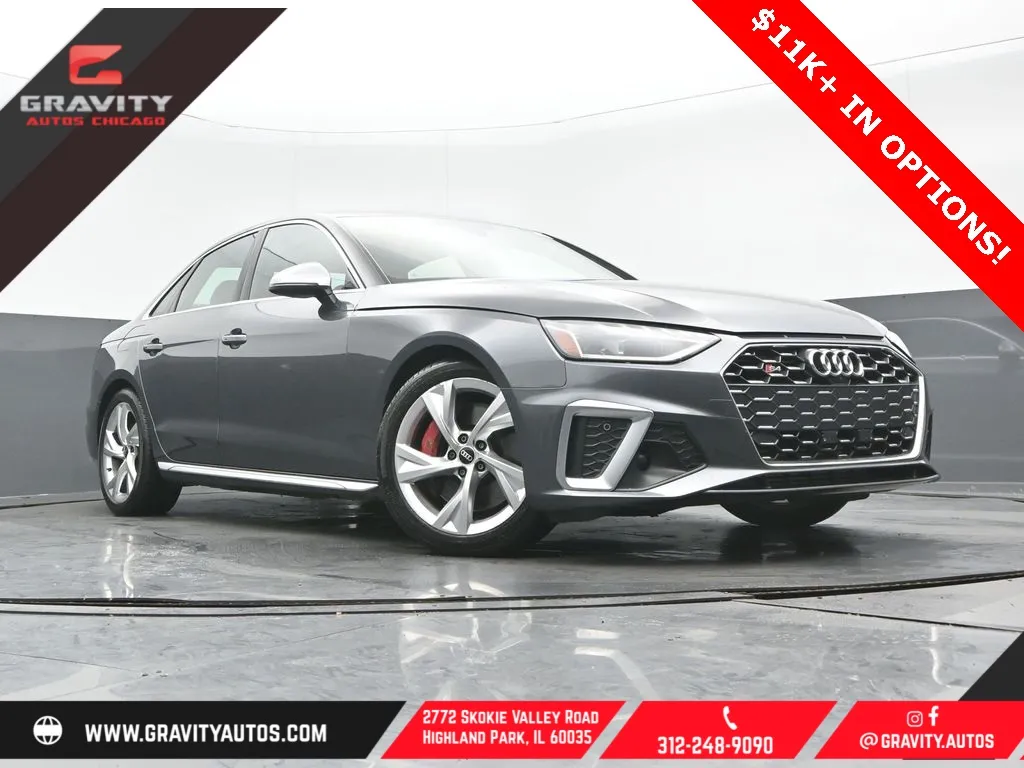
In actual driving conditions, the 2021 Audi S4 achieves a 0 to 60 mph time of roughly 4.2 to 4.4 seconds, outperforming Audi's conservative factory estimates of 4.4 to 4.7 seconds when utilizing its standard launch control system on a prepared surface with optimal weather conditions.
Introduction and Subject Overview
The performance vehicle market is filled with manufacturers that publish conservative acceleration figures for their sports sedans. Among these, the B9.5 generation of the Audi S4, specifically the 2021 model year, stands out as a prime example of real-world performance exceeding expectations. When Audi introduced the refreshed S4 for the 2021 model year, it brought subtle exterior styling updates, updated MIB 3 infotainment technology, and a continuation of the potent 3.0-liter turbocharged V6 engine paired with an 8-speed Tiptronic automatic transmission and quattro all-wheel-drive.
While manufacturer specifications often list the 0–60 mph sprint conservatively to account for varying global fuel qualities, altitude, tire wear, and atmospheric temperatures, independent automotive journalists, track testers, and enthusiast owners have routinely clocked the car running significantly quicker. Understanding the 2021 Audi S4 0–60 in practice requires looking beyond factory brochure numbers to examine how environmental variables, launch techniques, traction management, and mechanical health interact on the asphalt.
Powertrain Specifications and Technical Architecture
To understand how the 2021 Audi S4 achieves its real-world acceleration figures, one must analyze the mechanical hardware resting beneath the aluminum-intensive hood. At the core of the S4 is a 3.0-liter TFSI turbocharged V6 engine. This powerplant utilizes a twin-scroll turbocharger mounted inside the "hot V" configuration, minimizing turbo lag and maximizing immediate throttle response.
| Specification Element | Factory Technical Value |
|---|---|
| Engine Type | 3.0L Turbocharged V6 (EA839) |
| Horsepower | 349 hp @ 5,400 - 6,400 rpm |
| Torque | 369 lb-ft @ 1,370 - 4,500 rpm |
| Transmission | 8-speed Tiptronic Automatic |
| Drivetrain | Quattro Permanent All-Wheel Drive |
| Curb Weight | Approx. 3,847 lbs (1,745 kg) |
This engine produces 349 horsepower and a robust 369 lb-ft of torque. Crucially, that maximum torque band drops in at a low 1,370 RPM and holds flat all the way to 4,500 RPM. In practice, this broad torque plateau means the car does not need to be wrung out to high revolutions to get moving; the thrust is immediate the moment the driver depresses the throttle.
Unlike its European competitors that often employ dual-clutch transmissions, the 2021 Audi S4 utilizes a ZF-sourced 8-speed torque-converter automatic transmission (Tiptronic). While traditional torque-converter automatics were once thought slower than dual-clutch setups, modern calibrations allow the Tiptronic to execute lightning-fast upshifts while offering superior refinement during everyday stop-and-go driving and protecting the drivetrain components during aggressive standing-start launches.
The Quattro Advantage and Traction Dynamics
Acceleration is fundamentally a physics problem governed by traction, power delivery, and weight transfer. Many rear-wheel-drive competitors struggle to put down over 350 horsepower cleanly from a standstill without inducing wheelspin, requiring precise throttle modulation or sophisticated electronic intervention.
The 2021 Audi S4 bypasses much of this struggle through its mechanical-biased quattro all-wheel-drive system. Under normal driving conditions, the self-locking center differential distributes torque with a 40:60 front-to-rear bias, maintaining a rear-driven sports car feel. However, the moment slip is detected at either axle, the system can dynamically redirect up to 70 percent of torque to the front wheels or up to 85 percent to the rear wheels.
In practice, this instantaneous vectoring of power translates into an aggressive, slip-free bite off the line. When executing a hard launch, the tires hook up cleanly, allowing the driver to unleash full throttle without fighting torque steer or managing excessive wheel hop. This exceptional traction is the primary reason why independent real-world testing frequently yields 0–60 mph times that are two to three tenths of a second faster than factory estimates.
How to Execute a Launch Control Start in the 2021 Audi S4
Achieving optimal acceleration times in practice requires utilizing the vehicle’s built-in launch control program. Without it, the torque-converter pauses momentarily to build boost pressure, resulting in a slightly softer initial surge. Executing a proper launch control sequence involves a specific set of mechanical steps:
- Operating Temperature: Ensure the engine oil and transmission fluid have reached their proper operating temperatures. Launching a cold powertrain introduces unnecessary wear and triggers protective software limits.
- Drive Mode Selection: Switch the Audi drive select system to Dynamic mode. This tightens the dampers, sharpens throttle mapping, and alters shift logic.
- Transmission Mode: Shift the gear selector from Drive (D) down into Sport (S), or push the lever to the manual gate.
- Stability Control Adjustment: Briefly press the traction control button to engage ESC Sport, or hold it down for several seconds to completely disable Electronic Stability Control (though ESC Sport is generally optimal for maximum traction and slip management).
- The Launch Sequence: Firmly plant your left foot on the brake pedal and hold it down completely. Simultaneously, floor the accelerator pedal down past the kick-down switch. The engine RPMs will automatically stabilize between 3,000 and 3,500 RPM while the turbocharger builds maximum boost.
- The Release: Quickly and cleanly slip your left foot off the brake pedal while keeping the accelerator pinned. The car will launch with minimal hesitation, and the transmission will automatically execute crisp, high-RPM shifts through the lower gears.
Environmental and Real-World Variables Affecting 0-60 Times
While the nominal 4.2-second to 4.4-second window is reproducible, numerous external factors influence what an individual driver will experience on any given day. Recognizing these variables explains why track day slips and street tests can vary.
Ambient Temperature and Density Altitude
Internal combustion engines rely on oxygen density to make power. Cold, dense air increases oxygen concentration, allowing the turbocharger to deliver a denser charge of air and fuel into the cylinders, resulting in enhanced horsepower output. Conversely, high ambient temperatures and high elevation (density altitude) significantly reduce engine efficiency, often adding several tenths of a second to a 0–60 mph run.
Tire Condition and Compound
The contact patch between the rubber and the road dictates how effectively horsepower translates into linear motion. Factory-equipped original equipment manufacturer (OEM) all-season tires provide adequate grip across various weather conditions, but they compromise ultimate dry-pavement traction. Vehicles equipped with high-performance summer tires—or upgraded aftermarket rubber—consistently achieve shorter 0–60 mph times due to superior compound stickiness and stiffer sidewall construction.
Fuel Quality and Octane Ratings
The 3.0L TFSI engine is optimized for premium fuel. Running the vehicle on lower octane ratings (such as 87 octane) forces the engine control unit (ECU) to automatically retard ignition timing to prevent destructive engine knocking. This safety protocol robs the engine of peak power output, directly degrading acceleration performance.
Comparative Performance Analysis
To contextualize the real-world capabilities of the 2021 Audi S4, it is helpful to examine how it stacks up against its primary contemporary German luxury performance rivals under similar testing conditions.
| Make and Model | Engine Configuration | Factory 0-60 Time | Real-World Tested 0-60 | Transmission |
|---|---|---|---|---|
| 2021 Audi S4 | 3.0L Turbo V6 | 4.4 - 4.7 sec | 4.2 - 4.4 sec | 8-Speed Tiptronic |
| 2021 BMW M340i xDrive | 3.0L Turbo Inline-6 | 4.1 sec | 3.8 - 4.0 sec | 8-Speed Sport ZF |
| 2021 Mercedes-AMG C 43 | 3.0L Bi-Turbo V6 | 4.5 sec | 4.3 - 4.5 sec | 9-Speed Automatic |
| 2021 Audi S5 Sportback | 3.0L Turbo V6 | 4.5 - 4.7 sec | 4.3 - 4.5 sec | 8-Speed Tiptronic |
As illustrated in the comparison, the BMW M340i xDrive holds a slight mechanical edge in straight-line acceleration due to its notably potent B58 inline-six engine and aggressive factory tuning. However, the Audi S4 matches or edges out its Mercedes-Benz counterpart, the AMG C 43, while offering a more compliant everyday ride quality and exceptional high-speed stability.
Common Mistakes and Tuning Considerations
Drivers seeking to replicate professional test results often encounter hurdles that stunt their acceleration times. Avoiding these pitfalls ensures consistent performance.
- Overheating Heat Exchangers: Repeated back-to-back launch control runs heat up the intercooler fluid and intake air temperatures. When intake temperatures rise, the ECU initiates thermal protection protocols, cutting boost pressure and reducing power. Allowing the car to cool down between runs is essential.
- Excessive Cargo Weight: Extra weight in the trunk or cabin degrades power-to-weight ratios. Removing unnecessary items, golf clubs, or heavy luggage is standard practice during performance verification.
- Aftermarket Modifications: Many owners venture beyond stock performance by installing ECU tunes (stage 1 or stage 2 software), upgraded high-flow intercoolers, and cold-air intakes. While a simple stage 1 ECU flash can drop the 0–60 mph time well into the high 3-second range, it also increases stress on transmission components and factory axles, necessitating careful monitoring of mechanical limits.
Frequently Asked Questions
Does the 2021 Audi S4 require premium fuel to achieve its advertised performance?
Yes. Audi explicitly mandates 91 octane or higher premium gasoline for the S4. Using lower-grade fuel causes the engine management computer to retard ignition timing, reducing peak horsepower, lowering torque output, and noticeably slowing acceleration times.
How many consecutive launch control runs can the car handle safely?
The transmission and clutch packs are robust, but generating repeated high-RPM standing starts creates massive thermal loads. It is generally recommended to limit launch control sequences to two or three consecutive runs before driving at cruising speeds for several minutes to allow the cooling system to dissipate heat.
Is the Sport Differential necessary for a fast 0-60 time?
The optional Sport Rear Differential improves cornering agility and torque vectoring through bends, but it has minimal impact on a straight-line 0–60 mph acceleration run. The standard quattro system provides more than enough straight-line traction from a standstill.
Does turning off traction control completely yield a faster 0-60 time?
Not necessarily. Completely turning off electronic stability control can sometimes induce slight wheel chirp or over-rotation on imperfect pavement surfaces. Utilizing "ESC Sport" allows for a small, controlled amount of slip while keeping computer intervention minimal, which usually produces the cleanest and fastest launch.
Conclusion and Final Recommendation
In practice, the 2021 Audi S4 is considerably quicker than its official paperwork suggests. By blending a responsive turbocharged V6 engine, a wide torque curve, and the sure-footed grip of quattro all-wheel drive, the car delivers effortless, repeatable acceleration in almost any weather condition. For drivers evaluating this model, focusing on proper maintenance, high-octane fuel, healthy tires, and utilizing the factory launch control system will ensure the car consistently delivers its advertised thrills on demand.