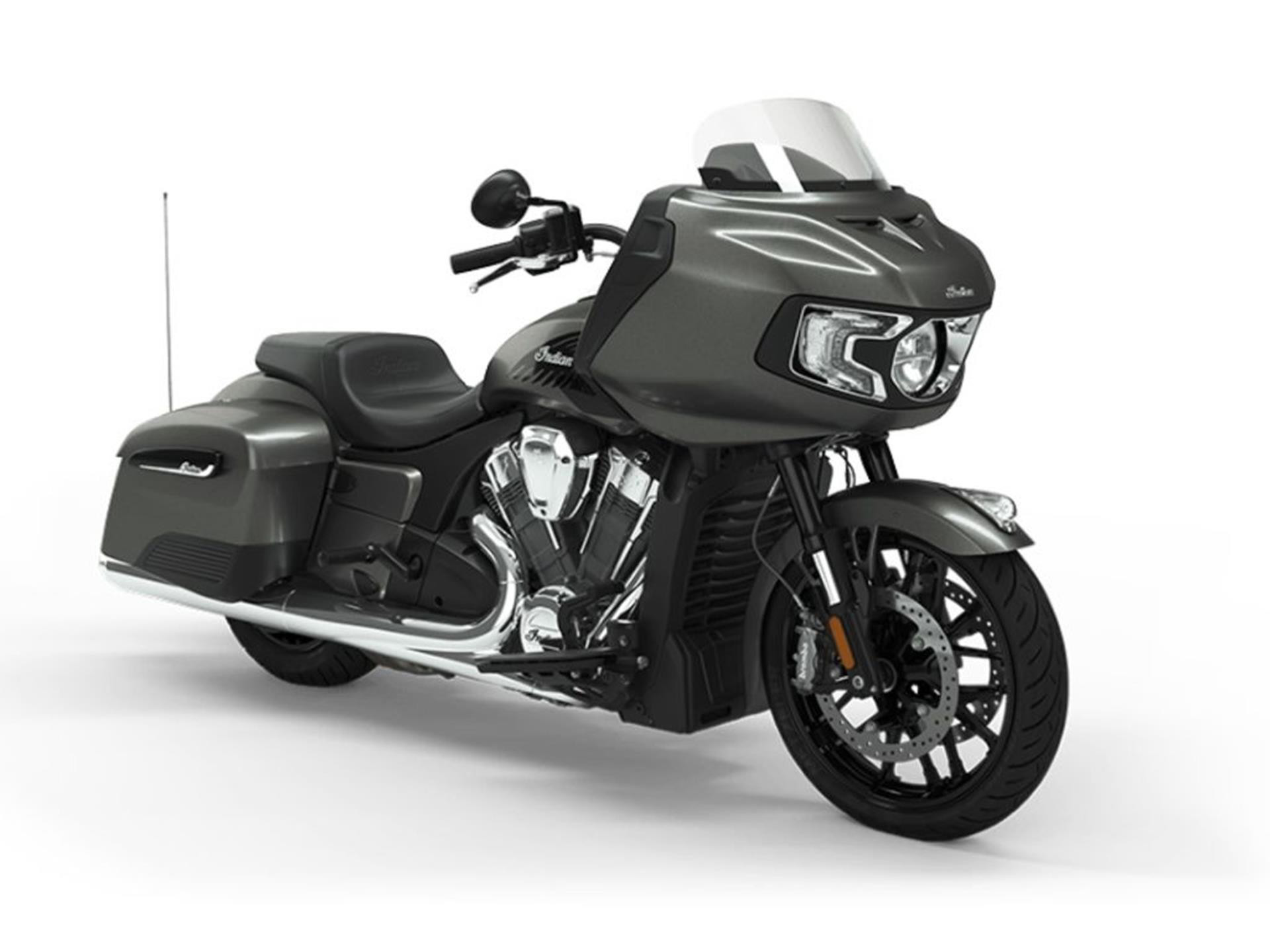
The 2020 Indian Challenger features a liquid-cooled, 108 cubic-inch PowerPlus V-twin engine producing 122 horsepower and 128 lb-ft of torque, paired with a lightweight cast-aluminum frame, inverted front forks, adjustable rear monoshock, and a frame-mounted fairing designed to compete directly in the American bagger market.
Introduction to the 2020 Indian Challenger
When Indian Motorcycle introduced the Challenger for the 2020 model year, it marked a significant strategic shift for the storied American brand. While models like the Chieftain and Roadmaster relied on the air-cooled Thunder Stroke 111 and 116 engines, the Challenger was built around an entirely new platform. Designed from the ground up to challenge established heavyweights in the American bagger segment—most notably the Harley-Davidson Road Glide—the 2020 Indian Challenger combined contemporary liquid cooling, a rigid cast-aluminum frame, and advanced electronic rider aids.
Understanding the complete technical specifications of the 2020 Indian Challenger requires a close examination of its powertrain, chassis geometry, suspension components, braking systems, and standard technology features. Whether you are looking to purchase a used model, evaluate its performance metrics, or compare it against rival touring motorcycles, this guide provides a comprehensive breakdown of what makes the 2020 Challenger a unique machine in modern motorcycle history.
Engine and Powertrain Architecture
At the heart of the 2020 Indian Challenger is the PowerPlus engine, a departure from traditional air-cooled configurations in favor of modern performance engineering.
PowerPlus V-Twin Specifications
The PowerPlus is a liquid-cooled, 60-degree V-twin displacing 108 cubic inches (1,768 cc). It utilizes overhead cams (OHC) with four valves per cylinder, allowing for higher rev limits and more efficient breathing across the power band compared to pushrod-actuated alternatives.
- Displacement: 1,768 cc (108 cu in)
- Bore x Stroke: 108.0 mm x 96.5 mm
- Compression Ratio: 11.0:1
- Cooling System: Liquid-cooled with integrated radiators
Performance Output
The engineering focus behind the PowerPlus motor was tractable torque paired with top-end horsepower suitable for aggressive highway cruising and spirited riding.
- Horsepower: 122 hp at 5,500 RPM
- Torque: 128 lb-ft (178 Nm) at 3,800 RPM
- Redline: 5,500 RPM
Transmission and Final Drive
Power is delivered to the rear wheel through a smooth-shifting 6-speed overdrive transmission with a wet, multi-plate clutch featuring assist and slip functionality to reduce lever effort and prevent rear-wheel hop during aggressive downshifts. The final drive uses a low-maintenance, reinforced carbon-fiber belt.
Chassis, Suspension, and Handling Dynamics
Unlike traditional cruiser frames constructed from heavy tubular steel, the 2020 Indian Challenger utilizes a lightweight, cast-aluminum frame. This rigid spine design contributes heavily to the bike's stability at high speeds and its agility in tighter turns.
Suspension Setup
Indian equipped the Challenger with high-performance suspension components designed to handle heavy loads without sacrificing feedback or comfort.
- Front Suspension: Inverted telescopic forks with 43 mm stanchions, offering 5.1 inches (130 mm) of travel.
- Rear Suspension: Fox single shock with hydraulic preload adjustment, offering 4.5 inches (114 mm) of travel, easily adjustable via a remote hand adjuster beneath the seat area.
Wheels and Tires
To manage the bike's mass and optimize grip, Indian partnered with Metzeler to supply performance-oriented rubber wrapped around cast alloy wheels.
- Front Wheel: Cast Black 19 inches x 3.5 inches
- Rear Wheel: Cast Black 16 inches x 5.0 inches
- Front Tire: Metzeler Cruisetec 130/60B19 61H
- Rear Tire: Metzeler Cruisetec 180/60R16 80H
Braking and Safety Technology
Stopping a heavy-bagger motorcycle requires robust hardware backed by advanced computational safety systems. The Challenger features Brembo brakes linked to a comprehensive Bosch inertial measurement unit (IMU).
Braking Components
- Front Brakes: Dual semi-floating 320 mm rotors with 4-piston radial-mount Brembo calipers.
- Rear Brakes: Single 298 mm floating rotor with a 2-piston caliper.
Electronic Rider Aids
The 2020 model incorporates cornering-enhanced safety suites to assist riders in varying weather and road conditions:
- ABS (Anti-lock Braking System): Standard equipment with cornering optimization.
- Dynamic Traction Control: Manages rear-wheel slip during acceleration, leaning into curves, and encountering low-traction surfaces.
- Ride Modes: Three selectable engine maps—Rain, Standard, and Sport—that alter throttle response and power delivery curves to match rider preference or road conditions.
Dimensions, Capacities, and Weights
Bagged touring motorcycles are substantial machines, and knowing the physical dimensions helps with garage storage, trailering, and ergonomic fit.
| Specification | Measurement (Imperial) | Measurement (Metric) |
|---|---|---|
| Wheelbase | 65.7 inches | 1,668 mm |
| Rake / Trail | 25.0° / 5.9 inches | 25.0° / 150 mm |
| Seat Height (Laden) | 26.5 inches | 672 mm |
| Ground Clearance | 5.3 inches | 135 mm |
| Fuel Capacity | 6.0 gallons | 22.7 liters |
| Dry Weight | 796 lbs | 361 kg |
| Mass in Running Order | 830 lbs | 377 kg |
| Gross Vehicle Weight Rating | 1,385 lbs | 628 kg |
Infotainment, Lighting, and Trim Variations
The 2020 Indian Challenger was released in multiple trim levels—Base, Limited, and Dark Horse—each altering the aesthetic finish, audio configuration, and auxiliary electronics.
The Ride Command Infotainment System
At the center of the dash sits Indian's Ride Command system, housed in a 7-inch touchscreen display.
- Features: AM/FM stereo, Bluetooth connectivity, USB media input, integrated turn-by-turn GPS navigation, vehicle status screens, and real-time weather/traffic overlays (depending on cellular connection).
- Audio: Standard models feature dual speakers; higher trims like the Limited and Dark Horse upgrade to a high-output PowerBand audio system delivering clearer sound at highway speeds.
Lighting and Electrical
The motorcycle features full LED lighting, including a prominent headlight integrated directly into the frame-mounted fairing. The electrical system is powered by a high-output 3-phase, 42-amp alternator capable of running heated gear and auxiliary accessories simultaneously.
Model Trim Comparison
| Feature / Component | Challenger (Base) | Challenger Limited | Challenger Dark Horse |
|---|---|---|---|
| Primary Aesthetic | Chrome & Gloss Paint | Premium Chrome & Gloss Paint | Matte / Blacked-Out Finishes |
| Smart Lean Technology | Standard | Standard | Standard |
| Ride Modes | Standard (3 Modes) | Standard (3 Modes) | Standard (3 Modes) |
| Audio System | Standard Audio | PowerBand Audio Ready | PowerBand Audio Ready |
| TPMS (Tire Pressure Monitoring) | Not Included | Standard | Standard |
Frequently Asked Questions
What engine powers the 2020 Indian Challenger?
The 2020 Indian Challenger is powered by the PowerPlus engine, a liquid-cooled, 108 cubic-inch (1,768 cc) 60-degree V-twin motor. It generates 122 horsepower and 128 lb-ft of torque, representing a significant technological step away from traditional air-cooled Indian motors.
Is the 2020 Indian Challenger fairing mounted to the frame or handlebars?
The fairing on the Indian Challenger is frame-mounted. This design isolates steering inputs from wind buffeting and the weight of the fairing, infotainment screen, and headlight, resulting in lighter low-speed steering and superior high-speed stability compared to fork-mounted batwing fairings.
What is the fuel capacity and range of the 2020 Indian Challenger?
The fuel tank holds 6.0 gallons (22.7 liters). Real-world fuel economy typically ranges between 35 and 45 mpg depending on riding style, payload, and speed, translating to an average touring range of roughly 210 to 250 miles per tank.
Does the 2020 Indian Challenger have reverse?
No, the 2020 Indian Challenger does not come with a mechanical or electric reverse gear from the factory. At approximately 830 lbs in running order, riders must exercise care when parking on inclines or backing out of tight spaces.
What are the differences between the Challenger Base, Limited, and Dark Horse?
The mechanical specifications, engine output, and chassis remain identical across all three 2020 trims. The differences lie in cosmetic styling, color options, badging, standard inclusion of tire pressure monitoring systems (TPMS), and audio system enhancements.
Practical Recommendations for Prospective Buyers
When evaluating a used 2020 Indian Challenger, verify that all mandatory safety recalls have been completed by an authorized dealer. Pay close attention to the service history of the liquid-cooling system, ensuring coolant flushes have been performed according to Indian’s recommended maintenance schedule. Inspect the aftermarket accessories, as many owners add highway bars, taller windshields, or upgraded touring seats that significantly alter the bike's ergonomics and long-distance touring comfort.