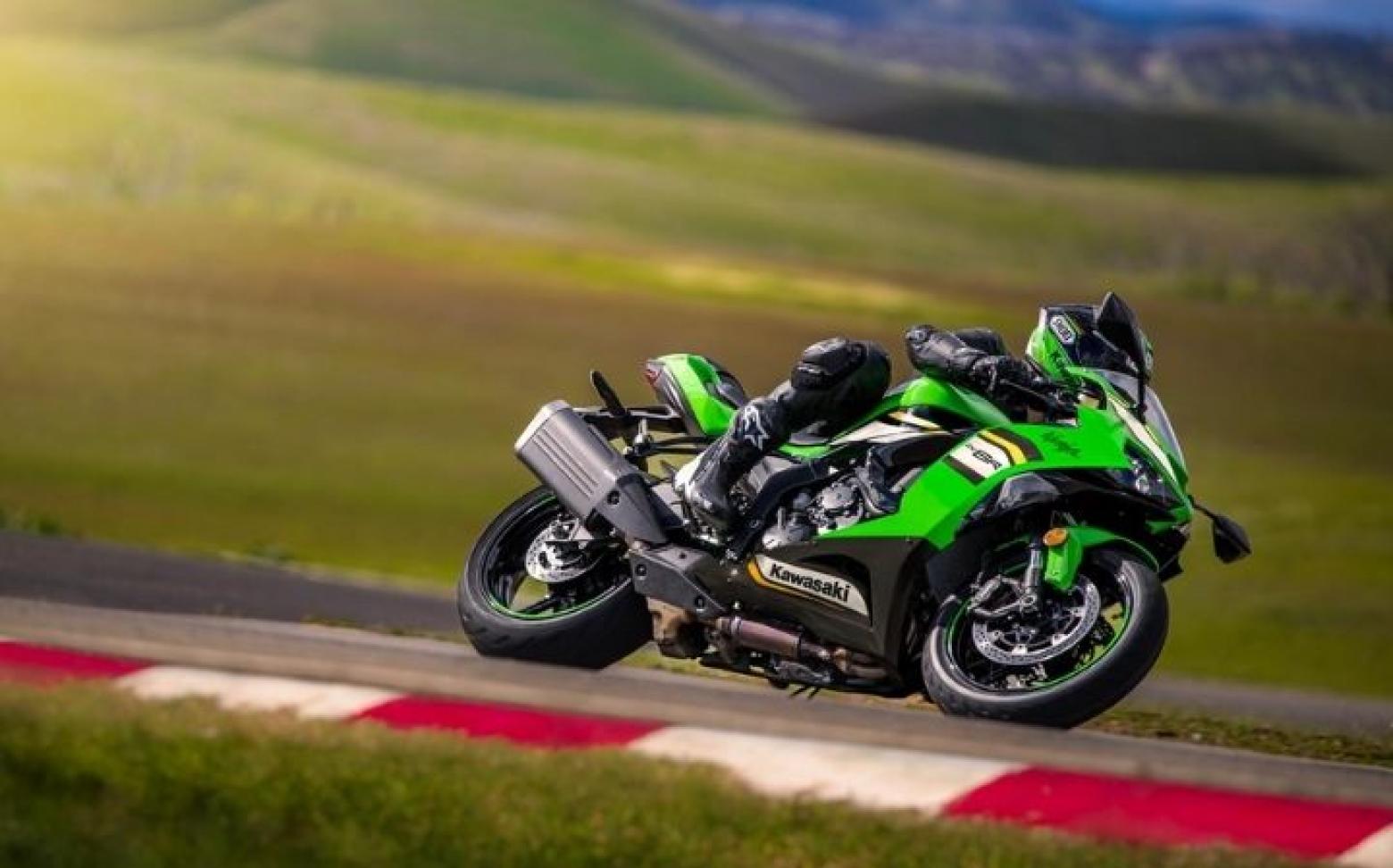
The 2018 Kawasaki Ninja ZX-6R reaches a top speed of approximately 160 to 165 mph (257 to 266 km/h) under ideal conditions. This figure is influenced by factors such as rider weight, aerodynamic drag, altitude, track surface, and the machine's state of maintenance. While the engine's output is formidable, physical variables and electronic limitations define the bike's absolute ceiling.
The Engineering Foundation: Understanding the 636cc Engine
The 2018 Kawasaki Ninja ZX-6R utilizes a 636cc liquid-cooled, DOHC, 16-valve inline-four engine. This specific displacement—larger than the industry-standard 600cc class—was a strategic choice by Kawasaki to provide a broader power band, particularly in the low-to-mid RPM range.
When discussing top speed, the focus is almost exclusively on the peak of the tachometer. The 636cc unit is designed to produce its peak horsepower near 13,500 RPM. Achieving top speed requires the motorcycle to overcome the exponential increase in aerodynamic drag that occurs as speed rises. Because the ZX-6R is a middleweight supersport, it is engineered for agility and cornering prowess rather than sheer top-end velocity like a liter-bike (1,000cc class). The engine’s power delivery is tuned for high-revving efficiency, allowing it to sustain the high gear ratios necessary to approach its mechanical limit.
Factors Influencing Top Speed Realization
Real-world top speed is rarely a static number. Owners often report varying results based on a complex interplay of environmental and mechanical variables:
- Aerodynamic Drag: Air resistance is the primary enemy of speed. At speeds exceeding 150 mph, the power required to push the motorcycle through the air increases cubicly. A rider’s tuck position significantly alters the frontal area. A rider sitting upright will create enough drag to reduce the potential top speed by several miles per hour compared to a rider fully tucked behind the windscreen.
- Environmental Density: Altitude plays a critical role in internal combustion performance. At sea level, where air is denser, the engine produces more power but experiences higher drag. At high altitudes, the air is thinner, reducing drag, but the engine also loses volumetric efficiency due to the lower oxygen concentration, which can impede the ability to reach maximum velocity.
- Transmission Gearing: The stock sprocket configuration (15/43 teeth) is optimized for a balance between acceleration and highway cruising. Modifying the final drive ratio—by changing sprocket sizes—can technically allow the bike to reach a different RPM at a given speed, but it rarely increases top speed. Usually, "gearing for top speed" requires finding a precise balance where the engine's power peak aligns with the wind resistance at the highest gear.
- Maintenance Status: The efficiency of the drivetrain—specifically the condition of the drive chain and the age of the engine oil—impacts frictional losses. A clean, properly tensioned, and lubricated chain ensures that the maximum amount of power is transferred to the rear wheel.
Performance Comparison: Supersport Capabilities
It is helpful to view the ZX-6R in the context of its contemporaries to understand where it sits in the hierarchy of performance motorcycles.
| Motorcycle Model | Engine Displacement | Est. Top Speed | Primary Design Focus |
|---|---|---|---|
| 2018 Kawasaki ZX-6R | 636cc | 160–165 mph | Track & Street Agility |
| 2018 Yamaha YZF-R6 | 599cc | 155–160 mph | Pure Track Performance |
| 2018 Honda CBR600RR | 599cc | 150–155 mph | Balanced Handling |
| 2018 Suzuki GSX-R600 | 599cc | 155–158 mph | Street Comfort/Power |
The 636cc engine provides a slight torque advantage over the 599cc-based competition. This allows the 2018 ZX-6R to reach its top speed with slightly more composure in varying wind conditions, though it remains within the same performance tier as other Japanese middleweights.
The Role of Electronic Rider Aids and Limitations
The 2018 model features the Kawasaki Traction Control (KTRC) system and selectable power modes. While these systems are primarily designed for safety and handling, they interact with the engine's output. In standard "Full Power" mode, the engine map is tuned for maximum performance. Unlike some modern bikes that feature aggressive electronic speed limiters (often set to 186 mph or 299 km/h for large-displacement motorcycles), middleweight sportbikes like the 2018 ZX-6R are usually limited by their own power-to-drag ratio rather than a software-imposed electronic ceiling.
However, riders should remain aware that the speedometer on the dashboard may display a figure higher than the actual ground speed. This is known as "speedometer error." Manufacturers calibrate speedometers to be optimistic, often showing 5–8% higher than the true GPS-verified velocity.
Rider Safety and Legal Considerations
Testing the limits of a motorcycle, such as attempting to reach the theoretical top speed, carries inherent risks. On public roads, this behavior is illegal and dangerous, exposing the rider to extreme hazards including debris, uneven pavement, and unpredictable traffic. The 2018 ZX-6R is a high-performance machine capable of closing gaps between vehicles in mere seconds; consequently, control inputs must be precise.
For those interested in exploring the performance limits of their machine, the only responsible venue is a closed-course circuit or a sanctioned land-speed racing event. These environments provide professional corner workers, medical support, and optimized track surfaces that are absent on public highways. Always ensure the motorcycle has been serviced according to the factory manual—specifically checking tire pressure, brake pad condition, and cooling system integrity—before engaging in high-speed maneuvers.
Frequently Asked Questions
Does changing the exhaust system increase top speed? Generally, a slip-on exhaust provides minimal gain in peak power. A full exhaust system, when paired with a proper Electronic Control Unit (ECU) tune, can optimize the air-fuel ratio and allow the engine to breathe better at high RPMs, potentially yielding a marginal increase in top speed, though it is usually negligible.
Why does my bike feel "slow" at high speeds compared to online claims? Discrepancies often arise from the difference between indicated speed (what the dash says) and actual speed (GPS-tracked). Additionally, wind direction, rider size, and the condition of the air filter and spark plugs can cause a bike to feel less responsive at the top of its rev range.
Is the 2018 ZX-6R limited by an electronic speed governor? The 636cc middleweight class is typically limited by mechanical power and aerodynamic drag. While the ECU controls ignition timing and fueling, it does not typically employ a hard speed limiter designed to stop the bike at a specific speed, as the bike naturally reaches its limit before it could pose a risk of exceeding structural limits.
How does tire pressure affect top speed performance? Under-inflated tires increase rolling resistance and generate excess heat, which creates drag. Maintaining the factory-recommended tire pressure is essential for minimizing rolling resistance and ensuring the motorcycle remains stable at high velocities.
Can a passenger reduce the top speed? Yes. A passenger significantly increases both the total weight of the motorcycle and, more importantly, the frontal surface area and aerodynamic drag. This will result in a lower top speed and slower acceleration across the entire power band.
Recommendations for Owners
If you are aiming to maintain your 2018 ZX-6R in peak operating condition, prioritize routine maintenance over performance modifications. Ensure your drive chain is cleaned and tensioned to the manufacturer’s specification (typically 25–35mm of slack), as a tight or poorly lubricated chain introduces unnecessary friction. Verify your tire pressure before any long ride, as variations here affect not only handling but also how effectively the bike manages its speed. Finally, always wear appropriate safety gear—including a full-face helmet, leather suit, and gloves—whenever operating the motorcycle at speed. For the best experience, visit a track day event where you can safely explore the capabilities of the ZX-6R in a controlled and supervised environment.