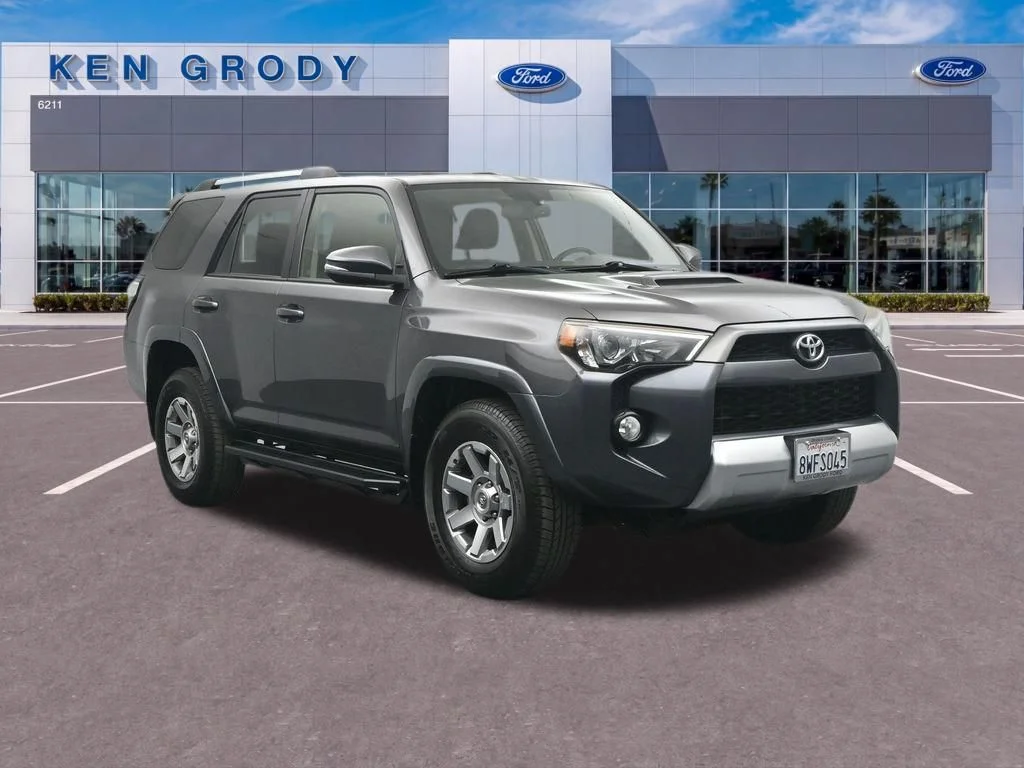
The 2015 Toyota 4Runner Trail is a dedicated off-road trim of the fifth-generation SUV, featuring a locking rear differential, Multi-Terrain Select, and Crawl Control as standard equipment. In 2026, it remains a highly sought-after used vehicle due to its mechanical simplicity, legendary 1GR-FE V6 reliability, and robust body-on-frame construction.
Defining the 2015 Trail Grade
The 2015 model year represents the second year of the 4Runner’s "facelift" for the fifth generation (N280). This update introduced the more aggressive front fascia, projector-beam headlights, and LED taillights that defined the look of the 4Runner for the following decade. Within the 2015 lineup, the Trail grade occupied a specific niche: it was designed for the enthusiast who prioritized dirt performance over the creature comforts of the Limited or the basic utility of the SR5.
Historically, the Trail grade is the direct predecessor to what Toyota renamed the "TRD Off-Road" in 2017. Mechanically, the two are nearly identical. For a buyer in 2026, the 2015 Trail represents a "sweet spot" in value, offering the most critical off-road hardware without the inflated price premium often attached to the TRD Pro models from the same era. It was available in two configurations: the standard Trail and the Trail Premium, the latter adding SofTex synthetic leather upholstery, a sunroof, and an upgraded Entune navigation system.
Powertrain and Mechanical Architecture
At the heart of the 2015 4Runner Trail is the 4.0-liter V6 engine, known internally as the 1GR-FE. In an era where many manufacturers were transitioning to small-displacement turbocharged engines, Toyota’s decision to stick with a naturally aspirated V6 has paid dividends in long-term durability.
Engine Specifications
The engine produces 270 horsepower at 5,600 RPM and 278 lb-ft of torque at 4,400 RPM. While these numbers were considered modest even in 2015, the engine's torque curve is optimized for low-speed crawling and towing. It utilizes Dual Independent Variable Valve Timing with intelligence (VVT-i) to manage efficiency, though "efficiency" is a relative term for this platform.
Transmission and Transfer Case
The engine is paired with a five-speed ECT-i automatic transmission. While the five-speed lacks the refinement and fuel economy of the 8- or 10-speed transmissions found in 2026 models, its overbuilt nature makes it incredibly resistant to heat and wear.
Unlike the Limited trim, which uses a full-time 4WD system with a Torsen center differential, the Trail utilizes a part-time 4WD system. This system is controlled by a traditional manual shift lever on the center console—a feature many purists prefer over the electronic dials found in later years. This allows the driver to physically engage 2WD High, 4WD High, and 4WD Low.
Off-Road Specific Hardware
The 2015 Trail grade distinguishes itself from the SR5 primarily through its standard off-road recovery and traction aids. These systems are housed in an overhead console, keeping the dashboard uncluttered.
- Locking Rear Differential: Unlike brake-based traction control (which mimics a locker by applying brakes to a spinning wheel), the Trail features a physical, selectable locking rear differential. When engaged in 4WD Low, it mechanically links the rear wheels together, ensuring they turn at the same speed regardless of traction.
- Multi-Terrain Select (MTS): This system allows the driver to choose between four modes (Mogul, Loose Rock, Mud & Sand, and Rock). MTS regulates wheel spin by adjusting engine throttle and braking pressure, providing the ideal amount of "slip" for different surfaces.
- Crawl Control: Often described as "off-road cruise control," this system maintains a constant, ultra-low speed while the driver focuses entirely on steering. It is particularly effective for extracting the vehicle from deep sand or navigating technical rock gardens.
- A-TRAC (Active Traction Control): Standard on all 4WD 4Runners but particularly effective on the Trail, A-TRAC uses the ABS sensors to detect wheel slip and redirects torque to the wheels with the most grip.
The KDSS Factor: A Technical Deep Dive
Perhaps the most significant option available on the 2015 Toyota 4Runner Trail was the Kinetic Dynamic Suspension System (KDSS). When evaluating a 2015 Trail in 2026, determining if a vehicle has KDSS is a critical step, as it fundamentally changes how the SUV handles.
KDSS is a purely hydraulic system that does not rely on electronics. It features massive, thick sway bars connected to hydraulic cylinders.
- On-Road Performance: The system senses high-speed cornering and keeps the hydraulic fluid pressurized, effectively "stiffening" the sway bars to reduce body roll. This makes the 4Runner feel significantly more planted and less "boaty" on pavement.
- Off-Road Performance: At low speeds, when the system detects uneven terrain (large bumps or ruts), the hydraulic pressure is released. This allows the sway bars to effectively disconnect, providing much greater wheel articulation. Increased articulation keeps the tires in contact with the ground longer, which is the key to maintaining traction without relying solely on lockers.
Potential buyers should note that KDSS was a standalone option. It can be identified by the presence of a "KDSS" light on the dashboard during startup or by looking for the large hydraulic cylinders attached to the frame rails and sway bars.
Interior Utility and 2015 Technology
The interior of the 2015 4Runner Trail is a study in functional ergonomics. Huge, chunky knobs allow the driver to adjust the climate control while wearing gloves, and the materials are chosen for durability rather than luxury.
Cargo and Seating
The Trail grade was strictly a five-passenger vehicle; the third-row seat option was reserved for the SR5 and Limited trims. This ensures a flat load floor and maximum cargo capacity of 89.7 cubic feet with the rear seats folded. One unique feature available on the Trail was the sliding rear cargo deck. This platform can support up to 440 pounds and slides out over the rear bumper, making it easier to load heavy gear or serving as a convenient "tailgate" seat.
Infotainment
By 2026 standards, the 2015 Entune system is rudimentary. It features a 6.1-inch touchscreen, Bluetooth connectivity, and a backup camera. It lacks Apple CarPlay and Android Auto (which didn't arrive in the 4Runner until 2020). Many 2026 owners opt to replace the factory head unit with a modern aftermarket display to bring the tech up to contemporary standards.
Safety and Reliability Considerations
The 2015 4Runner is a "legacy" vehicle in terms of safety technology. It predates Toyota Safety Sense (TSS-P), meaning it does not have adaptive cruise control, lane departure warning, or automatic emergency braking. However, it does feature the Star Safety System, which includes Vehicle Stability Control (VSC), Traction Control (TRAC), and Smart Stop Technology.
The Frame Rust Issue
For those shopping in 2026, the primary concern is the frame. Like many Toyota body-on-frame vehicles, the 4Runner is susceptible to corrosion, especially in "Salt Belt" regions. Before purchase, a physical inspection of the boxed frame rails is mandatory. Surface rust is common, but "scale" or holes are grounds for immediate rejection.
Mechanical Longevity
Aside from rust, the 2015 Trail is exceptionally reliable. Common issues are minor and well-documented:
- Secondary Air Injection Pump: Can fail due to moisture, leading to a "limp mode."
- Needle Bearing: In the front differential, a vibrations can sometimes occur in 4WD; many owners replace this with a Bushing from ECGS (East Coast Gear Supply).
- KDSS Lean: Over time, the hydraulic fluid can settle, causing a slight "lean" to one side. This is usually corrected by a simple shutter valve adjustment.
2015 4Runner Comparison Table
| Feature | SR5 (4WD) | Trail Grade | Limited |
|---|---|---|---|
| 4WD System | Part-Time | Part-Time | Full-Time (Torsen) |
| Rear Locker | No | Yes (Standard) | No |
| Multi-Terrain Select | No | Yes (Standard) | No |
| Crawl Control | No | Yes (Standard) | No |
| KDSS | Not Available | Optional | Not Available |
| Wheels | 17-inch 6-spoke | 17-inch 7-spoke (Unique) | 20-inch Alloy |
| Interior | Fabric / SofTex | Fabric / SofTex | Perforated Leather |
| Suspension | Standard | Standard / KDSS | X-REAS Sport |
Ownership in 2026: Maintenance and Costs
Maintaining a 2015 4Runner Trail in 2026 is relatively affordable because parts are plentiful and the engine bay is spacious enough for DIY repairs.
- Fuel Economy: Expect 17 MPG in the city and 21 MPG on the highway. In 2026, with the rise of hybrid and electric SUVs, the 4Runner is considered a "gas hog," and potential owners should budget accordingly.
- Fluid Intervals: To reach the 300,000-mile mark, owners should change the oil every 5,000 to 7,500 miles, the transmission fluid every 60,000 miles, and the differential/transfer case fluids every 30,000 miles, especially if used off-road.
- Tires: The Trail comes standard with 265/70R17 tires. Upgrading to a "C" or "E" load-rated All-Terrain tire (like the BFGoodrich KO2 or Falken Wildpeak) is the most common modification to enhance the vehicle's capability.
Frequently Asked Questions
Is the 2015 4Runner Trail better than the TRD Pro?
The 2015 TRD Pro added Bilstein shocks with remote reservoirs, a unique front grille, and TRD springs. However, the Trail offered the KDSS option, which the TRD Pro did not. For many drivers, a Trail equipped with KDSS plus an aftermarket lift kit is actually more capable and better-handling than a stock TRD Pro.
Does the 2015 4Runner Trail have a 3rd row?
No. The Trail and Trail Premium trims were never offered with a third-row seat. This was done to accommodate the off-road hardware and to keep the weight down. If you require a seven-passenger 4Runner, you must look at the SR5 or Limited grades.
What is the towing capacity of the 2015 4Runner Trail?
The 2015 4Runner Trail has a maximum towing capacity of 5,000 pounds. It comes with an integrated towing hitch receiver and a 4-pin/7-pin connector. However, because it lacks a dedicated "Tow/Haul" mode and uses a 5-speed transmission, towing heavy loads near the limit requires patience on steep grades.
How do I know if the KDSS is working?
On a 2015 model, the KDSS system is working if there are no warning lights on the dashboard. You can test its effectiveness by driving over a speed bump at an angle; a KDSS-equipped vehicle will feel much more stable with less side-to-side "head toss" compared to a standard 4Runner.
Is the 2015 4Runner Trail a good daily driver?
It is a compromise. While it is incredibly reliable and holds its value well, the ride is firmer than a modern unibody crossover, and the steering is slow. However, for those who value visibility and the ability to handle snow, mud, or floods without a second thought, it is an excellent daily driver.
Practical Recommendation
If you are evaluating a 2015 Toyota 4Runner Trail in 2026, prioritize vehicles with a documented service history and a rust-free frame. Look specifically for a Trail Premium with KDSS; this configuration offers the best balance of interior comfort and mechanical sophistication. While the technology is dated, the "analogue" nature of the vehicle is precisely why it remains valuable. Expect to pay a premium for low-mileage examples, as these vehicles are frequently kept for decades by their original owners. For further verification of vehicle history, always consult the National Highway Traffic Safety Administration (NHTSA) for any outstanding recalls related to the Takata airbag inflators which affected certain 2015 models.