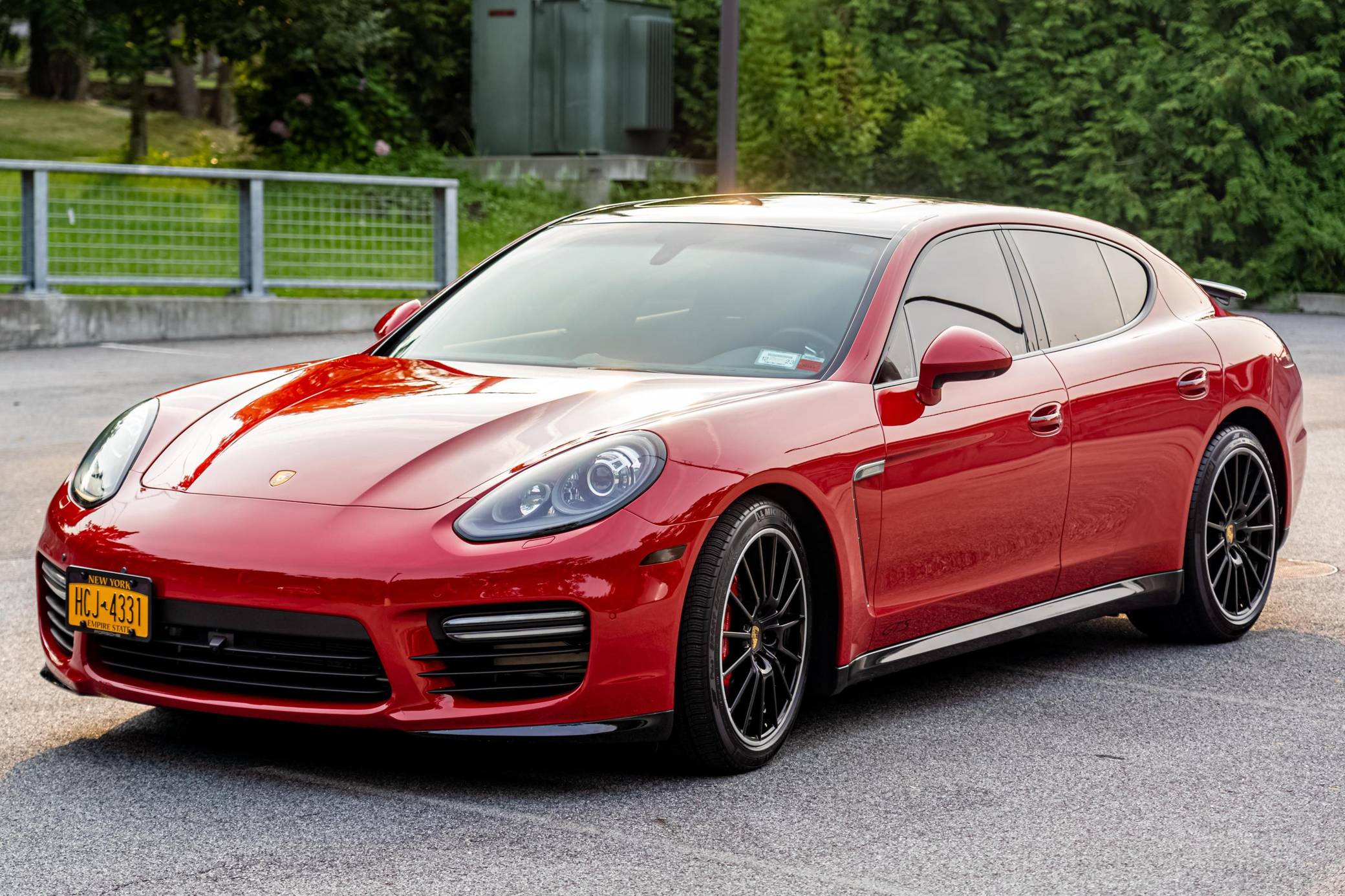
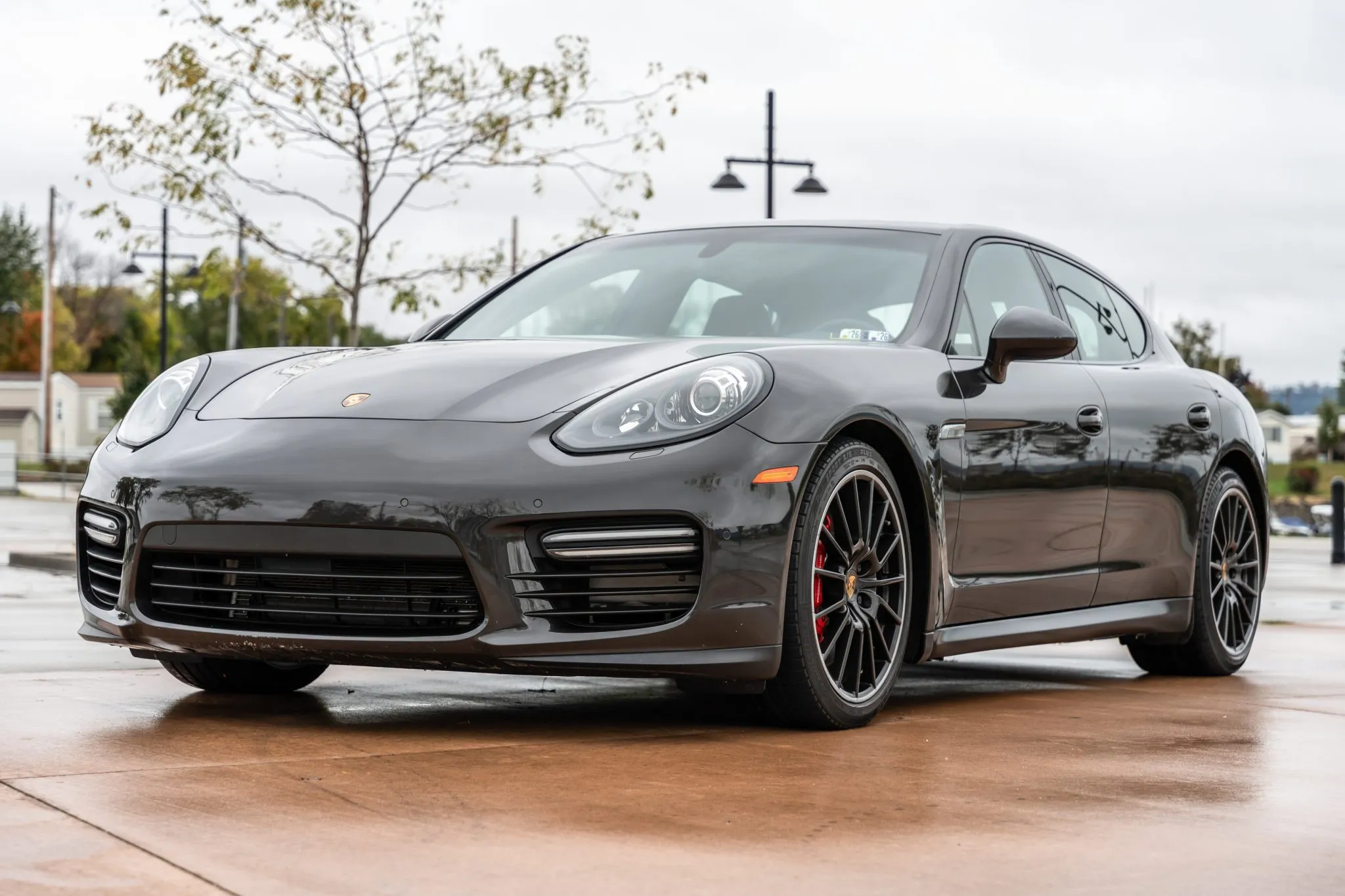
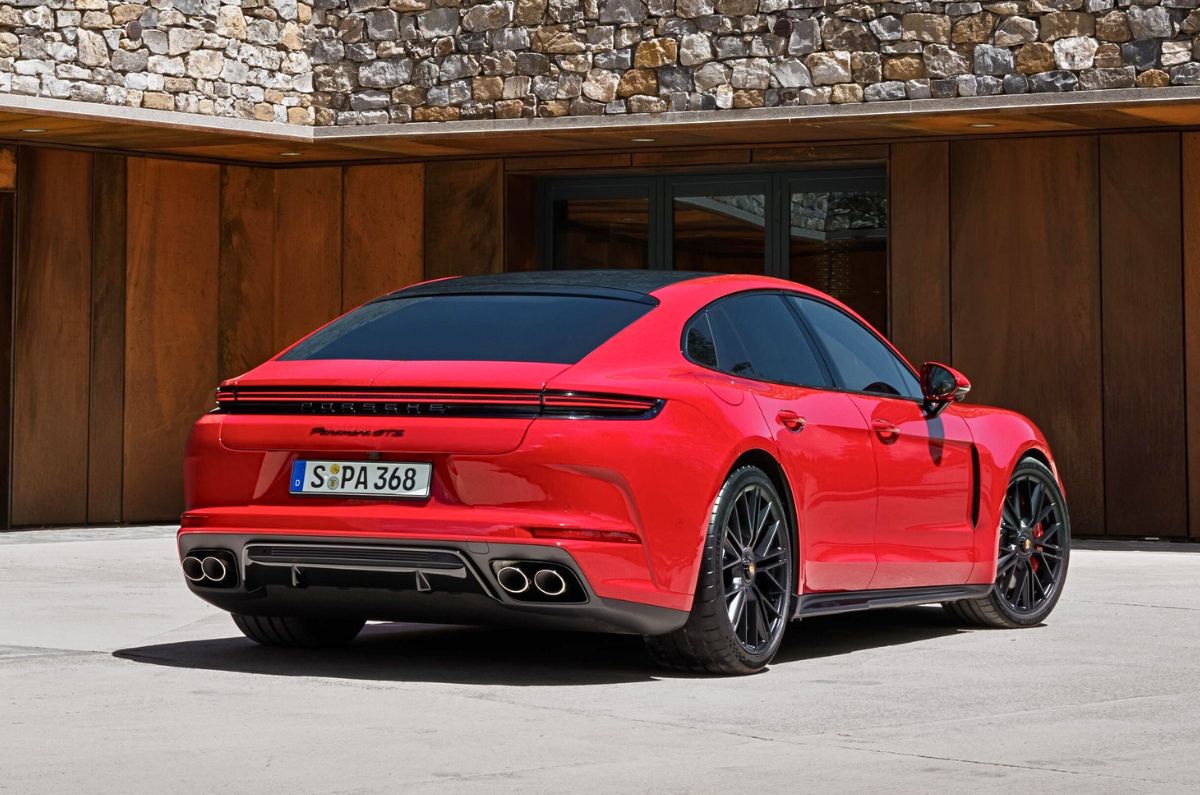
The 2015 Porsche Panamera GTS accelerates from 0 to 60 mph in a swift 4.2 seconds, a figure made possible by its standard Sport Chrono package and advanced launch control system. This performance is anchored by a 4.8-liter naturally aspirated V8 engine producing 440 horsepower, paired with a seven-speed dual-clutch transmission and all-wheel drive.
The 2015 Porsche Panamera GTS represents a specific peak in the evolution of the German executive sedan. Within the 970.2 (facelifted first generation) lineup, the GTS was positioned as the "purist's choice," bridging the gap between the balanced Panamera S and the forced-induction Panamera Turbo. Even looking back from 2026, the 2015 GTS remains a significant milestone because it was one of the last high-performance Panameras to utilize a high-displacement, naturally aspirated engine before the industry-wide shift toward turbocharging and hybridization.
The Heart of the GTS: The 4.8-Liter Naturally Aspirated V8
The performance of the 2015 GTS is defined by its 4.8-liter V8 engine. Unlike the Turbo models of the same era, which relied on twin turbochargers to force air into the cylinders, the GTS breathed naturally. This resulted in a more linear power delivery and a distinctive, aggressive exhaust note that many enthusiasts still prefer today.
Engineering-wise, the 2015 GTS engine was an evolution of the unit found in the Panamera S, but with significant modifications. Porsche engineers increased the power by 10 horsepower over the previous year's GTS (and 20 horsepower over the 2015 Panamera S), bringing the total to 440 hp at 6,700 rpm. The torque peaked at 384 lb-ft at 3,500 rpm. To achieve this, Porsche utilized modified intake camshafts and a revised engine management system, allowing the engine to breathe more freely at higher revs.
The "Sound Symposer" was another critical performance feature. This system picked up intake vibrations between the throttle valve and the air filter, transmitting them into the A-pillars via a switchable acoustic channel. At the press of a button, the driver could enhance the mechanical symphony of the V8 inside the cabin, complementing the standard Sport Exhaust system that utilized bypass flaps to reduce backpressure and increase volume.
Achieving the 4.2-Second 0-60: The Role of PDK and Launch Control
The 0-60 mph sprint of 4.2 seconds was not achieved through engine power alone; the 2015 Panamera GTS relied heavily on its drivetrain and electronics. The Porsche Doppelkupplung (PDK) seven-speed dual-clutch transmission was standard. In 2015, this was arguably the best transmission in the world for an executive sedan, offering lightning-fast gear changes without interrupting the flow of power.
The GTS came standard with the Sport Chrono Package, which included the "Sport Plus" mode. When engaged, the Sport Plus mode optimized the engine, chassis, and transmission for maximum performance. Most importantly, it enabled Launch Control. To operate it, the driver would depress the brake with the left foot and floor the accelerator with the right. The engine would hold at approximately 5,000 rpm; upon releasing the brake, the Porsche Traction Management (PTM) active all-wheel-drive system would distribute torque to all four wheels with millisecond precision, ensuring minimal wheel spin and maximum forward thrust.
Independent testing by automotive publications often saw the 2015 GTS dip even lower than the official 4.2-second estimate, with some recording 0-60 times as low as 3.9 or 4.0 seconds in ideal conditions with high-octane fuel and warm tires.
Handling and Chassis Dynamics: More Than Just Straight-Line Speed
The "GTS" nomenclature at Porsche traditionally signifies a vehicle tuned for the track despite its road-going luxury. To support the 4.8L V8's power, the 2015 Panamera GTS sat 10mm lower than the standard Panamera. It featured the Porsche Active Suspension Management (PASM) system as standard, which worked in tandem with the adaptive air suspension.
The air suspension in the GTS was uniquely tuned for stiffness and responsiveness. It featured a larger air volume in the springs compared to the Panamera S, allowing for a wider range of damping characteristics. In "Sport Plus" mode, the car would drop to its lowest setting, lowering the center of gravity and reducing body roll through corners.
Furthermore, the GTS featured the braking system from the Panamera Turbo. This included massive six-piston aluminum monobloc fixed calipers at the front and four-piston calipers at the rear. These brakes provided the immense stopping power required to bring a 4,400-pound sedan to a halt repeatedly without significant fade, a crucial requirement for a vehicle capable of a 177 mph top track speed.
2015 Porsche Panamera GTS Technical Specifications
| Feature | Specification |
|---|---|
| Engine Type | 4.8L Naturally Aspirated V8 |
| Horsepower | 440 hp @ 6,700 rpm |
| Torque | 384 lb-ft @ 3,500 rpm |
| 0-60 mph (Launch Control) | 4.2 Seconds |
| Top Track Speed | 177 mph |
| Transmission | 7-Speed PDK (Dual-Clutch) |
| Drivetrain | Active All-Wheel Drive (PTM) |
| Curb Weight | Approx. 4,420 lbs |
| Brakes (Front/Rear) | 390mm / 350mm Vented Discs |
| Suspension | Adaptive Air Suspension with PASM |
Comparative Performance: GTS vs. The Panamera Range
To understand the value of the 2015 GTS, one must look at how it compared to its siblings. The base Panamera and Panamera 4 used a V6 engine and were significantly slower, with 0-60 times in the 5-to-6 second range. The Panamera S utilized a 3.0L twin-turbo V6, which offered 420 hp but lacked the visceral response and sound of the GTS V8.
The Panamera Turbo was the "straight-line king" of 2015, utilizing a 4.8L twin-turbo V8 to produce 520 hp and a 0-60 time of 3.7 seconds. However, the Turbo was also heavier and featured a more comfort-oriented suspension tune. For drivers who prioritized steering feel and throttle modulation, the GTS was often considered the superior driver's car.
In the used market of 2026, the GTS is often valued higher than the Turbo because of its mechanical simplicity (no turbochargers to fail) and its status as the final naturally aspirated V8 Panamera. It represents a "sweet spot" of performance that remains relevant even against modern electric and hybrid luxury sedans that may be faster in a straight line but lack the GTS’s communicative chassis.
Aerodynamics and Cooling
The 2015 Panamera GTS shared the aggressive front fascia of the Panamera Turbo, featuring larger air intakes to feed the thirsty V8 and cool the substantial braking system. A key performance element was the four-way adaptive rear spoiler. At speeds above 56 mph, the spoiler would deploy; in the GTS and Turbo models, it didn't just rise, it also split and widened to provide a larger surface area, significantly increasing downforce on the rear axle.
This active aerodynamics system allowed the Panamera GTS to remain stable during high-speed Autobahn runs or on the long straights of a race track. The cooling system was also beefed up, with additional radiators to ensure the engine and PDK transmission remained within optimal temperature ranges during spirited driving or in high-ambient-temperature environments.
The 2026 Perspective: Maintenance and Reliability for Performance
For those looking to acquire a 2015 Panamera GTS in 2026, understanding the maintenance requirements for this level of performance is essential. While the 4.8L V8 is generally robust, it is an 11-year-old high-performance machine.
- Air Suspension: The rubber bellows in the air struts can develop leaks over a decade of use. If the car sits low after being parked for a few days, the struts likely need replacement.
- PDK Service: The dual-clutch transmission requires fluid and filter changes every 60,000 miles or 6 years. Ensuring this has been done is vital for maintaining the 4.2-second 0-60 capability.
- Brakes: The GTS uses Turbo-spec brakes. While they provide exceptional performance, replacing the rotors and pads is significantly more expensive than on a base Panamera or S model.
- Cooling System: The plastic cooling pipes used in this era can become brittle. Many owners in 2026 proactively replace these with metal components to avoid catastrophic leaks.
FAQ
What is the difference between the 2015 Panamera S and the GTS?
While both have performance leanings, the 2015 Panamera S uses a 3.0L twin-turbo V6, whereas the GTS uses a 4.8L naturally aspirated V8. The GTS also comes standard with features that were optional on the S, such as the Sport Chrono Package, Sport Exhaust, and the Turbo’s braking system and body kit.
Is the 2015 Porsche Panamera GTS all-wheel drive?
Yes, all 2015 Panamera GTS models feature the Porsche Traction Management (PTM) active all-wheel-drive system. This system uses an electronically controlled multi-plate clutch to vary the torque distribution between the front and rear axles, which is essential for achieving its 4.2-second 0-60 time.
How does the 2015 GTS compare to a modern 2026 Panamera?
By 2026, the Panamera has shifted toward heavy hybridization and smaller displacement turbocharged engines. While a 2026 Panamera 4 E-Hybrid might be faster to 60 mph due to instant electric torque, the 2015 GTS is lighter and offers a more analog, mechanical driving experience that many collectors prefer.
Does the 2015 Panamera GTS have a manual transmission?
No. The 2015 Panamera GTS was only available with the seven-speed Porsche Doppelkupplung (PDK) dual-clutch automatic transmission. This transmission was specifically tuned for the GTS to provide faster shifts and more aggressive mapping in Sport and Sport Plus modes.
What is the fuel economy for the 4.8L V8?
The 2015 Panamera GTS was not designed for fuel efficiency. It typically achieves around 15 mpg in the city and 24 mpg on the highway. However, in 2026, most owners of this vehicle use it as a weekend performance car rather than a primary daily driver, making fuel economy a secondary concern to performance.
Final Recommendation for Buyers
If you are evaluating a 2015 Porsche Panamera GTS in 2026, prioritize vehicles with a documented service history that includes PDK fluid changes and air suspension inspection. The GTS is a "modern classic" that offers a specific visceral experience—the roar of a naturally aspirated V8 and the precision of a Porsche-tuned chassis—that is increasingly difficult to find in the era of electrification. Verify that the Sport Chrono clock is present on the dashboard, as this confirms the presence of the software necessary for the 4.2-second launch control performance.