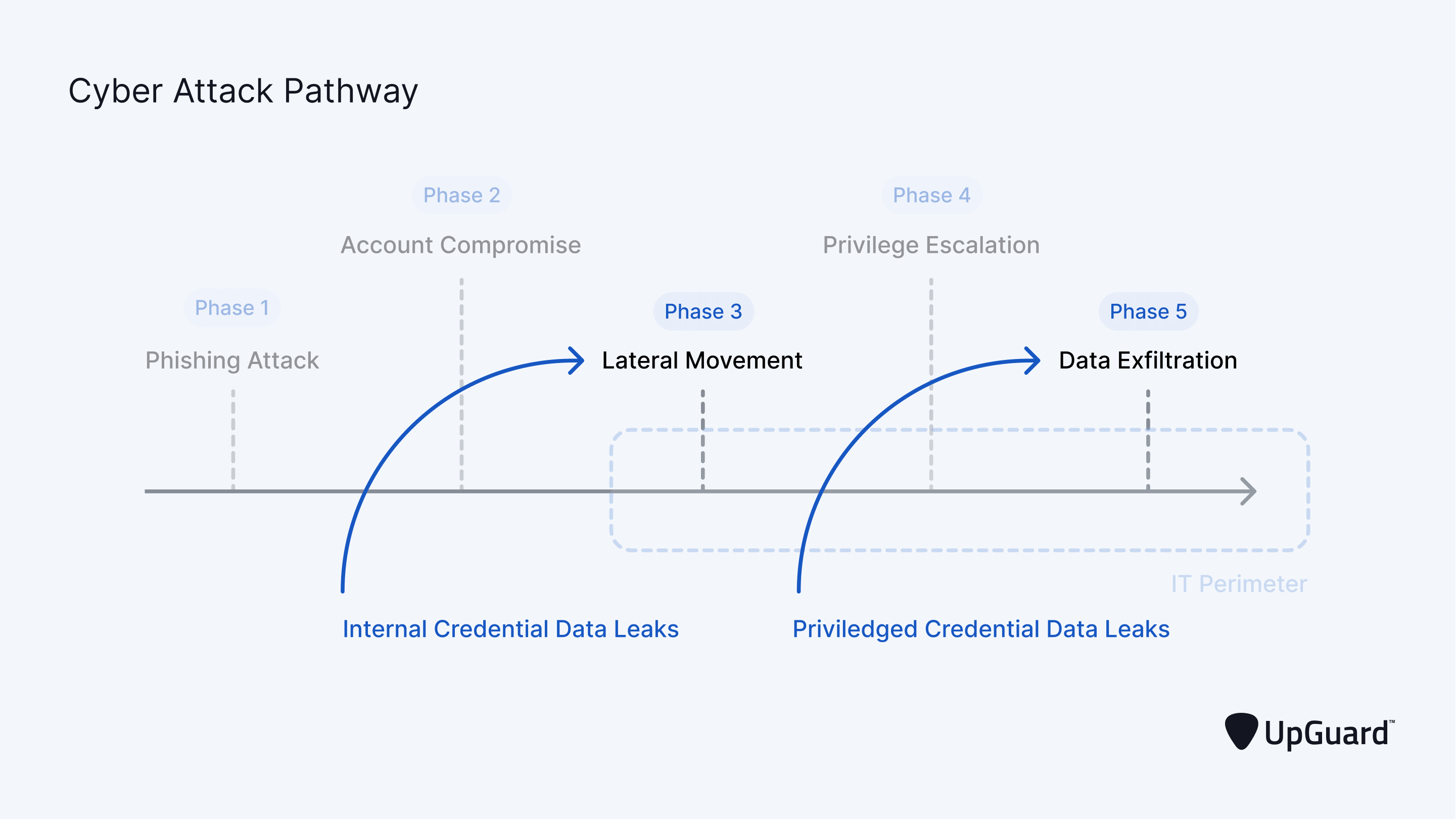
Cloud misconfigurations represent the single most common catalyst for modern data breaches, primarily occurring when storage buckets, databases, and permissions are left wide open due to human error, complex architectures, or default settings. Addressing this vulnerability requires rigorous continuous monitoring, strict identity and access management, and automated security posture management to ensure enterprise cloud environments remain secure against evolving threats.
The Anatomy of Cloud Misconfigurations
Cloud computing has revolutionized how organizations store, process, and manage data. However, the sheer speed and scale of cloud adoption have outpaced the security practices of many organizations. A cloud misconfiguration refers to any incorrect setting, flawed parameter, or security oversight within a cloud computing environment that leaves systems, applications, or data vulnerable to unauthorized access or exploitation.
Unlike traditional on-premises data centers protected by physical perimeters and hardware firewalls, cloud environments are defined by software and APIs. This virtualization means that a single misplaced permission tag or an improperly secured storage bucket can expose petabytes of sensitive data instantly to the public internet. Security frameworks like the Center for Internet Security (CIS) benchmarks and the Cloud Security Alliance (CSA) consistently identify configuration errors as a primary vector for security incidents, frequently outpacing zero-day exploits and sophisticated malware.
The complexity of modern multi-cloud and hybrid environments exacerbates this challenge. Organizations often utilize multiple providers simultaneously, such as Amazon Web Services (AWS), Microsoft Azure, and Google Cloud Platform (GCP). Each platform maintains its own unique vocabulary, permission models, and security tooling. Security teams struggle to maintain consistent visibility and policy enforcement across these disparate ecosystems, creating blind spots where misconfigurations thrive.
Why Cloud Environments Are Uniquely Vulnerable
The transition from static infrastructure to dynamic, code-driven environments introduces distinct vulnerability patterns. In legacy environments, provisioning a server required manual hardware installation, network configuration, and physical security checks, providing multiple natural checkpoints for review. In contrast, modern cloud environments rely on Infrastructure as Code (IaC), allowing developers to spin up thousands of servers, databases, and storage instances with a few lines of configuration script.
When errors exist in these scripts, they scale instantly. A single typographical error or a misunderstood access control flag in an IaC template can deploy thousands of misconfigured resources simultaneously. Furthermore, the shared responsibility model inherent in cloud computing often leads to dangerous assumptions. While cloud service providers (CSPs) secure the underlying infrastructure—including physical datacenters, hardware, and virtualization layers—the customer remains entirely responsible for securing everything they put into the cloud, including operating systems, network configurations, identity management, and data encryption.
| Responsibility Area | Cloud Service Provider (CSPs) | Customer / Tenant |
|---|---|---|
| Physical Infrastructure | Hardware, Datacenters, Power, Cooling | None |
| Virtualization Layer | Hypervisors, Host Operating Systems | None |
| Identity & Access Management | IAM Service Infrastructure | User Credentials, Roles, Policies, MFA |
| Data Classification & Privacy | None | Data Storage, Encryption Keys, Access Rules |
| Network Security | Core Networking Hardware | Virtual Private Clouds (VPCs), Security Groups, Firewalls |
Common Types of Cloud Misconfigurations
Understanding the specific ways configurations fail is essential for remediation. While vulnerabilities span various services, certain types of misconfigurations appear with alarming frequency in security incident reports.
Unsecured Storage Buckets and Databases
Storage services—such as AWS S3 buckets, Azure Blob Storage, and Google Cloud Storage—are designed for high scalability and accessibility. However, failing to restrict public read or write permissions on these buckets has historically led to massive data leaks. Breaches involving medical records, financial data, and proprietary source code frequently trace back to a storage bucket left readable by "All Users" or "Authenticated Users." Similarly, databases deployed without authentication passwords or configured with default administrative credentials invite automated botnets to harvest or ransom stored information.
Overly Permissive Identity and Access Management (IAM)
The principle of least privilege dictates that users, applications, and services should only possess the minimum permissions necessary to perform their specific functions. In practice, organizations frequently violate this principle by assigning administrative privileges to standard service accounts or user profiles for the sake of convenience. If an attacker compromises an application running with overly broad IAM permissions, they can leverage those credentials to pivot throughout the cloud environment, escalate privileges, and access sensitive downstream data stores.
Inadequate Logging and Monitoring
Visibility is the cornerstone of incident response. Many organizations fail to enable comprehensive logging features, such as AWS CloudTrail, Azure Monitor, or GCP Cloud Audit Logs, or they fail to centralize and analyze these logs in real time. Without proper logging, unauthorized access attempts, anomalous API calls, and silent data exfiltration can persist undetected for months, transforming a minor configuration slip into a catastrophic data breach.
Publicly Exposed Management Ports
Virtual machines and compute instances are frequently launched with default network security group rules that leave administrative ports—such as SSH (port 22) and RDP (port 3389)—open to the entire public internet. Threat actors continuously scan public IP ranges for open management ports, utilizing automated brute-force attacks or exploiting known vulnerabilities in unpatched operating systems to gain root access.
The Business and Operational Impact of Breaches
The consequences of a cloud misconfiguration extend far beyond immediate technical remediation. When sensitive data is exposed, organizations face a cascading series of operational, financial, and legal repercussions.
Financial losses often stem from multiple sources. Regulatory fines under frameworks like the General Data Protection Regulation (GDPR), the California Consumer Privacy Act (CCPA), or industry-specific standards like HIPAA can reach millions of dollars. Additionally, organizations incur significant expenses related to forensic investigations, legal counsel, credit monitoring services for affected customers, and mandatory public relations campaigns.
Beyond direct financial costs, reputational damage can erode customer trust permanently. In competitive markets, consumers and enterprise clients alike prioritize data security when selecting service providers. A high-profile data breach resulting from a basic configuration oversight signals poor internal governance and can lead to immediate customer churn, depressed stock valuations, and lost business opportunities. Furthermore, engineering teams diverted from product development to handle incident containment and remediation experience severe productivity losses and burnout.
Best Practices for Preventing and Remediating Misconfigurations
Securing cloud environments requires a multi-layered strategy that combines cultural shifts, rigorous policy enforcement, and automated tooling. Organizations can drastically reduce their risk profile by implementing a structured remediation roadmap.
Implement Infrastructure as Code Scanning
Because modern applications are defined by code, security checks must shift left into the development pipeline. Integrating Static Application Security Testing (SAST) and IaC scanning tools into continuous integration and continuous deployment (CI/CD) pipelines allows teams to catch misconfigurations before deployment. Tools can automatically scan Terraform, AWS CloudFormation, and Kubernetes manifests for security anti-patterns, failing builds that violate compliance policies.
Enforce Continuous Cloud Security Posture Management (CSPM)
Runtime environments change constantly as developers spin down and spin up resources. Point-in-time security audits are insufficient for dynamic cloud architectures. Organizations must deploy CSPM solutions that continuously monitor cloud resources against established security baselines and compliance frameworks. These tools provide real-time visibility, alert security teams to newly introduced vulnerabilities, and often offer automated remediation scripts to fix simple configuration drifts instantly.
Adopt Strict Identity Governance
Identity has become the new security perimeter in cloud computing. Organizations must eliminate long-lived access keys and static credentials wherever possible. Instead, implement multi-factor authentication (MFA) across all administrative accounts, leverage temporary security tokens, and enforce strict least-privilege policies. Regularly audit IAM roles and permissions to remove orphaned accounts and unused access paths.
Establish Comprehensive Visibility and Incident Response
Centralize logging across all cloud accounts and regions into a Security Information and Event Management (SIEM) or Extended Detection and Response (XDR) platform. Configure automated alerts for high-risk activities, such as changes to storage bucket access policies, unexpected creation of administrative keys, or traffic originating from anomalous geographic locations. Conduct regular tabletop exercises to ensure engineering and security teams can respond rapidly if a misconfiguration is detected.
Frequently Asked Questions
Why are cloud misconfigurations so common?
Cloud environments are exceptionally complex, dynamic, and decentralized. Developers can provision infrastructure instantly without going through traditional IT bottlenecks, often prioritizing speed over security hardening. Additionally, the steep learning curve associated with managing multi-cloud permissions and default settings creates numerous opportunities for human error.
What is the difference between a cloud misconfiguration and a software vulnerability?
A software vulnerability is a coding flaw inherent in an application or operating system vendor's product that requires a patch or update to fix. A cloud misconfiguration is an operational error made by the user or administrator when setting up, deploying, or managing cloud services, such as leaving a database password blank or making a storage bucket public.
How do attackers find cloud misconfigurations?
Attackers utilize automated scanning scripts and bots that continuously probe public IP ranges, domain names, and known cloud storage naming conventions (such as predictable S3 bucket URLs). Once an open port or unauthenticated storage bucket is identified, automated tools can extract or corrupt data within seconds.
What tools can help detect cloud misconfigurations?
Organizations use a variety of specialized tools, including Cloud Security Posture Management (CSPM) platforms, Infrastructure as Code (IaC) scanners, and cloud-native security services provided directly by platforms like AWS, Azure, and GCP. These tools analyze configurations against industry standards like CIS benchmarks and flag deviations in real time.
Are small businesses targeted by cloud misconfigurations as much as large enterprises?
Yes. Automated attack tools do not differentiate between small businesses and multinational corporations. Threat actors scan the entire internet indiscriminately. Small businesses often lack dedicated security staff, making them particularly vulnerable to automated exploitation of basic cloud configuration oversights.
Final Recommendations for Security Leaders
Mitigating cloud misconfigurations requires treating infrastructure configuration with the same rigor and version control applied to application source code. Security leaders must bridge the gap between development, operations, and security teams—fostering a culture of shared responsibility where security is integrated into every phase of the software development lifecycle. By prioritizing continuous monitoring, enforcing least-privilege access models, and automating posture checks, organizations can effectively neutralize the primary driver of modern data breaches and safeguard their critical digital assets.