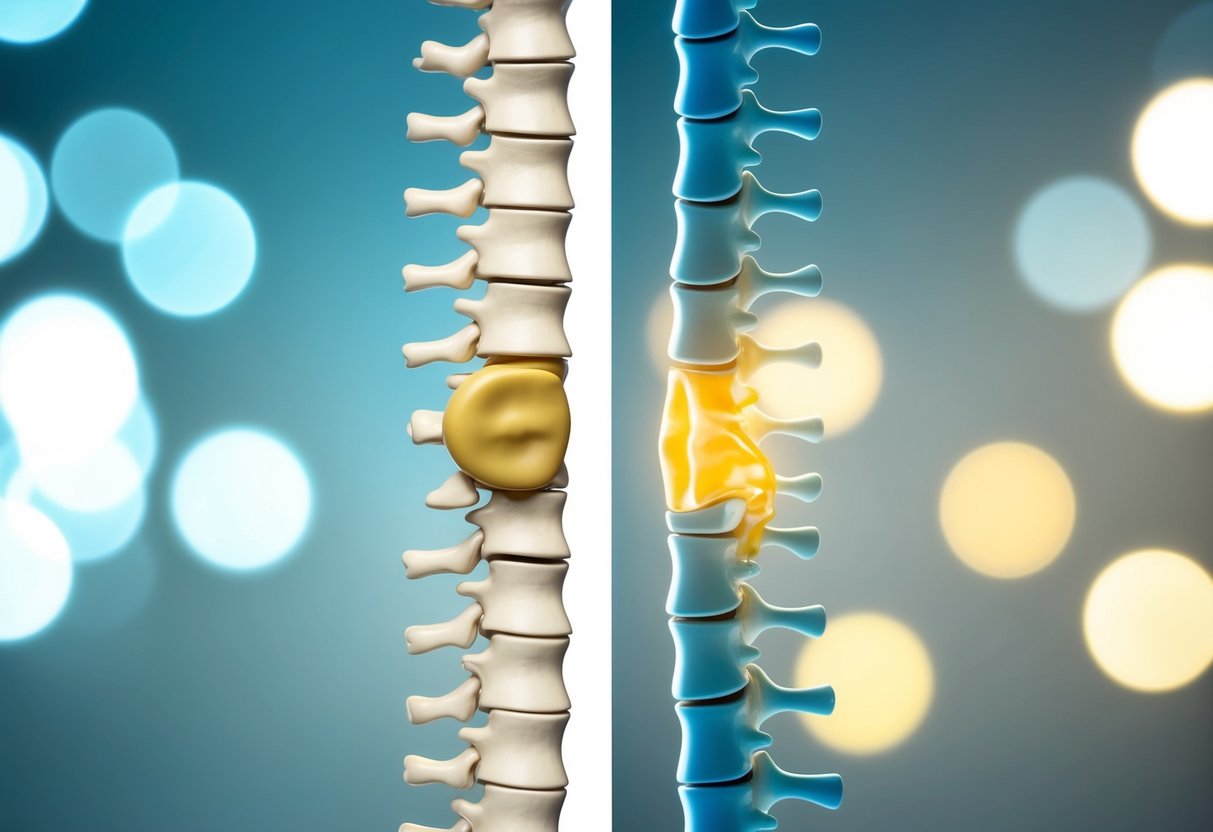
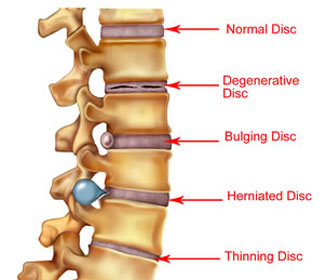
Managing a workers' compensation claim involving multiple spinal injuries—specifically two bulging discs in the cervical spine (neck) and two herniated discs in the lumbar spine (low back)—requires a comprehensive understanding of medical documentation, occupational disease or injury legal frameworks, and rigorous claims navigation. This combination of multi-region spinal trauma frequently presents unique challenges in proving work-related causation, securing appropriate diagnostic imaging, and obtaining authorization for multi-site medical treatment or surgical interventions.
Navigating a complex workers' compensation claim involving both cervical and lumbar spine damage requires injured workers, legal representatives, and medical case managers to address several interconnected operational phases. The following guide details the medical realities of multi-level disc pathology, the procedural steps for filing and managing a dual-region compensation claim, common pitfalls in insurance dispute resolution, and the strategic documentation necessary to support lifetime medical benefits or permanent disability ratings.
Understanding Multi-Region Spinal Pathology in Workplace Claims
Spinal injuries sustained on the job rarely occur in isolation, particularly in high-impact incidents, slip-and-fall accidents, heavy lifting routines, or chronic ergonomic stress environments. When an individual suffers injuries to both the cervical (neck) and lumbar (lower back) regions simultaneously, the physiological complexity escalates significantly. Insurers and independent medical examiners (IMEs) often scrutinize multi-region claims intensely, questioning how a single workplace event could simultaneously compromise two distinct anatomical areas of the spinal column.
Cervical Pathology: The 2 Bulging Discs
The cervical spine comprises seven vertebrae (C1 through C7) responsible for supporting the skull and facilitating neck mobility while housing the spinal cord and nerve roots exiting to the upper extremities. A "bulging disc" occurs when the tough outer layer of the disc (the annulus fibrosus) weakens and protrudes outward beyond its normal perimeter, often pressing against the spinal canal or exiting nerve roots.
Having two bulging discs in the neck typically means that adjacent or non-adjacent intervertebral segments—such as C5-C6 and C6-C7—have sustained structural compromise. Clinically, this can manifest as:
- Axial neck pain and localized stiffness restricting range of motion.
- Cerviculobrachial syndrome, where nerve root compression (cervical radiculopathy) causes radiating pain, numbness, tingling, or weakness traveling down the shoulder, arm, and hand.
- Secondary tension headaches resulting from chronic muscle guarding in the upper trapezius and suboccipital regions.
Lumbar Pathology: The 2 Herniated Discs
Conversely, the lumbar spine consists of five large vertebrae (L1 through L5) that bear the majority of the body's axial load and facilitate bending and twisting. A "herniated disc" differs slightly from a mere bulge; it occurs when a crack in the outer annular ring allows the gel-like center (nucleus pulposus) to protrude completely through the wall or rupture outward.
Documenting two herniated discs in the low back—commonly at high-stress junctions like L4-L5 and L5-S1—indicates significant structural failure. This frequently results in:
- Lower back pain exacerbated by prolonged sitting, standing, lifting, or transitioning from sit to stand positions.
- Lumbar radiculopathy (sciatica), characterized by sharp, electric shock-like pain shooting through the gluteal region down the back of the thigh and into the foot.
- Motor deficits, such as foot drop (inability to lift the front part of the foot) or diminished deep tendon reflexes, which serve as objective clinical indicators of nerve damage.
Establishing Work-Related Causation and Dual-Region Filing
The foundational requirement of any workers' compensation claim is proving that the injury "arose out of and in the course of employment." When a claim involves both cervical and lumbar damage, the evidentiary burden increases because defense medical examiners frequently argue that degenerative disc disease (DDD) or pre-existing wear-and-tear caused the condition rather than the acute workplace incident.
Linking the Mechanism of Injury
To secure benefits for both sets of discs, the mechanism of injury documented in the initial medical intake must logically support trauma to both areas. Examples include:
- A fall from height: Landing awkwardly can compress both the cervical spine (via whiplash or direct impact) and the lumbar spine (via axial loading).
- Heavy lifting or equipment operation: Straining to lift an excessively heavy object while twisting can simultaneously shear the lower lumbar discs and hyperextend or compress the cervical spine.
- Motor vehicle accidents during work duties: Rear-end collisions generate rapid hyperflexion and hyperextension forces (whiplash) affecting the neck, while simultaneously forcing the pelvis and lower spine against the seat back, injuring the lumbar region.
Comprehensive Medical Reporting
Treating physicians must explicitly address both anatomical regions in their narrative reports. A vague report stating "patient has back and neck pain" is insufficient for workers' compensation boards or insurance adjusters. The medical record must specify:
- The exact vertebral levels involved (e.g., C5-C6, C6-C7, L4-L5, L5-S1).
- The diagnostic modality used (typically high-field 1.5T or 3.0T MRI scans showing annular tears, disc protrusions, or nerve root impingement).
- A direct medical opinion on causation, using standard legal terminology such as "within a reasonable degree of medical certainty, the workplace accident was the primary contributing factor to the disc herniations and bulges."
Diagnostic Protocols and Treatment Pathways
Once a claim is accepted—or while it is being litigated—the injured worker must undergo a standardized sequence of diagnostic evaluations and conservative care before invasive procedures are authorized by workers' compensation insurance carriers.
Diagnostic Imaging and Electromyography
Objective testing is the cornerstone of validating a multi-region spinal injury within the workers' compensation system. Subjective complaints of pain are rarely enough to secure permanent disability benefits or surgical approval.
| Diagnostic Test | Target Anatomy | Purpose in Workers' Compensation Claims |
|---|---|---|
| Cervical & Lumbar MRI | Soft tissues, discs, nerve roots | Identifies exact size, location, and severity of the 2 bulging cervical discs and 2 herniated lumbar discs. |
| CT Myelogram | Bony structures and spinal canal | Used if MRI is contraindicated (e.g., due to metal implants) to visualize nerve compression. |
| EMG / NCV Study | Upper & lower extremities | Measures electrical activity in muscles and nerves to prove objective functional nerve damage (radiculopathy). |
| X-rays (Flexion/Extension) | Spinal alignment | Rules out spinal instability, spondylolisthesis, or acute fractures resulting from the workplace trauma. |
Conservative Treatment Milestones
Most state workers' compensation guidelines require injured workers to exhaust conservative (non-surgical) treatment options before approving advanced interventions like epidural steroid injections (ESIs) or surgical fusion/discectomy. Typical pathways include:
- Physical Therapy (PT): Supervised exercise programs focusing on core stabilization, cervical retraction, and posture modification. Utilization and compliance are heavily tracked by adjusters.
- Chiropractic Care or Acupuncture: Often integrated for pain modulation and functional restoration, subject to state-specific utilization review (UR) rules.
- Pharmacological Management: Prescriptions for non-steroidal anti-inflammatory drugs (NSAIDs), muscle relaxants, and neuropathic pain agents (e.g., gabapentin). Narcotic use is heavily scrutinized and restricted under modern workers' compensation pharmacy benefit management programs.
- Interventional Pain Management: Diagnostic and therapeutic medial branch blocks, facet joint injections, or transforaminal epidural steroid injections administered under fluoroscopic guidance to target specific injured levels.
Navigating Insurance Adjuster Tactics and Utilization Review
Workers' compensation insurance carriers employ dedicated adjusters, nurse case managers, and defense attorneys whose primary objective is to minimize financial payout and medical liability. Managing a multi-region claim requires an understanding of common carrier strategies.
Apportionment and Pre-Existing Conditions
Because bulging and herniated discs often show some degree of age-related degeneration on an MRI, insurance carriers frequently attempt to invoke "apportionment." This is a legal mechanism where the insurer argues that a percentage of the worker's disability is due to pre-existing degenerative disc disease rather than the work accident.
- Counter-Strategy: Rely on the treating physician to distinguish between asymptomatic degeneration (which the worker had before the accident without functional impairment) and symptomatic trauma (which turned a previously quiet spine into a painful, disabling condition). Under the "eggshell skull" rule in many jurisdictions, an employer takes the employee as they find them.
Independent Medical Examinations (IMEs)
The insurance carrier will almost certainly schedule an Independent Medical Examination (IME) with a physician of their choosing. Despite the word "independent," these doctors are typically compensated handsomely by insurance companies or defense firms and frequently report that:
- The work injury has resolved or reached Maximum Medical Improvement (MMI).
- The need for treatment is entirely related to natural aging rather than the work incident.
- The worker is capable of returning to full-duty work without restrictions.
Injured workers must attend these examinations carefully, provide accurate histories without exaggerating or minimizing symptoms, and review the resulting IME report with their treating physician or legal counsel to file formal rebuttals.
Disability Ratings, Settlement, and Permanent Restrictions
When medical treatment reaches a plateau and no further significant improvement is anticipated, the treating physician will declare that the worker has reached Maximum Medical Improvement (MMI). At this juncture, the focus shifts to evaluating permanent impairment and negotiating financial compensation or vocational rehabilitation.
Permanent Partial Disability (PPD)
Because the claim involves multiple spinal regions (neck and low back), the impairment rating is often calculated using specialized medical guidelines, such as the American Medical Association (AMA) Guides to the Evaluation of Permanent Impairment.
- Combined Values Chart: When multiple body parts or spinal regions are impaired, ratings are rarely added together directly. Instead, formulas are used to calculate the combined percentage of whole-person impairment.
- Scheduled vs. Non-Scheduled States: In some jurisdictions, the back and neck fall under "non-scheduled" body parts, meaning compensation is based on loss of earning capacity or wage-earning potential rather than a fixed schedule of weeks.
Vocational Rehabilitation and Job Retraining
If the permanent restrictions assigned by the physician (e.g., no lifting over 10 pounds, no prolonged sitting or standing, no repetitive bending or twisting) prevent the worker from returning to their pre-injury occupation, the workers' compensation system may provide vocational rehabilitation. This can include:
- Job placement assistance.
- Retraining or formal education programs for a less physically demanding career path.
- Wage-loss differential benefits if the worker must take a lower-paying job due to disability restrictions.
Frequently Asked Questions
Can I choose my own doctor for 2 bulging neck discs and 2 herniated low back discs?
Doctor selection rules vary entirely by jurisdiction. Some states allow the injured worker to select their treating physician from an approved network or completely independently, while other states require the employer or insurer to direct medical care for a specific period (e.g., the first 30 to 90 days). Consulting local workers' compensation statutes is essential before changing medical providers.
Why is the insurance company denying my low back claim while accepting my neck claim?
Insurers frequently fragment multi-region claims, accepting the cervical injury while denying the lumbar injury (or vice versa). They often argue that the mechanism of the accident only affected the upper body. Overcoming this requires detailed medical records demonstrating that the physical forces of the accident impacted the entire axial skeleton, supported by prompt initial medical complaints documenting back pain from day one.
What happens if I need surgery for my herniated lumbar discs later on?
If your claim remains open or you secure a "stipulated award" or "award for future medical care," the insurance carrier remains legally obligated to pay for reasonable and necessary medical treatment related to the work injury. However, if you settle your case via a "Full and Final Compromise and Release" (C&R) lump-sum cash buyout, you typically sign away your right to future medical benefits, meaning you must factor the future cost of potential spinal surgeries into the settlement amount.
Can I work light duty while treating for my spinal disc injuries?
Yes, if your treating physician releases you to modified or light-duty work and your employer can accommodate those restrictions (such as sitting-only tasks with no lifting), you are generally required to attempt it. Refusing a legitimate light-duty job offer within your medical restrictions can result in the suspension of your weekly wage-loss replacement benefits.
Next Steps and Strategic Action Plan
Navigating a workers' compensation claim involving two bulging cervical discs and two herniated lumbar discs demands meticulous organization and proactive management. To protect your health and legal rights, execute the following steps:
- Maintain Continuous Treatment: Attend all physical therapy, specialist, and pain management appointments. Gaps in treatment give insurance adjusters leverage to claim you have recovered.
- Request Detailed Medical Notes: Ensure your treating doctors explicitly document the exact spinal levels (C5-C6, L4-L5, etc.) and explicitly state the causal link to your workplace accident in their permanent charts.
- Document Functional Limitations: Keep a daily symptom journal detailing how your pain affects your ability to sit, stand, walk, lift, and sleep, which helps during depositions or administrative hearings.
- Consult a Qualified Legal Professional: Given the high financial stakes of multi-level spinal injuries and the likelihood of insurance disputes, securing a certified workers' compensation attorney early in the process ensures your interests are protected against carrier denials and low-ball settlement offers.