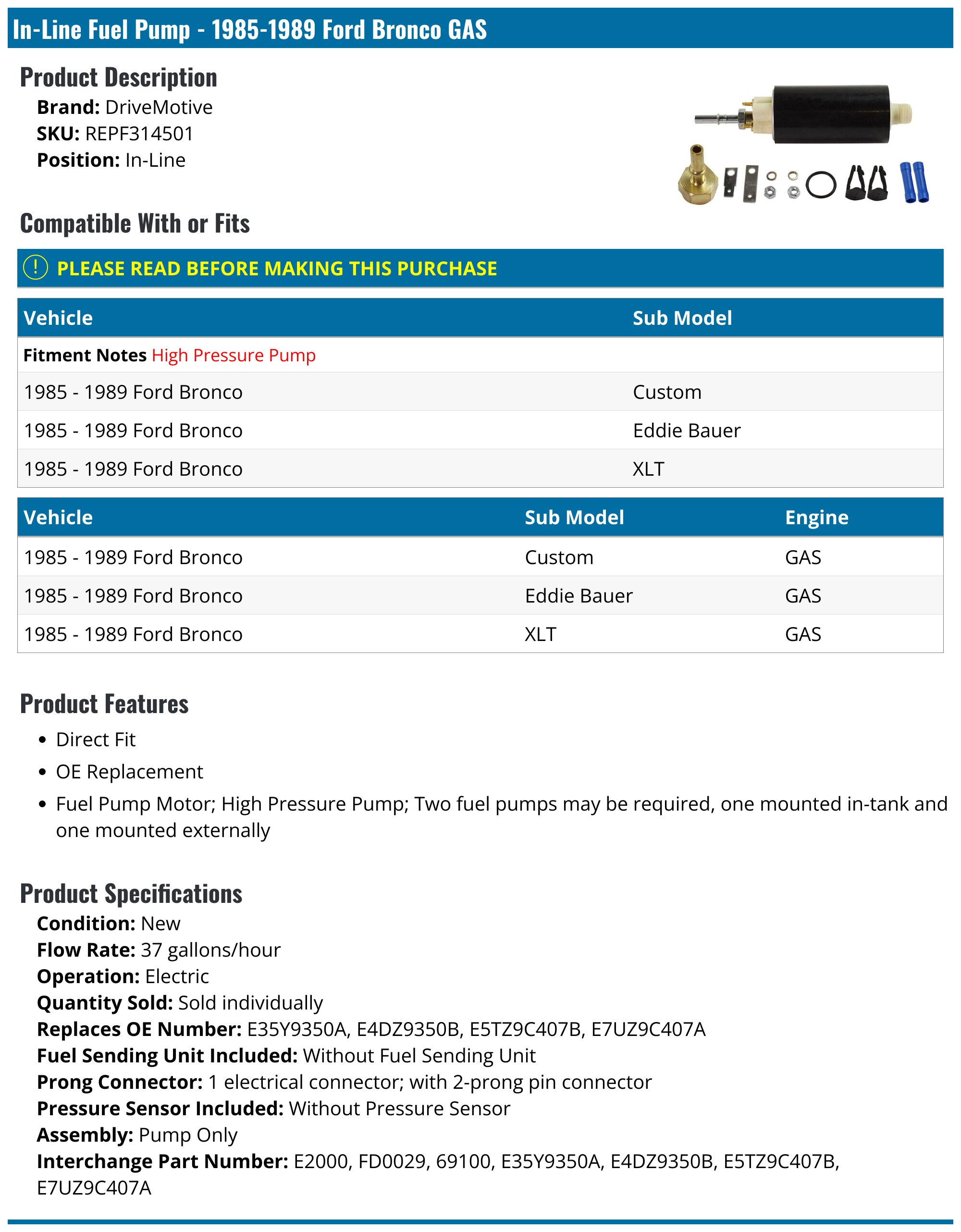
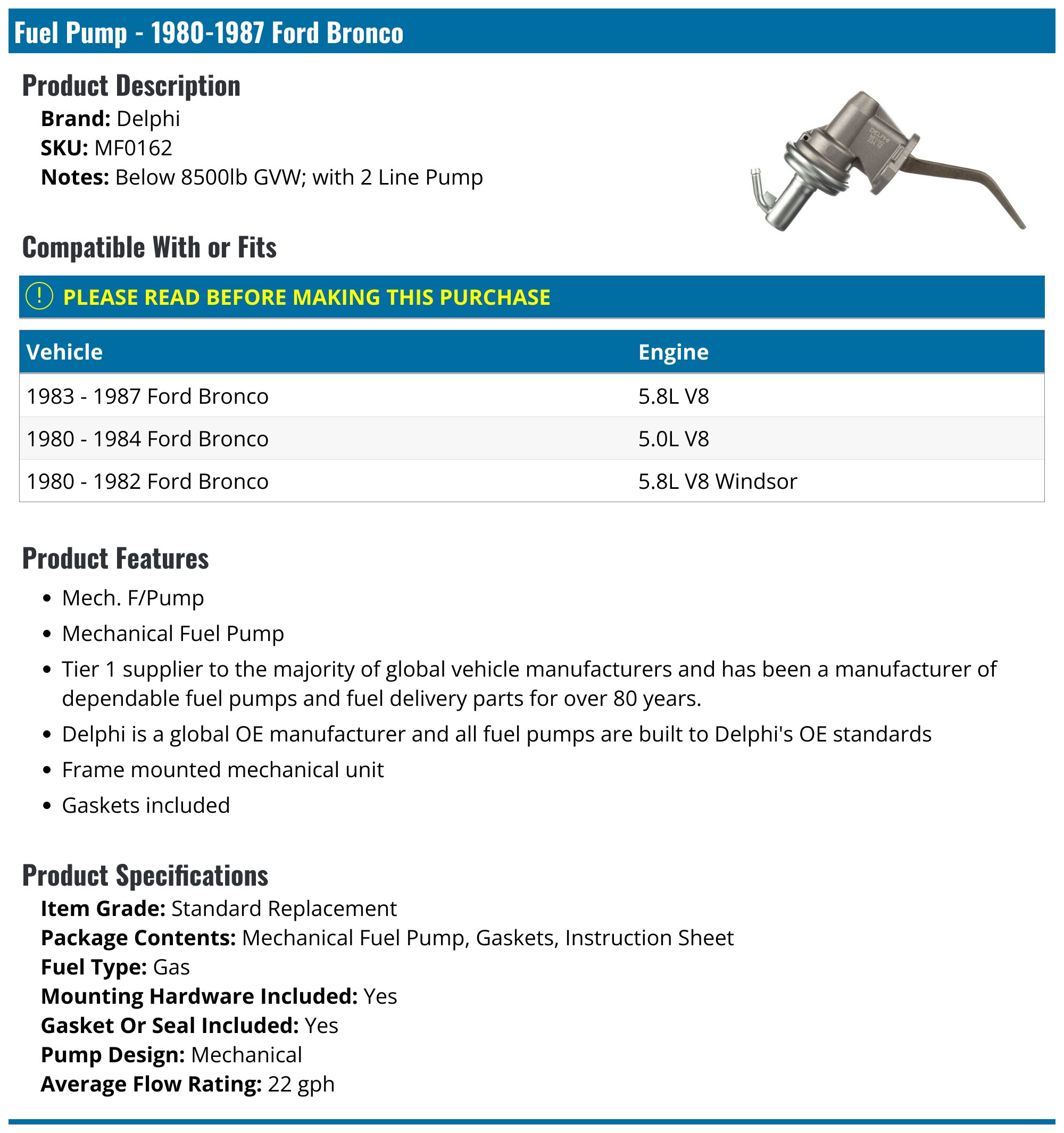
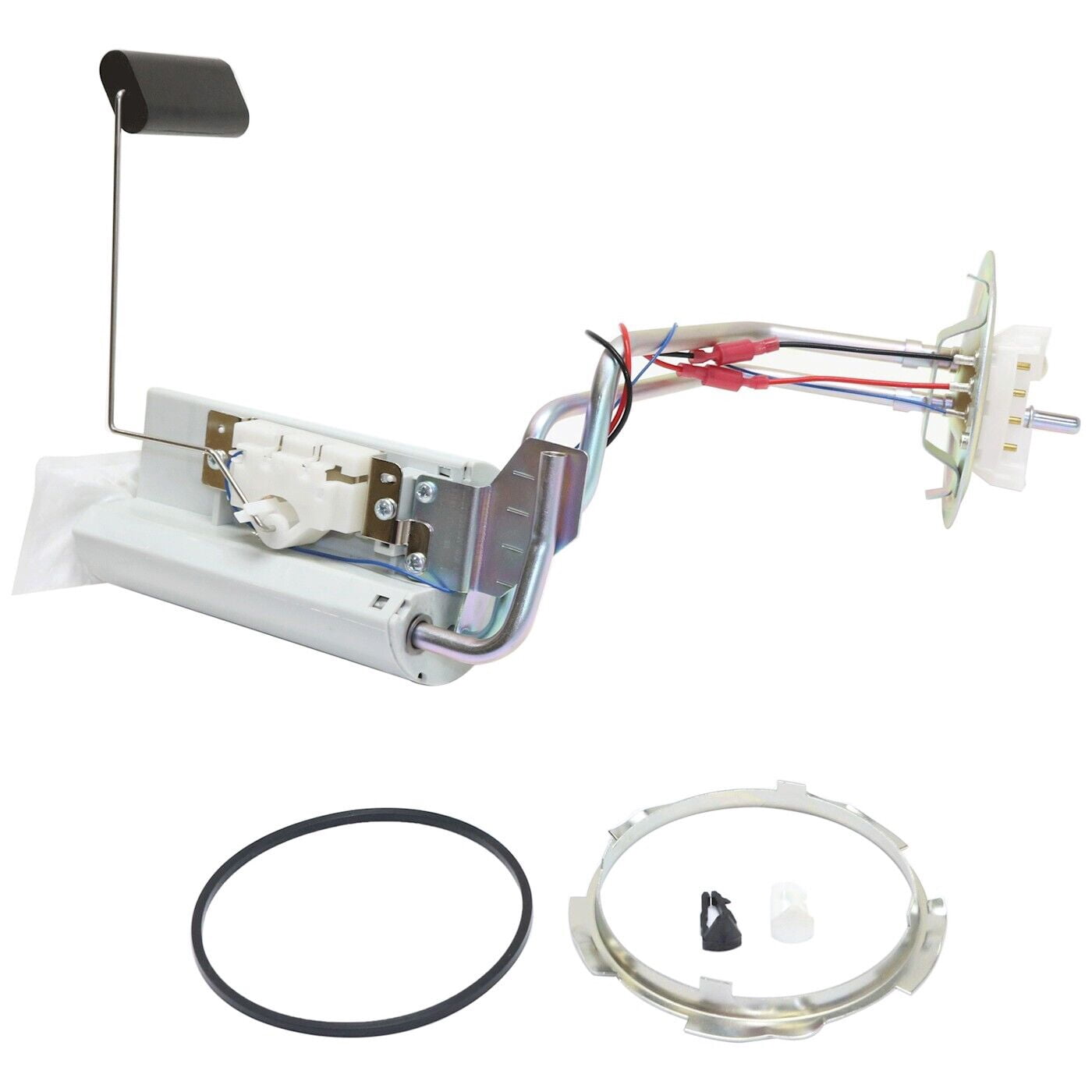
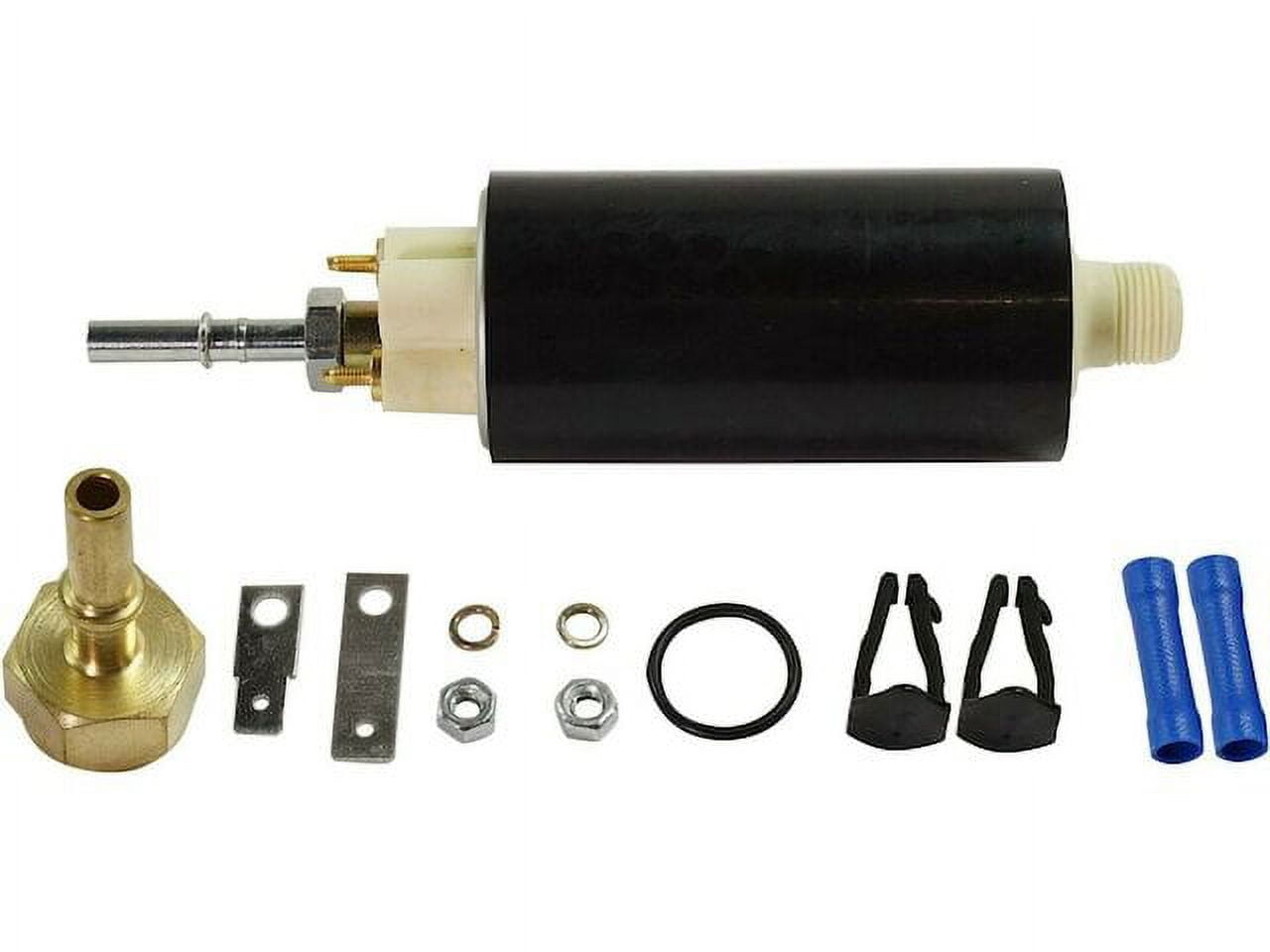
The 1989 Ford Bronco utilizes a sophisticated dual-pump Electronic Fuel Injection (EFI) system consisting of a low-pressure lift pump located inside the fuel tank and a high-pressure delivery pump mounted on the driver-side frame rail. To maintain peak performance, the high-pressure pump should maintain 35–45 PSI for V8 engines and 45–60 PSI for the 4.9L inline-six, with fuel filter replacements required every 30,000 miles.
Understanding the 1989 Ford Bronco Fuel Delivery System
By 1989, the Ford Bronco had fully transitioned into the era of Electronic Fuel Injection (EFI). This transition required a significant departure from the mechanical fuel pumps found on older carbureted models. The 1989 model year is distinct because it sits in a specific window of Ford engineering where the "two-pump" system was standard before Ford eventually moved to a high-pressure single-pump in-tank design in the early 1990s.
The system is designed to prevent vapor lock and ensure a constant supply of pressurized fuel to the fuel rail, regardless of the vehicle's angle or fuel level. This is particularly important for a vehicle like the Bronco, which was designed for off-road utility where steep inclines could cause fuel to slosh away from a traditional single-pump pickup.
The Low-Pressure In-Tank Pump
The primary job of the in-tank pump (often called the "boost" or "lift" pump) is not to provide the pressure needed for the injectors, but rather to move fuel from the tank to the frame-mounted reservoir. This pump operates at a relatively low pressure, usually between 4 and 7 PSI. It ensures that the high-pressure pump downstream never runs dry, which is critical because high-pressure EFI pumps rely on the flow of fuel for cooling and lubrication.
The High-Pressure Frame-Mounted Pump
Located on the inner driver-side frame rail, just forward of the fuel tank, is the high-pressure pump. This is the "workhorse" of the system. It draws fuel from the reservoir (supplied by the in-tank pump) and pushes it toward the engine at the specific PSI required for the injectors to atomize fuel correctly. If this pump fails or weakens, the engine will suffer from lean conditions, backfiring, or a total no-start.
Technical Specifications for 1989 Bronco Fuel Pumps
Specifications vary slightly depending on whether the Bronco is equipped with the 4.9L (300 cubic inch) Inline-6, the 5.0L (302) V8, or the 5.8L (351 Windsor) V8. However, the hardware configuration remains largely identical across these powerplants.
Pressure Requirements
Pressure is the most critical metric for the 1989 EFI system. If the pressure drops even 5 PSI below the minimum threshold, the vehicle may experience a "crank but no start" condition.
- 4.9L Inline-6: This engine requires higher pressure than the V8s.
- Key On, Engine Off: 45–60 PSI.
- Engine Idling: 45–60 PSI.
- 5.0L and 5.8L V8:
- Key On, Engine Off: 35–45 PSI.
- Engine Idling: 30–45 PSI (depending on vacuum at the regulator).
Flow Rate and Electrical Specs
- Flow Rate: The high-pressure pump is typically rated for approximately 30 to 40 gallons per hour (GPH) under load.
- Operating Voltage: 12.0 to 14.4 Volts DC.
- Amperage Draw: A healthy high-pressure pump should draw between 4 and 6 amps. An amperage draw exceeding 8 amps usually indicates a restricted fuel filter or a pump motor that is beginning to seize.
- Inlet/Outlet Type: The frame pump generally uses a 5/16" or 3/8" "Duck Bill" style quick-connect or threaded fitting depending on the specific manufacturing run.
| Component | Location | Function | Operating Pressure |
|---|---|---|---|
| Lift Pump | Inside Fuel Tank | Transfers fuel to reservoir | 4–7 PSI |
| High-Pressure Pump | External Frame Rail | Pressurizes fuel rail | 35–60 PSI (Engine specific) |
| Fuel Pressure Regulator | Engine Fuel Rail | Maintains constant rail pressure | Vacuum modulated |
| Inertia Switch | Passenger Kick Panel | Shuts off fuel in a collision | N/A |
Service Timeline and Maintenance Intervals
As of 2026, many 1989 Broncos are entering their fourth decade of service. While Ford did not originally list the fuel pumps as "wear items" with a fixed replacement interval, real-world data from the last 35 years suggests a proactive maintenance schedule is necessary to avoid being stranded.
Every 30,000 Miles: Fuel Filter Replacement
The fuel filter is located on the frame rail, usually between the high-pressure pump and the engine. Because the 1989 Bronco often sees off-road use or sits for long periods, sediment in the metal fuel tank can accumulate. A clogged filter forces the high-pressure pump to work harder, leading to premature failure. Replacing the filter every 30,000 miles (or every 2 years) is the single best way to extend the life of your pumps.
100,000 to 150,000 Miles: Proactive Pump Inspection
While some Ford OEM pumps have been known to last 200,000 miles, the 100k–150k range is the typical "failure zone." By 2026, most original units have either failed or are operating at reduced efficiency. If you are planning a long-distance trip or off-road excursion, testing the fuel pressure at the Schrader valve (located on the fuel rail) is recommended.
Periodic Check: The Inertia Switch and Wiring
Ford’s safety inertia switch is designed to cut power to the fuel pumps in the event of an impact. Over time, the electrical connectors at this switch (located behind the passenger-side kick panel) can become brittle or corroded. Inspecting these connections every 50,000 miles can prevent "mystery" no-start conditions.
Troubleshooting Common Fuel Pump Failures
Diagnosing a fuel issue in a 1989 Bronco requires a systematic approach to distinguish between an electrical failure and a mechanical pump failure.
The "Whine" Test
When you turn the ignition key to the "On" position (without cranking the engine), you should hear a distinct humming or whining sound from the frame rail for about 1 to 2 seconds. This is the ECC (Electronic Control Computer) priming the system.
- No Sound: Indicates an electrical issue (blown fuse, bad relay, or tripped inertia switch) or a completely dead pump.
- Constant Whining: If the pump runs continuously without the engine starting, there may be a failure in the fuel pressure regulator or the ECC.
Using the Schrader Valve
The fuel rail on the 4.9L, 5.0L, and 5.8L engines features a diagnostic port that looks like a tire valve. Attaching a mechanical fuel pressure gauge here is the only definitive way to verify pump health. If the gauge shows 10–20 PSI, your high-pressure pump is likely failing or the in-tank lift pump is not feeding the reservoir adequately.
The Dual-Pump Confusion
A common symptom of a failing in-tank (low pressure) pump is the Bronco running fine on a full tank but sputtering, stalling, or losing power when the fuel level drops below 1/4 tank. This happens because the high-pressure pump can sometimes "pull" enough fuel through a dead lift pump when the head pressure of a full tank assists it, but it fails once the fuel level is low.
Replacement Procedures: Best Practices
Replacing the fuel pumps on a 1989 Bronco is a manageable task for a DIY mechanic, but it requires strict adherence to safety protocols due to the presence of pressurized gasoline.
Depressurizing the System
Before breaking any fuel lines, you must relieve the pressure. The easiest way is to unplug the fuel pump power connector (or the inertia switch) and crank the engine until it stalls. This prevents gasoline from spraying into your eyes when you disconnect the lines at the frame rail.
Accessing the In-Tank Pump
Unlike some modern trucks, the 1989 Bronco does not have an access panel in the floor of the cargo area. To replace the lift pump, you must either drop the fuel tank or remove the entire rear body of the vehicle (dropping the tank is the standard method).
- Pro Tip: Use a floor jack with a wide piece of plywood to support the tank as you loosen the mounting straps. It is much easier to perform this task when the tank is nearly empty.
Choosing Replacement Parts
In 2026, the market is flooded with low-quality aftermarket fuel pumps. For a 1989 Bronco, it is highly recommended to use Motorcraft, Bosch, or Walbro units. Cheap "no-name" pumps often fail within months and frequently do not provide the consistent 40+ PSI required for the 4.9L inline-six, leading to persistent lean-code issues.
The Role of the Fuel Reservoir
A unique feature of the 1989 Bronco is the fuel reservoir assembly. On single-tank models, this is a plastic or metal canister that holds a small reserve of fuel to ensure the high-pressure pump stays submerged during vehicle maneuvers.
Some 1989 models utilized a "Dual Function Reservoir" if they were equipped with dual tanks (though dual tanks were more common in F-Series trucks, some Broncos were retrofitted or used similar parts). These reservoirs contain a diaphragm and valves that switch between tanks based on the pressure from the in-tank pumps. If your Bronco starts and runs but then dies after a few minutes, a ruptured diaphragm in this reservoir could be the culprit, as it may be recirculating fuel back to the wrong tank or causing a vacuum lock.
Frequently Asked Questions
Where is the fuel pump relay located on a 1989 Ford Bronco?
The fuel pump relay is located under the hood, typically on the driver-side fender well. It is often tucked inside a plastic weather-shield or attached to a bracket near the air filter box. It is usually a green or black plastic square. If your pump isn't priming, swapping this relay with a known good one is a quick diagnostic step.
Can I convert my 1989 Bronco to a single in-tank pump system?
Yes, many owners choose to "simplify" the system by installing a high-pressure in-tank pump from a 1990–1996 Bronco. This requires removing the frame-mounted pump and reservoir and potentially modifying the fuel lines. While this reduces the number of failure points, it requires careful plumbing to ensure the fuel lines are secure and do not leak under EFI pressures.
Why does my Bronco smell like gas near the driver-side door?
The high-pressure pump and the fuel reservoir are located directly under the driver's seat area on the frame rail. If the O-rings in the "Duck Bill" connectors or the gasket on the reservoir cap have perished, you will smell raw fuel. Given the age of 1989 models, these nylon lines and plastic connectors should be inspected for cracks and brittleness.
Does the 1989 Bronco have a fuel pump fuse?
Yes, but it is often a "fusible link" rather than a traditional blade fuse in the cabin. The primary protection for the fuel circuit is typically located near the starter solenoid on the fender wall or integrated into the wiring harness near the battery. Always check the inertia switch first, as it is the most common "mechanical" break in the electrical circuit.
What are the signs that my fuel pressure regulator is bad?
If your pumps are providing the correct 40 PSI but the engine is running extremely rich (black smoke from the exhaust) or fuel is found in the vacuum line attached to the regulator, the regulator's internal diaphragm has failed. The regulator is located on the fuel rail at the back of the engine and is responsible for "bleeding off" excess pressure back to the tank.
Final Recommendations for 1989 Bronco Owners
If you are restoring or maintaining a 1989 Ford Bronco in 2026, the fuel system should be treated as a complete ecosystem. Replacing just the high-pressure pump while ignoring a 35-year-old in-tank pump or a clogged filter is a recipe for a breakdown.
Next Steps:
- Test Pressure: Purchase or rent a fuel pressure gauge and verify the PSI at the Schrader valve.
- Inspect Lines: Check the nylon fuel lines for any signs of kinking or heat damage, especially near the exhaust headers.
- Upgrade the Filter: If you haven't replaced the fuel filter in the last two years, do so immediately; it is the cheapest insurance for your high-pressure pump.
- Verify the Ground: The fuel pumps on these trucks rely on a solid ground connection to the frame. Clean the grounding points near the fuel tank to ensure the pumps are receiving full voltage.