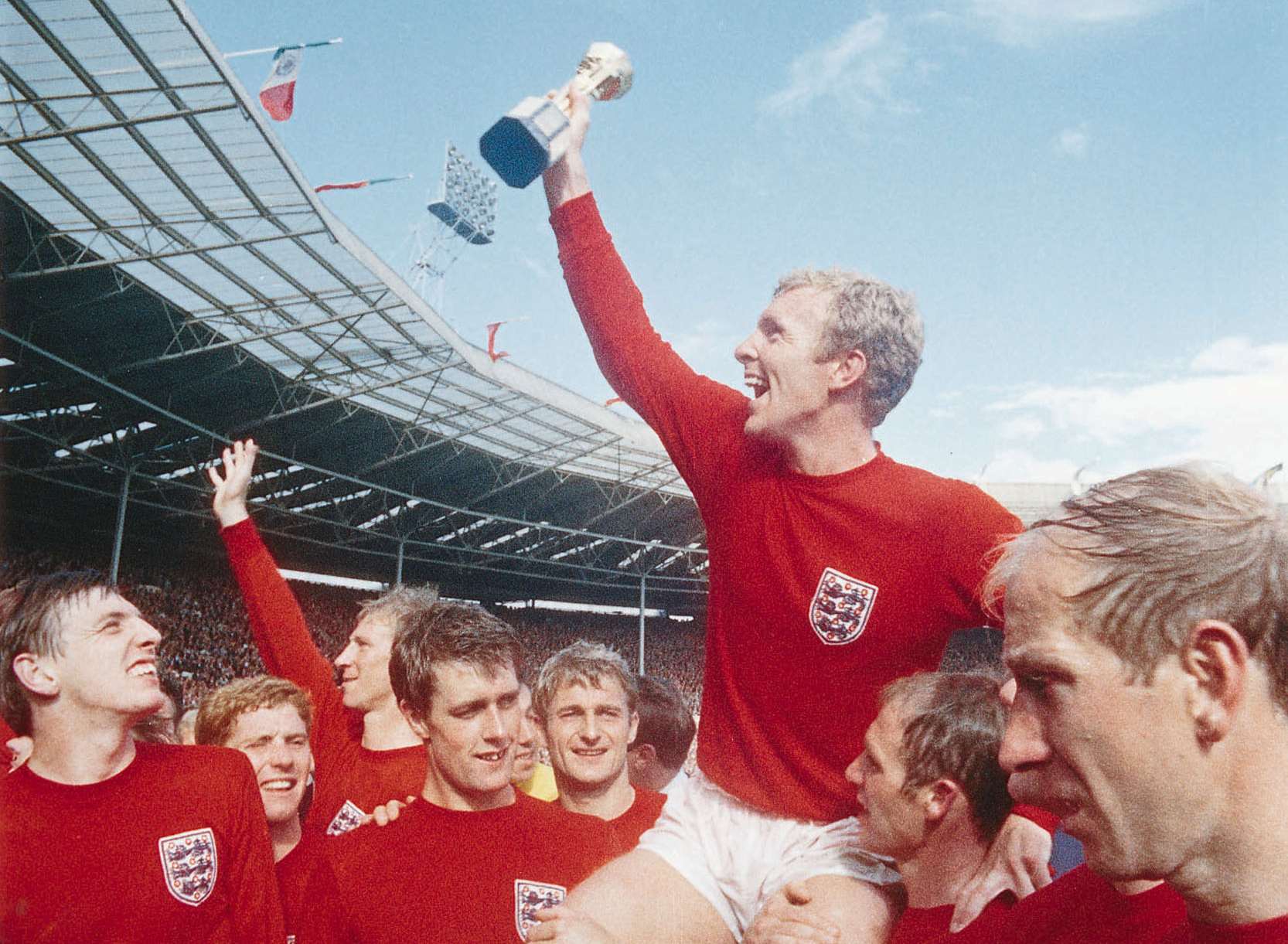
The 1966 England World Cup team players achieved immortal status by winning the country’s first and only FIFA World Cup title on home soil, defeating West Germany 4-2 after extra time at Wembley Stadium on July 30, 1966. Managed by Alf Ramsey and captained by Bobby Moore, the twenty-two men selected in the final squad represent an enduring chapter in association football history.
The Historical Context of the 1966 Squad
The journey to the 1966 FIFA World Cup was underpinned by a period of tactical evolution and strategic planning led by manager Alf Ramsey, who took charge of the national team in 1963. Ramsey boldly abandoned the traditional English 2-3-5 formation and the contemporary 4-2-4 system in favor of a rigid, disciplined tactical shape often described as the "Wingless Wonders." This system relied on industrious midfielders and full-backs who could cover vast amounts of ground, effectively bypassing traditional outside-forwards to pack the center of the pitch.
Hosting the tournament placed immense pressure on the English Football Association (FA) and the players. Preparations involved meticulous physical conditioning, tactical drills, and psychological readiness, masterminded by Ramsey, whose austere and uncompromising demeanor earned him immense respect from his players. Unlike modern tournament preparations characterized by vast entourages and commercial obligations, the 1966 squad spent weeks in relative seclusion at a training camp in Roehampton, forging a tight-knit camaraderie that would prove decisive during high-pressure knockout matches.
Understanding the composition of the 1966 squad requires examining not just the eleven players who started the final, but the entire twenty-two-man roster registered for the tournament. FIFA regulations at the time permitted all squad members to receive medals if their team won the competition—a rule that initially left non-playing squad members without medals until a concerted campaign by the FA and the players' families led to retrospective awards being presented by FIFA in 2007.
The Core Starting Eleven and Tactical Architecture
Alf Ramsey’s tactical blueprint was executed by a settled starting lineup that remained largely unchanged throughout the tournament, particularly from the group stage onward. Every player had a distinct tactical mandate within the 4-3-3 variant that utilized narrow midfielders.
[Gordon Banks] [George Cohen - Jack Charlton - Bobby Moore - Ray Wilson] [Nobby Stiles - Bobby Charlton - Alan Ball] [John Connelly (or Roger Hunt/Ian Callaghan) - Geoff Hurst - Martin Peters]
Goalkeeper and Defense
- Gordon Banks (Leicester City): Regarded as one of the greatest goalkeepers in football history, Banks possessed exceptional positional sense, agility, and handling. During the 1966 tournament, he conceded only three goals in six matches prior to the final, commanding his penalty area with absolute authority.
- George Cohen (Fulham): Operating as the right-back, Cohen was a pioneer of the overlapping full-back role, combining defensive resilience with tireless attacking runs down the flank.
- Jack Charlton (Leeds United): The older brother of Bobby Charlton, Jack was a towering, uncompromising central defender. His aerial dominance, physicality, and reading of the game neutralized some of the world's finest opposing center-forwards.
- Bobby Moore (West Ham United): The captain and tactical centerpiece of the team. Moore did not rely on raw pace or crunching tackles; instead, his supreme anticipation, clean tackling, and ability to read the game from deep defense made him a legendary sweeper-stopper.
- Ray Wilson (Huddersfield Town): Stationed at left-back, Wilson combined defensive solidity with intelligent distribution, providing a reliable outlet on the left side of Ramsey's defense.
Midfield Engine Room
- Nobby Stiles (Manchester United): Playing as the defensive anchor, Stiles was the ultimate midfield destroyer. Easily recognizable by his missing teeth, comb-over hairstyle, and aggressive tackling, he broke up opposition play and shielded the central defenders.
- Bobby Charlton (Manchester United): The creative heartbeat of the team. Operating as an advanced playmaker, Charlton possessed blistering acceleration, two-footed shooting ability, and immense stamina. His goals against Portugal in the semi-final secured England's place in the match for the trophy.
- Alan Ball (Blackpool): The youngest player in the starting XI at just 21 years old, Ball covered staggering distances during matches. His relentless work rate, energetic pressing, and crisp passing energized the midfield throughout the grueling extra-time period of the final.
Attack and Forwards
- Martin Peters (West Ham United): Playing on the left side of the attack, Peters was an early exponent of the "ghosting" midfielder who arrived late in the penalty area unmarked. His tactical intelligence and goalscoring instinct were crucial, culminating in his goal during regular time in the final.
- Geoff Hurst (West Ham United): Initially second-choice behind Jimmy Greaves, Hurst seized his opportunity when Greaves sustained an injury in the group stage. Hurst became the first and only player to score a hat-trick in a men's World Cup final, combining aerial prowess with powerful finishing.
- John Connelly (Manchester United) / Roger Hunt (Liverpool): While John Connelly started the opening match on the right wing, Roger Hunt played the vast majority of the tournament as the central striker, finishing as England's top goalscorer in the competition with four goals. Ian Callaghan and Jimmy Greaves also featured in attacking rotations during the early rounds.
Comprehensive Squad Roster and Club Affiliations
The twenty-two players selected by Alf Ramsey represented a cross-section of English club football during the mid-1960s, a period when domestic leagues relied heavily on locally-trained talent.
| Player Name | Position | Club in 1966 | Tournament Appearances / Notes |
|---|---|---|---|
| Gordon Banks | Goalkeeper | Leicester City | Started all 6 matches |
| George Cohen | Defender | Fulham | Started all 6 matches |
| Ray Wilson | Defender | Huddersfield Town | Started all 6 matches |
| Nobby Stiles | Midfielder | Manchester United | Started all 6 matches |
| Jack Charlton | Defender | Leeds United | Started all 6 matches |
| Bobby Moore | Defender | West Ham United | Started all 6 matches (Captain) |
| Alan Ball | Midfielder | Blackpool | Started 5 matches |
| Bobby Charlton | Midfielder | Manchester United | Started all 6 matches |
| Roger Hunt | Forward | Liverpool | Started all 6 matches |
| Martin Peters | Midfielder | West Ham United | Started 4 matches |
| John Connelly | Forward | Manchester United | Started 1 match |
| Jimmy Greaves | Forward | Tottenham Hotspur | Started 3 matches (injured in group stage) |
| Ron Flowers | Midfielder | Wolverhampton Wanderers | Squad member (non-playing reserve) |
| Gerry Byrne | Defender | Liverpool | Squad member (non-playing reserve) |
| Jimmy Armfield | Defender | Blackpool | Squad member (injured prior to tournament) |
| Ian Callaghan | Midfielder | Liverpool | Played 1 match (group stage vs. France) |
| Peter Bonetti | Goalkeeper | Chelsea | Squad member (non-playing reserve) |
| Terry Springett | Goalkeeper | Queens Park Rangers | Squad member (non-playing reserve) |
| Norman Hunter | Defender | Leeds United | Squad member (non-playing reserve) |
| George Eastham | Midfielder | Arsenal | Squad member (non-playing reserve) |
| Roger Byrne / Various | - | - | Squad finalized to 22 men |
| Peter Thompson | Forward | Liverpool | Squad member (non-playing reserve) |
Note: Squad numbers for the tournament were assigned alphabetically by player surname for outfield players (with exceptions for specific positional traditions), meaning goalkeepers wore 1 (Banks), 12 (Bonetti), and 22 (Springett).
Tournament Path and Key Performances
England's campaign began with a cautious 0-0 draw against Uruguay at Wembley on July 11, 1966. The result led to mild media scrutiny, but Ramsey maintained his tactical stance. In the subsequent group matches, England defeated Mexico 2-0 (with goals from Bobby Charlton and Roger Hunt) and France 2-0 (both scored by Hunt), securing top spot in Group 1.
The quarter-final pitted England against Argentina in a notoriously bad-tempered fixture at Wembley. Argentine captain Antonio Rattín was sent off by German referee Rudolf Kreitlein for dissent, leading to a lengthy delay. Alf Ramsey famously barred his players from exchanging shirts with the opposition after the match, referring to the South Americans' style of play in stark terms. Geoff Hurst scored the decisive header in the 78th minute to secure a 1-0 victory.
The semi-final against Eusebio’s Portugal proved to be one of the finest matches of the tournament. Bobby Charlton scored two masterclass goals—one a clinical finish from a scramble, the second a low drive—to counter a late penalty by Eusebio. England won 2-1, advancing to the final against West Germany.
The July 30 final remains etched in sporting lore. West Germany took an early lead through Helmut Haller before Geoff Hurst equalized with a header. Martin Peters put England ahead in the 78th minute, only for Wolfgang Weber to equalize for West Germany in the final minute of regular time, forcing extra time. In the additional thirty minutes, Hurst scored two of the most famous goals in football history—the first striking the underside of the crossbar and bouncing down (validated by Swiss linesman Tofik Bahramov), and the second scoring a fierce shot into the top corner as time expired, prompting BBC commentator Kenneth Wolstenholme to deliver his iconic broadcast line: "Some people are on the pitch, they think it's all over, it is now!"
Post-Tournament Legacy and Cultural Impact
The triumph of the 1966 team permanently altered the cultural and sporting landscape of the United Kingdom. It established association football as the undisputed national sport, transforming working-class heroes into national icons.
However, the aftermath also highlighted the stark financial realities of football in that era. Unlike modern athletes who command multi-million-pound contracts and lucrative endorsement deals, the 1966 players earned standard club wages capped by FA regulations, receiving modest bonuses for winning the World Cup. Many players struggled financially in retirement, prompting later charitable foundations and public campaigns to secure adequate pensions and support for aging players and their families.
The squad members maintained a strong bond throughout their lives, frequently reuniting for anniversaries of the victory. As decades passed, public reverence for the team grew, particularly as subsequent generations of the England men's national team failed to replicate their success, keeping the 1966 squad in a unique position of historical reverence.
Frequently Asked Questions
Who was the manager of the 1966 England World Cup team?
Alf Ramsey managed the team. Appointed in 1963, Ramsey famously predicted that England would win the 1966 World Cup, implemented a disciplined 4-3-3 tactical system without traditional wingers, and was knighted in 1967 for his achievements.
Did all twenty-two squad members receive World Cup winners' medals?
Initially, only the eleven players who played on the pitch in the final received medals according to historical FIFA regulations. Following a campaign led by the FA and the players' families, FIFA amended its rules in 2007, awarding retrospective winners' medals to all squad members and the manager's family.
Who scored England's goals in the 1966 World Cup final?
Geoff Hurst scored a hat-trick (three goals), and Martin Peters scored one goal during the 4-2 victory against West Germany.
Why did Jimmy Greaves not play in the final?
Jimmy Greaves was England's premier goalscorer entering the tournament but suffered a severe shin injury requiring stitches during the final group match against France. Geoff Hurst replaced him in the starting lineup for the quarter-final and retained his position due to his strong form and tactical suitability.
How many players from the 1966 squad played for domestic clubs only?
The entire twenty-two-man squad played exclusively for English domestic clubs at the time of the tournament, reflecting an era before significant player migration across European leagues.
Conclusion and Next Actions
Analyzing the 1966 England World Cup team players provides crucial insight into the tactical discipline, physical endurance, and mental resilience required to win international football's highest honor. For researchers, historians, and sports enthusiasts, examining official match reports, consulting authorized archives from the National Football Museum, or reviewing contemporary broadcasting footage offers a deeper understanding of how Alf Ramsey's tactical innovations shaped modern footballing strategy.