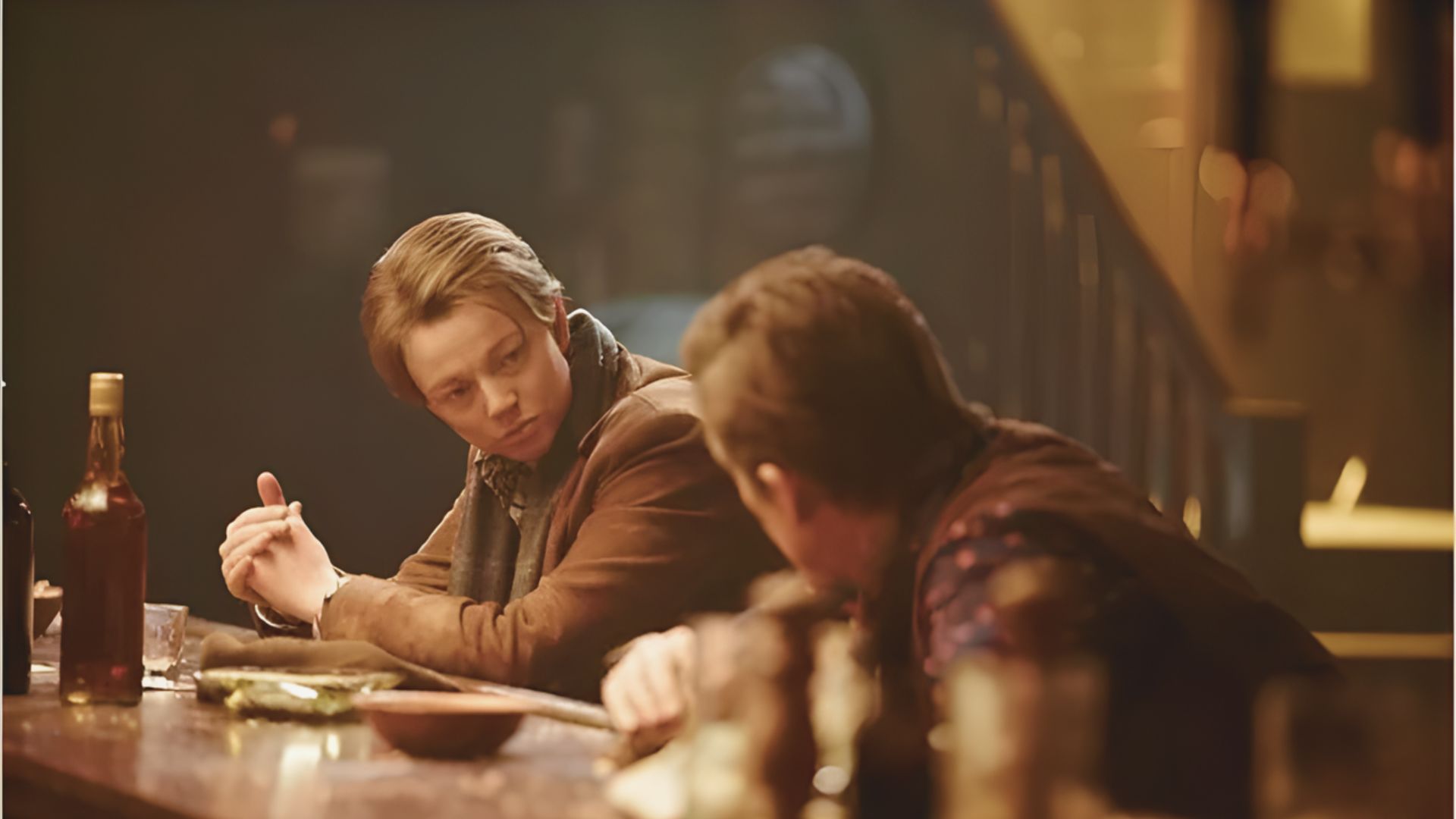
Stephen King’s 2011 novel and its subsequent 2016 television adaptation offer a meticulous reexamination of the time-travel genre, moving away from high-tech paradoxes to explore the ethical weight of altering history, the immutable nature of the past, and the psychological cost of obsession.
Introduction: The Temporal Mechanics andmatic Scope of King’s Masterpiece
When Stephen King published 11/22/63 in November 2011, readers and critics alike recognized that the master of horror had crafted something distinct: a historical science fiction novel deeply rooted in the sociopolitical anxieties of the early 1960s. The premise follows Jake Epping, a high school English teacher from Lisbon Falls, Maine, who is introduced to a time portal inside a local diner by his friend Al Temple. The portal leads directly to October 9, 1958. Al’s dying wish is for Jake to travel back in time, wait five years, and prevent the assassination of John F. Kennedy on November 22, 1963, under the hypothesis that stopping the tragedy would avert a dystopian future.
Reexamining the work requires looking past the high-concept premise to examine how the narrative handles the mechanics of time. Unlike mechanical time machines or complex temporal physics seen in hard science fiction, King introduces a metaphysical rulebook dictated by the past itself: the past is obdurate. It resists change. Every action Jake takes to alter history is met with escalating friction, ranging from minor inconveniences to catastrophic disasters designed to protect the timeline. This thematic framing shifts 11/22/63 from a standard sci-fi thriller into a profound meditation on determinism, memory, and the bittersweet acceptance of reality as it is.
The Literary Blueprint: Structure, Setting, and Historical Immersion
The architectural strength of 11/22/63 lies in its patient pacing and immersive historical texture. King spent years researching the era, and it shows in the meticulous sensory details used to recreate small-town America on the cusp of the tumultuous 1960s.
The Aesthetics of 1958–1963 America
Jake’s journey into the past is not merely a plot device; it is an exercise in historical nostalgia tempered by sober realism. King contrasts the perceived innocence of the era—characterized by root beer floats, classic automobiles, un-air-conditioned classrooms, and local jazz clubs—with the dark undercurrents of mid-century American life, including domestic abuse, institutional racism, and the looming shadow of nuclear annihilation.
- Sensory Authenticity: The tactile description of period currency, cigarette smoke in bowling alleys, and the distinct cadence of 1950s speech anchor the reader in Jake’s prolonged undercover existence.
- The Waiting Game: Because the assassination does not occur until late 1963, Jake must live five years in the past. This structural choice transforms the book from a breathless sprint into a slow-burn character study. Jake establishes a life as "George Amberson," takes a teaching job in Jodie, Texas, and falls in love.
Character Development and the Stakes of Intervention
The emotional anchor of the narrative is Jake’s relationship with Sadie Dunhill, a librarian with a traumatic past of her own. As Jake’s mission stretches on, his dual identity creates internal conflict. He is simultaneously an archivist of history, a guardian against tragedy, and a man building a genuine life with a woman who belongs to an era destined to be rewritten. The stakes of the time-travel thriller are thus elevated from abstract political outcomes to immediate, devastating personal loss.
Adaptation Analysis: Novel vs. the 2016 Miniseries
In 2016, J.J. Abrams’ Bad Robot Productions and Warner Bros. Television adapted the novel into an eight-episode limited series for Hulu, starring James Franco as Jake Epping and Sarah Gadon as Sadie Dunhill. Reexamining the story requires evaluating how the narrative translates from page to screen, noting necessary compressions and creative liberties.
| Feature / Element | Stephen King’s 2011 Novel | 2016 Hulu Limited Series |
|---|---|---|
| Pacing & Duration | Spans over 800 pages, allowing for deep dives into Jake's life in Jodie and extensive surveillance of Lee Harvey Oswald. | Condensed into 8 episodes, accelerating the timeline and streamlining subplots. |
| Externalizing Internal Monologue | Relies heavily on Jake's internal thoughts, moral dilemmas, and historical observations. | Introduces the character of Bill Turcotte (played by George MacKay) as a physical confidant to externalize Jake's internal dialogue. |
| The Depiction of Lee Harvey Oswald | Detailed, psychologically nuanced exploration of Oswald’s domestic life, political delusions, and isolation. | Tighter, more pressurized focus on the surveillance phase leading up to the fateful day in Dallas. |
| Climax and Resolution | Features a complex aftermath of the altered timeline, emphasizing the ecological collapse of history and a poignant final meeting with an aged Sadie. | Streamlines the temporal consequences while maintaining the emotional core of the Jake-Sadie dynamic. |
The television adaptation successfully captures the paranoid atmosphere of the Cold War and the claustrophobia of Jake's surveillance of Lee Harvey Oswald. While book purists noted the omission of certain secondary characters and regional subplots—such as Jake's extended return to his hometown in Maine—the miniseries stands as a remarkably faithful and visually striking companion piece to the text.
Core Themes of the Time-Travel Thriller Reexamined
Strip away the period details and the political intrigue, and 11/22/63 addresses fundamental philosophical questions common to the greatest works of speculative fiction.
1. The Obduracy of the Past
In many time travel stories, the timeline is fragile and easily fractured. King flips this trope entirely. The past in 11/22/63 acts like a living immune system. When Jake tries to save a family from a horrific tragedy in his past, the universe pushes back violently, resulting in injury, accident, and emotional trauma. This raises the central thematic question: If history fights back to preserve its course, are human beings morally obligated to respect that cosmic boundary, or must we fight the universe to save each other?
2. The Butterfly Effect and Unintended Consequences
When Jake finally succeeds in stopping the assassination, he steps back through the portal into the present day, expecting to find a utopia where John F. Kennedy navigated the civil rights movement without dying and avoided the escalation of the Vietnam War. Instead, he returns to a desolate, radioactive wasteland where Boston has been decimated by an earthquake caused by ecological ripples of his temporal interference. King uses this stark twist to argue that human understanding of cause and effect is profoundly limited; pulling a single thread can unravel the entire tapestry of existence.
3. Nostalgia vs. Reality
The narrative serves as a cautionary tale against romanticizing bygone eras. While the 1950s and 1960s are often viewed through a nostalgic lens of simplicity, Jake’s extended stay forces him—and the reader—to confront the brutal social injustices, medical limitations, and casual cruelties of the period. Nostalgia is revealed as a comforting illusion that blinds individuals to historical reality.
Critical Reception and Cultural Legacy
Upon its release, 11/22/63 received widespread critical acclaim, frequently cited by reviewers as one of Stephen King’s finest late-career achievements. Unlike his classic horror works (It, The Shining) or epic fantasy (The Dark Tower series), this novel demonstrated King’s mastery of historical fiction and character-driven drama.
Literary analysts noted that the book operates as a metafictional commentary on writing itself. The time portal functions much like the creative process: an author steps into a constructed past, meticulously arranges details, struggles against the resistance of the medium, and ultimately must accept that once a work is finished, it cannot be endlessly rewritten without losing its organic soul.
The 2016 miniseries further cemented the story's place in popular culture, introducing a new audience to the moral dilemmas of temporal intervention and sparking renewed debates regarding the historical controversies surrounding the Kennedy assassination.
Frequently Asked Questions
What happens when someone goes through the diner portal in 11/22/63?
Every time a traveler enters the portal, history resets entirely. Any previous changes made during past visits are wiped clean, meaning the traveler must start their mission from scratch every time they return to the present and go back again. Furthermore, each trip creates a distinct past with its own unfolding consequences.
Why does the past resist being changed in the story?
The narrative establishes that time possesses a self-correcting immune system. If a traveler attempts to alter a major historical event, the universe deploys coincidences, sudden illnesses, mechanical failures, and extreme weather to prevent the change. This mechanism underscores the thematic idea that history is heavy, interconnected, and fiercely protective of its sequence.
Does Jake Epping succeed in saving JFK?
Yes, Jake successfully prevents Lee Harvey Oswald from assassinating President John F. Kennedy on November 22, 1963. However, the victory is short-lived and Pyrrhic, as the physical toll of the mission and the catastrophic changes to the future force Jake to undo his actions and accept the original timeline.
How does the book's ending differ from the miniseries?
While both versions conclude with Jake returning to a restored timeline to find an aged Sadie Dunhill living out her final days, the novel provides a more expansive exploration of the ruined dystopian future Jake temporarily creates, as well as a more melancholic reflection on memory, aging, and paths not taken.
Is 11/22/63 considered a pure sci-fi novel or historical fiction?
It is a hybrid genre piece. While it utilizes the science fiction trope of time travel, its primary focus is on historical realism, character development, romance, and moral philosophy rather than hard-science technological speculation.
Conclusion and Final Recommendation
11/22/63: A Time Travel Thriller Reexamined reveals a sophisticated, emotionally resonant work that transcends the genre conventions of both time-travel fiction and historical thrillers. Whether experiencing Stephen King’s original 800-page text or watching the condensed 2016 television adaptation, audiences are treated to a gripping exploration of love, fate, and the heavy price of second chances. For readers seeking a narrative that combines meticulous historical research with high-stakes speculative drama, 11/22/63 remains an essential, enduring masterclass in modern storytelling.