Migrating enterprise infrastructure to the cloud within a compressed one-week sprint requires a security-first framework that balances rapid execution with rigid risk governance, prioritizing baseline identity management, automated compliance guardrails, and continuous posture monitoring to prevent critical vulnerabilities during transition.
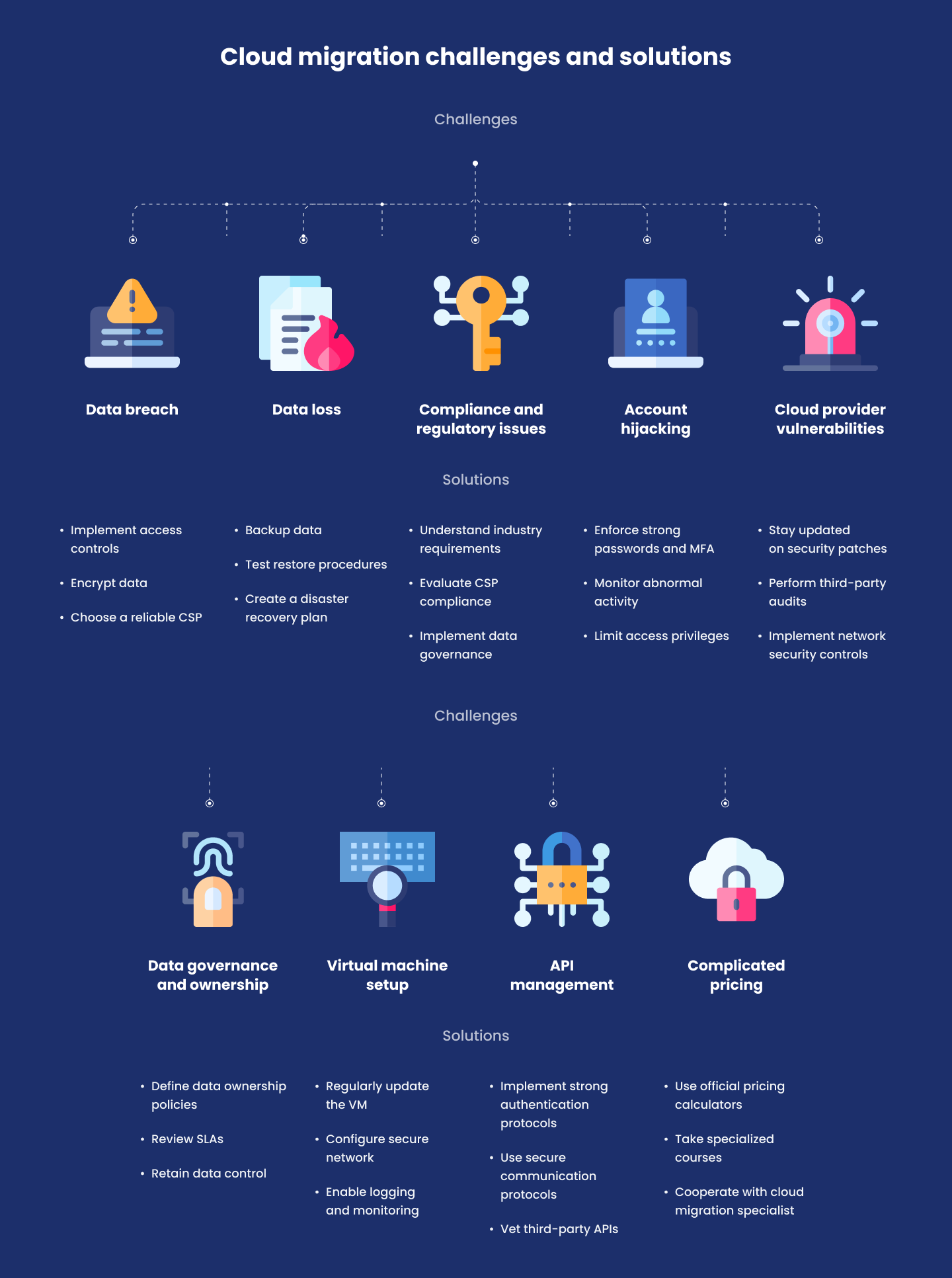
Executing a cloud migration within a compressed time frame—often conceptualized in accelerated multi-week frameworks like a one-week phase four schedule—demands a rigorous, uncompromising approach to security. When organizations rush infrastructure transitions to capitalize on market opportunities or meet strict board-mandated deadlines, security is frequently sidelined. However, bypassing foundational safeguards during a cloud migration inevitably introduces catastrophic vulnerabilities, ranging from misconfigured storage buckets and exposed API keys to unencrypted data flows across hybrid perimeters.
This comprehensive overview outlines the critical security components, tactical priorities, and execution frameworks necessary to maintain enterprise-grade posture during an accelerated migration cycle. By systematically addressing identity and access management, network segmentation, data protection, and continuous compliance, engineering teams can achieve velocity without compromising organizational resilience.
Understanding the Accelerated Migration Security Paradigm
An accelerated migration schedule compresses months of architectural validation into a matter of days. This velocity requires absolute clarity regarding responsibility boundaries, shared security models, and automated enforcement mechanisms.
The Shared Responsibility Model in Fast-Paced Migrations
Cloud service providers (CSPs) such as Amazon Web Services (AWS), Microsoft Azure, and Google Cloud Platform (GCP) operate under a strict shared responsibility model. While the provider secures the underlying infrastructure—including physical data centers, host hardware, and virtualization layers—the migrating organization remains entirely responsible for customer data, identity management, operating system patching, network configuration, and application-level security.
When executing a rapid migration, engineering teams often mistakenly assume that moving to an enterprise cloud environment inherently grants built-in security. In practice, default cloud configurations are optimized for accessibility rather than isolation. Unsecured storage endpoints, open security groups, and default administrative credentials present immediate attack surfaces for automated threat actors scanning public IP ranges. Consequently, establishing strict security guardrails before the first workload transfer is non-negotiable.
Defining the Scope and Risk Thresholds
Before initiating any data transfer or workload cutover within an accelerated timeframe, security architects must define acceptable risk thresholds. Not all applications carry the same sensitivity profile. A tiered risk approach ensures that limited security resources focus on high-value assets:
- Tier 1: Mission-Critical and Regulated Data: Systems handling personally identifiable information (PII), financial records, or healthcare data subject to compliance mandates (e.g., HIPAA, PCI-DSS, GDPR). These require end-to-end encryption, multi-factor authentication (MFA), and isolated virtual private clouds (VPCs).
- Tier 2: Internal Productivity and Operational Tools: Non-public applications with moderate impact profiles. These require standard role-based access controls and perimeter defense but can tolerate slightly streamlined deployment pipelines.
- Tier 3: Public-Facing Static Assets: Marketing websites or public documentation portals. While requiring low data-confidentiality safeguards, these assets demand rigorous protection against distributed denial-of-service (DDoS) attacks and defacement.
Phase-Specific Security Requirements
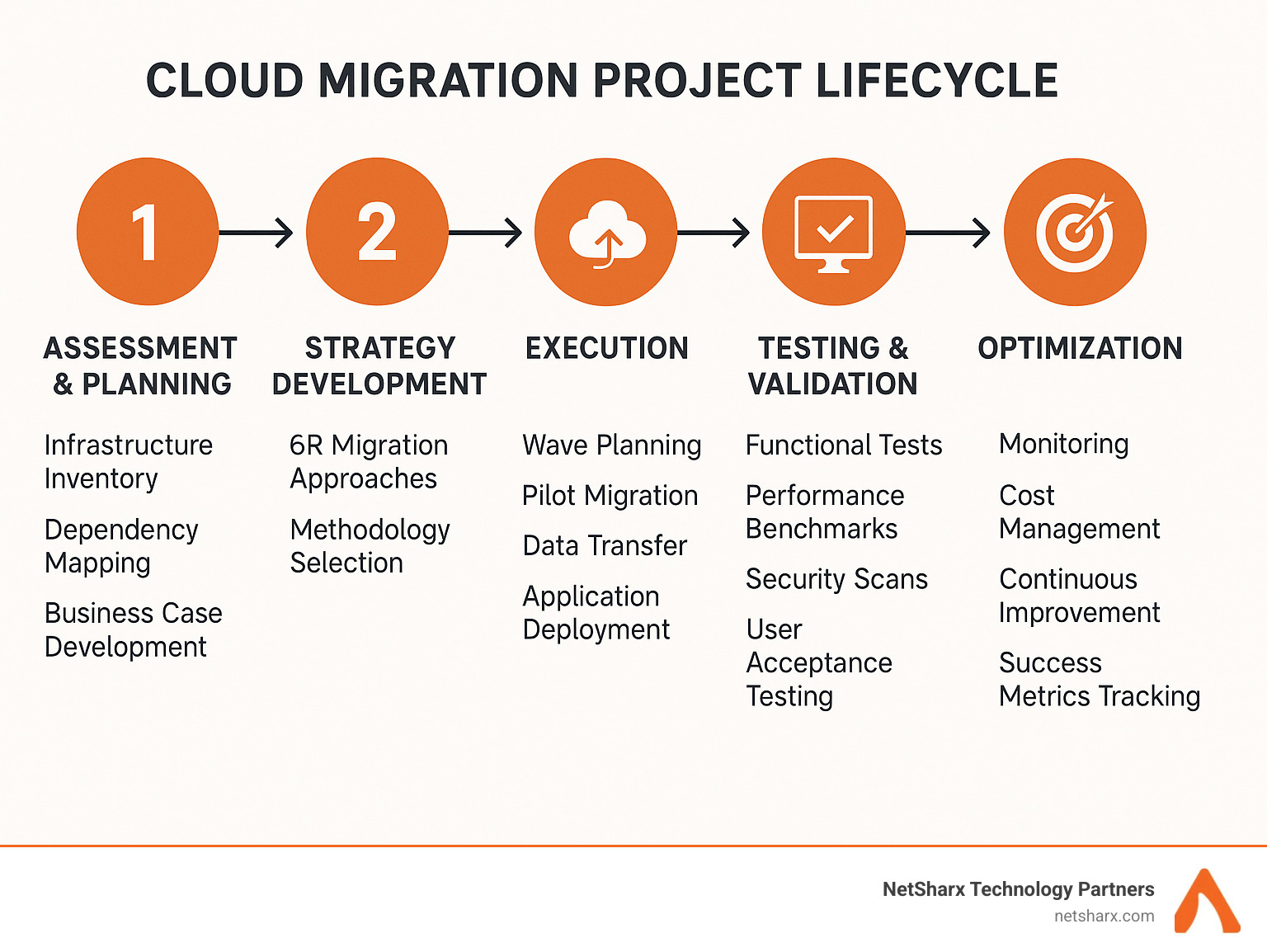
Navigating a secure migration requires mapping security controls directly to the chronological stages of the transition. Each phase introduces unique threat vectors that must be actively mitigated.
Phase 1: Pre-Migration Discovery and Identity Baseline
Security preparation begins long before data moves across the wire. The primary objective of the initial window is establishing a zero-trust identity baseline.
- Identity and Access Management (IAM) Hardening: Disable root account access immediately and enforce hardware-based multi-factor authentication for all administrative identities. Implement the principle of least privilege by mapping existing on-premises directory services (such as Active Directory) to federated cloud IAM roles.
- Asset Discovery and Classification: Catalog all legacy databases, virtual machines, and source code repositories. Categorize data assets based on sensitivity to determine encryption requirements during transit and at rest.
- Governance Guardrails: Deploy organizational policies or resource manager constraints that programmatically prevent engineers from creating unencrypted storage volumes or public-facing databases.
Phase 2: In-Transit Data Protection and Network Perimeter
As workloads traverse public networks or dedicated interconnects toward the cloud destination, data integrity and confidentiality must be rigorously protected.
- Encrypted Tunnels: Mandate TLS 1.3 for all data in transit across public internet connections. For high-volume enterprise migrations, utilize dedicated private interconnects (e.g., AWS Direct Connect or Azure ExpressRoute) combined with MACsec encryption where supported.
- Network Segmentation: Construct a secure landing zone featuring isolated Virtual Private Clouds or Virtual Networks. Divide environments into public, private, and database subnets, ensuring that backend databases have no direct route to the public internet.
- Firewall and Security Group Auditing: Implement strict ingress and egress filtering rules. Drop all inbound traffic by default, permitting only explicitly required ports from verified source IP ranges.
Phase 3: Post-Migration Validation and Continuous Monitoring
Once workloads are instantiated in the target cloud environment, immediate validation is required to ensure that configurations match baseline security requirements.
| Security Domain | Pre-Migration Control | Post-Migration Verification | Common Risk / Vulnerability |
|---|---|---|---|
| Identity Management | Enforce federated SSO and MFA | Audit active access keys and service accounts | Dormant root keys or overly permissive IAM roles |
| Data Encryption | Define KMS key policies | Verify CMK rotation and bucket policies | Unencrypted temporary staging snapshots |
| Network Security | Design VPC/VNet topologies | Run automated port scans and reachability tests | Accidental 0.0.0.0/0 ingress rule on test instances |
| Logging & Auditing | Enable centralized SIEM ingestion | Verify CloudTrail / Activity Log delivery | Blind spots in newly provisioned serverless functions |
Critical Security Controls and Technical Guardrails
To prevent human error from compromising an accelerated migration, organizations must rely on automated technical guardrails rather than manual reviews.
Infrastructure as Code (IaC) Scanning
Modern cloud migrations frequently utilize Infrastructure as Code tools such as Terraform, AWS CloudFormation, or Azure Resource Manager templates to provision environments rapidly. Security teams must integrate static analysis tools (such as Checkov, tfsec, or KICS) directly into continuous integration and continuous deployment (CI/CD) pipelines. These tools scan IaC templates for misconfigurations—such as public read permissions on object storage or missing log aggregation—before deployment scripts execute against the cloud provider.
Cloud Security Posture Management (CSPM)
Deploying a CSPM solution provides real-time visibility into the security posture of the newly migrated environment. CSPM tools continuously compare actual cloud resource configurations against regulatory frameworks and internal baselines, alerting security operations centers (SOCs) to drift or newly introduced vulnerabilities.
Vulnerability Management and Container Security
If the migration involves containerized workloads (e.g., Docker containers orchestrated via Kubernetes), container image scanning must be enforced at the registry level. Unvetted third-party base images often contain known Common Vulnerabilities and Exposures (CVEs). Automated registries should block the deployment of any container image exceeding established CVSS severity thresholds.
Operational Challenges and Common Migration Mistakes
Rushed migrations often expose operational vulnerabilities that attackers actively exploit. Recognizing these pitfalls allows teams to proactively harden their migration pipelines.
- Hardcoded Secrets in Source Code: Developers migrating legacy applications frequently embed database connection strings, API tokens, or private keys directly into configuration files or container images. Automated secrets management services (such as AWS Secrets Manager, Azure Key Vault, or HashiCorp Vault) must be utilized alongside secret-scanning tools in git repositories.
- Neglecting Logging and Monitoring: In the rush to achieve functional cutover, teams sometimes disable or misconfigure centralized logging. Without comprehensive audit trails (e.g., AWS CloudTrail, GCP Cloud Audit Logs, Azure Monitor), identifying the scope of a security breach during or immediately after migration is nearly impossible.
- Over-Privileged Service Accounts: To save time during troubleshooting, engineers frequently assign broad administrative privileges (such as
AdministratorAccess) to application service accounts. If an application is compromised, the attacker instantly gains full control over the cloud environment. Least-privilege scoping must be maintained even under tight deadlines.
Frequently Asked Questions
What is the most critical security priority during a rapid cloud migration?
Identity and access management represents the absolute core security priority. Establishing strict authentication controls, enforcing multi-factor authentication, and implementing the principle of least privilege prevents unauthorized access even if network perimeters experience temporary misconfigurations during cutover.
How can security teams verify compliance when a migration takes only days?
Teams must rely on automated compliance-as-code and Cloud Security Posture Management (CSPM) tools rather than manual audits. Automated guardrails validate configurations against standards like ISO 27001, SOC 2, or PCI-DSS in real time as infrastructure is provisioned.
Are cloud environments inherently secure right out of the box?
No. Cloud providers secure the underlying hardware and data center facilities, but the customer remains entirely responsible for securing their data, applications, virtual networks, and identity configurations. Default settings are typically designed for ease of use rather than maximum isolation.
How should encryption be handled during an accelerated data transfer?
All data in transit must be encrypted using modern transport protocols (such as TLS 1.3) or dedicated private networking lines with MACsec. Furthermore, data at rest must be protected using customer-managed encryption keys (CMEK) managed via dedicated key management services.
What should an organization do immediately if a security misconfiguration is discovered post-migration?
The affected resource should be isolated immediately by modifying network security groups or revoking compromised IAM credentials. Once containment is achieved, forensic logs must be analyzed to determine whether unauthorized data exfiltration occurred before remediation.
Practical Next Actions for Security Teams
To successfully execute or audit a secure migration within an accelerated window, leadership and engineering teams should immediately execute the following checklist:
- Enforce Mandatory Multi-Factor Authentication: Ensure 100% MFA coverage across all administrative and programmatic cloud accounts before provisioning production workloads.
- Deploy Automated Guardrails: Implement policy-as-code frameworks to block the creation of unencrypted data stores and public-facing storage buckets.
- Activate Centralized Logging: Verify that cloud audit logging and threat detection services are active across all target regions and streaming logs to a centralized security information and event management (SIEM) platform.
- Conduct Post-Cutover Audits: Execute automated vulnerability scans and configuration reviews immediately following workload migration to identify and remediate residual drift.