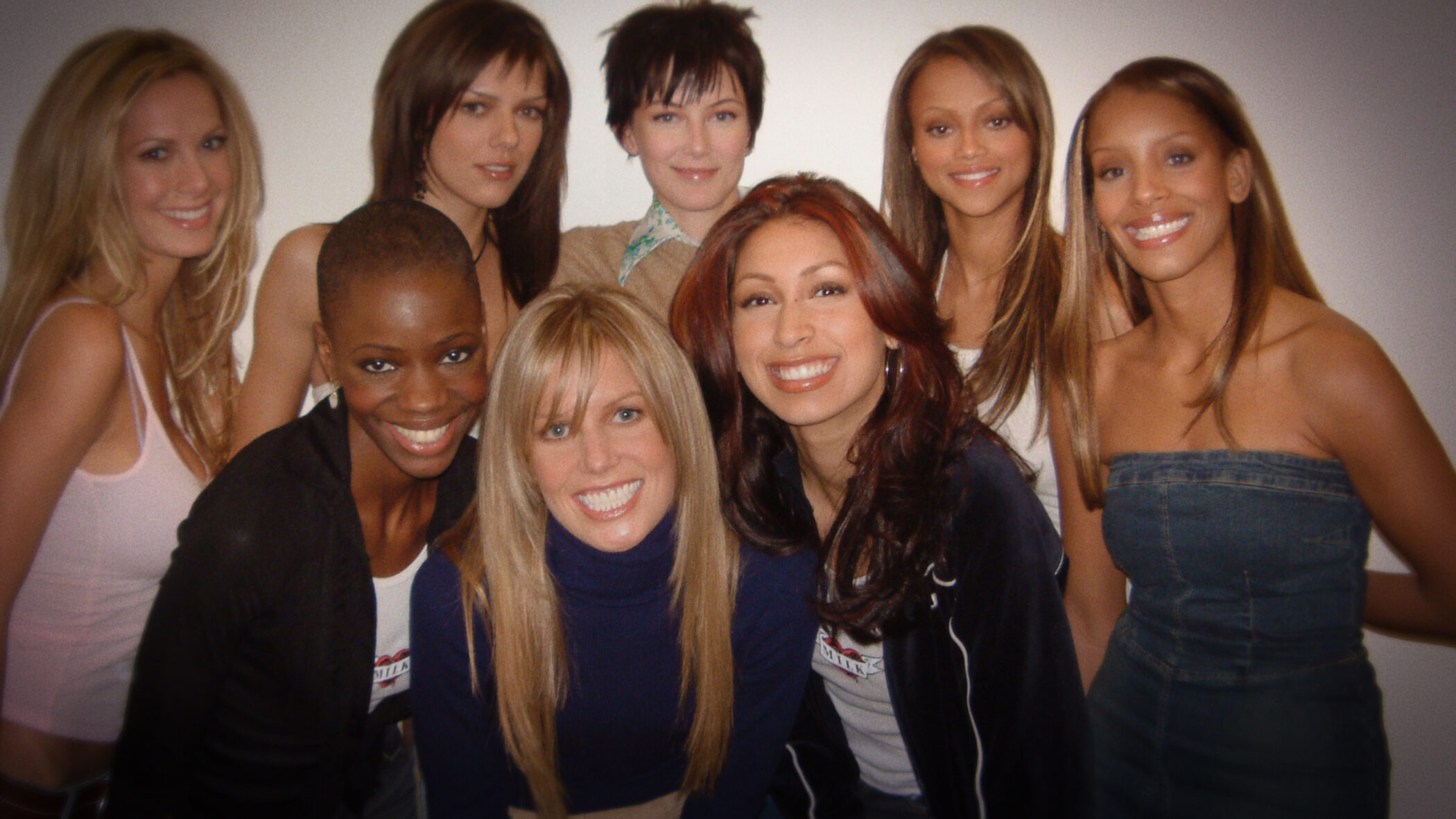
The first winner of America's Next Top Model revealed was Adrianne Curry, a 20-year-old waitress from Joliet, Illinois. She captured the title during the Cycle 1 finale on July 15, 2003, defeating runner-up Shannon Stewart and third-place finalist Elyse Sewell to become the franchise's inaugural champion.
When supermodel Tyra Banks launched America's Next Top Model (ANTM) on the now-defunct UPN network in May 2003, few industry analysts predicted that the low-budget, gritty reality competition would morph into a multi-decade global television phenomenon. Unlike the polished, high-fashion spectacles of later seasons, the inaugural cycle operated on shoestring production budgets, filmed in a cramped Manhattan loft, and tested an unproven format combining documentary-style reality television with high-stakes fashion editorial challenges.
At the center of that pioneering run was Adrianne Curry, whose raw personality, unconventional beauty, and resilience in the face of physical adversity defined the show's early identity. The reveal of Curry as the first winner set the blueprint for how reality television evaluated aspiring fashion talent, while her subsequent career and public disputes with show producers laid bare the systemic discrepancies between reality TV promises and fashion industry realities.
The Road to the Cycle 1 Finale: How Adrianne Curry Won
The first season assembled ten contestants selected from nationwide casting calls. At the time, the fashion landscape was dominated by traditional agency scouting, making the premise of selecting a commercial and editorial model via weekly television eliminations an unorthodox experiment.
Adrianne Curry entered the competition as a high school dropout and working-class waitress from Joliet, Illinois. Characterized by raspy vocals, rock-and-roll aesthetics, and an outspoken demeanor, she contrasted sharply with conventional modeling archetypes of the early 2000s. Her primary competitors represented completely different facets of the industry: Elyse Sewell, a cynical, pre-med student possessing high-fashion editorial proportions, and Shannon Stewart, a devout Christian beauty queen representing traditional American commercial appeal.
Cycle 1 Elimination Progression:
- Cast of 10 Contestants
- International Destination: Paris, France (Top 4)
- 4th Place: Kesse Wallace
- 3rd Place: Elyse Sewell
- Runner-Up: Shannon Stewart
- Winner: Adrianne Curry
- International Destination: Paris, France (Top 4)
Navigating the Paris Overseas Stage
The critical turning point of Cycle 1 occurred when the final four contestants traveled to Paris, France. International travel would become an essential franchise staple, but in 2003, the Paris trip served as a grueling reality check for the contestants.
Curry’s journey in Paris was marked by extreme physical challenge. Before a major go-see challenge and photo shoot, she fell severely ill with food poisoning and a high fever, requiring emergency medical treatment. Despite intense dehydration and fatigue, Curry checked herself out of the clinic to complete her shoots and go-see auditions. The judging panel—comprising Tyra Banks, fashion photographer Beau Quillian, baby-phat designer Kimora Lee Simmons, and the world's first self-proclaimed supermodel, Janice Dickinson—praised Curry's professionalism under pressure, viewing her endurance as proof of her readiness for the brutal physical demands of the modeling industry.
The Final Runway and Deliberation
The season culminated in an emotional showdown between Curry and Stewart. The two finalists walked in a runway show for Kimora Lee Simmons's Baby Phat line, navigating a chaotic backstage environment and executing starkly different runway walks. Stewart delivered a measured, traditional walk, while Curry brought an aggressive, confident strut that caught the attention of fashion insiders.
During the final panel deliberation, the judges weighed contrasting attributes:
- Commercial Viability vs. Edgy Editorial: Stewart was immediately marketable for catalog work, commercial clients, and beauty campaigns, but lacked high-fashion versatility. Curry presented an edgy, chiseled look suited for alternative editorial spreads, yet her walk and speech were deemed unrefined.
- Portfolio Consistency: Across the eight-week competition, Curry had produced standout imagery, including a praised nude shoot with diamonds and an athletic swimwear portrait shot on a rooftop.
- Transformation Narrative: Curry demonstrated the most dramatic transformation from an unpolished Midwestern youth into a working model capable of taking commercial direction.
When Banks revealed the final photograph, Curry's picture materialized, marking the show's first crowned champion.
The Inaugural Prize Package: Broken Promises and Reality
As the inaugural champion of America's Next Top Model, Adrianne Curry was awarded a three-part prize package designed to serve as the launching pad for an international modeling career:
- A modeling contract with Wilhelmina Models.
- A national beauty contract with Revlon Cosmetics.
- A multi-page fashion editorial spread in Marie Claire magazine.
While the prizes seemed straightforward on television, the execution revealed a significant disconnect between network television production and established modeling agency practices.
Expected Prize vs. Actual Execution (Cycle 1):
| Prize Component | Announced on Air | Realized Outcome |
|---|---|---|
| Wilhelmina Contract | Full career management | Unpaid commissions, minimal bookings |
| Revlon Contract | Major national campaign | Relegated to non-commercial appearances |
| Marie Claire Spread | Guaranteed editorial feature | Delayed, minimal editorial placement |
Following her victory, Curry discovered that the infrastructure to transition a reality television star into a high-fashion model was virtually non-existent. Traditional fashion houses, designers, and casting directors viewed reality television contestants as commercial novelties rather than serious editorial talent.
Furthermore, the relationship between production and the sponsors quickly unraveled:
- The Revlon Dilemma: Curry revealed in later interviews that Revlon had not firmly established a contract to use the winner in their primary national advertising campaigns. Instead of appearing in high-paying national print and television commercials alongside established spokeswomen, Curry was hired for peripheral, non-contractual promotional work that did not pay the life-changing figures implied by the show.
- Wilhelmina Representation Issues: Curry struggled under Wilhelmina's representation, stating that the agency prioritized collecting high commission percentages from her television-related public appearances while failing to push her for high-paying, legitimate modeling jobs. The agency was reportedly unprepared to handle the unique cross-over branding of an overnight reality television celebrity.
The breakdown in post-show management led Curry to seek professional legal counsel, ultimately parting ways with Wilhelmina Models and sparking a permanent estrangement between her and the ANTM production team.
Comparison of the Cycle 1 Finalists
The finalists of Cycle 1 represented three drastically different archetypes of early 2000s modeling. The table below outlines their performances, strengths, and long-term industry outcomes.
| Contestant | Hometown | Strongest Placement | Primary Strengths | Post-Show Career Trajectory |
|---|---|---|---|---|
| Adrianne Curry | Joliet, Illinois | Winner | Edgy bone structure, physical resilience, editorial risk-taking | Pivoted to reality television (The Surreal Life, My Fair Brady), pop culture commentary, lifestyle and digital retail. |
| Shannon Stewart | Franklin, Ohio | Runner-Up | Classical commercial look, pageant poise, natural athletic physique | Signed with Elite Models, sustained a steady commercial modeling career, returned for ANTM: All-Stars (Cycle 17). |
| Elyse Sewell | Albuquerque, New Mexico | 3rd Place | High-fashion measurements, articulate demeanor, natural couture aesthetic | Achieved massive international modeling success in East Asia (Hong Kong, Japan), authored an acclaimed autobiographical book. |
Adrianne Curry’s Career After ANTM: From Fashion to Reality Royalty
Faced with closed doors in the traditional high-fashion market, Adrianne Curry pivoted toward reality television, where her candid demeanor and transparency resonated with mid-2000s audiences.
The Surreal Life and VH1 Celebreality
In 2005, Curry was cast in the fourth season of VH1's hit reality series The Surreal Life, which placed a disparate group of celebrities into a Hollywood Hills mansion. It was on this show that she met Christopher Knight, the actor best known for playing Peter Brady on the classic sitcom The Brady Bunch.
Their unexpected romantic relationship captured public attention and led VH1 to produce a dedicated spin-off reality series, My Fair Brady (2005–2008). The show documented their turbulent courtship, subsequent marriage in 2006, and marital challenges across three high-rated seasons. The exposure cemented Curry as one of the defining personalities of the 2000s "celebreality" era, generating consistent revenue through personal appearances, convention hosting, and public endorsements. The couple divorced in 2012.
Transition to Digital Media and Rural Homesteading
Following her departure from mainstream entertainment television, Curry shifted away from the traditional Hollywood ecosystem. Recognizing the emerging power of direct-to-consumer digital audiences, she established a massive social media presence and became an early adopter of video live-streaming, lifestyle blogging, and digital sales.
Curry joined Avon Products as an independent beauty representative, quickly climbing company ranks to become one of the brand's top-selling sales associates in the United States. She eventually relocated to rural Montana, marrying voice actor Matthew Rhode. Today, Curry works as a full-time digital creator, lifestyle commentator, and homesteader, maintaining an active, unfiltered online platform that regularly reflects on her experiences in the entertainment industry.
The Public Fallout Between Adrianne Curry and Tyra Banks
The relationship between the first winner of America's Next Top Model and its creator, Tyra Banks, has been historically contentious. Unlike later winners who maintained active professional ties with the production company, Curry became one of the show's most vocal and persistent critics.
Key Points of Contention Between Curry and ANTM Production:
- Lack of Support: Neglect by producers after filming wrapped.
- Unfulfilled Prizes: Lack of national Revlon campaigns promised on-air.
- Exploitation: Financial exploitation via unstandardized early contracts.
- Host Disconnect: Tyra Banks's perceived absence outside of filming segments.
Curry has publicly shared that once the cameras stopped rolling on Cycle 1, the supportive mentorship portrayed by Tyra Banks ceased. She recounted instances where she reached out to Banks for professional intervention when Wilhelmina failed to secure bookings, only to be met with silence from executive producers.
The tension peaked during subsequent milestone seasons of ANTM. When the show produced retrospectives, anniversary specials, and the Cycle 17 All-Stars season, Curry was visibly absent. She later confirmed that producers had actively excluded her from legacy promotions, blurred her image in certain archival flashback packages, and omitted her name from various promotional retrospectives—an extraordinary measure given that she was the franchise's foundational champion.
The Enduring Legacy of America's Next Top Model Cycle 1
Despite its low initial production values and the contractual disputes that followed, Cycle 1 fundamentally shaped modern reality television. In 2003, unscripted competitive programming was dominated by survival games like Survivor or talent shows like American Idol. America's Next Top Model pioneered a brand-new sub-genre: the industry-specific career competition.
Industry Milestones Established by Cycle 1
- The Format Formula: The elimination ceremony structure—where Banks called forward safe contestants holding their photographic prints while narrating their weekly accomplishments—became an internationally recognized television device, licensed across dozens of foreign territories (Britain’s Next Top Model, Australia’s Next Top Model, Germany’s Next Top Model).
- The "Tyra-isms": Cycle 1 introduced foundational terminology that entered the modern pop culture lexicon, setting the stage for future concepts like the "smize" (smiling with one's eyes) and "booty tooch."
- Reality TV Exploitation Discourse: The post-show struggles of Curry, Sewell, and other early contestants catalyzed a larger conversation within entertainment labor circles regarding reality television contracts, mental health, and the ethics of how inexperienced non-union talent is managed by television networks.
While later cycles produced winners who achieved major fashion credentials—such as Eva Marcille (Cycle 3), Jaslene Gonzalez (Cycle 8), and Nyle DiMarco (Cycle 22)—Adrianne Curry remains the quintessential historical figure of the franchise. Her victory proved the concept could capture an audience, while her subsequent struggles exposed the friction between televised entertainment and high-fashion reality.
Frequently Asked Questions
Who won the very first season of America's Next Top Model?
Adrianne Curry won Cycle 1 of America's Next Top Model, which concluded in July 2003. She competed against runner-up Shannon Stewart and third-place finalist Elyse Sewell in the season finale.
What prizes did the first winner of ANTM actually receive?
Adrianne Curry won a contract with Wilhelmina Models, a cosmetics deal with Revlon, and a feature in Marie Claire magazine. However, Curry revealed that the Revlon contract did not include the high-paying national ad campaigns promised, and she experienced significant difficulty getting agency support from Wilhelmina.
Why was Adrianne Curry cut out of later ANTM retrospectives?
Curry had a public falling-out with Tyra Banks and ANTM executive producers after she voiced frustration over unfulfilled prize promises and an alleged lack of professional guidance. As a result of these vocal criticisms, production minimized her inclusion in subsequent anniversary specials and retrospective packages.
Which Cycle 1 contestant had the most successful high-fashion career?
While Curry won the title, third-place finisher Elyse Sewell achieved the most sustained international high-fashion success. Sewell relocated to Asia, securing major runway shows, catalog bookings, and advertising campaigns throughout Hong Kong, Japan, and mainland China.
What is Adrianne Curry doing today?
Adrianne Curry lives in Montana with her husband, Matthew Rhode. She has retired from traditional Hollywood entertainment and works as an independent digital lifestyle creator, beauty consultant, and direct-to-consumer sales leader.
Practical Takeaways for Television Historians and Media Students
For those researching the evolution of reality television and talent management contracts, the inaugural cycle of America's Next Top Model serves as an essential case study:
- Review Early 2000s Production Contracts: Cycle 1 represents the pre-standardization era of reality competition law. Comparing ANTM Cycle 1 contracts to modern unscripted talent releases provides clear insight into how networks adapted intellectual property, likeness rights, and post-show management clauses over two decades.
- Examine Media Convergence: Analyze how early unscripted winners like Adrianne Curry leveraged emerging cable ecosystems (e.g., VH1’s "Celebreality" programming block) when legacy industries (such as high-fashion modeling) refused to integrate television-born personalities.
- Trace Franchise Syndication: To understand how television formats were globalized, track how the format blueprints established during Curry’s 2003 season were licensed, standardized, and distributed across more than 30 international spin-offs worldwide.