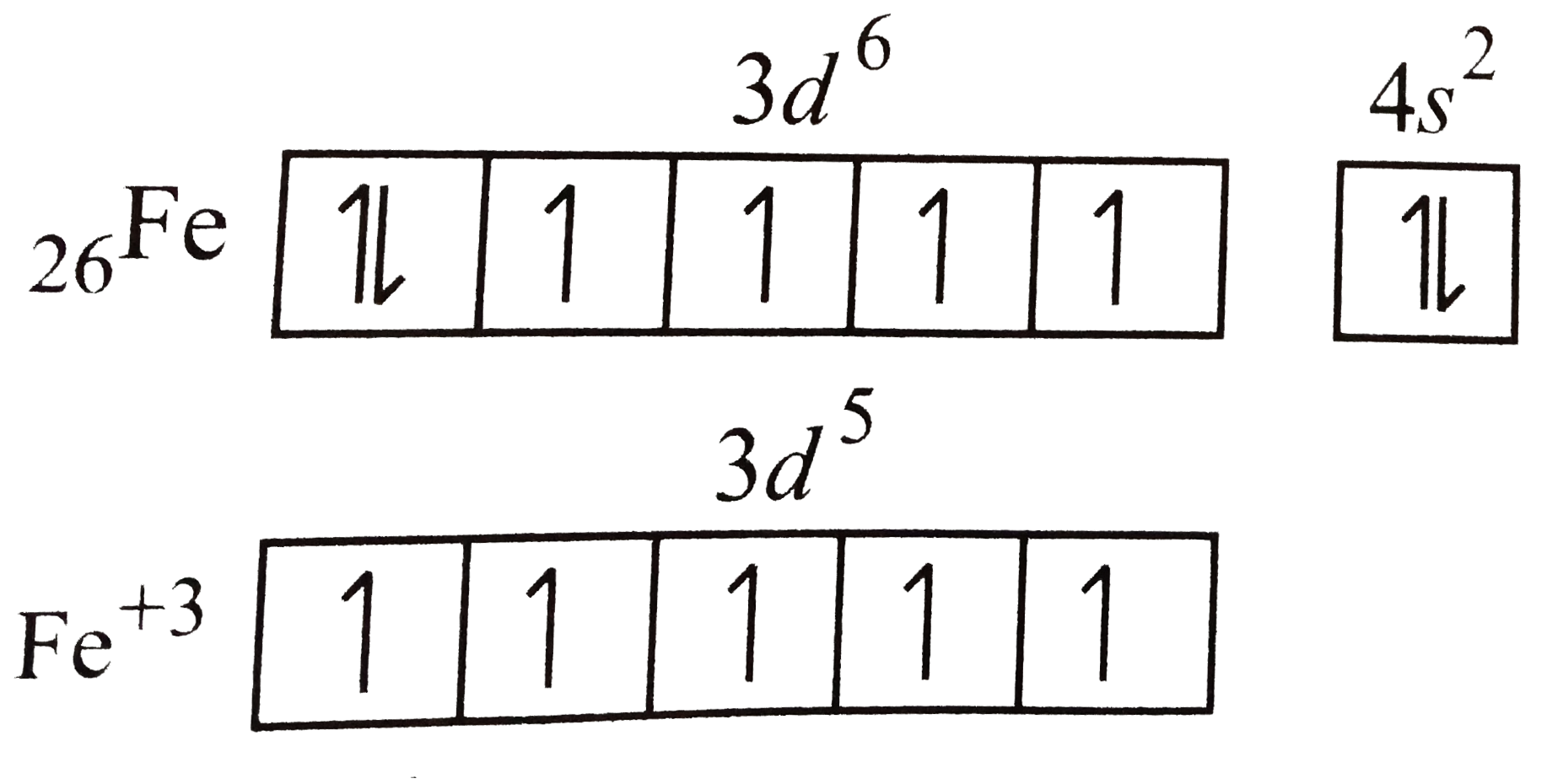
The oxidation state of iron (Fe) in iron(III) oxide ($Fe_2O_3$) is +3. This means that each iron atom in the compound has lost three electrons to achieve a stable electronic configuration, bonding with oxygen atoms that each typically exhibit an oxidation state of -2.
Understanding the oxidation state of iron in various chemical compounds is a foundational concept in inorganic chemistry, electrochemistry, and materials science. Among the various iron oxides found in nature and synthesized in laboratories, iron(III) oxide—commonly known as rust or hematite—is one of the most studied. Determining why iron adopts a +3 oxidation state in this specific stoichiometry requires a systematic application of chemical nomenclature rules, electronegativity principles, and charge balance calculations.
Fundamentals of Oxidation States in Inorganic Chemistry
An oxidation state, often used interchangeably with oxidation number in simple ionic contexts, represents the hypothetical charge an atom would have if all bonds to atoms of different elements were completely ionic. It provides a bookkeeping method for electrons in chemical reactions, particularly in redox (reduction-oxidation) processes where electrons are transferred between species.
Unlike actual electrical charges on monatomic ions, oxidation states are theoretical constructs. They are assigned using a strict set of priority rules developed by the International Union of Pure and Applied Chemistry (IUPAC). These rules help chemists track electron shifts, balance chemical equations, and understand molecular structure without necessarily knowing the exact quantum mechanical electron density distribution.
In any neutral chemical compound, the sum of the oxidation states of all constituent atoms must equal zero. For polyatomic ions, the sum equals the net charge of the ion. This zero-sum rule serves as the primary mathematical foundation for solving unknown oxidation states when the states of the accompanying elements are known.
Chemical Profile of Iron(III) Oxide ($Fe_2O_3$)
Iron(III) oxide is a chemical compound with the formula $Fe_2O_3$. It occurs naturally as the mineral hematite, which is the principal ore of iron used in the steel industry. It is also the main component of common rust, formed when elemental iron reacts with oxygen in the presence of moisture over extended periods.
| Chemical Property | Specification |
|---|---|
| Formula | Fe2O3 |
| IUPAC Name | Iron(III) oxide |
| Common Names | Hematite, rust, ferric oxide |
| Molar Mass | 159.69 g/mol |
| Crystal Structure | Rhombohedral, corundum-like |
| Oxidation State of Iron | +3 |
| Oxidation State of Oxygen | -2 |
The crystal lattice of $Fe_2O_3$ consists of a hexagonal close-packed array of oxide anions ($O^{2-}$ ) with iron(III) cations ($Fe^{3+}$) occupying two-thirds of the octahedral interstitial sites. This tightly bound network gives the material high chemical stability, insolubility in water, and a characteristic reddish-brown coloration.
Step-by-Step Calculation of Iron's Oxidation State in $Fe_2O_3$
Calculating the oxidation state of iron in iron(III) oxide involves applying standard oxidation number rules to the chemical formula $Fe_2O_3$.
Step 1: Identify Standard Oxidation States for Known Elements
According to standard chemical assignment rules, oxygen almost always exhibits an oxidation state of -2 in its compounds, with rare exceptions such as peroxides (where it is -1) or superoxides (where it is -1/2). In $Fe_2O_3$, oxygen is bonded to a less electronegative transition metal, confirming its standard -2 assignment.
Step 2: Set Up the Algebraic Equation
Let $x$ represent the unknown oxidation state of a single iron (Fe) atom in the formula. The chemical formula $Fe_2O_3$ indicates that there are two iron atoms and three oxygen atoms in one neutral formula unit.
The sum of all oxidation states in a neutral compound must equal zero:
$2(x) + 3(-2) = 0$
Step 3: Solve for $x$
Expand and simplify the equation:
$2x - 6 = 0$
Add 6 to both sides of the equation:
$2x = 6$
Divide by 2:
$x = +3$
Thus, the oxidation state of each iron atom in $Fe_2O_3$ is +3.
Electronic Structure and Bonding Behind the +3 State
To understand why iron forms a +3 oxidation state in $Fe_2O_3$, one must examine the electron configuration of elemental iron and how it interacts with oxygen.
Neutral iron (Fe) has an atomic number of 26, meaning it has 26 protons and 26 electrons. Its condensed electron configuration is $[Ar] 3d^6 4s^2$. When iron undergoes oxidation to form chemical bonds, it typically loses its two outermost $4s$ electrons first, resulting in the $Fe^{2+}$ (ferrous) ion with a configuration of $[Ar] 3d^6$.
Under oxidizing conditions—such as exposure to atmospheric oxygen at ambient or elevated temperatures—iron can lose an additional electron from its $3d$ subshell. Losing one $3d$ electron yields a configuration of $[Ar] 3d^5$ for the $Fe^{3+}$ ion.
The $3d^5$ configuration is particularly stable due to Hund's rules of maximum multiplicity, which dictate that a half-filled subshell (where each of the five $d$ orbitals contains a single unpaired electron) confers extra thermodynamic and electronic stability. This half-filled subshell stability is a major driving force behind the prevalence and persistence of the +3 oxidation state in iron chemistry.
Comparison with Other Iron Oxides
Iron exhibits multiple stable oxidation states, most notably +2 and +3. Comparing $Fe_2O_3$ with other common iron oxides highlights how varying ratios of iron to oxygen correspond to different oxidation states and chemical behaviors.
| Compound | Chemical Formula | Iron Oxidation States | Common Name / Mineral |
|---|---|---|---|
| Wüstite | FeO | +2 | Iron(II) oxide (non-stoichiometric) |
| Magnetite | Fe3O4 | +2 and +3 (Mixed) | Lodestone, ferrous ferric oxide |
| Hematite | Fe2O3 | +3 | Ferric oxide, rust |
In Wüstite (FeO), iron is present exclusively in the +2 oxidation state. In Magnetite ($Fe_3O_4$), the crystal structure accommodates both +2 and +3 oxidation states in a $1:2$ ratio, often written formulaically as $FeO \cdot Fe_2O_3$. Hematite ($Fe_2O_3$) represents the fully oxidized state under normal atmospheric conditions, where all iron atoms have reached the +3 state.
Common Misconceptions and Troubleshooting
When determining oxidation states, students and researchers sometimes encounter confusion regarding stoichiometry and net charges.
- Confusing subscripts with charges: A common error is assuming that the subscript of iron in $Fe_2O_3$ directly indicates its oxidation state. While the subscript 2 appears near Fe, the actual oxidation state (+3) is derived from balancing the charges of the entire formula unit, not by simply swapping subscripts (though the criss-cross method suggests this heuristic, it requires validation).
- Assuming all iron oxides are identical: Treating rust as a uniform chemical species with a single oxidation state is chemically inaccurate. Natural rust is often a hydrated mixture of iron(III) oxides ($Fe_2O_3 \cdot nH_2O$) and iron(III) oxyhydroxides ($FeO(OH)$), though the iron remains in the +3 oxidation state throughout these hydration states.
- Misinterpreting covalent character: While assigning oxidation states assumes complete ionicity, the bonds in $Fe_2O_3$ possess significant covalent character due to the high charge density of the $Fe^{3+}$ ion polarizing the electron cloud of the $O^{2-}$ anion. Oxidation states remain a formal book-keeping tool and do not imply pure ionic charges.
Frequently Asked Questions
What is the oxidation number of iron in $Fe_2O_3$?
The oxidation number of iron in $Fe_2O_3$ is +3. This is determined by setting up an algebraic equation where two iron atoms balance three oxygen atoms, each assigned a standard oxidation state of -2.
Why is iron +3 in $Fe_2O_3$ instead of +2?
Oxygen is a strong oxidizing agent that removes electrons from iron until it achieves a stable electronic configuration. Losing three electrons leaves iron with a half-filled $3d^5$ electron shell, which provides notable thermodynamic stability compared to other configurations.
Is $Fe_2O_3$ ionic or covalent?
The bonds in $Fe_2O_3$ are predominantly ionic, but they exhibit a degree of covalent character due to polarization effects caused by the small, highly charged $Fe^{3+}$ ion interacting with oxygen anions.
How does the oxidation state of iron affect rust formation?
During atmospheric corrosion, elemental iron ($Fe^0$) is first oxidized to $Fe^{2+}$ and subsequently undergoes further oxidation to the stable $Fe^{3+}$ state found in rust ($Fe_2O_3$). The +3 state represents the thermodynamic sink for iron exposed to oxygen and water under ambient conditions.
Can iron have oxidation states higher than +3?
Yes, iron can exhibit higher oxidation states, such as +4, +5, and +6, but these are rare, highly reactive, and typically exist only in specialized compounds like ferrates (e.g., $K_2FeO_4$) under strongly alkaline and oxidizing conditions.
Conclusion and Practical Summary
Determining the oxidation state of iron in iron(III) oxide ($Fe_2O_3$) is a straightforward exercise in applying the rules of inorganic chemistry. By recognizing that oxygen maintains an oxidation state of -2, the application of the zero-sum rule for neutral compounds reveals that each iron atom must balance this deficit by adopting a +3 oxidation state. This specific valence state explains the stoichiometry of hematite and rust, driven fundamentally by the electronic stability of the half-filled $3d^5$ subshell in the ferric ion.