CIP2A (Cancerous Inhibitor of Protein Phosphatase 2A) is a potent human oncoprotein that promotes malignancy by inhibiting the tumor-suppressive activity of Protein Phosphatase 2A (PP2A), specifically through the stabilization of the c-Myc transcription factor. Its clinical relevance in 2026 is defined by its near-universal overexpression in solid and hematological tumors, serving as a critical prognostic biomarker for poor survival and a high-priority target for emerging therapeutic interventions.
The Molecular Mechanism of CIP2A
To understand the clinical significance of CIP2A, one must first examine its primary biochemical function: the inhibition of Protein Phosphatase 2A (PP2A). PP2A is a major cellular serine/threonine phosphatase that acts as a "master controller" of various signaling pathways, including those involved in the cell cycle, apoptosis, and metabolism. Under normal physiological conditions, PP2A functions as a tumor suppressor by dephosphorylating and thus inactivating several key oncoproteins.
CIP2A exerts its oncogenic effects by binding directly to the scaffolding A-subunit of the PP2A holoenzyme. This binding prevents PP2A from dephosphorylating the c-Myc protein at the Serine 62 (Ser62) position. Dephosphorylation at this site is a prerequisite for the degradation of c-Myc. Therefore, by blocking this process, CIP2A stabilizes c-Myc, allowing it to accumulate in high concentrations within the nucleus. This leads to the uncontrolled transcription of genes that drive cell proliferation, inhibit senescence, and promote genomic instability.
Beyond the c-Myc axis, research as of 2026 has confirmed that CIP2A interacts with several other critical pathways. It has been shown to modulate AKT signaling, facilitate the E2F1-mediated cell cycle progression, and support the activity of the mTOR pathway. This multi-faceted role makes CIP2A a central node in the maintenance of the "malignant phenotype" across diverse histological types of cancer.
CIP2A as a Prognostic Biomarker in Solid Tumors
One of the most established clinical applications of CIP2A is its use as a prognostic indicator. High levels of CIP2A expression in tumor tissue are consistently associated with aggressive disease characteristics and decreased overall survival (OS) or disease-free survival (DFS).
Breast Cancer
In breast cancer, particularly in triple-negative breast cancer (TNBC), CIP2A expression serves as a critical marker for disease progression. Because TNBC lacks estrogen, progesterone, and HER2 receptors, therapeutic options are often limited. Studies have demonstrated that CIP2A is overexpressed in a high percentage of TNBC cases and correlates significantly with higher histological grade and increased lymph node metastasis. Patients with CIP2A-high tumors often show a significantly shorter time to relapse compared to those with low expression.
Lung Cancer (NSCLC)
In Non-Small Cell Lung Cancer (NSCLC), CIP2A levels are used to stratify patient risk. Elevated CIP2A is linked to advanced TNM staging and the presence of distant metastases. Furthermore, CIP2A has been implicated in the resistance to Tyrosine Kinase Inhibitors (TKIs). Patients harboring EGFR mutations who also exhibit high CIP2A expression tend to have a poorer response to first-line TKI therapies, suggesting that CIP2A may be a useful biomarker for predicting treatment failure in this population.
Gastric and Colorectal Cancers
In gastrointestinal malignancies, CIP2A expression is frequently detected in the early stages of carcinogenesis but increases dramatically as the disease advances. In gastric cancer, CIP2A is an independent prognostic factor for poor survival. Clinicians use CIP2A staining in biopsy samples to help determine the aggressiveness of the surgical intervention and the intensity of post-operative adjuvant chemotherapy.
Hematological Malignancies and CIP2A
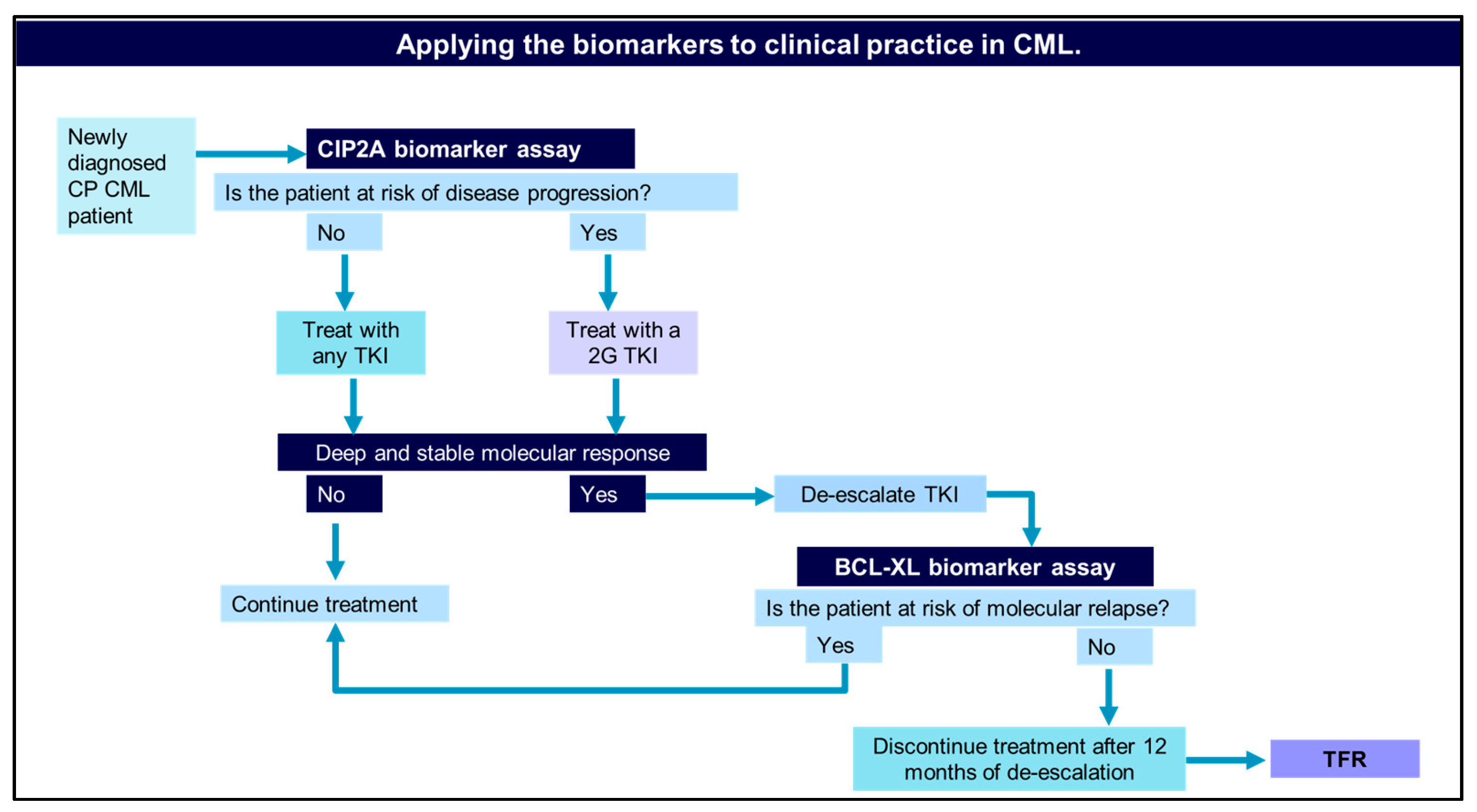
The clinical relevance of CIP2A extends deeply into hematology, particularly in the management of Chronic Myeloid Leukemia (CML). The discovery that CIP2A levels could predict the transition from the chronic phase to the fatal "blast crisis" revolutionized the understanding of disease monitoring in CML.
In CML patients, the BCR-ABL1 oncoprotein induces the expression of CIP2A. High CIP2A levels at the time of diagnosis are strongly predictive of a poor response to Imatinib and other first-generation TKIs. By measuring CIP2A mRNA levels, hematologists can identify "high-risk" patients who might benefit from more potent, second- or third-generation TKIs (such as Ponatinib) or early consideration for allogeneic stem cell transplantation.
Research has also identified CIP2A's role in Acute Myeloid Leukemia (AML) and B-cell lymphomas. In these contexts, CIP2A appears to correlate with the inhibition of apoptosis, making cells resistant to standard cytarabine-based induction regimens.
Therapeutic Targeting of CIP2A: Status in 2026
For over a decade, CIP2A was considered an "undruggable" target due to its lack of enzymatic activity and complex protein-protein interactions. However, by 2026, several therapeutic strategies have moved into various stages of clinical and preclinical development.
- Small Molecule Inhibitors: Traditional small molecules designed to disrupt the interaction between CIP2A and PP2A are currently being refined. These compounds aim to "re-activate" PP2A by releasing it from CIP2A's inhibitory grip.
- p90-Directed Therapies: Since CIP2A was originally identified as the p90 autoantigen, immunotherapy approaches targeting this protein have been explored. Peptide-based vaccines and CAR-T cell therapies targeting cells overexpressing CIP2A are undergoing early-phase safety trials.
- PROTACs (Proteolysis Targeting Chimeras): One of the most promising avenues in 2026 involves the use of PROTACs. These molecules are designed to bring CIP2A into proximity with an E3 ubiquitin ligase, leading to its targeted degradation by the proteasome. This approach bypasses the "undruggable" nature of the protein by removing it entirely rather than merely inhibiting its binding site.
- RNA Interference (RNAi): siRNA and antisense oligonucleotides (ASOs) targeting CIP2A mRNA have shown high efficacy in laboratory models at reducing tumor volume and increasing sensitivity to chemotherapy. The primary challenge remains the systemic delivery of these agents to the tumor site.
CIP2A and Chemotherapy Resistance
A major clinical hurdle in oncology is the development of multi-drug resistance (MDR). CIP2A is frequently at the center of this phenomenon. By stabilizing c-Myc and maintaining AKT activation, CIP2A provides a survival signal that counters the pro-apoptotic effects of most conventional chemotherapeutic agents.
- Cisplatin Resistance: High CIP2A expression has been linked to cisplatin resistance in cervical and head and neck cancers.
- Bortezomib Resistance: In multiple myeloma, CIP2A levels can dictate the efficacy of proteasome inhibitors.
- Doxorubicin Resistance: Increased CIP2A activity has been shown to upregulate efflux pumps, such as P-glycoprotein, effectively pumping the drug out of the cancer cell before it can exert its effect.
Monitoring CIP2A levels during treatment allows for a more "dynamic" approach to therapy, where clinicians can switch to non-cross-resistant drugs if CIP2A levels begin to rise, signaling the onset of resistance.
Clinical Comparison: CIP2A Impact Across Cancer Types
The following table summarizes the clinical implications of CIP2A overexpression in several high-prevalence malignancies based on data available through 2026.
| Cancer Type | Expression Frequency | Primary Clinical Association | Survival Impact |
|---|---|---|---|
| Breast (TNBC) | High (>60%) | Lymph node metastasis, grade III status | Significant decrease in OS |
| NSCLC | Moderate-High | TKI resistance, distal recurrence | Shorter DFS |
| Gastric | High | Deep invasion, early relapse | Independent risk factor |
| CML | Variable | Progression to blast crisis | Predicts Imatinib failure |
| Colorectal | Moderate | Liver metastasis, staging progression | Correlation with Duke’s Stage |
| Ovarian | High | Serous subtype aggressiveness | Poor response to Platinum |
Diagnostic Considerations and Laboratory Methods
In the clinical setting of 2026, CIP2A detection is primarily performed via Immunohistochemistry (IHC) on formalin-fixed, paraffin-embedded (FFPE) tissue sections. IHC allows for the visualization of both the intensity and the localization of CIP2A expression—both of which are clinically relevant. While cytoplasmic expression is most common, some studies suggest that nuclear localization may be associated with even more aggressive phenotypes.
Quantitative real-time PCR (qRT-PCR) is also utilized, particularly in hematological cases where circulating tumor cells or bone marrow aspirates are more readily available than solid tissue biopsies. The development of liquid biopsies—detecting CIP2A mRNA or p90 antibodies in the blood—is an active area of clinical validation, promising a non-invasive way to monitor disease status in real-time.
Standardized Reporting
There is an ongoing effort to standardize the "CIP2A Score" in pathology reports. This score typically combines the percentage of positive cells with the intensity of staining (0 to 3+). A score of 2+ or 3+ is generally considered "overexpressed" and warrants closer clinical monitoring or more aggressive treatment planning.
Frequently Asked Questions (FAQ)
1. Is CIP2A expressed in healthy human tissues?
Under normal physiological conditions, CIP2A expression is extremely low or absent in most adult differentiated tissues. It is primarily found in the testes and in certain progenitor cell populations. This restricted expression pattern in normal tissue is what makes CIP2A an ideal therapeutic target, as targeting it is expected to have minimal toxicity on healthy organs.
2. Can CIP2A levels change during the course of treatment?
Yes. CIP2A is a dynamic marker. Studies have shown that in response to certain therapies, particularly those that stress the cell or induce DNA damage, CIP2A levels can be upregulated as a compensatory survival mechanism. This is why serial monitoring (e.g., via liquid biopsy or repeat biopsy) is more informative than a single baseline measurement.
3. How does CIP2A relate to the "Warburg Effect" in cancer?
CIP2A influences cellular metabolism by stabilizing c-Myc, which is a master regulator of metabolic reprogramming. High CIP2A levels promote increased glucose uptake and glycolysis (the Warburg Effect), providing the energy and biosynthetic precursors necessary for rapid tumor growth.
4. Is there a commercially available CIP2A inhibitor in 2026?
As of mid-2026, there are no FDA-approved small molecule inhibitors specifically labeled as "CIP2A inhibitors." However, several PP2A activators and p90-targeted immunotherapies are in Phase II clinical trials. Some existing drugs, like the natural compound Celastrol or certain derivatives of Ethoxysanguinarine, have shown "off-target" effects that lead to CIP2A downregulation and are being used as scaffolds for drug development.
5. Does CIP2A expression affect immunotherapy outcomes?
Preliminary data suggest a correlation. Because CIP2A promotes an immunosuppressive microenvironment by modulating cytokine signaling and stabilizing c-Myc (which can downregulate MHC class I expression), high CIP2A levels may be associated with "cold" tumors that respond poorly to Immune Checkpoint Inhibitors (ICIs) like PD-1 blockers.
Practical Recommendation for Clinicians
In the current landscape of personalized medicine, CIP2A should be viewed as a critical component of a comprehensive molecular profile. For patients with aggressive solid tumors—especially triple-negative breast cancer and advanced NSCLC—requesting an IHC stain for CIP2A can provide vital information regarding the likelihood of early recurrence.
In CML management, CIP2A mRNA testing should be considered a standard part of the baseline workup to identify patients who are high-risk for TKI resistance. As therapies specifically targeting the PP2A-CIP2A axis move closer to clinical approval, identifying the "CIP2A-high" patient population will be essential for the successful implementation of these next-generation oncology treatments.