Calculating Line 16 on your 2025 Form 1040 requires identifying your total tax liability after credits and adjustments, often by using the Tax Table or Tax Computation Worksheet. This line represents the amount of income tax you owe before accounting for payments you have already made, such as federal income tax withheld or estimated tax payments.
Understanding the Role of Line 16 in the 1040 Structure
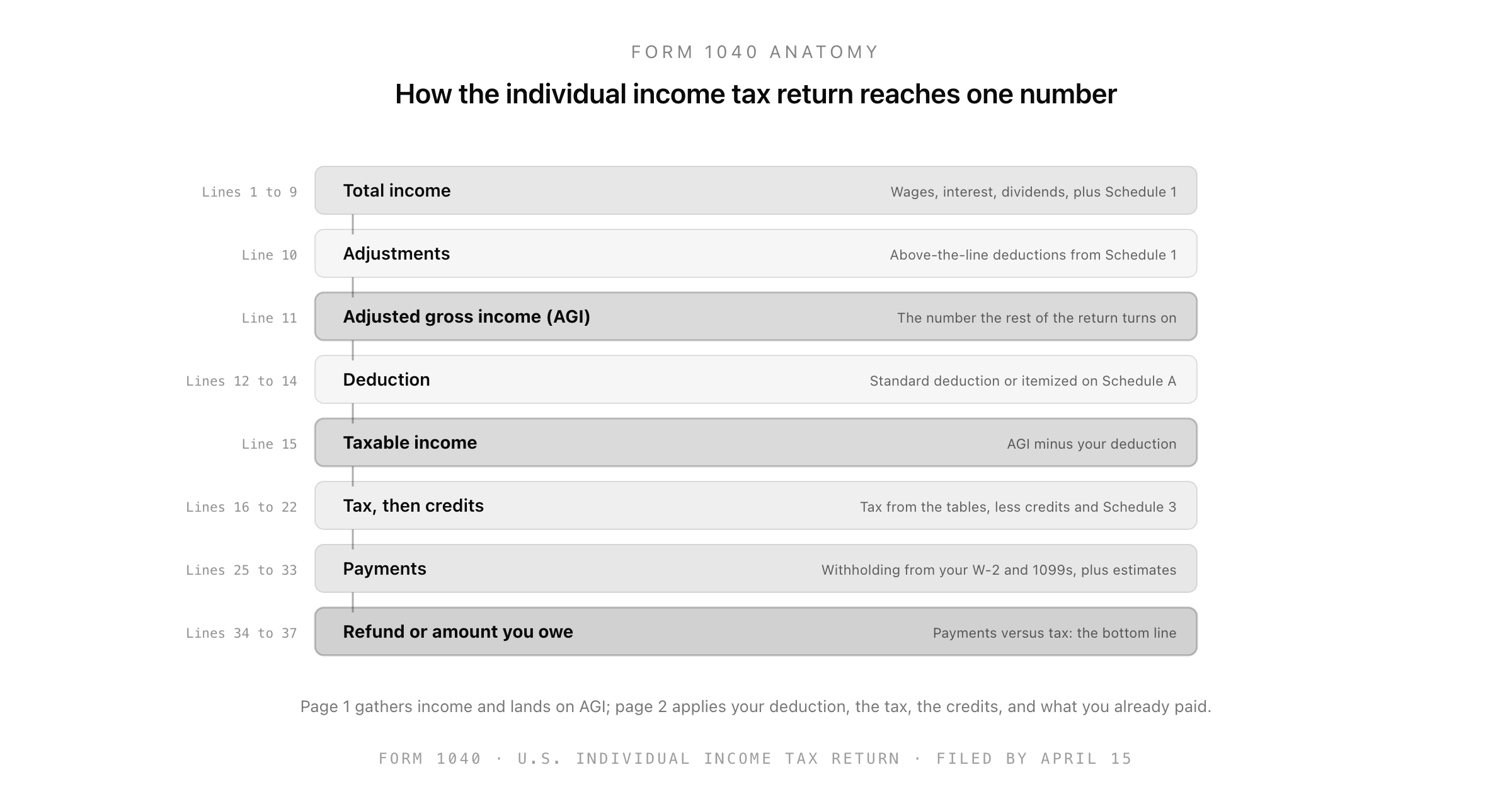
The U.S. Individual Income Tax Return (Form 1040) is structured to guide taxpayers from their total income down to the final tax amount owed or the refund due. Line 16 is a critical pivot point in this process. Before you reach this line, you have already navigated through your filing status, exemptions (if applicable under current law), income sources, and deductions to arrive at your Taxable Income, which is found on Line 15.
Line 16 is where the IRS calculates the "tax" portion of your return. It is essentially the result of applying the federal income tax brackets to the number reported on Line 15. Understanding this calculation is essential because it informs you of your base tax obligation before the application of non-refundable credits that might reduce this number further, or refundable credits that might increase your refund.
Prerequisites: What You Must Have Before Calculating Line 16
To accurately determine the value for Line 16, you cannot simply guess or perform a mental calculation. You must have the following documentation and information prepared:
- Your Taxable Income (Line 15): You must have completed all pages and schedules leading up to Line 15. If your income calculation is incorrect, your Line 16 entry will inherently be wrong, leading to potential IRS notices or the need to file an amended return (Form 1040-X).
- The Form 1040 Instructions for 2025: The IRS releases specific instruction booklets every year. You must use the 2025 version, as tax brackets are adjusted annually for inflation. Using a previous year's instructions will result in inaccurate tax calculations.
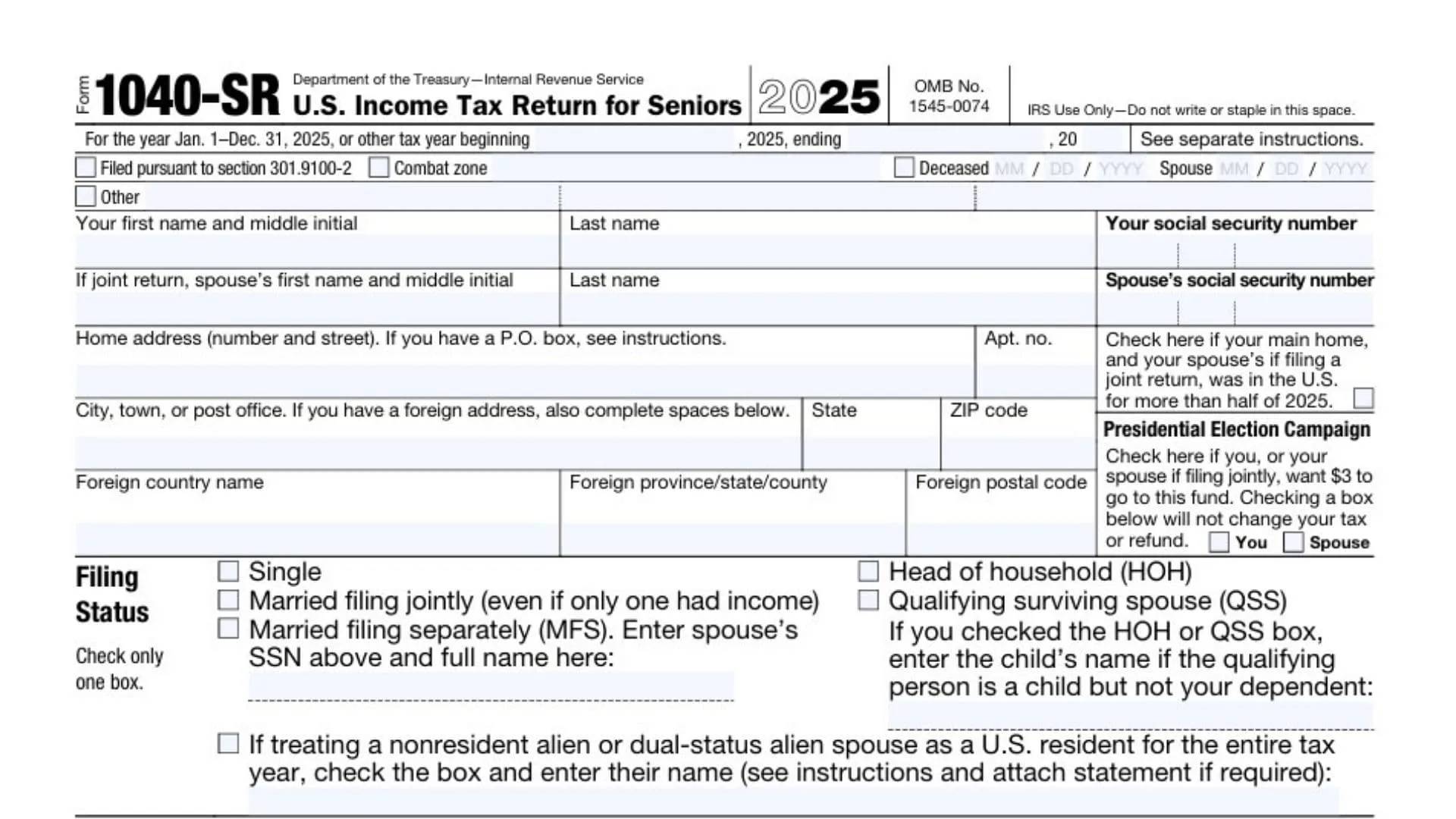
- Your Filing Status: Whether you are filing as Single, Married Filing Jointly, Married Filing Separately, or Head of Household dictates which tax bracket table you must consult.
- Information on Capital Gains or Qualified Dividends: If your income includes long-term capital gains or qualified dividends, you cannot use the standard Tax Table. Instead, you must use the Qualified Dividends and Capital Gain Tax Worksheet.
Step-by-Step Calculation Methods
There are two primary ways to arrive at the number for Line 16. The method you use depends entirely on the nature of your income and the amount of your taxable income.
Method 1: Using the Tax Table
For the vast majority of taxpayers whose taxable income is less than $100,000, the IRS provides a Tax Table in the back of the Form 1040 instruction booklet.
- Locate the Correct Table: Find the page in the instructions corresponding to your filing status.
- Find Your Income Range: Look for the row that covers your specific taxable income (Line 15). These are usually displayed in ranges (e.g., "At least $50,000 but less than $50,050").
- Identify the Tax: Follow the row to the column that corresponds to your filing status. The intersection of your income range and your filing status row provides the tax amount.
- Enter the Result: Place this specific dollar amount on Line 16.
Method 2: The Tax Computation Worksheet
If your taxable income is $100,000 or more, or if you have specific types of income that require special treatment, the Tax Table method is not applicable. In this case, you must use the Tax Computation Worksheet.
- Calculate Taxable Income: Start with your amount from Line 15.
- Apply Brackets: The worksheet will guide you through multiplying portions of your income by the relevant tax rates (e.g., 10%, 12%, 22%, etc.) and subtracting the "tax decrease" associated with those brackets.
- Summate: Total these segments to reach your base tax liability.
- Verification: Always double-check the arithmetic, as mistakes in these multi-step worksheets are common.
When to Use Specific Worksheets
You may be required to bypass the standard tax calculation if your tax situation involves specific complexities. The most common scenario involves the Qualified Dividends and Capital Gain Tax Worksheet. If you have capital gains, these are taxed at preferential rates (0%, 15%, or 20%) rather than ordinary income tax rates. Using the standard tax table for these amounts would result in overpaying your taxes.
Table: Comparison of Tax Calculation Methods
| Method | Eligibility | Primary Tool | Best For |
|---|---|---|---|
| Tax Table | Income < $100,000 | IRS Tax Table (Booklet) | Most individual taxpayers |
| Computation Worksheet | Income ≥ $100,000 | Form 1040 Instructions | High-income filers |
| Capital Gain Worksheet | Qualified Dividends/Gains | Schedule D / Inst. Worksheet | Investors with capital gains |
Common Mistakes to Avoid
Calculating Line 16 seems straightforward, but minor errors can trigger an automated audit or adjustment by the IRS.
- Using the Wrong Table: A frequent error is using a previous year’s tax table or the table for the wrong filing status. Always verify that the year at the top of the table matches the 2025 tax year.
- Rounding Errors: The IRS tax tables use ranges, but when using the Computation Worksheet, ensure you follow the rounding instructions exactly as stated in the documentation.
- Ignoring Capital Gains: Failing to identify that you have qualified dividends or capital gains will lead you to calculate your tax at higher ordinary income rates, resulting in an inflated Line 16.
- Math Errors: If you are calculating the tax by hand rather than using tax software, perform the addition and subtraction at least twice. Software platforms (like e-file providers) handle this automatically, which significantly reduces the risk of manual calculation errors.
The Impact of Credits on Line 16
It is important to remember that Line 16 is not your final tax bill. It is the tax you owe on your income. After completing Line 16, you will proceed to the "Tax and Credits" section of the 1040. Here, you will subtract non-refundable credits (such as the Child Tax Credit or Education Credits) from your Line 16 amount.
If your non-refundable credits exceed your tax liability, your tax for that purpose cannot drop below zero. Refundable credits, however, are applied later in the return and can result in an actual refund even if they exceed your tax liability.
Troubleshooting: What if Your Numbers Do Not Match?
If you are using tax software and your calculated tax differs from the software’s output, investigate the following:
- Data Entry: Check your entry for Line 15. A typo here propagates through the entire tax return.
- Filing Status: Ensure your software is set to the correct filing status (e.g., did you accidentally check "Single" when you intended to file "Married Filing Jointly"?).
- Schedules: Ensure that all relevant schedules (like Schedule D for capital gains) are properly attached or entered. The software will not account for preferential tax rates if the supporting data isn't provided.
Frequently Asked Questions
Is Line 16 the same as my total tax due? No. Line 16 is the amount of income tax calculated based on your taxable income. Your "total tax" may include other taxes (like self-employment tax), and your "amount due" or "refund" depends on how much you have already paid through withholding or estimated payments.
Can I manually calculate my tax instead of using the IRS tables? Yes, you can calculate it using the tax rates, but you must strictly follow the Tax Computation Worksheet provided in the IRS instructions. Using a manual calculation that does not account for the specific tax brackets and rate-specific subtractions will lead to errors.
Why is my tax rate higher than I expected? Tax rates are progressive. If you had a significant increase in income in 2025, you may have pushed a portion of your income into a higher tax bracket. Line 16 reflects the sum of all tax segments at their respective rates.
What should I do if I find a mistake on Line 16 after filing? If you discover a calculation error after your 2025 return has been processed, you must file Form 1040-X, Amended U.S. Individual Income Tax Return. This form allows you to correct the calculation and report the accurate tax liability to the IRS.
Does the IRS provide a tool to check my Line 16 calculation? Yes. The IRS website (IRS.gov) provides an "Interactive Tax Assistant" and the formal "Tax Table" for the 2025 tax year. These are the most authoritative resources for verifying your calculation.
Next Steps
Once you have successfully determined your Line 16, proceed to complete the rest of your 1040. Ensure that any non-refundable credits are applied correctly to reduce your tax liability. If you are using professional tax preparation software, allow the system to perform the final cross-check. If you are filing a paper return, perform a final review of all entries against your supporting documents, such as W-2s and 1099s, before mailing your return to the appropriate IRS service center.