Securing cloud environments for the Department of Defense (DoD) requires adhering to the highest standards of data protection, regulatory compliance, and architectural resilience. The single most effective cloud security posture for the DoD is not found in a single standalone vendor, but rather in a comprehensive framework anchored by the DoD Cloud Computing Security Requirements Guide (SRG), managed through secure multi-cloud architectures, and enforced by continuous monitoring tools authorized at Impact Level 5 (IL5) and Impact Level 6 (IL6).
Understanding the Landscape of DoD Cloud Security
The United States Department of Defense manages vast amounts of sensitive, unclassified, and classified data. Securing this digital infrastructure demands a departure from traditional, perimeter-based cybersecurity defenses. Modern military operations require agile, globally accessible, and highly resilient cloud ecosystems. To achieve this, the DoD relies heavily on commercial cloud service providers (CSPs) alongside private defense-specific infrastructure, integrating them under strict regulatory mandates.
At the core of this strategy is the realization that cloud security for the military is a shared responsibility model. While cloud vendors secure the underlying physical infrastructure, the DoD and its contractors retain ultimate responsibility for configuring workloads, managing identity and access management (IAM), and protecting data in transit and at rest. Understanding how these layers interact is essential for defense contractors, system integrators, and military IT personnel tasked with deploying secure applications.
The Regulatory Framework: FedRAMP and the DoD SRG
Commercial cloud technologies cannot be deployed within the Department of Defense without rigorous vetting. The primary benchmarks for this evaluation are the Federal Risk and Authorization Management Program (FedRAMP) and the DoD Cloud Computing Security Requirements Guide (SRG).
FedRAMP High Baseline
FedRAMP provides a standardized approach to security assessment, authorization, and continuous monitoring for cloud products and services. For defense applications, a cloud service provider must typically achieve a FedRAMP High baseline authorization. This baseline includes hundreds of controls derived from NIST SP 800-53, designed to protect high-impact systems where the loss of confidentiality, integrity, or availability would result in severe or catastrophic adverse effects on organizational operations, assets, or individuals.
DoD Impact Levels (IL4, IL5, and IL6)
While FedRAMP provides the baseline, the DoD SRG categorizes data into specific Impact Levels based on mission criticality and classification:
- Impact Level 4 (IL4): Designed for Uncontrolled Unclassified Information (UUI) and other types of controlled unclassified information (CUI) that require protection against unauthorized disclosure.
- Impact Level 5 (IL5): Accommodates higher-categorization CUI, National Security Systems, and unclassified mission-critical data. IL5 introduces stricter physical and logical separation requirements, mandating that cloud infrastructure reside within the continental United States (CONUS) or specific approved territories, and requiring personnel with specific background checks to manage the infrastructure.
- Impact Level 6 (IL6): Dedicated to Secret-level classified workloads. This environment requires dedicated physical hardware, connection to the Secret Internet Protocol Router Network (SIPRNet), and specialized cryptographic controls.
Core Capabilities of Top-Tier DoD Cloud Security Platforms
When evaluating the best cloud security solutions for defense requirements, certain technical capabilities are non-negotiable. These features ensure that systems can withstand advanced persistent threats (APTs) while maintaining operational velocity.
Zero Trust Architecture (ZTA) Implementation
The DoD has aggressively transitioned toward a Zero Trust posture, encapsulated in the DoD Zero Trust Strategy. Modern cloud security platforms must abandon the implicit trust associated with internal network boundaries. Instead, they must continuously authenticate, authorize, and validate every user and device-regardless of location-before granting access to applications and data. Micro-segmentation, software-defined perimeters, and continuous behavioral analytics are vital components of this capability.
Continuous Monitoring and Automated Compliance
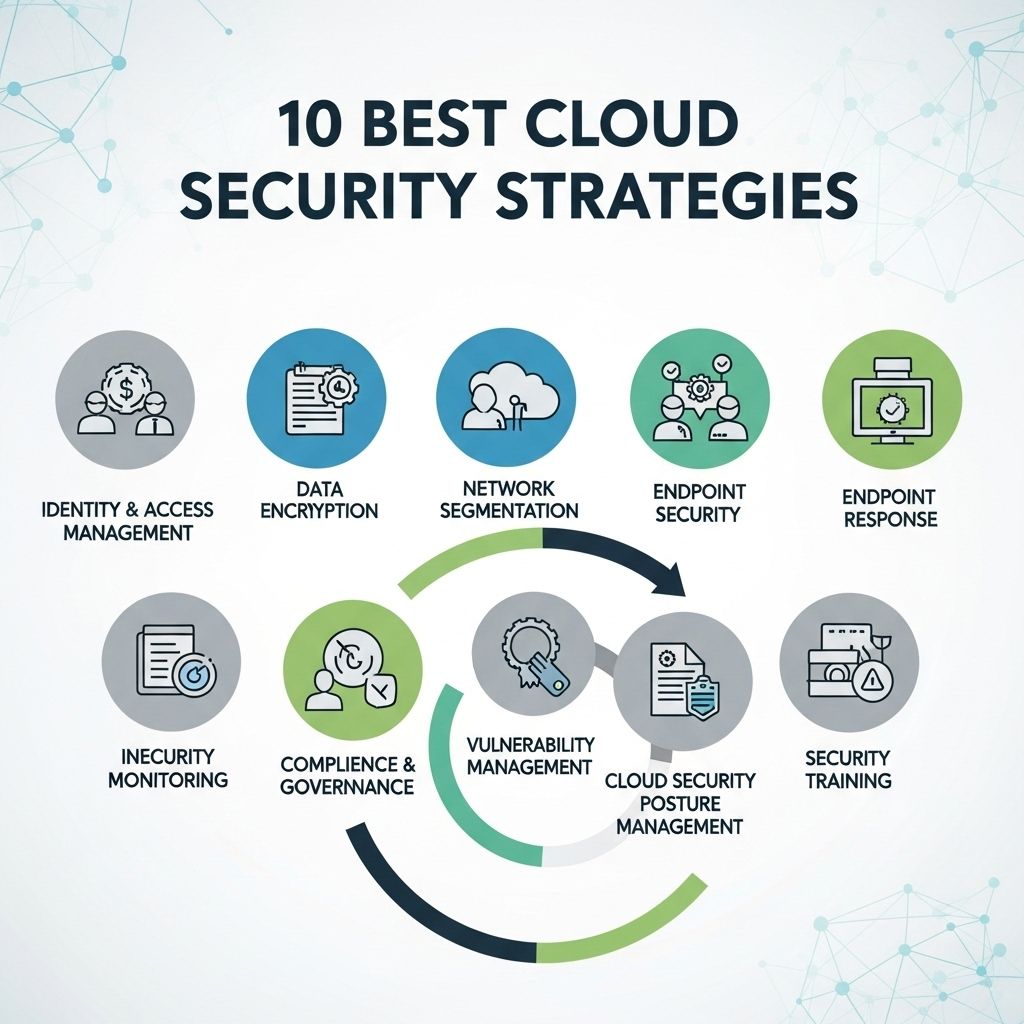
Manual security audits are insufficient for dynamic cloud environments. The best cloud security configurations incorporate automated tools that continuously assess posture against DISA Security Technical Implementation Guides (STIGs) and Security Requirements Guides. These tools provide real-time visibility into misconfigurations, unpatched vulnerabilities, and anomalous user behavior, allowing security operations centers (SOCs) to remediate risks before exploitation occurs.
Advanced Cryptography and Key Management
Data protection mechanisms must meet National Security Agency (NSA) standards, particularly the Commercial National Security Algorithm (CNSA) suite. Cloud security solutions must support robust encryption for data at rest and in transit, coupled with Hardware Security Modules (HSMs) managed by the organization or authorized defense agencies. Key management services must ensure that encryption keys remain under sovereign control, preventing unauthorized access even by the cloud provider itself.
Comparative Overview of Defense Cloud Strategies
To understand how defense agencies deploy secure cloud environments, it is helpful to examine the primary architectural paradigms currently in use.
| Strategy / Framework | Primary Data Classification | Key Security Requirements | Typical Use Case |
|---|---|---|---|
| Commercial Hyperscale (IL5) | Controlled Unclassified Information (CUI) | FedRAMP High, CONUS residency, personnel clearances | General enterprise IT, logistics, business systems |
| Secret-Level Cloud (IL6) | Classified (Secret) | SIPRNet connectivity, dedicated hardware, NSA-approved encryption | Tactical operations, intelligence analysis, mission planning |
| Hybrid Edge Computing | Unclassified to Secret | Tactical localized nodes, resilient disconnected operations | Forward-deployed units, tactical vehicles, disconnected environments |
Evaluating Commercial Cloud Providers for DoD Workloads
Major commercial cloud infrastructure providers have established dedicated regions and contractual frameworks to meet strict DoD mandates.
Enterprise Multi-Cloud Environments
The DoD's Joint Warfighting Cloud Capability (JWCC) contract multi-vendor approach leverages top-tier enterprise cloud platforms. These hyperscalers offer specialized government-dedicated regions (such as AWS GovCloud and Microsoft Azure Government) that natively support IL4, IL5, and IL6 environments. These environments feature built-in compliance tools, automated STIG mapping, and integrated identity federation compatible with Common Access Cards (CAC) and Personal Identity Verification (PIV) credentials.
Third-Party Security Overlay Tools
Beyond the foundational infrastructure provided by hyperscalers, organizations often deploy specialized cloud-native application protection platforms (CNAPPs) and cloud access security brokers (CASBs). These tools provide an abstraction layer for multi-cloud security management, enabling unified policy enforcement, threat detection, and posture management across disparate environments without vendor lock-in.
Common Pitfalls and Operational Limitations
Deploying cloud security within the Department of Defense involves unique operational hurdles that teams must navigate to avoid costly delays or security vulnerabilities.
Misconfiguration and Identity Drift
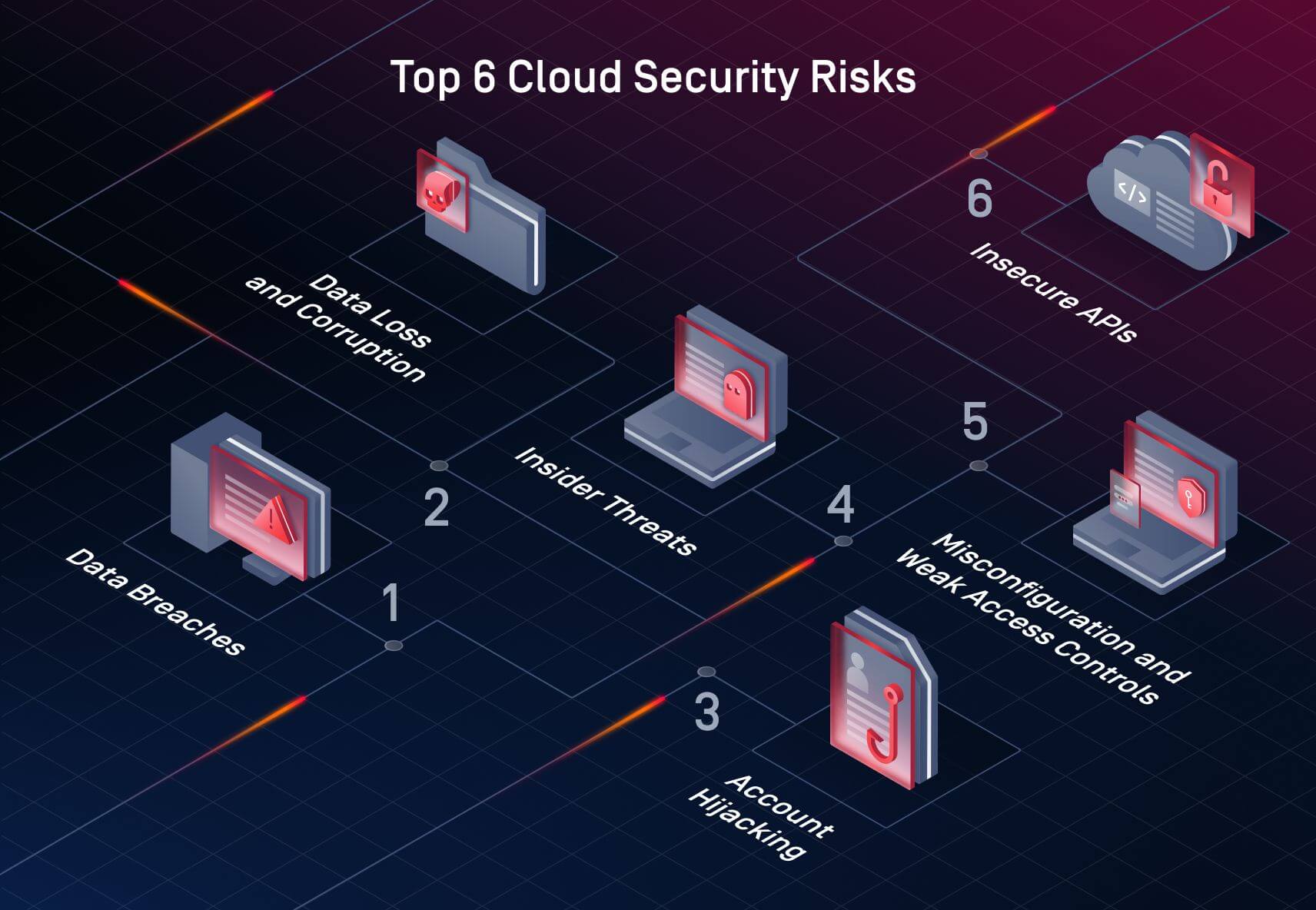
The most common source of cloud security incidents remains human error. In complex environments, overly permissive IAM roles, exposed storage buckets, and unmonitored service accounts can create significant attack surfaces. Automated cloud security posture management (CSPM) tools are essential for mitigating these risks, but they must be actively tuned to prevent alert fatigue among security analysts.
Latency and Disconnected Operations
Military operations frequently occur in bandwidth-constrained or disconnected, intermittent, and low-bandwidth (DIL) environments. A cloud security architecture that relies entirely on constant connectivity to central management servers will fail in the field. Effective solutions incorporate edge computing nodes and local caching mechanisms that maintain security controls and authentication even when network links are severed.
Frequently Asked Questions
What is the difference between FedRAMP High and DoD IL5?
FedRAMP High is a federal government-wide standard for unclassified high-impact systems, focusing heavily on NIST SP 800-53 controls. DoD Impact Level 5 (IL5) builds upon FedRAMP High by adding specific defense mandates, including requirements for data residency within the continental United States, physical separation of hardware, and background-checked personnel handling the infrastructure to protect higher-categorization Controlled Unclassified Information.
Can commercial clouds host classified DoD data?
Yes, commercial cloud providers can host classified data, but only within specialized, dedicated environments authorized at Impact Level 6 (IL6) for Secret data, or higher. These environments require dedicated hardware separate from commercial tenants, specialized cryptographic implementations, and direct connection to secure military networks like SIPRNet.
How does Zero Trust apply to DoD cloud security?
Zero Trust eliminates the concept of a trusted internal network. In a DoD cloud context, every access request must be authenticated, authorized, and encrypted based on continuous risk evaluation of the user identity, device health, location, and behavior, regardless of whether the request originates from inside or outside a military base.
What role does the JWCC contract play in defense cloud security?
The Joint Warfighting Cloud Capability (JWCC) is a multi-cloud enterprise contract vehicle that allows the DoD to acquire commercial cloud services directly from multiple leading providers at all classification levels. It streamlines the procurement of secure, pre-authorized cloud infrastructure from the enterprise level down to tactical edge deployments.
Are defense contractors required to use IL5-certified clouds?
Defense contractors handling Controlled Unclassified Information (CUI) as part of the Cybersecurity Maturity Model Certification (CMMC) framework or specific contract clauses must ensure their cloud environments meet the security standards corresponding to the data classification defined in their contracts, frequently aligning with NIST SP 800-171 and federal cloud security baselines.
Practical Next Steps for Defense Cloud Implementation
Implementing the optimal cloud security posture for Department of Defense workloads requires a methodical, step-by-step approach:
- Data Categorization: Identify and categorize all data assets according to the DoD Information Security Program and define the appropriate Impact Level (IL4, IL5, or IL6).
- Architecture Selection: Choose an authorized cloud environment (such as an approved JWCC hyperscale region or dedicated enclave) that natively supports the required compliance baseline.
- Identity Integration: Configure identity and access management to enforce multifactor authentication utilizing CAC/PIV credentials and Zero Trust micro-segmentation principles.
- Continuous Monitoring Setup: Deploy automated CSPM and SIEM tools configured with DISA STIG benchmarks to ensure real-time visibility and threat detection across all deployed workloads.