A structured GRE prep plan is a systematic schedule that balances content mastery with strategic practice across the Quantitative Reasoning, Verbal Reasoning, and Analytical Writing sections. By organizing study sessions around diagnostic results and specific weaknesses, test-takers can optimize their limited preparation time and ensure readiness for the computer-adaptive format of the current GRE.
To achieve a competitive score on the Graduate Record Examination (GRE), one cannot rely on sporadic study sessions or passive reading. Success in 2026 requires a data-driven approach that accounts for the shorter exam format—introduced in late 2023 and now the industry standard—which emphasizes efficiency and precision over a grueling four-hour endurance test. A structured plan serves as a roadmap, preventing burnout and ensuring that no critical concept is overlooked.
Phase 1: The Diagnostic Foundation and Goal Setting
Before purchasing prep books or subscribing to online platforms, every candidate must establish a baseline. This begins with an official practice test provided by the Educational Testing Service (ETS). Taking a full-length, timed diagnostic exam under realistic conditions reveals not just what you know, but how you handle the pressure of the clock and the specific logic of the GRE.
Analyzing Your Baseline
Once the diagnostic test is complete, the focus should shift to a granular analysis of the results. It is not enough to know you scored a 155 in Quant; you must identify if that score was lowered by a lack of geometry knowledge, poor time management, or "silly" arithmetic errors. This analysis dictates the weight of your structured plan. If your Verbal score is significantly lower than your Quant score, your first month of study should be weighted 70/30 toward Verbal content.
Defining the Target Score
Graduate programs vary wildly in their score expectations. A PhD program in Engineering at a top-tier university may require a near-perfect Quantitative score, while a Master’s in Comparative Literature will prioritize the Verbal and Analytical Writing sections. Researching the median scores of the most recent incoming classes for your target programs allows you to set a "stretch goal" and a "safe goal." This target dictates the intensity and duration of the prep plan.
Phase 2: Mastering Quantitative Reasoning
The Quantitative Reasoning section of the GRE does not test high-level calculus; rather, it tests a candidate’s ability to apply high-school-level math concepts to complex, logical problems. In 2026, the exam continues to reward "mathematical maturity"—the ability to find the most efficient path to a solution rather than the most laborious one.
Arithmetic and Algebra Fundamentals
A structured plan must dedicate the first few weeks to refreshing core concepts. This includes number properties (even/odd, primes, divisibility), fractions, decimals, percents, and ratios. In algebra, the focus should be on simplifying expressions, solving linear and quadratic equations, and mastering inequalities. Many test-takers overlook these "basics," yet these are the areas where the GRE builds its most deceptive traps.
Geometry and Data Interpretation
Geometry on the GRE is restricted to Euclidean principles: lines, angles, triangles, quadrilaterals, circles, and 3D figures like cylinders and rectangular solids. Memorizing formulas is only the first step; the plan must include practice on how these shapes interact within coordinate planes. Data Interpretation, meanwhile, requires the ability to quickly synthesize information from bar graphs, line charts, and circle graphs. These questions often involve multi-step calculations, making them a significant time-sink if not practiced systematically.
Quantitative Comparison Strategies
The Quantitative Comparison (QC) question type is unique to the GRE. It asks you to determine the relationship between two quantities. A structured plan includes specific drills for QC, such as the "ZONE-F" method (testing Zeros, Ones, Negatives, Extremes, and Fractions) to ensure that a perceived relationship holds true across all possible values.
Phase 3: Mastering Verbal Reasoning
The GRE Verbal Reasoning section shifted years ago away from rote memorization of obscure words toward an emphasis on "reasoning." While a strong vocabulary remains essential, the exam primarily tests your ability to understand the logical flow of a sentence and the structural integrity of a passage.
Text Completion and Sentence Equivalence
These questions require you to fill in blanks with the word or words that best fit the context. A structured plan involves learning to identify "signal words" or "road signs"—terms like however, moreover, despite, or consequently—which indicate whether the sentence is continuing a thought or pivoting to a contrast. Vocabulary building should be integrated daily, utilizing spaced repetition systems (SRS) like Anki to move words from short-term to long-term memory.
Reading Comprehension and Critical Reasoning
Reading Comprehension (RC) accounts for about half of the Verbal section. Preparation must involve active reading techniques. Instead of just reading for information, the plan should train the student to read for structure and authorial intent. Why did the author include this specific example? Is the tone skeptical or celebratory? Critical Reasoning questions, a subset of RC, require you to strengthen, weaken, or identify the assumptions of a short argument. These require a distinct logical toolkit that must be practiced independently of standard RC passages.
Phase 4: Analytical Writing (AWA)
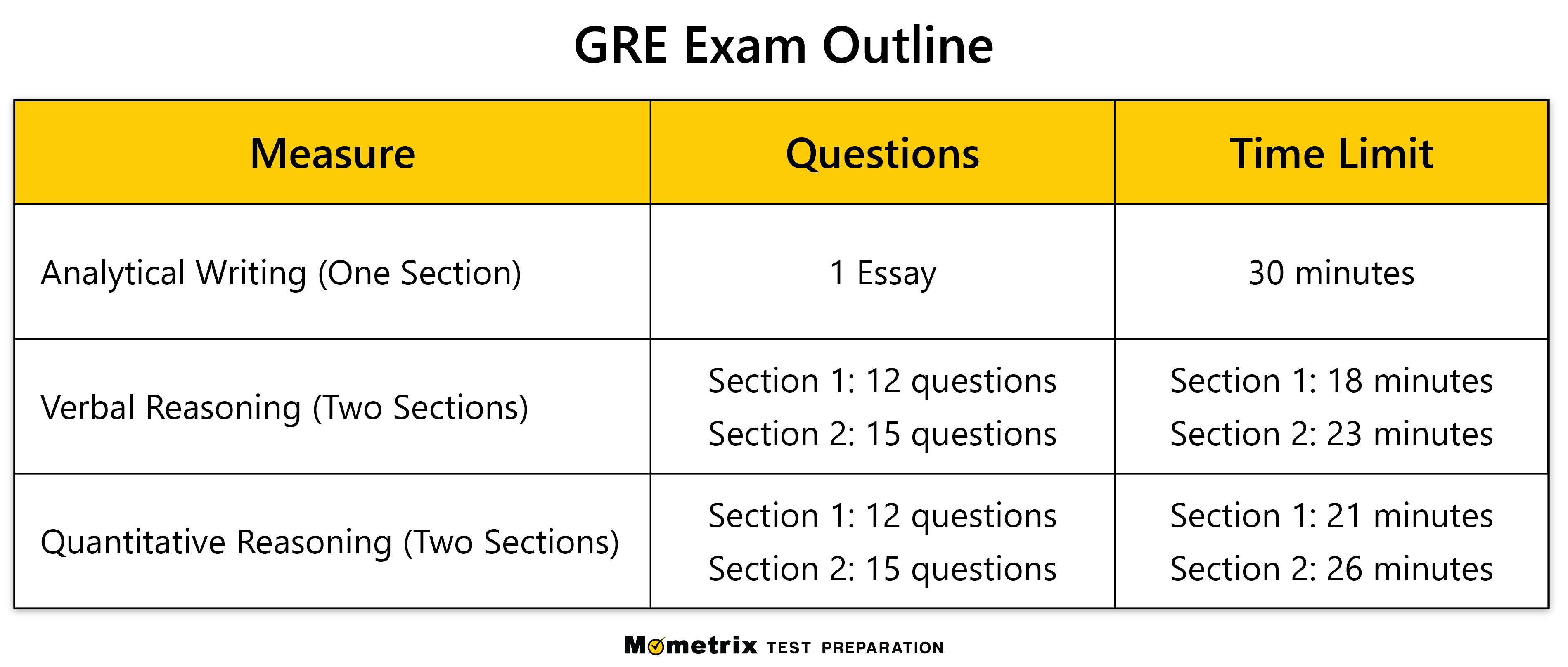
Since 2023, the GRE has featured only one essay: the "Analyze an Issue" task. This requires candidates to respond to a prompt and develop a cogent, well-supported argument within 30 minutes.
Structural Integrity of the Essay
A structured prep plan should not ignore the AWA section until the week before the exam. Instead, students should practice outlining one essay per week. The goal is to develop a standard template:
- Introduction: Rephrase the issue and state a clear thesis.
- Body Paragraphs: Provide specific examples (historical, literary, or personal) and explain how they support the thesis.
- Counter-Argument: Acknowledge the opposing view to demonstrate nuance.
- Conclusion: Summarize the argument and reinforce the thesis.
Organizing the Timeline: Sample Study Tracks
The duration of a structured plan depends on the gap between the diagnostic score and the target score. Generally, 10 hours of study often correlates to a 1-point increase in the total score, though this varies by individual.
| Plan Duration | Weekly Commitment | Primary Focus | Ideal Candidate |
|---|---|---|---|
| 4-Week Sprint | 20–25 Hours | Strategy and high-yield topics | Those near their target score or with an urgent deadline. |
| 8-Week Standard | 10–15 Hours | Balanced content review and practice | Most students; allows for deep dives into weak areas. |
| 12-Week Comprehensive | 5–8 Hours | Foundational math and heavy vocab building | Non-native speakers or those out of school for 5+ years. |
| 16-Week Extended | 4–6 Hours | Slow-paced mastery and endurance | Working professionals with limited daily study windows. |
The Role of the Error Log
The most critical component of a structured GRE prep plan is the Error Log. This is a document or spreadsheet where you record every question you get wrong during practice. It is not enough to read the explanation and move on. For each error, you must document:
- The source of the question.
- The category (e.g., Geometry, Text Completion).
- The reason for the error (e.g., conceptual gap, reading the question too fast, calculation error).
- The "Takeaway": What will you do differently next time?
Reviewing the Error Log weekly is more valuable than doing 100 new practice problems. It forces the brain to recognize patterns in its own mistakes, which is the fastest way to increase accuracy.
Essential Resources for 2026
To ensure the highest fidelity to the actual exam, students should prioritize materials that mirror the logic of the test-maker.
- Official GRE Mentor: An ETS-provided digital platform that offers practice questions and a full-length mock test.
- Official Guide to the GRE General Test: The "bible" of GRE prep, containing authentic questions.
- Big Book (Historical): While older, the "GRE Big Book" contains 27 old tests. It is excellent for Reading Comprehension and basic Quant practice, though some question types are now obsolete.
- Vocabulary Apps: Magoosh, Manhattan Prep, and Barron’s remain the leaders in curated GRE word lists.
- External Logic Training: For those struggling with Critical Reasoning, resources from the Law School Admission Council (LSAC) regarding Logical Reasoning can be helpful, as the logic is identical to the GRE.
Frequently Asked Questions
How long is the GRE in 2026?
The GRE is approximately 1 hour and 58 minutes long. It consists of one Analytical Writing section (30 minutes), two Verbal Reasoning sections (totaling 41 minutes), and two Quantitative Reasoning sections (totaling 47 minutes). There is no longer an unscored experimental section or a scheduled break.
Is the GRE still adaptive?
Yes, the GRE is section-level adaptive. Your performance on the first Verbal section determines the difficulty of the second Verbal section. The same applies to the Quantitative sections. A higher performance on the first section leads to a harder second section, which is necessary to achieve a high-tier score.
Can I use a calculator?
An on-screen calculator is provided for the Quantitative Reasoning sections. It includes basic functions and a square root button. While useful, the most successful test-takers use the calculator sparingly, as many GRE problems are designed to be solved more quickly through estimation or algebraic simplification.
How many times can I take the GRE?
You can take the GRE once every 21 days, up to five times within any continuous rolling 12-month period. Most universities will allow you to use ScoreSelect, which lets you choose which scores from which test dates to send to the schools you are applying to.
When should I start my prep plan?
Ideally, you should start your prep plan 3 to 4 months before your first application deadline. This allows time for a structured 8-week or 12-week study period and a buffer for a retake if your first official score does not meet your target.
Final Recommendation for Test-Takers
Success on the GRE is as much about psychological discipline as it is about intellectual ability. Once your structured plan is in place, the final two weeks should focus on "tapering"—reducing the volume of new problems and increasing the focus on timing and mindset. Ensure you take at least two official practice tests in the final 14 days to cement your pacing strategy. By the time you sit for the actual exam, the structure of the prep plan should have made the process feel like a routine exercise rather than a high-stakes obstacle.