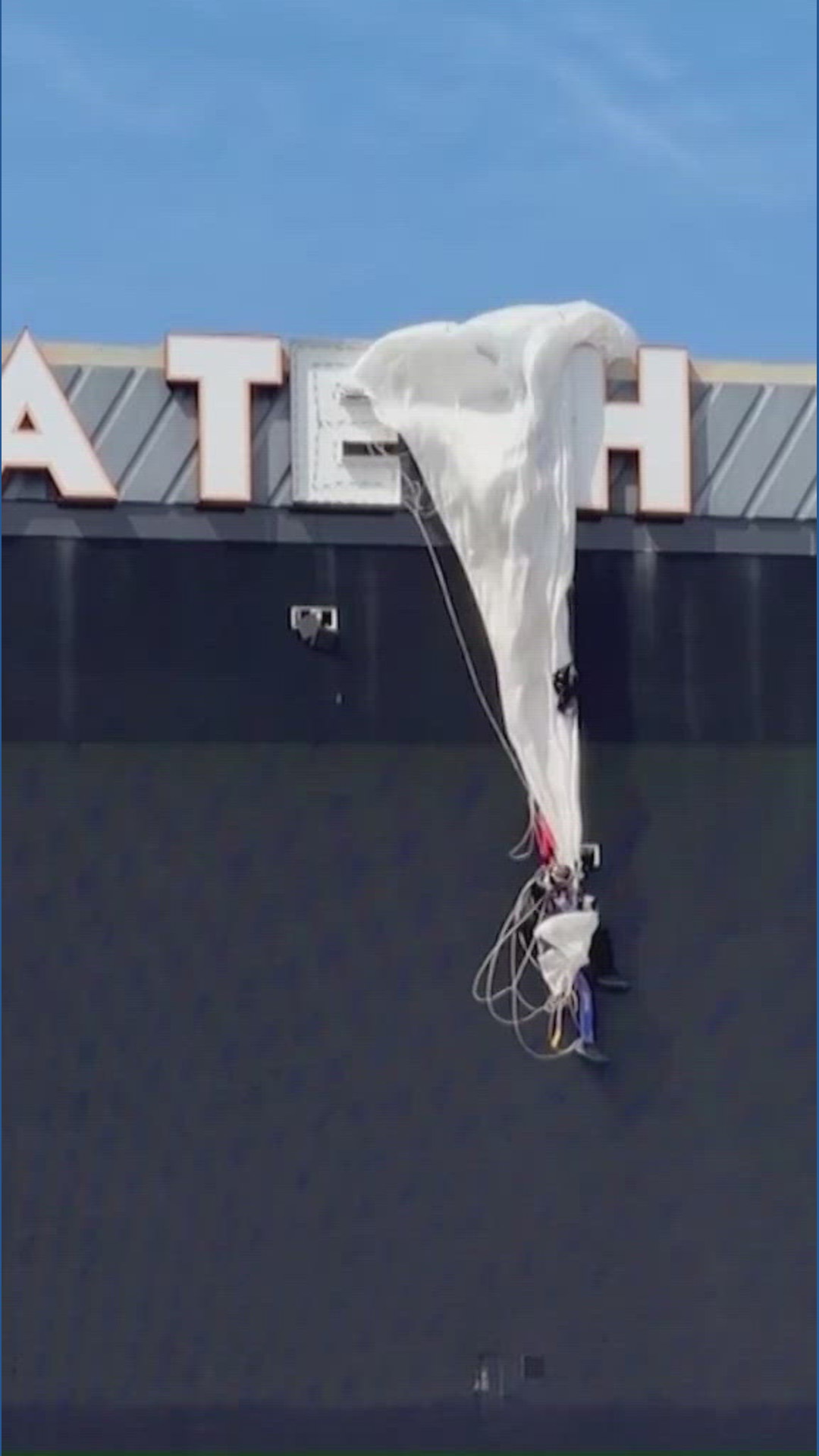
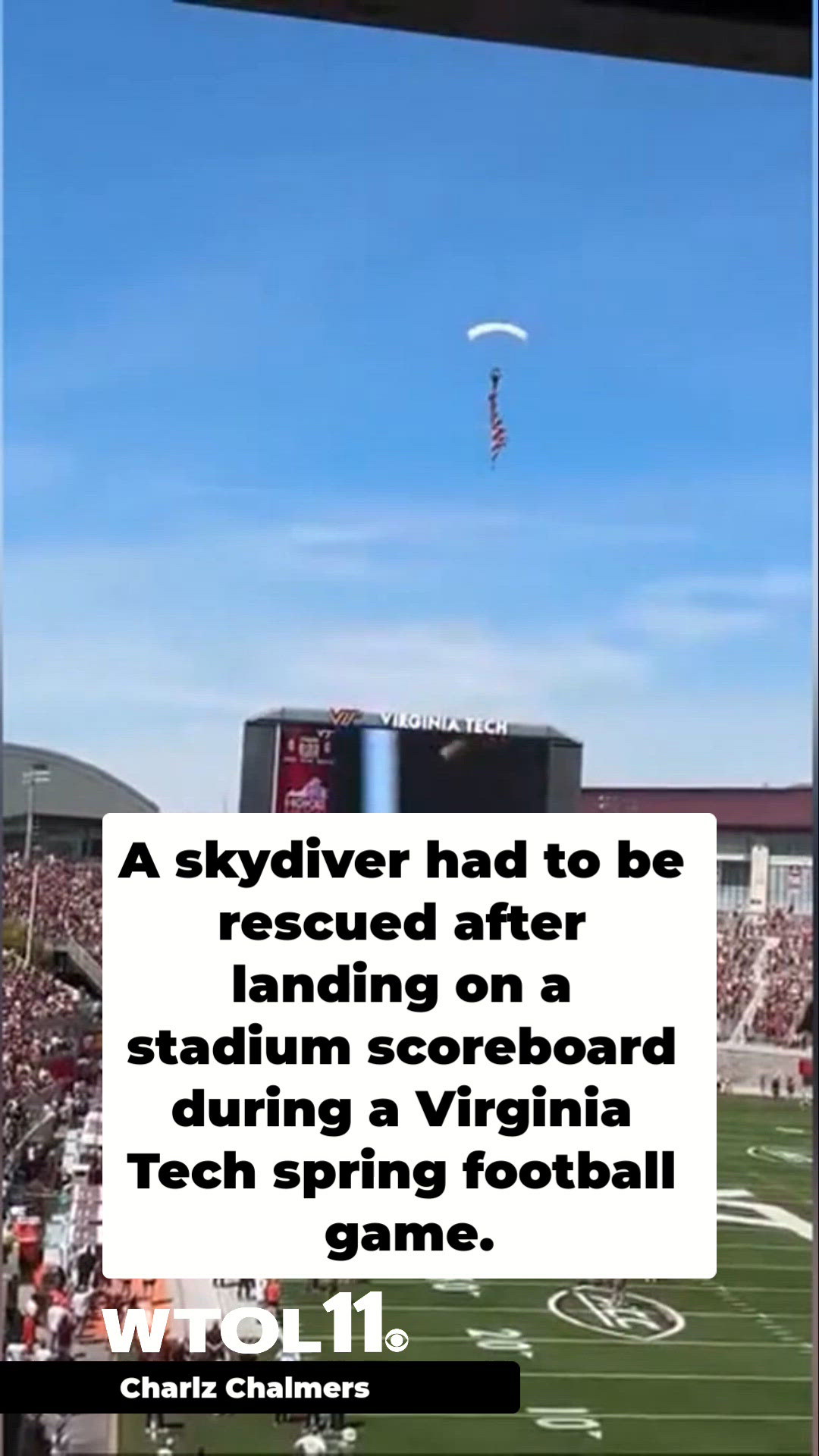
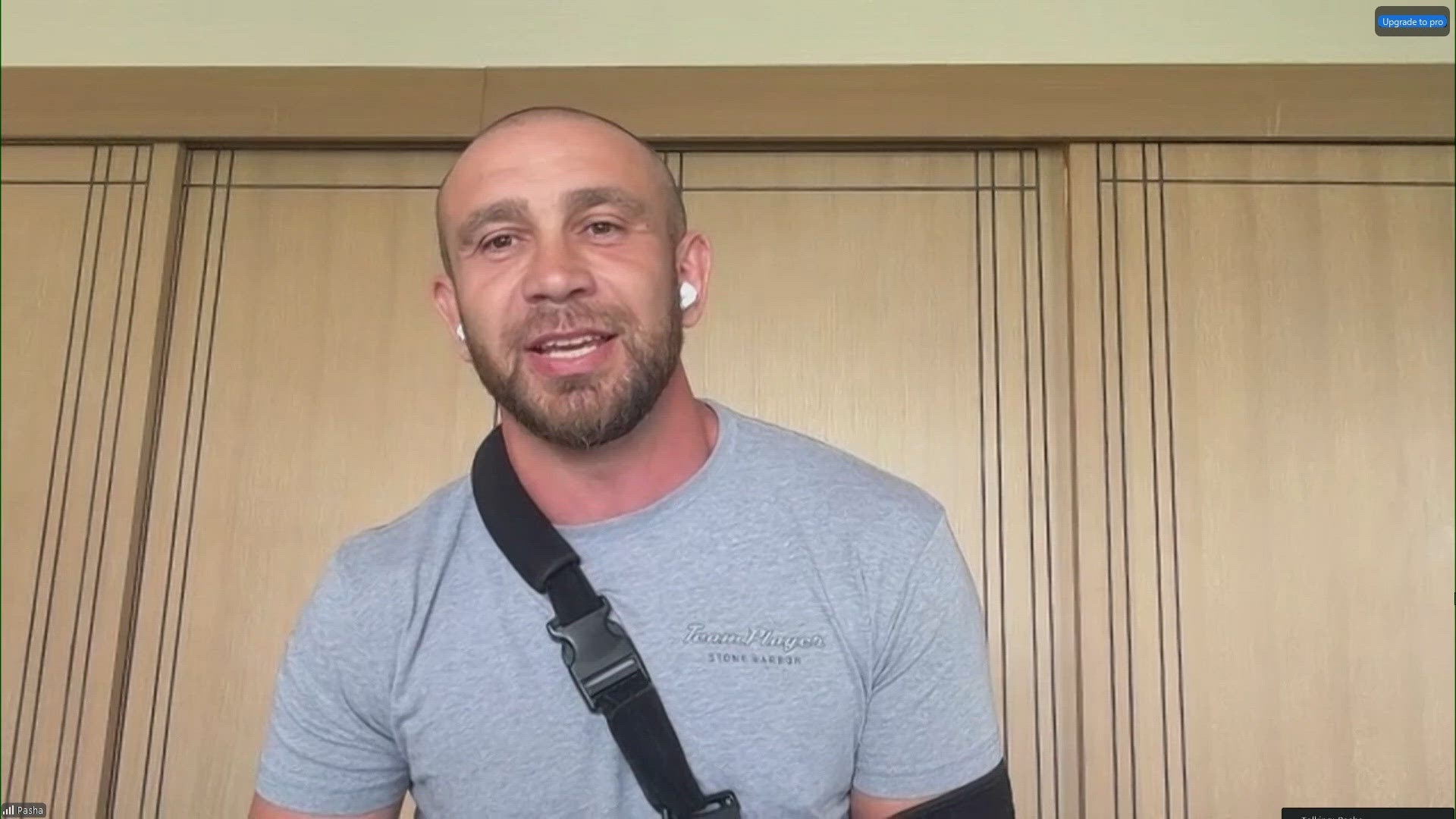
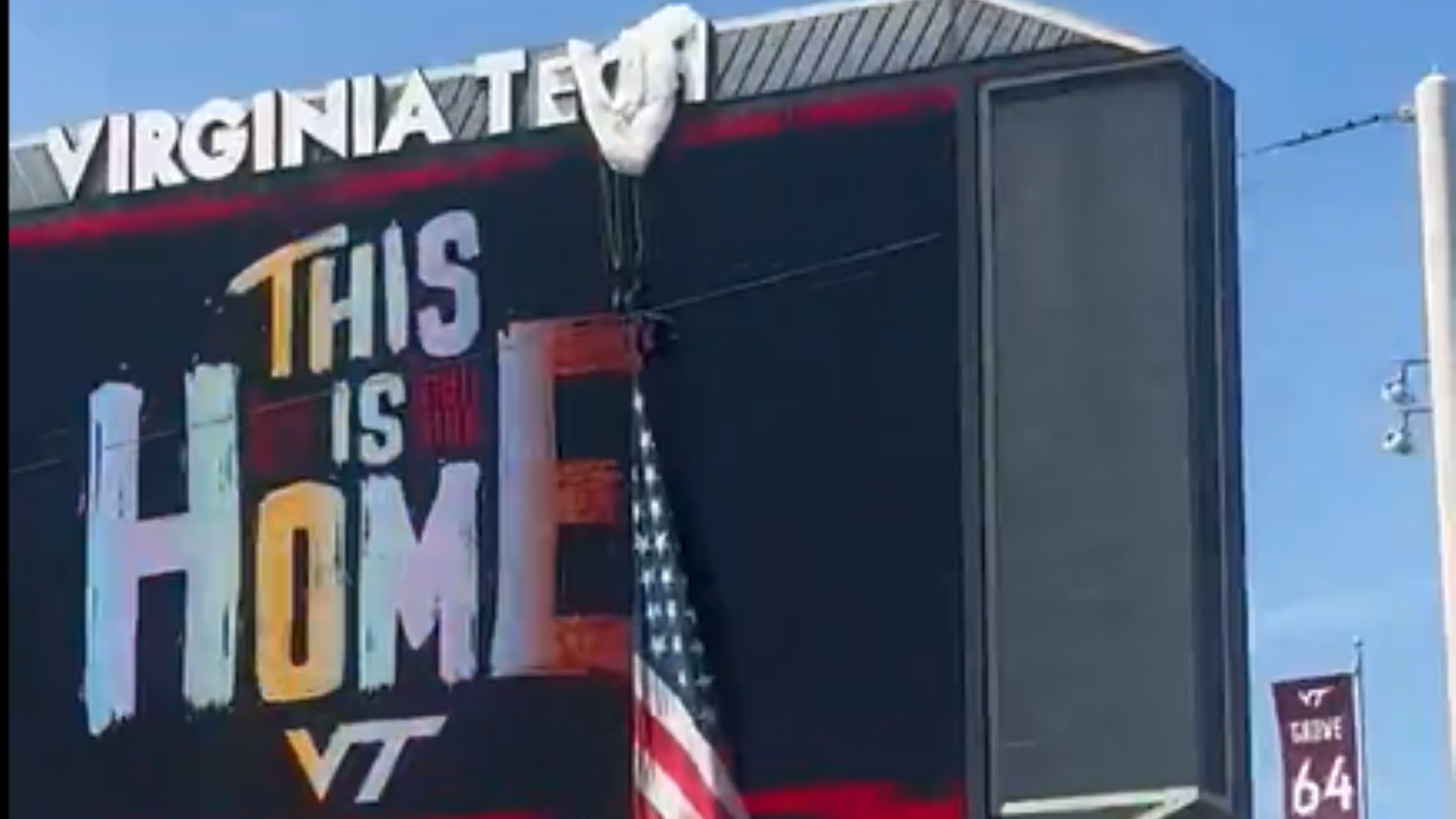
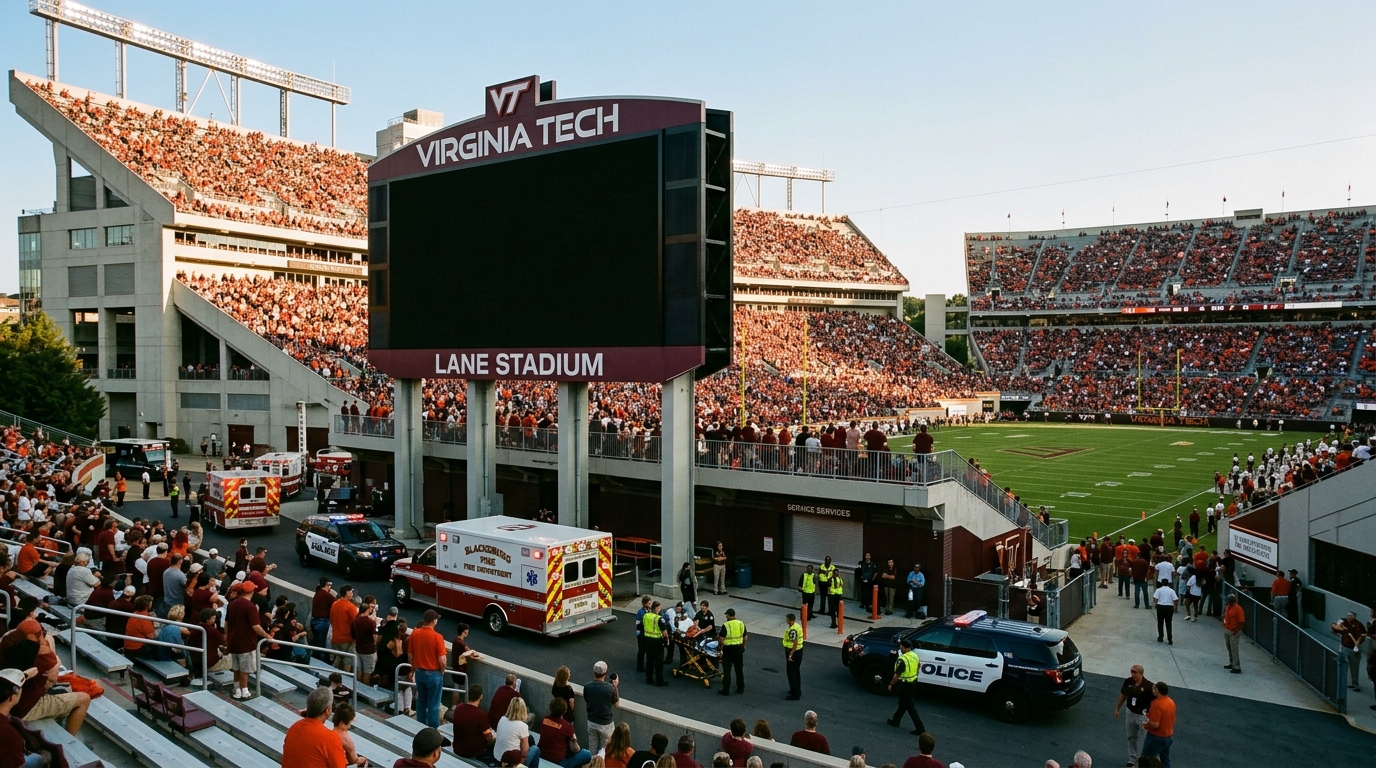
The incident involving a skydiver striking the Lane Stadium scoreboard at Virginia Tech represents a high-profile case study in the intersection of aerial performance, stadium event planning, and risk mitigation. During a pre-game parachute demonstration, the skydiver miscalculated an approach, resulting in a collision with the stadium’s large video board structure, an event that highlighted the complex variables inherent in urban and high-density aerial navigation.
The Dynamics of Stadium Aerial Demonstrations
Aerial performances, such as parachute jumps for football games, are technically classified as complex special-use aviation events. These demonstrations require precise coordination between the Federal Aviation Administration (FAA), local stadium management, the athletics department, and the jump team. When a skydiver enters a stadium environment like Virginia Tech’s Lane Stadium, they are dealing with more than just landing accuracy; they are contending with "stadium effect" aerodynamics.
Stadiums, due to their bowl-like structure and high walls, create unpredictable wind tunnels and micro-vortexes. As air flows over the top of the stadium walls, it can create turbulence that is often invisible to the parachutist until they are well within the descent path. For a professional skydiver, the goal is to maintain a glide slope that accounts for these localized wind shifts while navigating tight flight corridors defined by light towers, scoreboards, and the sheer volume of spectators in the stands.
The incident at Virginia Tech serves as a reminder of the physical constraints imposed by the stadium’s architecture. Large scoreboards, such as the one involved in the collision, act as significant physical obstructions that not only occupy space but also disrupt natural airflow, creating "dead zones" where a canopy may lose lift, or conversely, strong drafts that can push a canopy off its intended glide path.
Regulatory Oversight and Safety Planning
Every parachute demonstration over a public venue in the United States must adhere to strict guidelines outlined in the FAA’s Advisory Circular (AC) 105-2E. Before such an event is permitted, the organizers must submit a detailed plan that includes:
- NOTAMs (Notice to Air Missions): Issuance of a temporary flight restriction to clear the airspace of unauthorized aircraft.
- Target Assessment: A thorough evaluation of the landing zone (LZ), ensuring it exceeds minimum size requirements and is clear of spectators and unneeded infrastructure.
- Weather Minima: Specific, non-negotiable wind speed and visibility requirements.
- Risk Mitigation: A breakdown of how the team will handle "off-target" scenarios, which includes pre-mapping escape routes and alternative landing zones.
In the case of the Virginia Tech incident, the investigation focused on whether the deviation was a result of mechanical error, pilot miscalculation, or an environmental factor—such as an unexpected gust—that exceeded the jump’s risk threshold. The primary question for regulatory bodies after such an occurrence is not merely "who was at fault," but rather what systemic failures in the flight plan allowed the athlete to drift into a structural hazard.
Factors Contributing to Aerial Incidents in Arenas
Understanding why an incident occurs requires a multi-dimensional look at the variables. It is rarely the result of a single error, but rather a "chain of events."
- Environmental Volatility: As noted, the temperature differential between the hot turf inside a stadium and the cooler air above the stands can cause localized turbulence.
- Canopy Performance Characteristics: Modern high-performance parachutes are fast and responsive, which is excellent for accuracy, but they also have a higher "stall speed" compared to older, more passive designs. If a skydiver needs to make a sudden, sharp correction to avoid an object, they risk stalling the canopy, which results in a loss of horizontal speed and a rapid drop.
- Visualization and Depth Perception: From high altitudes, a stadium can appear small. As the skydiver approaches the field, the scale changes rapidly. Distinguishing the distance between the scoreboard and the open field requires immense experience, as the structures can visually "compress" when viewed from an overhead, high-speed perspective.
Comparative Analysis of Stadium Landing Hazards
To understand the risks involved in stadium jumps, it is helpful to look at how different stadium configurations present unique challenges for aerial athletes.
| Stadium Feature | Risk Level | Primary Challenge | Impact on Navigation |
|---|---|---|---|
| Open Bowl | Low | Wind shear at the rim | Requires steady altitude management |
| Enclosed/Deep Bowl | High | Vortex generation | Turbulent air near the field level |
| High-Rise Scoreboards | Very High | Direct physical collision | Limits the "safe" entry window |
| Floodlight Towers | Medium | Obstruction of sightlines | Forces flight path adjustments |
The data in the table above illustrates why planners often categorize landing zones based on the height of surrounding structures. At Virginia Tech, the scoreboard configuration presented a vertical hazard that effectively shortened the available "safe" landing window, requiring the pilot to clear the structure with precision.
Post-Incident Protocol and Recovery
When a skydiver hits a structure, the immediate response is dictated by emergency management plans. These plans involve:
- Medical Triage: Paramedics stationed at the stadium are the first responders. Due to the high-stakes nature of these jumps, advanced life support is typically staged at the edge of the LZ before the jump occurs.
- Site Containment: Security personnel must prevent spectators from entering the crash area, which is vital to keep clear paths for emergency responders.
- Technical Investigation: A review of the jump’s telemetry, the pilot’s log, and the environmental data collected by the site coordinator.
In the years following such incidents, the goal for athletic departments and skydiving organizations is to refine "no-fly" buffers around infrastructure. This might involve increasing the distance required between the landing target and the nearest high-profile obstacle or installing more sophisticated weather monitoring equipment inside the stadium to detect micro-gusts in real-time.
Frequently Asked Questions
Why are skydivers allowed to jump into crowded stadiums if it is so dangerous? Stadium jumps are highly controlled, sanctioned events performed by elite, licensed skydivers who hold specialized ratings for demonstrations. The risk is considered acceptable when balanced against the rigorous safety planning, FAA coordination, and the high skill level of the athletes involved.
What happens to the skydiver’s parachute if they hit a scoreboard? If a canopy strikes a structure, the skydiver generally performs a "cutaway" or immediate stabilization maneuver. Modern systems are designed to minimize the risk of entanglement, and the parachute is often recovered for inspection to see if material failure contributed to the incident.
How does Virginia Tech verify safety for these events? Virginia Tech, like other major universities, contracts with professional demonstration teams. These teams are responsible for providing proof of insurance, current certifications, and a comprehensive risk assessment that must be approved by both the university’s risk management office and the FAA.
What is the "stadium effect" on parachutes? The stadium effect refers to the unpredictable air movement caused by the bowl shape of a stadium. This air creates swirling eddies and downdrafts that can catch a parachute, making it behave inconsistently compared to landing in a flat, open field.
Are these jumps mandatory for the pilot? No. Skydiving is a voluntary sport. Pilots often have the final authority to "scrub" (cancel) a jump if they feel the conditions are unsafe, even if the event organizers or the stadium staff are pushing to proceed.
Professional Guidance and Future Safety Trends
For those interested in the logistics of aerial sports, the primary takeaway is the importance of "margin of error." As technology advances, we are seeing the introduction of real-time wind sensors and high-resolution drone mapping that allows jumpers to simulate their descent paths days before the actual jump.
If you are involved in event planning or are simply a spectator, remember that these events are governed by layers of bureaucracy designed to keep both the athletes and the public safe. When an incident like the one at Virginia Tech occurs, it triggers an industry-wide review, leading to safer practices and improved infrastructure awareness. Professionalism in skydiving isn't just about the skill of the jump—it is about the meticulous planning that happens long before the skydiver ever leaves the aircraft. Always defer to official event guidelines and never underestimate the complexity of navigating a man-made structure from the sky.