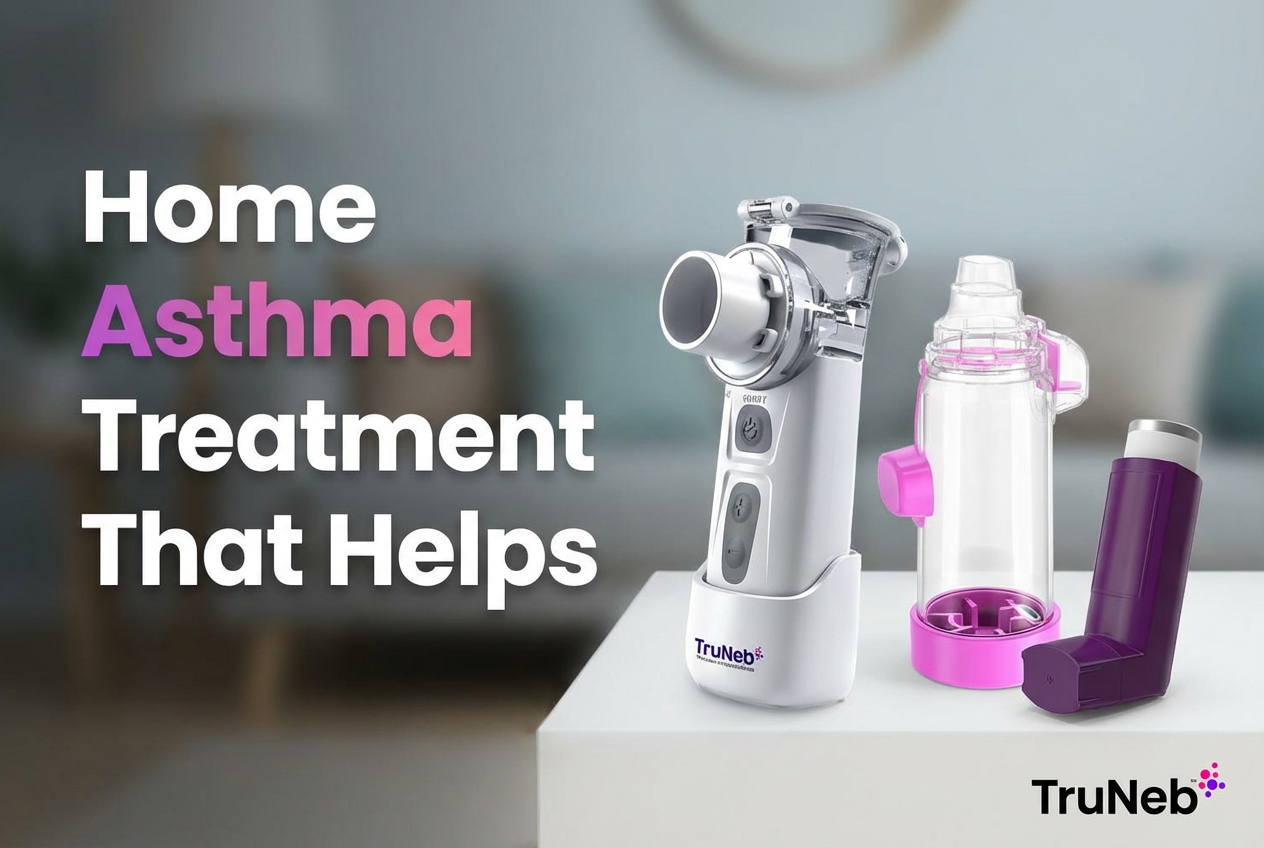
Effective at-home asthma management requires a dual-track approach: strict adherence to a personalized Asthma Action Plan and rigorous control of environmental triggers. By combining maintenance medications—such as inhaled corticosteroids—with proactive monitoring tools like peak flow meters and smart inhaler sensors, patients can significantly reduce airway inflammation and prevent life-threatening exacerbations before they escalate.
The Foundation of At-Home Care: The Asthma Action Plan
Before implementing any at-home strategy, it is imperative to establish a formal Asthma Action Plan (AAP) in consultation with a healthcare provider. As of 2026, clinical standards emphasize that at-home management is not a series of ad-hoc reactions to symptoms, but a structured protocol based on physiological data. An AAP categorizes a patient’s respiratory status into three distinct zones—Green, Yellow, and Red—each dictating specific pharmacological and behavioral steps.
The Green Zone represents stability. In this phase, the goal is maintenance. You are breathing well, sleeping through the night, and can perform daily activities without restriction. The strategy here involves the consistent use of long-term controller medications, even when symptoms are absent.
The Yellow Zone signals a "caution" phase where symptoms like coughing, wheezing, or chest tightness begin to manifest. At-home treatment shifts toward increasing the frequency of reliever medications or initiating a temporary course of oral corticosteroids as pre-defined by your physician. This zone is critical because it represents the window of opportunity to prevent a full-scale attack.
The Red Zone is a medical emergency. If peak flow readings drop below 50% of your personal best or if rescue medications provide no relief, the at-home management phase ends, and immediate emergency intervention is required. Understanding these thresholds is the most vital component of domestic asthma safety.
Pharmacological Strategies and Delivery Optimization
At-home treatment relies heavily on the correct administration of two primary classes of medication: controllers and relievers. In recent years, the medical community has moved toward MART (Maintenance and Reliever Therapy), which utilizes a single inhaler containing both an inhaled corticosteroid (ICS) and a long-acting beta-agonist (LABA), such as formoterol.
Mastering Inhaler Technique
The efficacy of at-home treatment is often limited not by the drug itself, but by poor delivery technique. Research consistently shows that a significant percentage of patients do not receive the full dose because of "oropharyngeal deposition"—where the medicine hits the back of the throat instead of reaching the bronchioles.
To optimize delivery:
- Use a Spacer: For Metered-Dose Inhalers (MDIs), a valved holding chamber or spacer is non-negotiable. It slows down the particles, allowing them to remain suspended in the air long enough to be inhaled deeply into the lower airways.
- Exhale Fully: Before activating the inhaler, exhale away from the device to empty the lungs, creating maximum space for the incoming medication.
- The Breath-Hold: After inhalation, holding your breath for 10 seconds allows the medication particles to settle onto the surface of the airway lining.
- Rinse Your Mouth: When using ICS, rinsing the mouth after use is essential to prevent oral candidiasis (thrush) and systemic absorption.
Nebulizer Use at Home
While portable inhalers are standard, some patients—particularly young children or those with severe airflow obstruction—may require a nebulizer. This machine converts liquid medicine into a fine mist. At-home nebulizer therapy requires regular maintenance; filters must be changed, and the tubing must be kept dry to prevent bacterial growth, which could ironically trigger further respiratory distress.
Environmental Control and Trigger Mitigation
Controlling the "micro-environment" of the home is as important as medication. Asthma is an inflammatory response to external stimuli; removing these stimuli reduces the underlying "twitchiness" of the airways.
Humidity and Air Filtration
In 2026, high-efficiency particulate air (HEPA) filtration systems are a standard recommendation for asthma households. These units can capture particles as small as 0.3 microns, including pet dander, pollen, and dust mite proteins.
Humidity management is equally critical. Ideally, indoor humidity should be maintained between 30% and 50%. If humidity exceeds 50%, the environment becomes a breeding ground for mold and dust mites. Conversely, air that is too dry (below 30%) can irritate the bronchial tubes, leading to a dry cough and increased sensitivity. Using a hygrometer to monitor these levels allows for the precise adjustment of humidifiers or dehumidifiers.
Addressing the "Big Three" Domestic Allergens
- Dust Mites: These microscopic organisms thrive in bedding and upholstery. Management involves encasing mattresses and pillows in "allergen-impermeable" covers and washing linens weekly in water heated to at least 130°F (60°C).
- Pet Dander: If removing a pet is not an option, the home should be zoned. Keeping pets out of the bedroom—where you spend a third of your life—is the single most effective way to reduce nocturnal asthma symptoms.
- Molds: Focus on "wet areas" like bathrooms and basements. Fix leaks immediately and use exhaust fans to ensure moisture does not linger on surfaces.
Monitoring Tools and Digital Health Integration
Managing asthma at home has been revolutionized by digital tracking. No longer do patients need to rely on subjective feelings of "tightness."
Peak Flow Meters
A peak flow meter measures Peak Expiratory Flow (PEF)—the maximum speed at which you can exhale. By recording these numbers daily, you can identify a "Personal Best." A drop in PEF often precedes physical symptoms by hours or even days, providing an early warning system to escalate treatment according to the Yellow Zone of your AAP.
Smart Inhalers and Sensors
By 2026, many pharmaceutical providers have integrated Bluetooth sensors into inhaler caps. These devices automatically log the time and geographical location of every puff. This data is invaluable for identifying "hot spots" (e.g., a specific park or a room in the house) that trigger symptoms. Furthermore, they provide a clear record of adherence, helping you and your doctor determine if a flare-up was due to environmental factors or missed doses.
| Tool | Primary Purpose | Frequency of Use | Key Benefit |
|---|---|---|---|
| Peak Flow Meter | Measures airway patency | Twice daily (Morning/Night) | Detects narrowing before symptoms occur. |
| HEPA Purifier | Removes airborne particulates | Continuous (24/7) | Reduces the overall allergen load in the home. |
| Hygrometer | Measures indoor humidity | Continuous monitoring | Prevents mold growth and dry-air irritation. |
| Smart Sensor | Tracks medication adherence | Every time inhaler is used | Provides objective data for clinical reviews. |
| Valved Spacer | Optimizes drug delivery | With every MDI dose | Ensures medication reaches deep lung tissue. |
Breathing Techniques and Complementary Strategies
While not a replacement for medication, specific breathing exercises can help manage the anxiety and hyperventilation that often accompany an asthma attack.
The Buteyko Method
The Buteyko method focuses on "nasal breathing" and reduced breathing volume. Many asthma patients have a tendency to "over-breathe" or mouth-breathe, which introduces cold, dry, and unfiltered air directly to the sensitive airways. Training yourself to breathe through the nose warms and humidifies the air, providing a natural protective effect.
Diaphragmatic Breathing
Also known as belly breathing, this technique encourages the use of the diaphragm rather than the accessory muscles in the chest and neck. By strengthening the diaphragm, the work of breathing becomes more efficient, which can be particularly helpful during periods of physical exertion.
Physical Activity and EIB
Exercise-induced bronchospasm (EIB) shouldn't prevent an active lifestyle. Practical at-home management for EIB includes a 15-minute warm-up period and, if prescribed, using a bronchodilator 15 to 30 minutes before starting vigorous activity. Cold-weather exercise should involve wearing a mask or scarf over the mouth to pre-warm the air.
Recognizing the Limits of Home Care
A critical part of "practical management" is knowing when the strategy must shift from domestic care to professional emergency services. At-home treatment is designed to manage chronic inflammation and minor fluctuations, not to resolve a severe acute obstruction.
Immediate medical attention is required if:
- Rescue medication provides no relief for more than 15-20 minutes.
- You are struggling to speak in full sentences or find yourself gasping for air.
- The skin around your ribs or neck "sucks in" during inhalation (retractions).
- Your fingernails or lips take on a bluish or grayish tint (cyanosis).
- Your peak flow reading is in the Red Zone (less than 50% of personal best).
Note: This information is for educational purposes and does not replace professional medical advice, diagnosis, or treatment. Always seek the advice of your physician or other qualified health provider with any questions regarding a medical condition.
Frequently Asked Questions
Can I treat an asthma attack at home without an inhaler?
No. While breathing techniques like the Papworth or Buteyko methods can help calm a patient and slow the respiratory rate, they cannot reverse the physiological bronchospasm and airway inflammation of an asthma attack. If you do not have your prescribed inhaler during an attack, you must seek emergency medical services immediately. Attempting to "wait it out" with home remedies like caffeine or steam is dangerous and often ineffective.
How often should I replace my home monitoring equipment?
Mechanical peak flow meters should generally be replaced every 12 to 24 months, as the internal spring can lose its tension, leading to inaccurate readings. Electronic monitors and smart sensors often have different lifespans based on battery type and manufacturer guidelines. Spacers should be replaced every 6 to 12 months or sooner if the plastic becomes cloudy or the valve becomes brittle.
Is it possible to "over-manage" asthma with too much medication?
Adhering to a prescribed Asthma Action Plan is not over-management; it is controlled therapy. However, relying too heavily on "rescue" inhalers (SABA) more than twice a week is a sign of poorly controlled asthma. In 2026, the focus has shifted toward using ICS-formoterol combinations precisely to avoid the risks associated with SABA overuse, such as increased airway hyper-responsiveness and down-regulation of beta-receptors.
Does an air purifier really make a difference for asthma?
Yes, provided it is a HEPA-certified unit and sized correctly for the room. Air purifiers are most effective at removing suspended particles like smoke, pollen, and dander. However, they do not remove "heavy" allergens that have already settled into carpets or furniture, such as dust mite droppings. Therefore, air purification must be used in conjunction with physical cleaning strategies like vacuuming with a HEPA-filtered vacuum.
Can diet affect my asthma management at home?
While there is no "asthma diet," certain foods can influence systemic inflammation. A diet high in antioxidants (found in colorful fruits and vegetables) and omega-3 fatty acids may provide a modest protective effect on the lungs. Conversely, some patients are sensitive to sulfites (found in wine and dried fruits) or specific food allergens that can trigger respiratory symptoms. Maintaining a healthy weight is also vital, as obesity is a known risk factor for increased asthma severity and decreased responsiveness to corticosteroids.
Practical Next Action
The most effective next step you can take today is to verify your personal best peak flow reading. Over the next two weeks, while your asthma is well-controlled, take your peak flow reading twice a day (morning and evening). The highest number you achieve during this period of good health is your "Personal Best." Use this number to recalibrate the Green, Yellow, and Red zones on your written Asthma Action Plan, ensuring that your at-home interventions are based on your actual lung capacity rather than generic estimates.