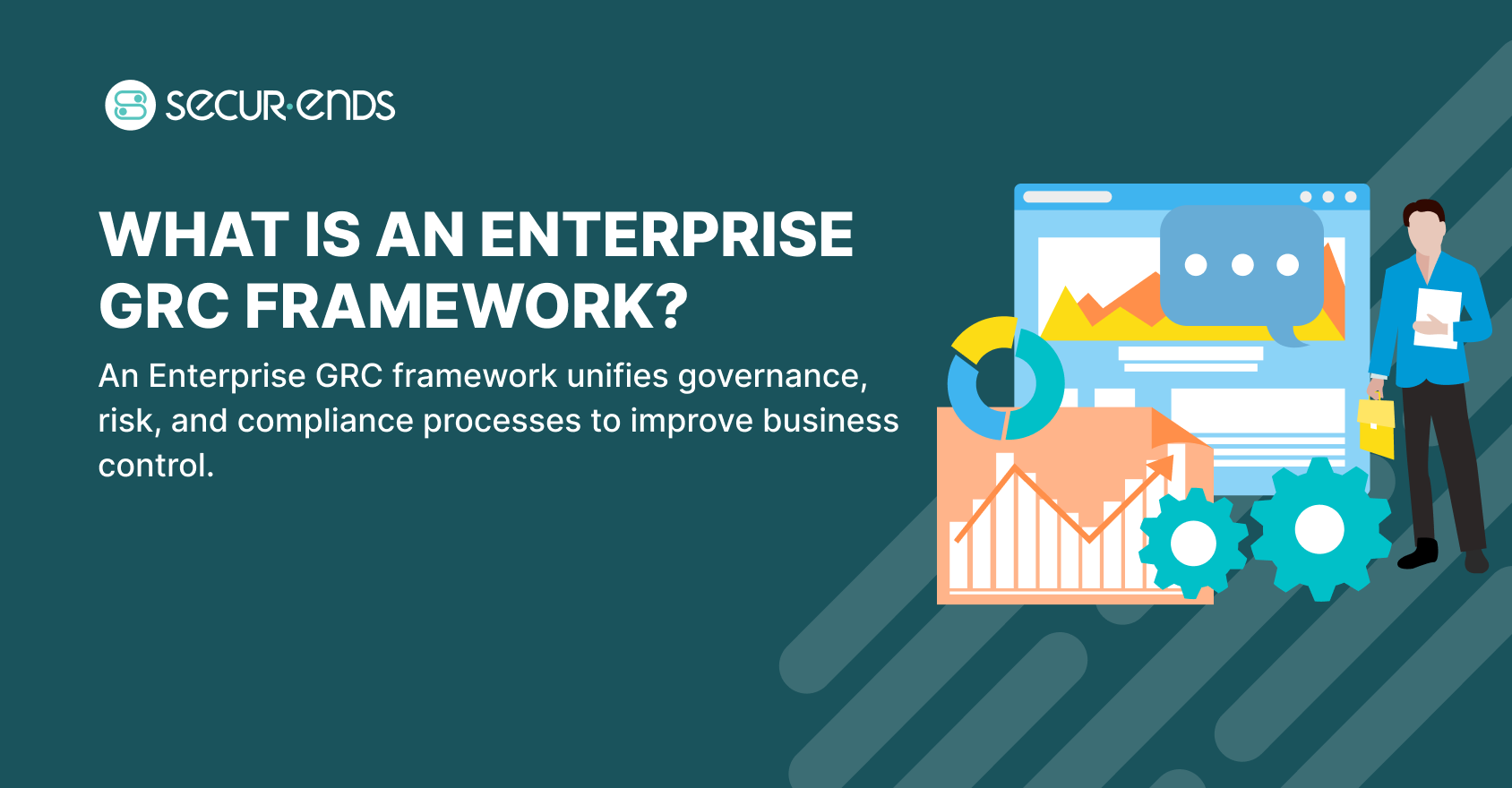
A Governance, Risk, and Compliance (GRC) framework for modern enterprises provides a structured approach to aligning information technology and business operations with regulatory requirements, internal policies, and risk appetites. By integrating governance, risk management, and compliance into a unified system, organizations can reduce operational silos, improve decision-making transparency, and ensure agility in the face of evolving digital threats and global regulatory demands.
The Shift Toward Integrated GRC
Historically, many enterprises treated governance, risk management, and compliance as disparate functions. Finance managed internal controls, the legal department handled regulatory compliance, and IT departments focused on cybersecurity. This fragmented approach—often referred to as “siloed GRC”—frequently leads to conflicting policies, redundant audit efforts, and a lack of visibility into the true risk profile of the business.
A modern GRC framework seeks to break these silos. By creating a centralized repository for data, policies, and risk assessments, leadership gains a "single source of truth." In the current corporate environment, where data privacy regulations like the GDPR, CCPA, and emerging artificial intelligence governance standards shift rapidly, the ability to map a single technical control to multiple regulatory requirements is essential for efficiency.
Core Pillars of a GRC Framework
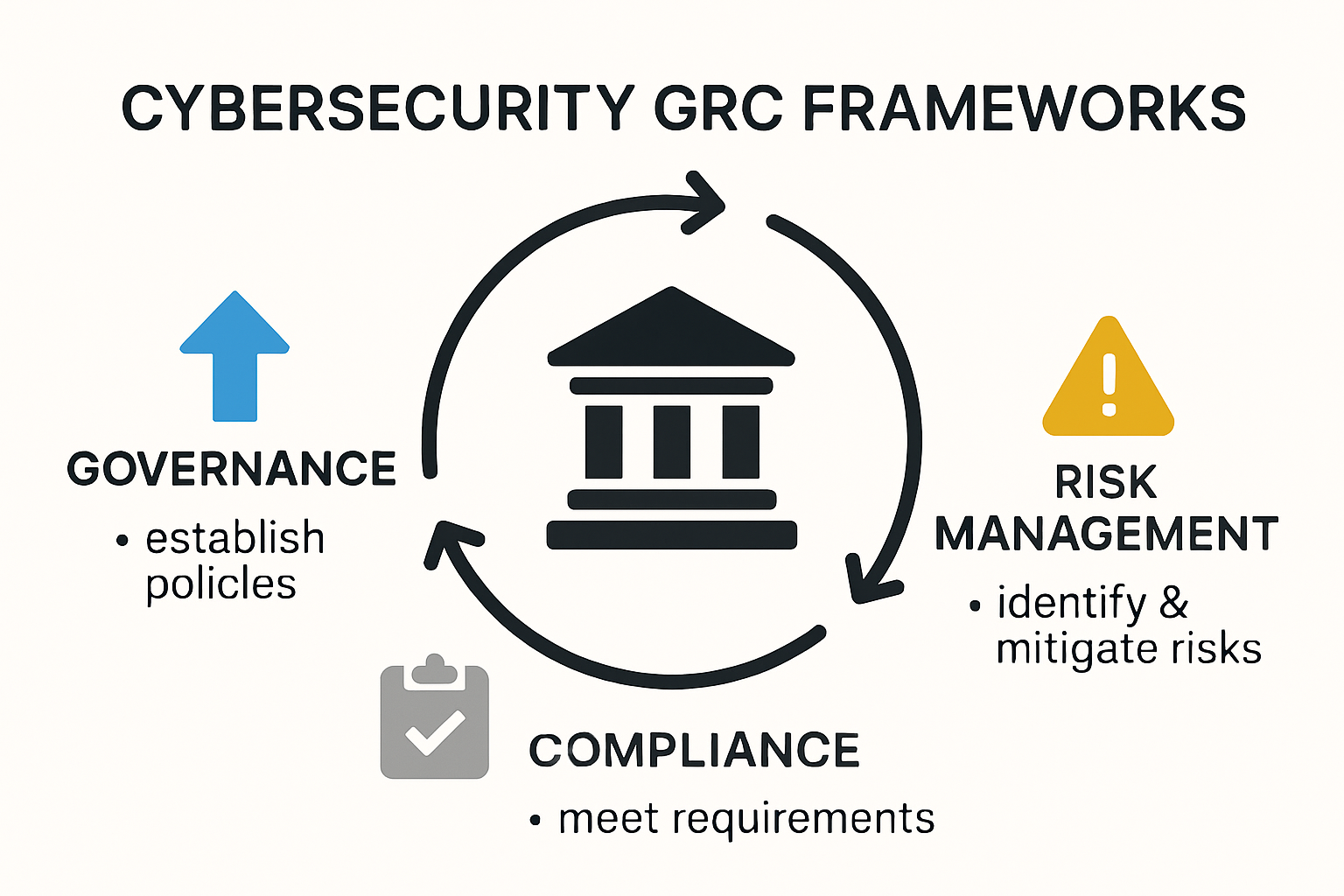
To be effective, a framework must address the three distinct but interconnected pillars that define the discipline.
1. Governance Governance establishes the structure for decision-making. It ensures that the actions of the enterprise align with its strategic objectives. This includes setting the ethical tone from the top, defining the roles and responsibilities within the risk management hierarchy, and establishing board-level oversight for digital transformation and enterprise risk.
2. Risk Management Modern risk management moves beyond simple quantitative assessment. It requires a dynamic process for identifying, measuring, and mitigating threats—both internal and external. This includes third-party risk management (TPRM), which has become increasingly critical as enterprises rely on vast ecosystems of SaaS providers and cloud infrastructure.
3. Compliance Compliance ensures the enterprise adheres to the laws, regulations, and industry standards—such as ISO 27001, SOC 2, or NIST CSF—that govern its operations. A robust framework allows for "compliance by design," where controls are baked into the development lifecycle rather than being treated as an afterthought during an audit.
Prerequisites for Implementation
Before deploying a framework, an enterprise must assess its current maturity level. Implementing a high-level GRC program in an organization that lacks basic asset management is counterproductive.
- Executive Sponsorship: GRC is not purely an IT project; it is a business imperative. Without support from the C-suite, the necessary cultural shift toward transparency and accountability will fail.
- Asset Discovery: You cannot protect or govern what you cannot identify. A comprehensive inventory of digital assets, hardware, software licenses, and third-party vendor access is a mandatory prerequisite.
- Defined Risk Appetite: The board and senior leadership must explicitly state how much risk the organization is willing to tolerate. Without this threshold, risk assessment processes become abstract and disconnected from business reality.
- Cross-Functional Steering Committee: GRC requires the input of Legal, IT, HR, Finance, and Operations. A committee representing these departments must be formed to ensure the framework addresses the concerns of all stakeholders.
Steps to Architecting a Modern Framework
Implementing a GRC framework is an iterative process. It does not happen overnight but rather follows a logical progression of maturity.
Step 1: Mapping Objectives to Controls
Start by identifying the external regulations and internal business objectives. Create a "Common Control Framework" (CCF). Instead of auditing separately for different regulations, identify the commonalities. For example, if both SOC 2 and GDPR require specific access controls, establish one set of robust authentication policies that satisfy both.
Step 2: Automation and Integration
Manual spreadsheets are the enemy of modern, scalable GRC. Enterprises should look toward integrated GRC platforms (often referred to as IRM, or Integrated Risk Management, platforms) that allow for real-time monitoring. Automation should be applied to control testing—using technical scripts to verify that servers are patched or that multi-factor authentication is active across all endpoints.
Step 3: Establishing the Continuous Monitoring Cycle
Compliance is no longer a “point-in-time” event (like an annual audit). Modern frameworks emphasize continuous compliance. This involves deploying automated tools that alert risk officers the moment a configuration drifts from a compliant state, rather than waiting for an auditor to discover the failure six months later.
Step 4: Measuring and Reporting
Use Key Risk Indicators (KRIs) and Key Performance Indicators (KPIs) to track success. Reporting should be tailored to the audience. The board needs high-level summaries focusing on financial and reputational risk, while technical teams require granular reports on vulnerability remediation timelines and policy enforcement rates.
Comparison of GRC Approaches
| Feature | Siloed Approach | Integrated GRC Framework |
|---|---|---|
| Visibility | Fragmented, departmental | Unified, enterprise-wide |
| Audit Effort | Redundant, repetitive | Streamlined, continuous |
| Risk Response | Reactive, delayed | Proactive, real-time |
| Communication | Informal, manual | Centralized, automated |
| Compliance Cost | High (due to overlap) | Optimized (shared controls) |
Overcoming Common Implementation Mistakes
Many organizations fail because they attempt to implement too much too soon. A common pitfall is the "boil the ocean" approach—trying to automate every process and map every single regulation from day one.
- Avoid Over-Complexity: Start with your most critical regulatory requirements and highest-impact risks. Expand the scope only after the initial implementation provides verifiable value.
- Cultural Resistance: Employees often view GRC as a "policing" function that adds unnecessary friction to their work. Position the framework as a tool that reduces their cognitive load by clarifying requirements and automating repetitive security tasks.
- Static Policies: A GRC framework that is not updated to reflect changes in the threat landscape or business structure becomes a liability. Schedule biannual reviews of the framework itself to ensure it remains relevant to the current organizational footprint.
Legal and Professional Considerations
A GRC framework is a supportive tool, not a substitute for professional legal advice or specific regulatory filings. Regulations are subject to regional interpretation and evolving case law. Enterprises should consult with specialized counsel when establishing policies that involve sensitive personal data or cross-border data transfers, as these are subject to jurisdictional nuances. Furthermore, while GRC software can track adherence to standards, the ultimate responsibility for ensuring legal compliance rests with the organization’s leadership, not the software vendor.
Frequently Asked Questions
What is the primary difference between GRC and IRM? GRC is the strategy and the domain, while IRM (Integrated Risk Management) is the modern, technology-driven practice of executing that strategy. IRM focuses on using software platforms to integrate risk and compliance data, making GRC more agile and data-driven than legacy manual processes.
How often should a GRC framework be updated? A framework should be updated whenever there is a material change in the business, such as entering a new market, implementing a significant new technology stack, or experiencing a major shift in the regulatory environment. At a minimum, a formal review should occur at least once annually.
Can a small business implement a GRC framework? Yes, but the scope must be scaled. Small businesses should focus on a "lightweight" framework that prioritizes the most critical regulatory requirements (e.g., PCI-DSS for payments or HIPAA for health data) rather than trying to adopt an exhaustive corporate-level structure.
How does AI impact modern GRC frameworks? Artificial Intelligence introduces new categories of risk, including algorithmic bias, data privacy violations, and "hallucination" risks. A modern framework must now include AI governance policies that dictate how models are tested, deployed, and monitored for performance and safety.
What is a "Common Control Framework" (CCF)? A CCF is a strategy of de-duplication. By mapping individual controls to multiple regulatory requirements, an organization can fulfill several compliance obligations with a single audit, significantly reducing the administrative burden on the enterprise.
Next Actions for Implementation
To begin, conduct a "Gap Analysis" between your current state and your desired future state. Document your top five regulatory compliance burdens and your top five operational risks. Once identified, form a steering committee consisting of representatives from IT, Legal, and Finance. Task this committee with selecting a singular, unified platform or a centralized repository for your governance, risk, and compliance data. Initiate a pilot program focused on one high-priority business unit to demonstrate the efficacy of your new integrated framework before rolling it out across the entire enterprise.