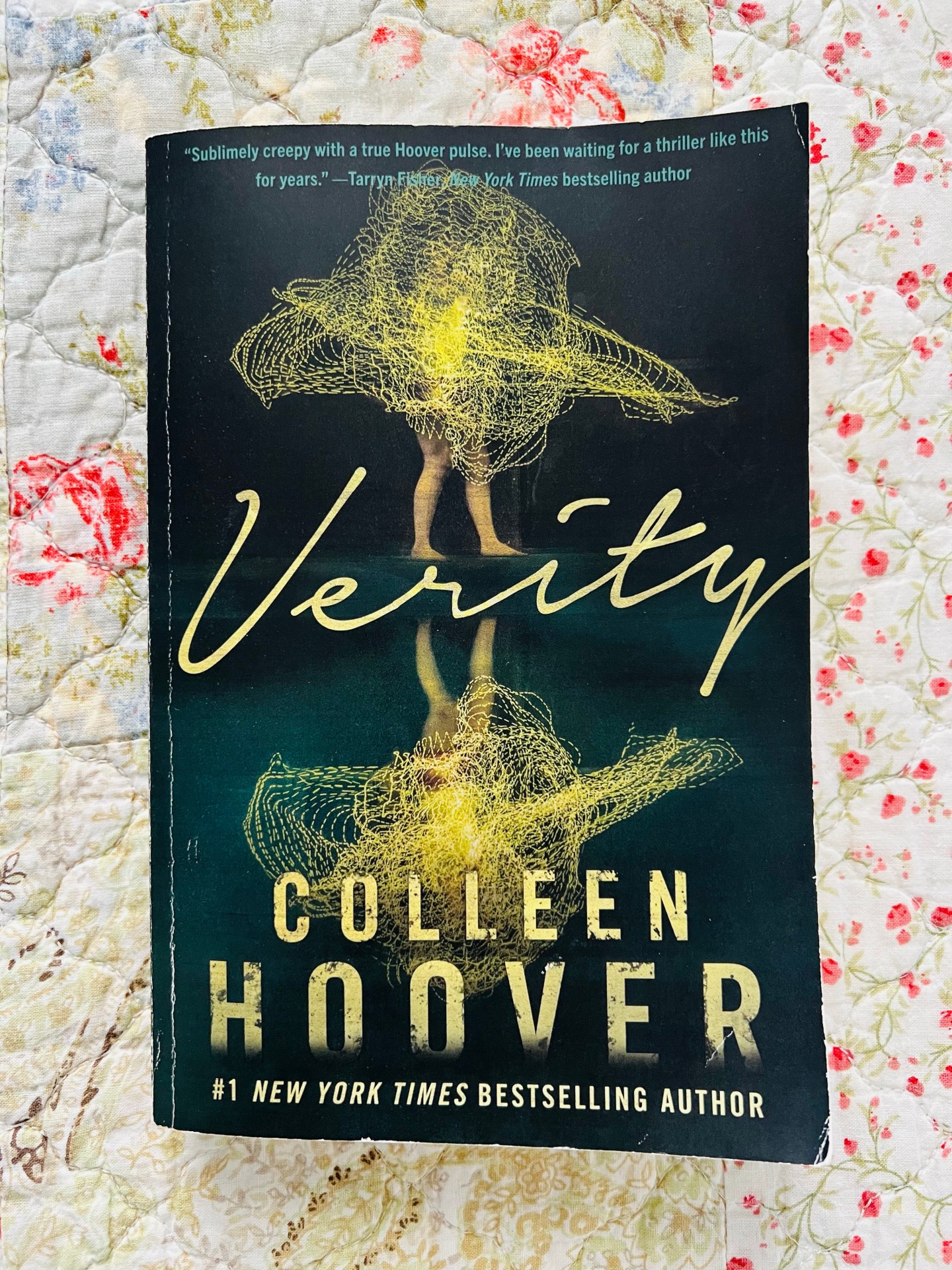
Colleen Hoover’s Verity is a psychological thriller that follows Lowen Ashleigh, a struggling writer hired to complete the remaining books in a successful series by the incapacitated author Verity Crawford. Upon discovering a hidden, disturbing autobiography, Lowen uncovers dark secrets that challenge her perception of truth, motherhood, and the man she is falling for.
First published in 2018 and experiencing a massive resurgence in the early 2020s, Verity remains a cornerstone of the psychological thriller genre in 2026. It is a novel defined by its moral ambiguity, visceral prose, and a "twist" ending that continues to divide readers into "Team Manuscript" and "Team Letter." To understand the depth of this story, one must look past the surface-level plot and into the psychological manipulation that Colleen Hoover masterfully weaves through her characters.
The Inciting Incident: A Job Born of Desperation
The story begins with Lowen Ashleigh, a mid-list author living in New York City, who is on the brink of financial ruin. Her mother has recently passed away after a long illness, leaving Lowen both emotionally drained and broke. Her life takes an unexpected turn when she is witness to a gruesome accidental death on the street, where she meets a kind stranger named Jeremy Crawford.
Shortly after this encounter, Lowen’s agent informs her of a life-changing opportunity. Jeremy Crawford is the husband of Verity Crawford, a world-famous author who has been involved in a catastrophic car accident that has left her unable to finish her highly anticipated "Virtue" series. Jeremy, having met Lowen under traumatic circumstances earlier that day, supports the decision to hire her to ghostwrite the final three books.
Lowen is initially hesitant, feeling unworthy of stepping into the shoes of such a legendary writer. However, the staggering financial offer and her own desperate circumstances force her to accept. To gather the necessary notes and research to emulate Verity’s style, Lowen agrees to stay at the Crawford estate in Vermont for several days.
The Crawford Estate: A Setting of Gothic Dread
Upon arriving at the Crawford home, the atmosphere shifts from a standard contemporary setting to one of gothic suspense. The house is large, isolated, and filled with the ghosts of recent tragedies. We learn that before Verity’s accident, the Crawfords lost both of their young daughters—Chastin and Harper—in separate incidents only months apart.
Verity herself is present in the house, living in a hospital bed in a state of unresponsive paralysis. She is cared for by a rotating shift of nurses, though Jeremy remains the primary emotional anchor for their remaining son, Crew. The tension in the house is palpable. Lowen feels like an intruder in a shrine of grief, and the silence of the house is often broken by the unsettling feeling that she is being watched.
As Lowen begins to dig through Verity’s chaotic home office, she isn't looking for a memoir; she is looking for outlines and character beats for the "Virtue" series. Instead, she finds a hidden manuscript titled So Be It. This document is an autobiography that Verity apparently wrote in secret, and it serves as the primary engine for the novel’s horror.
The Manuscript: "So Be It"
The synopsis of Verity is essentially two stories in one: the "real-world" events involving Lowen and Jeremy, and the narrative contained within the manuscript. As Lowen reads So Be It, the reader is exposed to Verity’s inner monologue, which is chillingly devoid of traditional maternal or moral compasses.
The Obsession with Jeremy
The manuscript details Verity’s immediate and consuming obsession with Jeremy Crawford. According to her own writing, she viewed her children not as blessings, but as rivals for Jeremy’s affection. She describes her pregnancies with resentment and her daughters with a cold, analytical detachment that borders on sociopathy.
The Death of the Twins
The most harrowing parts of the manuscript involve the deaths of Chastin and Harper. In the autobiography, Verity confesses to being responsible for the "accidents" that claimed their lives.
- Chastin’s Death: Verity describes a scenario involving an allergic reaction where she deliberately delayed intervention.
- Harper’s Death: The manuscript details a much more active role in Harper’s drowning, suggesting that Verity murdered her daughter out of a twisted sense of spite and a desire to reclaim Jeremy’s undivided attention.
Lowen is horrified by these revelations. She becomes convinced that Verity is not truly brain-dead but is performing a "long con," pretending to be injured to escape the consequences of her actions or to continue observing her family.
The Escalating Tension and Romance
While reading the manuscript, Lowen’s relationship with Jeremy intensifies. They share a mutual grief and a growing physical attraction. Jeremy is portrayed as the ultimate victim: a grieving father who has lost almost everything and is now tethered to a wife who (according to the manuscript) is a monster.
Lowen faces a massive moral dilemma. If she shows Jeremy the manuscript, it will destroy his memory of his wife and potentially shatter his mental health. However, if she remains silent, she is living in a house with a possible murderer who might be faking her condition.
The psychological toll on Lowen is immense. She begins to experience sleepwalking episodes and becomes increasingly paranoid. She sees Verity at the top of the stairs; she sees her eyes follow her. The line between Lowen’s reality and the horror of the manuscript begins to blur.
The Climax: The Truth Revealed?
The climax of the novel occurs when Lowen finally decides she can no longer keep the secret. She manipulates a situation to prove Verity is faking her injuries and eventually shows the manuscript to Jeremy.
The reaction is explosive. Jeremy, confronted with the evidence of his wife’s cruelty and the murder of his daughters, loses control. In a fit of rage, he confronts Verity, who finally "breaks" her catatonic state to defend herself. In the ensuing struggle, Jeremy—with Lowen’s assistance—strangles Verity, making it look like she choked on her own vomit in her sleep. This act bonds Lowen and Jeremy in a dark, shared secret.
The Final Twist: The Letter
Months later, after Lowen and Jeremy have moved away and Lowen is pregnant with Jeremy’s child, she returns to the Crawford house one last time to clear out the remaining items. Under a floorboard in Verity’s room, she finds a letter addressed to Jeremy.
The letter provides a completely different perspective. In it, Verity claims that the manuscript So Be It was never a confession. Instead, it was a writing exercise suggested by her former agent to help her "get into the head" of a villainous character. Verity writes that she was a devoted mother and that the deaths of her daughters were truly accidents. She claims she was faking her injuries because she realized Jeremy had found the manuscript, believed it was real, and had tried to kill her (the car accident was actually Jeremy’s attempt to murder her). She stayed in a catatonic state out of fear for her life, hoping to eventually escape with Crew.
The novel ends with Lowen destroying the letter, leaving the reader—and Lowen—in a state of permanent uncertainty. Was the manuscript the truth, or was the letter the truth?
Comparative Analysis: Manuscript vs. Letter
To fully grasp the synopsis of Verity, one must weigh the evidence provided by both documents. In 2026, literary circles still debate which version of the story holds more weight.
| Feature | The Manuscript (So Be It) | The Letter |
|---|---|---|
| Tone | Raw, visceral, unapologetic, and dark. | Desperate, defensive, and pleading. |
| Motive | A secret outlet for Verity's true, dark nature. | An explanation to save her life and reputation. |
| Supporting Evidence | Crew’s strange behavior and Verity’s "staring." | The fact that Verity was a fiction writer by trade. |
| Outcome | Suggests Verity was a sociopathic murderer. | Suggests Jeremy is a vengeful attempted murderer. |
| Reliability | Written as an "autobiography" with no intended audience. | Written specifically to manipulate Jeremy's perception. |
Thematic Depth: Truth as a Subjective Construct
The primary theme of Verity is the subjectivity of truth. Colleen Hoover utilizes the "unreliable narrator" trope not just once, but multiple times. Lowen is unreliable due to her trauma and growing obsession with Jeremy; Verity is unreliable because she is a professional liar (a novelist); and Jeremy is unreliable because we only see him through Lowen’s biased eyes.
The Burden of Motherhood
The novel explores the "taboo" thoughts associated with motherhood. Whether the manuscript is fiction or not, it touches on the very real pressures and psychological breaks that can occur in the wake of postpartum struggles and the loss of identity that sometimes accompanies parenting.
Deception and Survival
Every character in Verity lies to survive. Verity (allegedly) lies about her health; Jeremy lies about the nature of the car accident; Lowen lies about finding the manuscript until it suits her needs. The synopsis is a chain of deceptions that leads to a shared homicide, suggesting that "truth" is often less important than the stories we choose to believe to keep our lives intact.
The 2026 Perspective: The Collector's Edition Chapter
In the years following the original release, a Collector’s Edition was published featuring an additional chapter. This chapter follows Lowen and Jeremy some time after the events of the house. While many hoped this would resolve the "Letter vs. Manuscript" debate, it instead doubled down on the darkness.
The extra chapter depicts Jeremy and Lowen at a beach, where they encounter a woman who might recognize them. Jeremy’s reaction is cold and calculating, implying a level of darkness in him that aligns more with Verity’s "Letter" version of events—that he is a man capable of cold-blooded murder to protect his narrative. This addition has led many modern analysts to conclude that neither woman was the "villain," but rather that Jeremy Crawford is the true antagonist of the story.
Frequently Asked Questions
Is Verity Crawford actually a murderer?
The book intentionally leaves this unanswered. If you believe the manuscript, she murdered Harper and caused Chastin's death. If you believe the letter, she was a grieving mother whose "writing exercise" was tragically misinterpreted. Most readers lean toward the manuscript being the truth because of the level of detail and the lack of an audience for it at the time it was written.
Why did Jeremy kill Verity?
Jeremy killed Verity because Lowen showed him the manuscript. He believed Verity had murdered their daughters and had spent months faking a disability while he slaved away caring for her. His act was presented as a moment of blind, vengeful rage, though the ending suggests he may have had a history of violence toward her.
What is the significance of the "Virtue" series?
The "Virtue" series, which Lowen is hired to finish, is written from the perspective of the villain. This is a meta-commentary on the book Verity itself. It sets the stage for the idea that Verity Crawford is an expert at inhabiting the minds of evil people, which provides the "Letter" with its strongest supporting argument.
Does Crew know the truth?
Crew is a haunting figure throughout the book. He makes several strange comments, such as "Verity says we have to be quiet," which suggests he knew his mother was faking her condition. However, because he is a child who has suffered immense trauma, his testimony is as unreliable as the adults around him.
Was there ever a sequel to Verity?
As of 2026, Colleen Hoover has not released a direct sequel, preferring to let the ambiguity of the ending stand. However, the "Extra Chapter" found in the Collector’s Edition serves as the closest thing to a follow-up, providing a glimpse into the dysfunctional life Lowen and Jeremy built on the foundation of their crimes.
Final Recommendation: How to Approach the Story
For those looking to engage with Verity, the best approach is to read it as a study of perspective rather than a search for a definitive answer. The "synopsis" of the book is not just the plot; it is the feeling of losing your grip on what is real.
If you are a fan of psychological thrillers, your next action should be to look for the Collector’s Edition specifically. The added context of the final chapter is essential for a complete 2026-era understanding of the characters. After finishing, engage with the "Team Manuscript" or "Team Letter" communities to see how your interpretation aligns with the thousands of others who remain haunted by the Crawford family secrets.