A data warehouse is a centralized repository designed to store, filter, and analyze large volumes of structured and semi-structured data from disparate sources. It serves as the "single source of truth" for an organization, enabling business intelligence, historical reporting, and advanced analytics to support strategic decision-making.
Defining the Modern Data Warehouse
A data warehouse (DWH) is more than just a large database; it is a complex environment built specifically for query and analysis rather than transaction processing. Unlike operational databases that handle day-to-day transactions (Online Transactional Processing or OLTP), a data warehouse is optimized for Online Analytical Processing (OLAP). In 2026, the definition of a data warehouse has expanded to include cloud-native platforms that can scale compute and storage independently, often integrating seamlessly with data lakes to form what is now commonly known as a "Data Lakehouse."
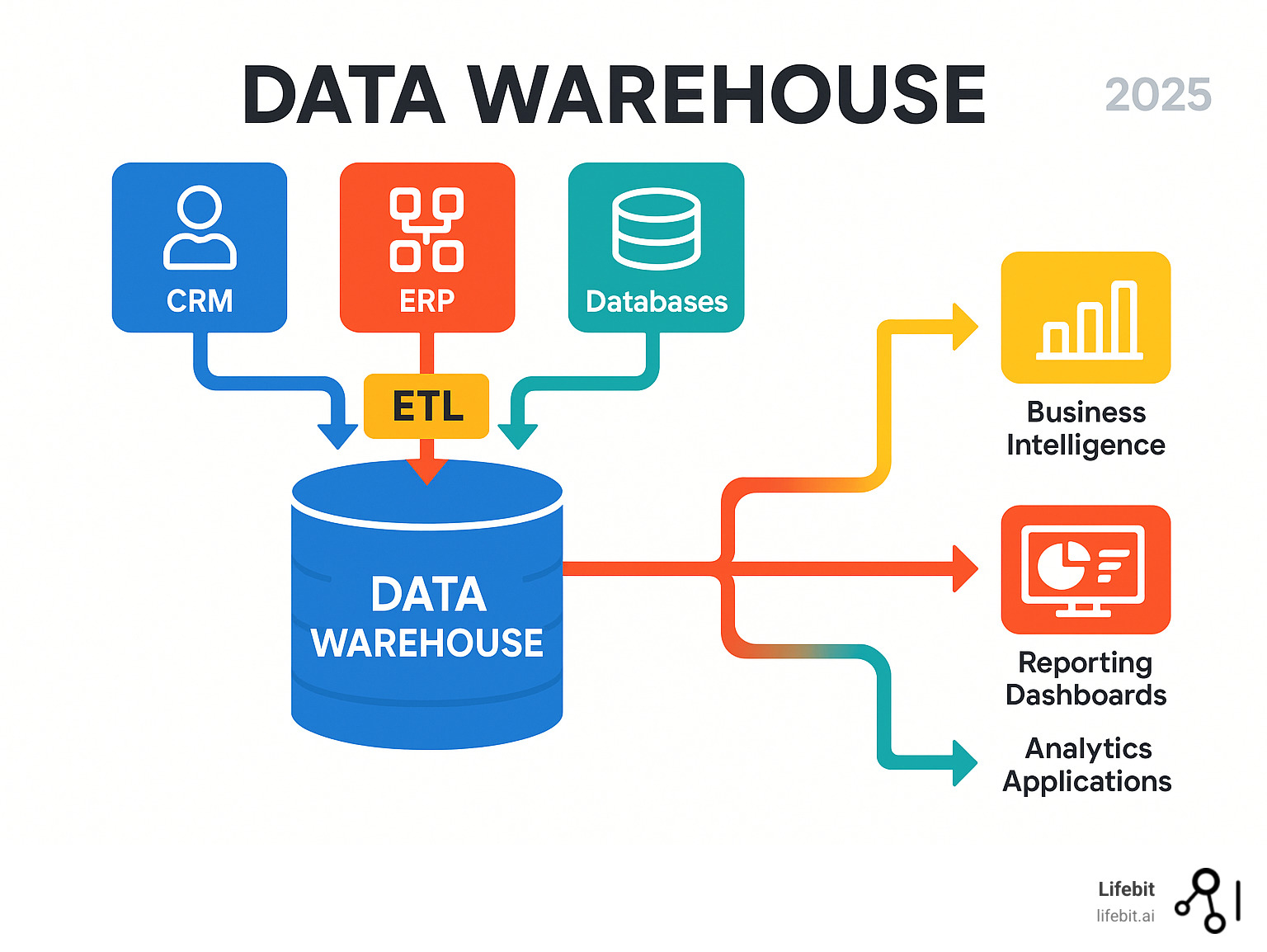
The primary purpose of a data warehouse is to provide a unified view of an organization’s data. Businesses generate data across various platforms: CRM systems, ERP software, web logs, social media interactions, and financial records. Without a warehouse, this data remains siloed, making it nearly impossible to gain a holistic view of business performance. By consolidating these sources, a warehouse allows for complex trend analysis, such as comparing this year’s Q3 sales across three different regions against the same period five years ago.
The Architectural Framework of Data Warehousing
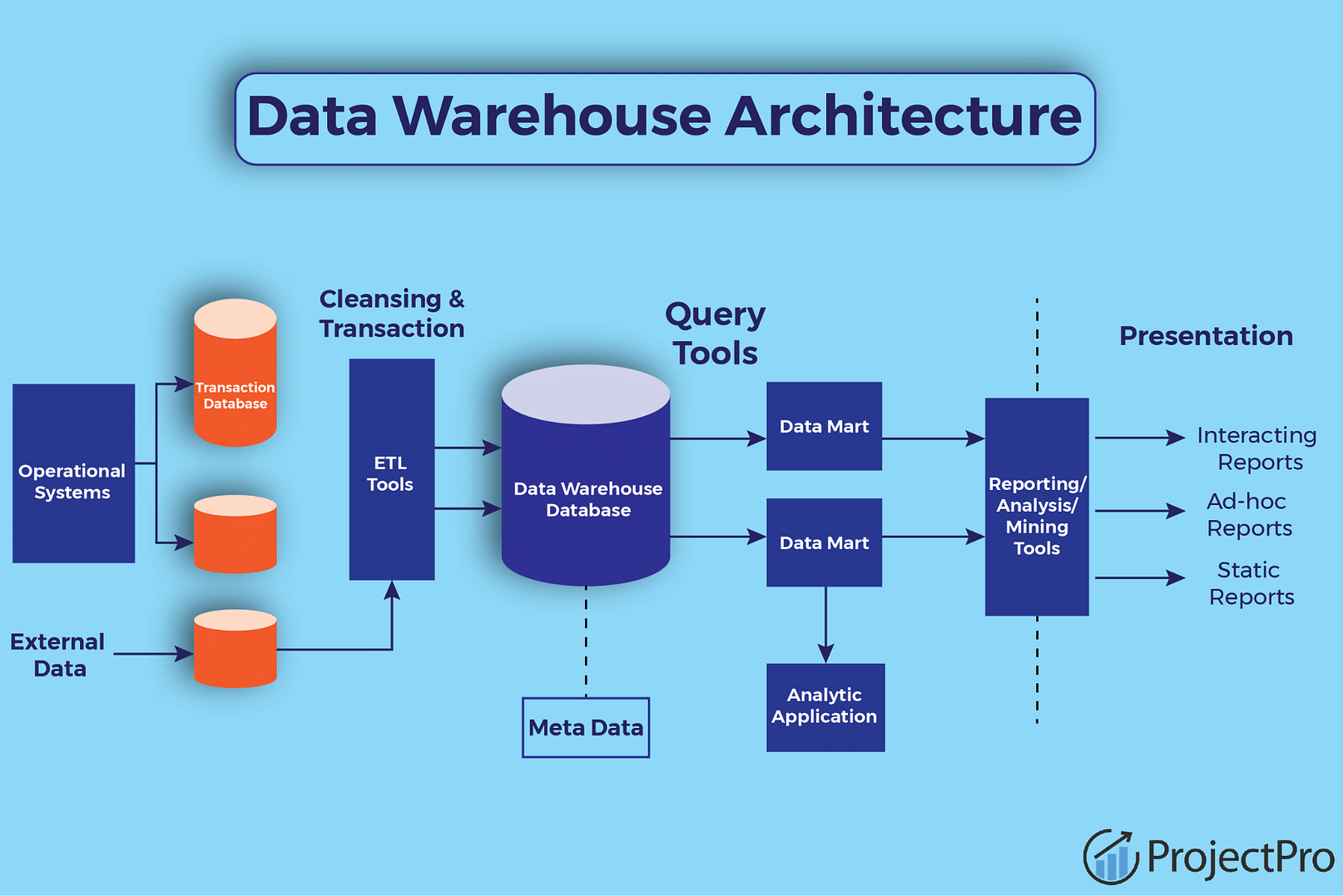
The architecture of a data warehouse determines how data is moved, stored, and accessed. Historically, this has been viewed as a three-tier structure, though modern cloud environments have introduced more fluidity into these layers.
The Bottom Tier: The Data Storage Layer
This is the foundational layer where the data actually resides. In a traditional on-premises setup, this involves high-performance relational database servers. In 2026, this tier is predominantly cloud-based, utilizing distributed file systems or object storage (like Amazon S3 or Azure Blob Storage) optimized for massive datasets. Data here is typically organized into specialized schemas (like Star or Snowflake schemas) to facilitate rapid retrieval.
The Middle Tier: The OLAP Server
The middle tier acts as the engine that processes queries. It sits between the raw storage and the user-facing tools. The OLAP server allows for multi-dimensional views of data. For example, a user can "drill down" from annual sales to monthly sales, or "slice and dice" data to see how a specific product category performed in a specific zip code. Modern middle-tier engines often use columnar storage, which reads only the columns necessary for a query, significantly increasing speed compared to traditional row-based storage.
The Top Tier: The Front-End Client Layer
This is the interface where end-users interact with the data. It includes data visualization tools (like Tableau, Power BI, or Looker), query tools, and data mining applications. The top tier translates business questions into SQL queries (or other protocols) that the middle tier can execute. By 2026, many of these interfaces have integrated generative AI assistants, allowing users to ask questions in plain English, which the system then converts into complex analytical reports.
Data Integration: From ETL to ELT
One of the most critical functions of a data warehouse overview is understanding how data gets into the system. This process is generally referred to as data integration.
The Traditional ETL Process
Extract, Transform, and Load (ETL) has been the standard for decades.
- Extract: Data is pulled from various source systems (SQL databases, APIs, CSV files).
- Transform: The data is cleaned, formatted, and standardized in a temporary staging area. This ensures that "USD" from one system and "US Dollars" from another are mapped to the same value.
- Load: The cleaned data is written into the warehouse.
The Modern ELT Shift
With the rise of massive cloud compute power, many organizations have shifted to Extract, Load, and Transform (ELT). In this model, data is extracted and loaded into the warehouse in its raw or near-raw form. The transformation happens inside the data warehouse itself. This approach is often more flexible because it allows data scientists to access raw data if they need it, while still providing structured tables for business analysts. As of 2026, ELT is the preferred method for high-volume environments due to the efficiency of modern cloud warehouses like Snowflake and BigQuery.
Comparison of Data Storage Solutions
Choosing the right storage architecture depends on the type of data and the intended use case. The following table compares the three most common paradigms in 2026.
| Feature | Data Warehouse | Data Lake | Data Lakehouse |
|---|---|---|---|
| Data Type | Structured / Semi-structured | Raw / Unstructured | All types |
| Schema | Schema-on-write (highly curated) | Schema-on-read (flexible) | Multi-layered (curated & raw) |
| Users | Business Analysts / Executives | Data Scientists / Engineers | All data personas |
| Performance | High for complex SQL queries | High for massive batch processing | Optimized for both SQL and ML |
| Cost | Typically higher (storage + compute) | Lower (object storage focus) | Balanced / Hybrid |
| Primary Use Case | Business Intelligence & Reporting | Machine Learning & Big Data | Unified Analytics & AI |
Key Components and Concepts
To fully grasp a data warehouse overview, one must be familiar with several core concepts that ensure the system remains functional and accurate.
Metadata
Metadata is "data about data." It acts as the directory for the warehouse. It tells the system where the data came from, when it was last updated, what the column headers mean, and who has permission to see it. Without robust metadata management, a data warehouse quickly becomes a "data swamp" where information is impossible to find or trust.
Data Marts
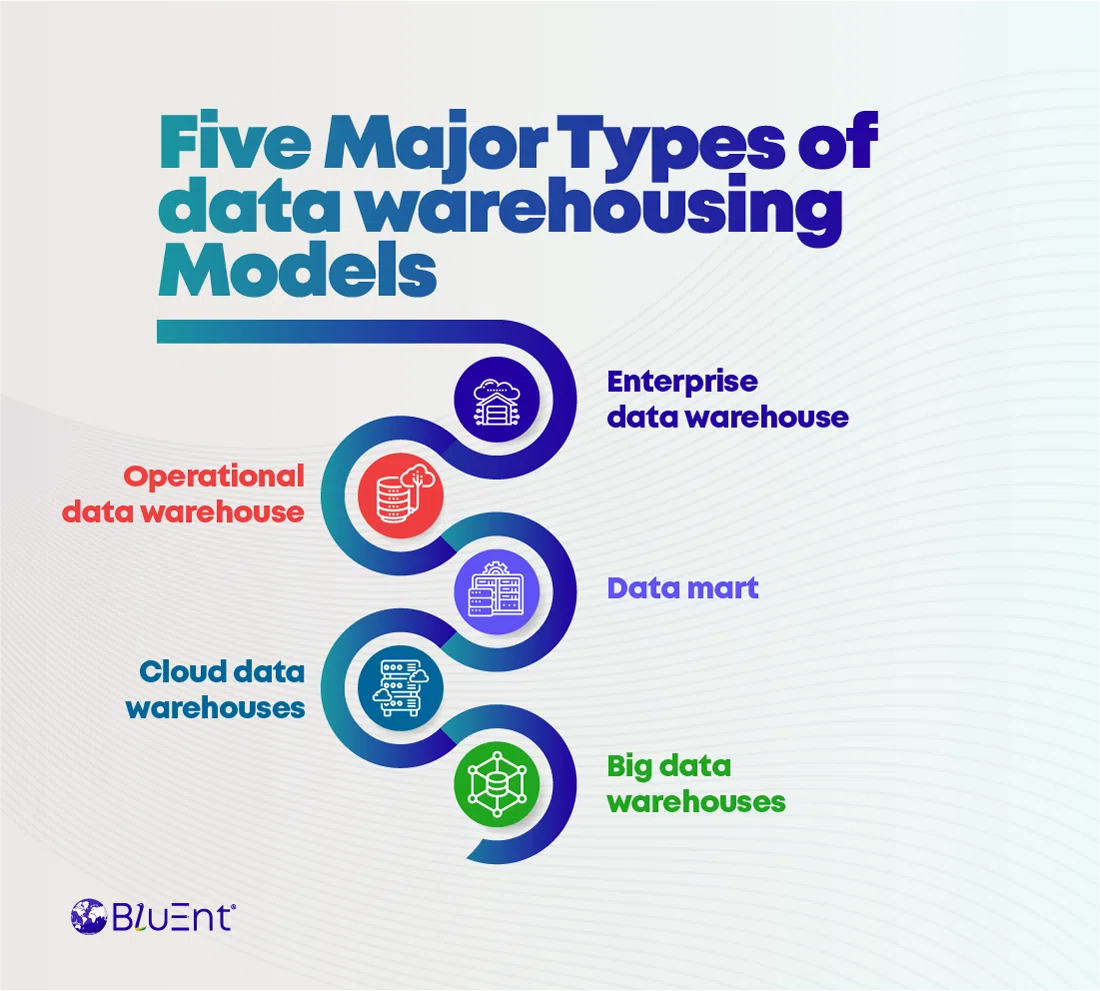
A data mart is a subset of a data warehouse, usually oriented to a specific business line or team, such as Finance, Marketing, or Sales. While the Enterprise Data Warehouse (EDW) contains all company data, a data mart provides a curated, easier-to-navigate view for a specific group. This improves performance and security by limiting the scope of data a user interacts with.
Slowly Changing Dimensions (SCD)
In a warehouse, historical accuracy is paramount. If a customer moves from New York to California, the warehouse needs a way to track this change. Does it overwrite the old address (Type 1), create a new row to preserve history (Type 2), or add a new column (Type 3)? Managing SCDs is a fundamental task for data engineers to ensure that historical sales reports remain accurate based on where the customer lived at the time of purchase.
The Value Proposition: Why Invest in a Data Warehouse?
Implementing a data warehouse is a significant investment in both time and capital. However, the returns are often seen in several critical areas:
- Enhanced Data Consistency: By using a centralized warehouse, different departments no longer argue over whose numbers are correct. Everyone uses the same standardized definitions and data sources.
- Historical Intelligence: Operational databases are usually "snapshots" of the present. Data warehouses store years of history, allowing for longitudinal studies and seasonal trend forecasting.
- Improved Query Performance: Running complex analytical queries on an operational database can slow down the system for customers and employees. A warehouse offloads this processing, ensuring that analytics do not interfere with business operations.
- Data Governance and Security: It is much easier to manage security and compliance (like GDPR or CCPA) when data is centralized. Administrators can apply global masks or encryption policies to sensitive data in one place.
Modern Trends in 2026: AI and Vector Support
By 2026, the landscape of data warehousing has been fundamentally altered by the integration of Artificial Intelligence. Modern warehouses now include Vector Support, allowing them to store and query embeddings—mathematical representations of unstructured data like text or images. This enables the warehouse to support "Retrieval-Augmented Generation" (RAG) for AI models, providing LLMs (Large Language Models) with secure, real-time corporate data to generate accurate answers.
Furthermore, "Autonomous Data Warehousing" has become the standard. These systems use machine learning to automatically tune indexes, manage partitions, and scale compute resources based on predicted query loads. This reduces the administrative burden on Database Administrators (DBAs) and lowers operational costs by ensuring resources are not wasted during idle periods.
Implementation Roadmap
Building or migrating to a data warehouse requires a structured approach to avoid common pitfalls like scope creep or poor data quality.
1. Requirements Gathering
Start with the business questions, not the technology. What are the key performance indicators (KPIs) that the executive team needs to see? Identifying these will dictate what data sources are required.
2. Tool Selection
Decide between on-premises and cloud solutions. In 2026, cloud providers like Snowflake, Google BigQuery, and Amazon Redshift dominate the market due to their elasticity and low entry cost.
3. Data Modeling
Choose a modeling methodology. The Kimball (bottom-up) approach focuses on data marts and user needs, while the Inmon (top-down) approach prioritizes a centralized, normalized data model for the entire enterprise. Most modern firms use a hybrid of the two.
4. Integration and Testing
Develop the ETL/ELT pipelines. This stage often takes the longest, as it involves cleaning "dirty" data and ensuring that the warehouse accurately reflects the source systems. Rigorous testing is required to ensure that a query in the warehouse matches the results found in the source ERP or CRM.
Frequently Asked Questions
What is the difference between a database and a data warehouse?
A database is designed for fast, frequent data entry and updates (transactions), whereas a data warehouse is designed for complex data analysis and large-scale queries. Databases typically store current data, while warehouses store historical data from many different sources.
Is a data warehouse still necessary if we have a data lake?
Yes, in most cases. While a data lake is excellent for storing raw, unstructured data cheaply, it lacks the performance and structure required for rapid business reporting. In 2026, many companies use both in a "Lakehouse" architecture, using the lake for storage and the warehouse for structured, high-performance analytics.
How much does a data warehouse cost?
Costs vary significantly based on data volume and query frequency. Cloud warehouses often use a pay-as-you-go model. Organizations must budget for storage (the amount of data kept) and compute (the processing power used to run queries). Careful management of "compute clusters" is essential to prevent unexpected monthly bills.
Who manages a data warehouse?
Typically, a data warehouse is managed by a team of Data Engineers, Database Administrators (DBAs), and Data Architects. Business Analysts and Data Scientists are the primary users who consume the data stored within.
Can a data warehouse handle real-time data?
While traditionally used for batch processing (nightly updates), modern 2026 data warehouses support "streaming ingestion." This allows data to be available for analysis within seconds or minutes of being generated at the source, supporting near real-time dashboards.
Next Actions for Organizations
For organizations looking to modernize their data stack, the first step is a thorough audit of existing data silos. Before selecting a vendor, it is essential to establish a data governance framework that defines data ownership and quality standards. Once the foundation is in place, a pilot project—focusing on a single, high-impact data mart—can prove the value of the warehouse to stakeholders before a full-scale enterprise rollout.