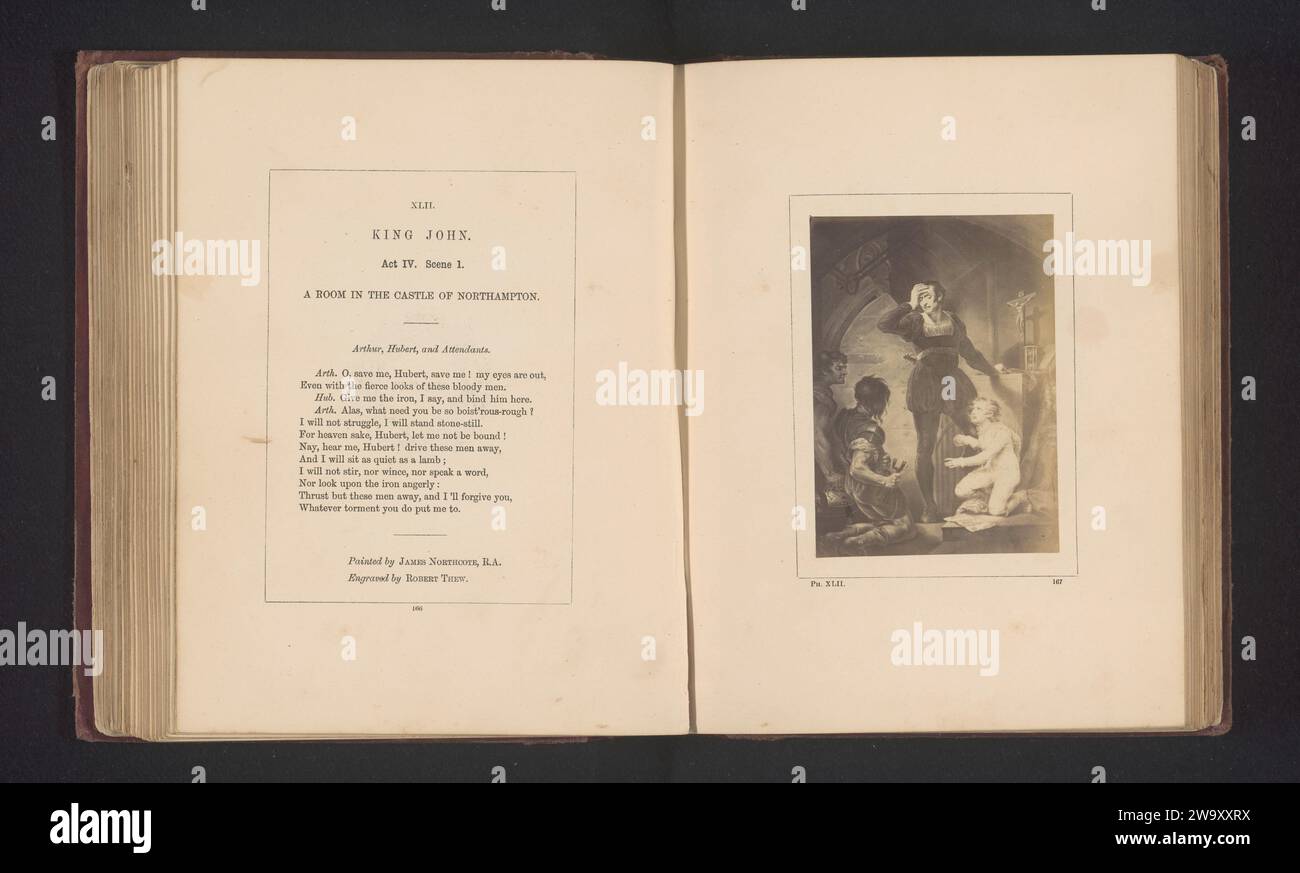
Arthur of Brittany, the nephew and rival of King John of England, was almost certainly murdered in April 1203 while imprisoned at Rouen. Historical evidence and contemporary chronicles strongly suggest that King John killed the fifteen-year-old prince in a drunken rage or ordered his execution to eliminate his strongest competitor for the English throne and the Angevin Empire.
The disappearance of Arthur of Brittany remains one of the most chilling "cold cases" of the Middle Ages. As of 2026, historians continue to analyze the sparse primary sources to piece together the final days of a boy who was, by the laws of primogeniture, the rightful King of England. His death was not merely a family tragedy; it was the catalyst for the collapse of the Angevin Empire and a fundamental shift in European history.
The Identity and Claim of Arthur of Brittany
Arthur I, Duke of Brittany, was born in 1187, the posthumous son of Geoffrey II, Duke of Brittany, and Constance, Duchess of Brittany. Geoffrey was the third son of King Henry II of England and Eleanor of Aquitaine, making him the younger brother of Richard the Lionheart and the older brother of the future King John. Under the emerging rules of primogeniture—where the son of an elder brother takes precedence over a younger uncle—Arthur held a superior legal claim to the throne of England upon the death of Richard I in 1199.
Richard the Lionheart had fluctuating views on his succession. In the 1191 Treaty of Messina, he formally recognized Arthur as his heir. However, on his deathbed at Chalus in 1199, Richard reportedly named his brother John as his successor. This created a fractured empire. While England and Normandy largely accepted John, the territories of Anjou, Maine, and Touraine declared for the young Arthur, who was then only twelve years old.
The conflict was not just a domestic dispute but a geopolitical lever. King Philip II of France recognized Arthur's claims to these continental lands, using the boy as a puppet to destabilize John’s authority. This set the stage for a brutal civil war within the Plantagenet family, pitting a desperate uncle against a defiant nephew.
The Capture at Mirebeau: The Turning Point
The crisis reached its zenith in July 1202. Arthur, emboldened by French support and leading a small army, attempted to besiege the castle of Mirebeau in Poitou. His primary target was his own grandmother, the octogenarian Eleanor of Aquitaine, who was holding the fortress for John. It was a strategic blunder born of youthful arrogance; Eleanor managed to send word to John, who was then at Le Mans.
In a rare display of military brilliance and speed, John covered 80 miles in 48 hours, surprising Arthur’s forces on the morning of July 31, 1202. The entire leadership of the rebel faction, including Arthur and over 200 knights, was captured. This victory should have secured John’s reign. Instead, it became the beginning of his downfall. While the knights were treated with varying degrees of cruelty—many were starved to death at Corfe Castle—Arthur was kept under close guard, first at Falaise and later moved to the more secure castle at Rouen.
The Mystery of the Murder in 1203
Arthur’s disappearance from the historical record occurs in early 1203. For months, rumors circulated throughout Europe that the Duke of Brittany was dead. The uncertainty caused an uprising among Breton nobles and gave Philip II the moral and legal pretext to invade John’s French territories.
The Refusal of Hubert de Burgh
One of the most persistent accounts regarding Arthur’s fate involves Hubert de Burgh, the castellan of Falaise. According to the chronicler Ralph of Coggeshall, John initially ordered Hubert to blind and castrate Arthur to render him unfit for kingship. Hubert, fearing the backlash of such a heinous act against a noble youth, claimed he had performed the deed but actually kept Arthur unharmed. When John learned that the public was outraged by the "death" of Arthur, Hubert was forced to reveal the boy was still alive. However, this revelation did not save Arthur; it merely led to his transfer to Rouen, where John could exert more direct control.
The Margam Annals Account
The most detailed and widely accepted account of the actual murder comes from the Annals of the Margam Abbey. This Cistercian chronicle suggests that on the night of Maundy Thursday, April 3, 1203, King John, "drunk and possessed by the devil," slew Arthur with his own hands. According to this record, John tied a heavy stone to the body and cast it into the River Seine. A fisherman later recovered the body, and it was secretly buried at the priory of Notre-Dame-des-Prés.
The Role of William de Braose
William de Braose, a powerful Marcher Lord and once John’s closest confidant, is believed to have been an eyewitness or an accomplice. The Braose family's later fall from grace—and the horrific death of William's wife and son in John's dungeons—is often attributed to the fact that they "knew too much" about Arthur's fate. In 1210, Matilda de Braose openly accused John of murdering his nephew, a statement that led to her imprisonment and death by starvation.
Comparing the Rivals: John vs. Arthur
To understand why the murder occurred, one must analyze the precarious nature of John’s legitimacy. The following table illustrates the conflicting factors of their claims as they stood in 1199–1203.
| Feature | King John (The Uncle) | Arthur of Brittany (The Nephew) |
|---|---|---|
| Lineage | 4th son of Henry II | Son of Geoffrey (3rd son of Henry II) |
| Legal Basis | Proximity of Blood (closer to the last King) | Primogeniture (representing the senior line) |
| Supporters | English Barons, Norman Nobles, Eleanor of Aquitaine | Philip II of France, Breton Nobles, Anjou, Maine |
| Age in 1202 | 35 years (Experienced commander) | 15 years (Minor, under regency/guardianship) |
| Reputation | Known for treachery and volatility | Seen as a symbol of hope and independence |
| Status in 1203 | Crowned King of England | Prisoner at Rouen |
The Legal and Political Aftermath
The murder of Arthur of Brittany was a catastrophic political error. In the medieval world, while "accidental" deaths of rivals were common, the cold-blooded murder of a close relative and a peer of the realm was a violation of the chivalric code that underpinned feudal society.
The Loss of Normandy
King Philip II of France exploited the situation with legal precision. As John’s feudal overlord for his French lands, Philip summoned John to Paris to answer for the disappearance of the Duke of Brittany. When John refused to attend, Philip declared John’s lands forfeit. The Breton lords, incensed by the loss of their Duke, joined Philip’s cause. By 1204, Normandy, the heart of the Plantagenet empire, had fallen to the French crown. John was mocked with the nickname "Softsword" and "John Lackland," as his continental empire evaporated.
Impact on the English Barons
The murder sowed deep-seated distrust among the English nobility. If a King could murder his own nephew and a high-ranking Duke in a fit of rage, no baron was safe. This culture of fear and the subsequent heavy taxation John imposed to fund failed wars to reclaim Normandy led directly to the rebellion of 1215 and the signing of the Magna Carta. The "Law of the Land" protections in the Magna Carta were, in many ways, a delayed response to the arbitrary cruelty John displayed toward Arthur and the Braose family.
Historical Debates and Modern Perspectives
As we look at the evidence in 2026, some historians offer alternative theories, though they remain in the minority. Some suggest Arthur may have died of illness or while attempting to escape, and that John simply allowed the rumors of murder to persist to appear "strong" and "fearsome." However, the secrecy surrounding the boy’s fate and the subsequent persecution of anyone who mentioned it suggests a much darker reality.
The lack of a grave or a formal funeral for a Duke of Brittany is perhaps the strongest circumstantial evidence of foul play. In the 13th century, a natural death would have been publicized to ensure a smooth transition of the Dukedom and to avoid the very rebellion that eventually unseated John from his French territories.
Frequently Asked Questions
Was Arthur of Brittany ever actually King of England?
No. While many modern legal scholars and some contemporary nobles believed he had the superior claim, he was never crowned. After Richard the Lionheart’s death, John moved quickly to secure the treasury at Chinon and was crowned at Westminster Abbey on May 27, 1199. Arthur's "reign" was limited to his title as Duke of Brittany and the recognition of his claims in certain French territories.
Why did King John kill Arthur instead of just keeping him imprisoned?
In the early 13th century, a living claimant was a constant focal point for rebellion. Even from prison, Arthur was a symbol that Philip II and the Breton lords could use to challenge John’s authority. John likely believed that by killing Arthur, he would end the challenge to his legitimacy. He failed to realize that the act of murder would provide his enemies with a more powerful weapon: moral outrage.
What happened to Arthur’s sister, Eleanor of Brittany?
Eleanor, known as the "Fair Maid of Brittany," was also captured at Mirebeau. Unlike her brother, she was not murdered but was kept in "honorable" but strict imprisonment for the rest of her life. She was moved between various English castles (including Corfe and Bristol) for 39 years to prevent her from marrying or providing a rallying point for Breton independence. She died in 1241 during the reign of John’s son, Henry III.
Is there any chance Arthur survived and lived in secret?
While some "lost prince" myths have appeared in fiction, there is no historical evidence to support Arthur's survival. The immediate and total collapse of his cause, combined with the testimony of contemporary chroniclers and the actions of the Braose family, points definitively to his death in 1203.
How did the murder affect the reputation of the Plantagenet dynasty?
The murder stained the Plantagenet name for generations. It portrayed the family as "the Devil's Brood," a reputation of volatility and internecine violence that would haunt future kings. However, it also forced the English monarchy to become more "English" as they lost their ancestral French lands and were forced to negotiate with their own barons, eventually leading to the development of Parliament.
Final Recommendation for Researchers
For those seeking to understand the intricacies of the murder of Arthur of Brittany, it is essential to consult the primary Latin chronicles, specifically the Annales Monastici and the works of Matthew Paris. While later fictionalizations, such as William Shakespeare’s King John, provide a dramatic look at the event, they take significant liberties with the facts (such as Arthur's age and the manner of his death). To gain a modern academic perspective, the biographies of King John by historians like W.L. Warren or S.D. Church remain the gold standard for navigating the complex political landscape of the 13th century.