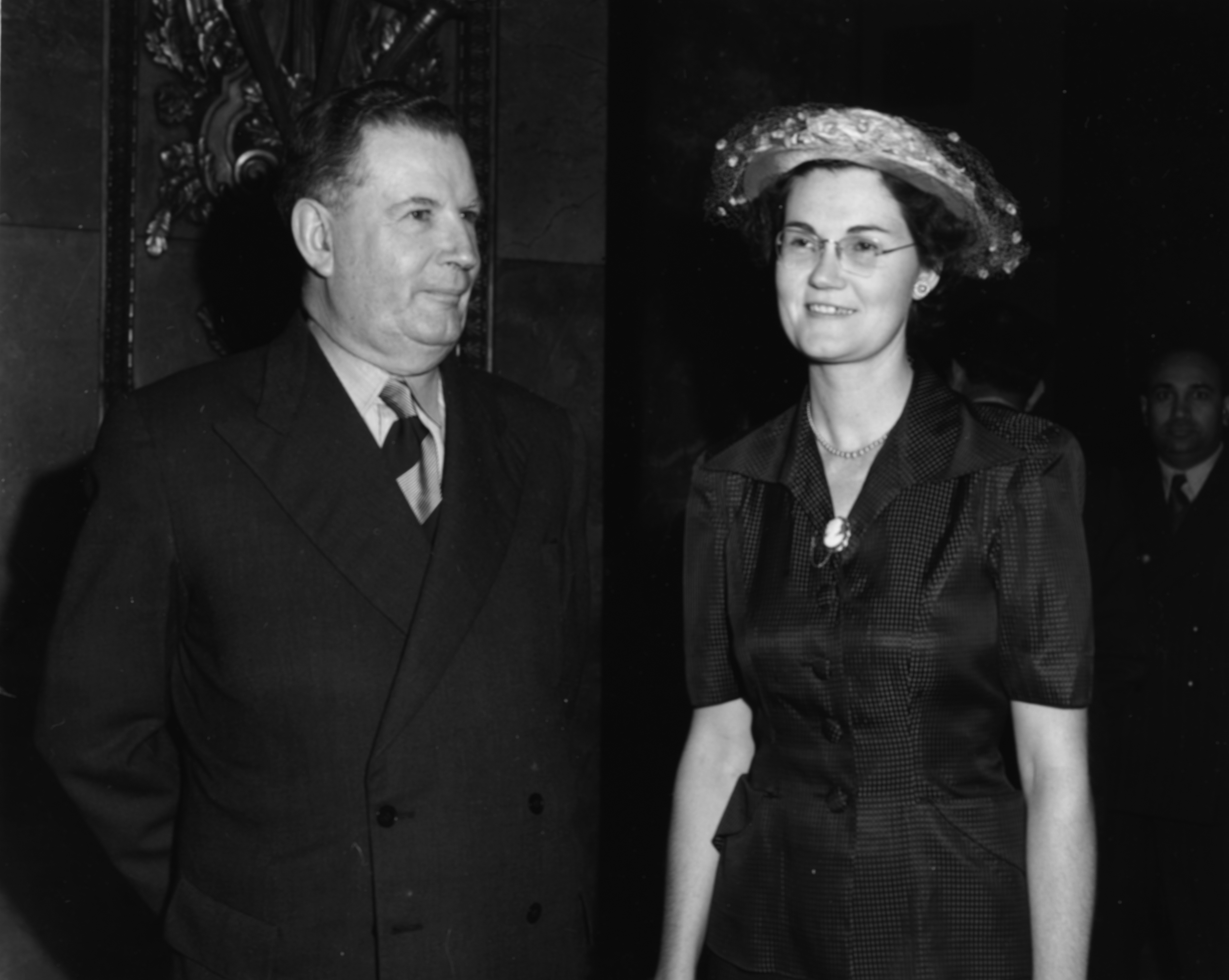
Arthur Nielsen Sr. and his son, Arthur Nielsen Jr., built a fortune primarily through the $1.3 billion sale of the A.C. Nielsen Company to Dun & Bradstreet in 1984. While precise individual net worth figures were not publicly indexed like modern billionaires, the family’s wealth was anchored in the invention of the Nielsen Ratings, establishing a multibillion-dollar industry standard that remains central to global media and retail in 2026.
The Foundations of the Nielsen Fortune
The story of Arthur Nielsen’s net worth is not merely a chronicle of accumulated cash, but a study in the creation of a new asset class: data. Before Arthur Charles Nielsen Sr. founded his company in 1923, businesses operated largely on intuition. Nielsen, an electrical engineer by training, applied scientific principles to the marketplace, effectively inventing the field of modern market research.
Nielsen’s initial success did not come from television, which didn't exist in a commercial capacity at the time, but from the "Nielsen Food and Drug Index." By tracking the movement of goods from store shelves to consumers, he provided manufacturers with the first accurate look at market share. This innovation created a recurring revenue model that is the hallmark of modern SaaS and data companies. By 1939, the company was expanding internationally, and its "worth" was tied to its unique ability to provide objective truth to corporate giants like Procter & Gamble and Coca-Cola.
The financial "moat" Nielsen built was based on high barriers to entry. Gathering physical data from thousands of retail locations across multiple countries required a massive logistical infrastructure. This physical and intellectual property formed the bedrock of a fortune that would eventually be realized through one of the largest corporate acquisitions of the 1980s.
The Invention of the Nielsen Ratings and Media Dominance
While retail data provided the foundation, the media measurement business—specifically the Nielsen Ratings—catapulted the company's valuation into the stratosphere. In 1936, Nielsen acquired the "Audimeter," a device that could be attached to a radio to record which stations were being tuned in. This was the precursor to the television ratings system that would define the value of every minute of airtime in the 20th and early 21st centuries.
The "Nielsen Rating" became the currency of the advertising world. Because the entire television industry agreed to use Nielsen’s data as the gold standard for pricing ads, the company held a functional monopoly. This level of market dominance ensured consistent profitability and a massive valuation for the family-owned shares.
By the time Arthur Nielsen Sr. passed away in 1980, the company was a global juggernaut. His son, Arthur Nielsen Jr., had taken over as president in 1957 and served as chairman until the company's sale. Under the younger Nielsen’s leadership, the firm expanded its reach into more than 20 countries, further diversifying the family’s sources of wealth and increasing the eventual exit price.
The 1984 Sale: Quantifying the Nielsen Net Worth
The most definitive moment for quantifying the Arthur Nielsen family net worth occurred in 1984. Dun & Bradstreet, a powerhouse in business information, acquired the A.C. Nielsen Company for approximately $1.3 billion in a mix of cash and stock. To put this into perspective for 2026, when adjusted for inflation and the growth of the data sector, that $1.3 billion figure represents a valuation of well over $4 billion in modern currency.
At the time of the sale, the Nielsen family held a significant portion of the company’s equity. This transaction transitioned the family’s wealth from "paper" company value into liquid assets and diversified investments. While the specific split among the heirs remained private, the exit solidified the Nielsens as one of the wealthiest families in the American Midwest.
Historical Valuation Milestones
| Year | Milestone | Financial Impact / Valuation |
|---|---|---|
| 1923 | Founding of A.C. Nielsen Co. | Initial $45,000 investment from friends and family. |
| 1950 | Launch of National TV Ratings | Shifted company focus to media, creating a high-margin monopoly. |
| 1958 | IPO / Public Listing | Allowed for initial public valuation of family shares. |
| 1980 | Death of Arthur Nielsen Sr. | Estate valuation reflected a global firm with $400M+ annual revenue. |
| 1984 | Acquisition by Dun & Bradstreet | $1.3 Billion exit price (the definitive wealth realization event). |
| 2022 | Private Equity Buyout | Nielsen (then public) sold for $16 Billion, reflecting the brand's enduring value. |
Evolution of the Nielsen Entity Post-Exit
To understand the scope of the wealth Arthur Nielsen created, one must look at how the company evolved after the family sold their interest. Although the family no longer owned the firm after 1984, the brand name continued to generate billions.
In 2006, a consortium of private equity firms, including Blackstone and Carlyle, bought the company (then known as VNU) for nearly $10 billion. In 2022, the company was again taken private by Elliott Investment Management and Brookfield Business Partners for a staggering $16 billion. While this later growth did not directly increase the Nielsen family's personal net worth post-1984, it highlights the immense "brand equity" and industrial utility that Arthur Nielsen Sr. established with his original vision.
Philanthropy and the Distribution of Wealth
Arthur Nielsen’s net worth was also reflected in his significant philanthropic contributions, particularly in the Chicago area and within the sport of tennis. Nielsen was an avid tennis player (winning several U.S. Father-Son doubles titles with his son), and his wealth funded the A.C. Nielsen Tennis Center in Winnetka, Illinois.
The family also established the Nielsen Foundation, which continues to support various educational and community initiatives. By 2026, the Nielsen legacy is as much defined by these charitable outlays as it is by the data metrics used by advertisers. The family’s wealth was used to establish chairs at universities and support the Nielsen Global Support Fund, which assists employees in times of hardship.
Comparative Wealth and Business Moats
In the context of 2026, Arthur Nielsen’s wealth-building strategy is often compared to that of modern data moguls like Michael Bloomberg or the founders of Google. Nielsen understood a fundamental truth: The person who measures the market eventually controls the market's value.
His "net worth" was protected by a technological and methodological "moat." Because the Nielsen system was embedded in the accounting and reporting structures of thousands of corporations, it was nearly impossible to dislodge. This ensured that even during economic downturns, the Nielsen fortune remained stable because companies needed data more than ever to navigate volatile markets.
Arthur Nielsen Jr.’s Independent Success
Arthur Nielsen Jr. did not simply rest on his father's laurels. He was a decorated veteran of World War II and a business leader in his own right. His stewardship of the company saw it transition from a domestic measurement firm into a global information services giant.
His personal net worth was further bolstered by his service on the boards of multiple other major corporations, including Walgreens, Motorola, and United Airlines. These directorships, combined with his equity in the family company, placed him among the elite tier of American industrialists. When Arthur Jr. passed away in 2011, his legacy was one of both massive financial success and a reputation for integrity in an industry—data—that was becoming increasingly scrutinized.
Frequently Asked Questions
How much did Arthur Nielsen make from the sale of his company?
The A.C. Nielsen Company was sold for $1.3 billion in 1984. While the exact personal take-home for individual family members was private, the family's majority stake ensured they received hundreds of millions of dollars in cash and Dun & Bradstreet stock, which was a top-tier performing asset at the time.
Is the Nielsen family still the owner of the Nielsen Ratings?
No. The Nielsen family sold their interest in the company in 1984. Since then, the company has been owned by Dun & Bradstreet, later by the Dutch company VNU, then went through an IPO, and was most recently taken private in 2022 by a group of private equity firms for $16 billion.
What was the source of Arthur Nielsen’s original wealth?
His wealth began with the "Nielsen Food and Drug Index," which tracked retail sales. It was later exponentially increased by the "Nielsen Ratings" for radio and television, which became the industry standard for measuring audience size and demographic reach.
How does Arthur Nielsen’s net worth compare to today’s billionaires?
While $1.3 billion in 1984 was an immense sum (placing them among the wealthiest in the world), it is smaller than the $100 billion+ fortunes seen in 2026. However, Nielsen’s wealth was built on a foundational monopoly that modern tech companies now emulate.
What is the Arthur Nielsen legacy in 2026?
In 2026, his legacy is the global standard for data-driven decision-making. The company he founded continues to dominate the "measurement" space, even as the industry shifts from traditional television to streaming and digital programmatic advertising.
Practical Recommendation: Understanding Data as an Asset
For investors and business students in 2026, the study of Arthur Nielsen’s net worth provides a critical lesson: Ownership of a standard is more valuable than ownership of a product. Nielsen did not sell groceries or produce television shows; he sold the "ruler" used to measure them.
If you are looking to build long-term wealth, focus on creating systems or data points that other businesses depend upon for their own valuation. Like Nielsen, those who provide the infrastructure for market transparency often build the most resilient and significant fortunes.