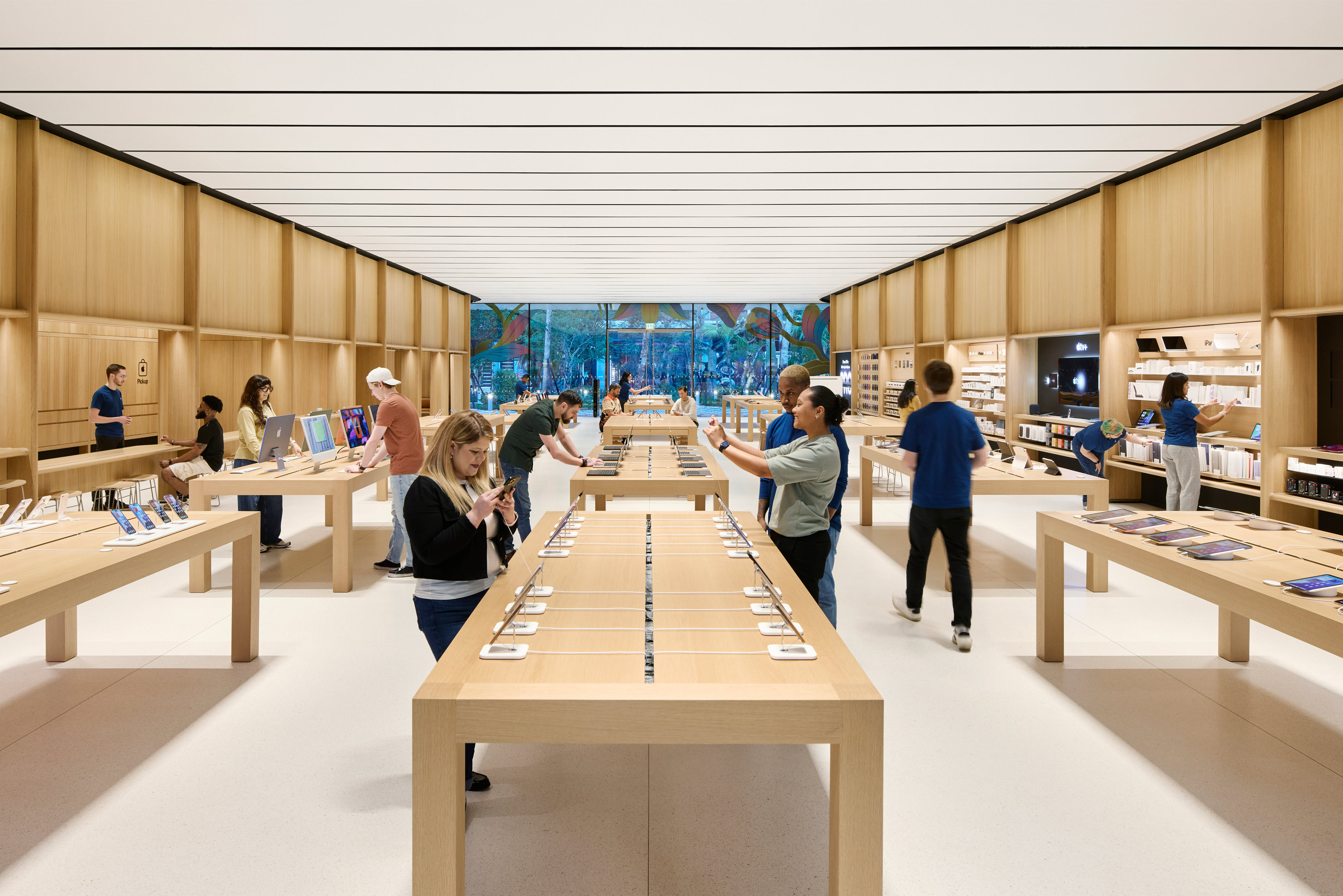
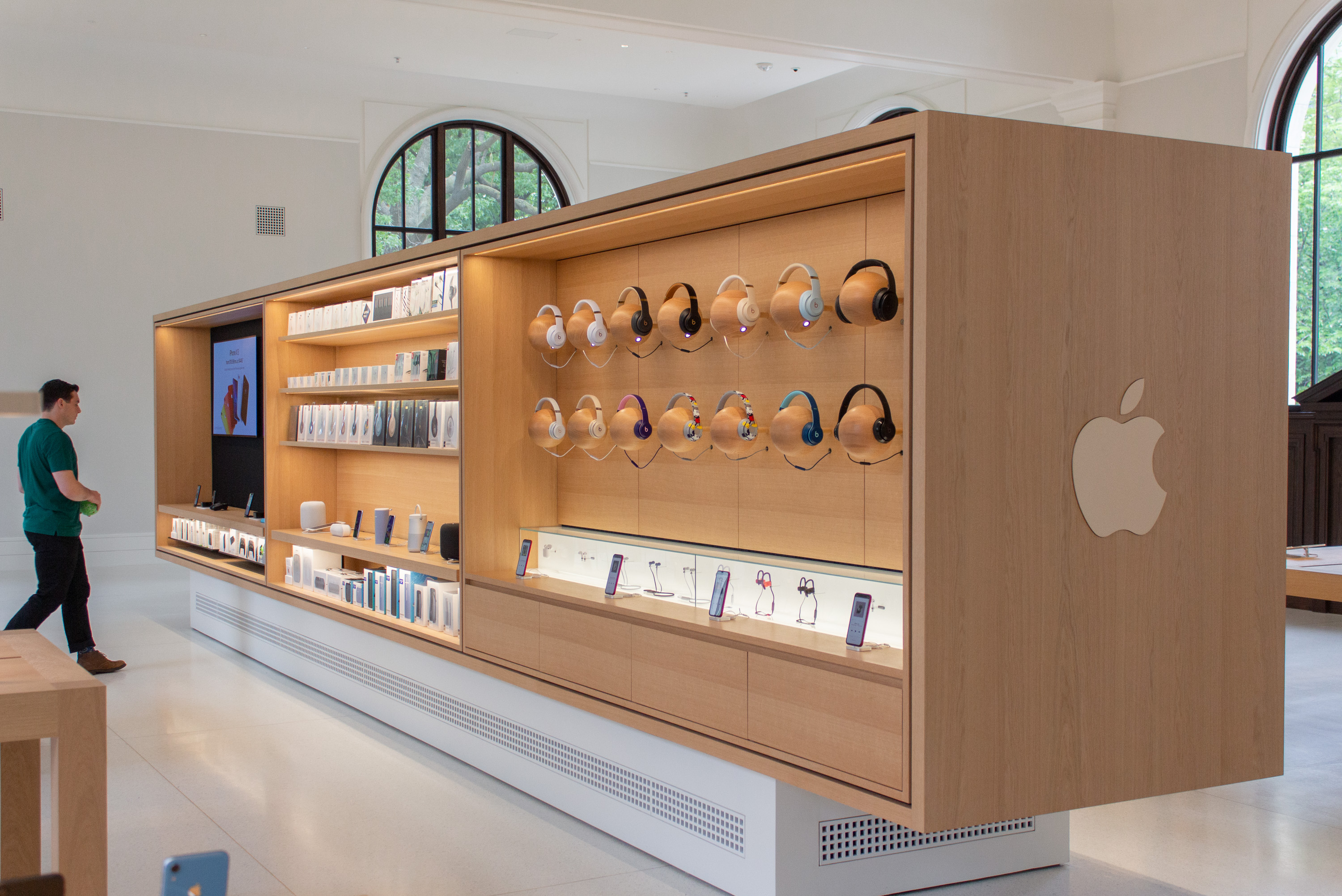
The design of Apple Store tables, characterized by their minimalist aesthetic and use of sustainable timber, centers on specific engineering requirements: structural integrity for heavy device arrays, grain consistency for visual continuity, and high-performance finishing to withstand intensive public interaction and cleaning protocols.
The Philosophy of the Apple Store Table
Apple’s retail environment is defined by a rigorous commitment to minimalism. The iconic, long wooden tables serve as the anchor of the store experience. Unlike traditional retail fixtures that might rely on metal or laminate, Apple utilizes premium, high-density hardwoods to convey a sense of warmth, accessibility, and longevity. The "Apple Store table" is not merely furniture; it is an architectural element that facilitates a specific human-device interaction.
From a design perspective, the tables must reconcile two seemingly contradictory requirements: they must appear impossibly light and simple while supporting an immense structural load. This is achieved through advanced wood-engineering techniques, including hidden steel reinforcements and precise joinery that hides the mechanical complexity of integrated power management.
Material Selection: Hardwood Specifications
The choice of wood for Apple Store tables is dictated by durability, aesthetic grain, and environmental certification. Apple traditionally utilizes hardwoods such as European white oak. This selection is based on the wood's Janka hardness rating, which ensures the surfaces resist denting from hardware, accidental impacts, and the constant friction of daily customer use.
When considering the use of these materials in a commercial high-traffic setting, several factors are paramount:
- Moisture Content and Equilibrium: In a controlled retail environment, the wood must be kiln-dried to specific moisture content levels. If the wood is not properly stabilized before manufacturing, the extreme climate control systems typical of flagship Apple locations could cause the table to warp, check, or split.
- Grain Matching and Bookmatching: To achieve the seamless, "single-piece" look, fabricators employ rigorous grain-matching techniques. Panels are selected from the same harvest lots to ensure color consistency, and boards are often bookmatched to create a symmetrical visual flow across the surface.
- Sustainability Standards: Apple requires strict adherence to Forest Stewardship Council (FSC) certifications. The material must be sourced from managed forests, and the supply chain must be transparent from timber harvest to final milling.
Structural Engineering and Concealed Functionality
The most significant design hurdle for these tables is the seamless integration of technology. Each table is designed to power the devices resting on it without visible cords or bulky hubs. This requires the internal volume of the wood to be hollowed or routed in a way that preserves the structural integrity of the tabletop.
- Internal Support Frames: Beneath the surface of the wood, high-strength steel sub-frames provide the necessary rigidity. This prevents the long, thin table sections from sagging over time. The wood acts as a "skin" over this skeletal structure, allowing for a slim edge profile that defies traditional heavy-duty joinery.
- Cable Management Channels: Internal routing must account for high-voltage power lines and low-voltage data cables. These must be separated by specific distances to avoid electromagnetic interference and to comply with local electrical codes for commercial spaces.
- Thermal Dissipation: Because electronics generate heat, the wood finish must be resistant to thermal degradation. Furthermore, the internal cavities must allow for passive airflow to prevent the electronics from overheating inside the table enclosure.
Finishing for High-Traffic Durability
A standard furniture finish is insufficient for an environment that receives thousands of touch-points per day. The wood surface is subjected to oils from human skin, liquid cleaning agents, and potential abrasive debris.
The finishing process typically involves a multi-stage application of high-performance, non-toxic, matte-sheen coatings. Unlike traditional varnishes, which can yellow or crack over time, these coatings are chosen for their ability to maintain a natural "raw wood" appearance while providing a sealed barrier against moisture penetration. The finish must be repairable—meaning that if a scratch occurs, it can be spot-treated by maintenance staff without requiring the entire table to be refinished, which would necessitate closing off a section of the store.
Comparison of Design Considerations
| Feature | Requirement | Reason |
|---|---|---|
| Edge Profile | Tapered/Minimal | Enhances the appearance of thinness and lightness. |
| Surface Finish | Matte, Low-VOC | Prevents light glare and ensures a natural touch-feel. |
| Sub-structure | Internal Steel Skeleton | Prevents sagging of long spans and houses wiring. |
| Wood Species | White Oak (or similar) | High Janka hardness to resist impact and wear. |
| Maintenance | Spot-repairable finish | Allows for quick fixes without full-table refinishing. |
Common Challenges in Table Design and Deployment
Designing for an Apple-style retail environment presents several technical risks that must be mitigated during the prototyping phase.
One common issue is the "drift" of wood over time. Even with the best kiln-drying, wood is a hygroscopic material—it will continue to expand and contract slightly based on the relative humidity of the store. If the table is bolted too tightly to its metal frame, the wood will eventually split under the stress of this expansion. Therefore, designers use slotted mounting holes that allow for controlled "float," letting the wood move independently of the steel sub-frame.
Another challenge is vibration damping. As devices are placed on the table, vibrations from the building’s HVAC or foot traffic can be amplified by long wooden surfaces. Using dampening materials between the wood and the metal frame ensures that the surface remains stable and quiet.
Environmental Considerations and Lifecycle Management
By 2026, the retail sector emphasizes the "circular economy." Apple Store tables are designed with longevity in mind, but also with an eye toward eventual deconstruction. The mechanical fasteners used are often hidden but designed for reversal, allowing the wood panels to be removed or replaced without destroying the entire unit.
When evaluating these designs, project teams must consider the local environmental regulations of the specific store location. In many jurisdictions, the use of formaldehyde-based resins or certain high-VOC (Volatile Organic Compound) sealants is restricted. Using water-based, environmentally friendly sealants is not just a policy preference but often a regulatory requirement for indoor commercial air quality.
Frequently Asked Questions
Why are Apple Store tables so thin at the edges? The thin edge profile is a visual design choice meant to create an illusion of lightness. By using a steel sub-frame to handle the structural load, the wood can be cut to a very slim profile at the edges while the center of the table remains structurally rigid and reinforced.
How is electrical wiring integrated without ruining the wood aesthetic? The wiring is run through precision-routed channels within the table’s internal structure. Access ports are often disguised as flush-mounted inlays or hidden behind cleverly integrated magnetic covers that blend into the wood grain.
Does the wood require special cleaning agents? Yes. To maintain the finish, store maintenance uses non-abrasive, pH-neutral cleaners. The use of harsh solvents or alcohol-based cleaners is generally prohibited as they can dissolve the specialized protective sealants, leaving the wood vulnerable to stains.
Can these tables be repaired if they get a deep scratch? Yes, the professional-grade finishes used allow for localized sanding and re-application of the finish. This is a critical design requirement, as replacing a large, custom-milled table is costly and logistically complex.
What is the most important factor in long-term maintenance? Humidity control is the most vital factor. Maintaining the store's humidity between 40% and 60% prevents the wood from drying out (leading to cracks) or absorbing too much moisture (leading to warping and joint separation).
Recommendations for Implementation
If you are pursuing a design project influenced by these standards, start by prioritizing structural rigidity. The visual appeal of the wood is secondary to the performance of the underlying frame. Ensure you are working with a master cabinetmaker capable of working with metal-wood hybrids. When selecting the finish, perform a "wear test" on the exact species and sealant combination using a machine that simulates the abrasive force of a device being slid across the surface 50,000 times. Finally, ensure that your design includes a "fail-safe" for electrical access, as the frequency of hardware updates in retail environments will eventually require you to reconfigure the internal wiring.