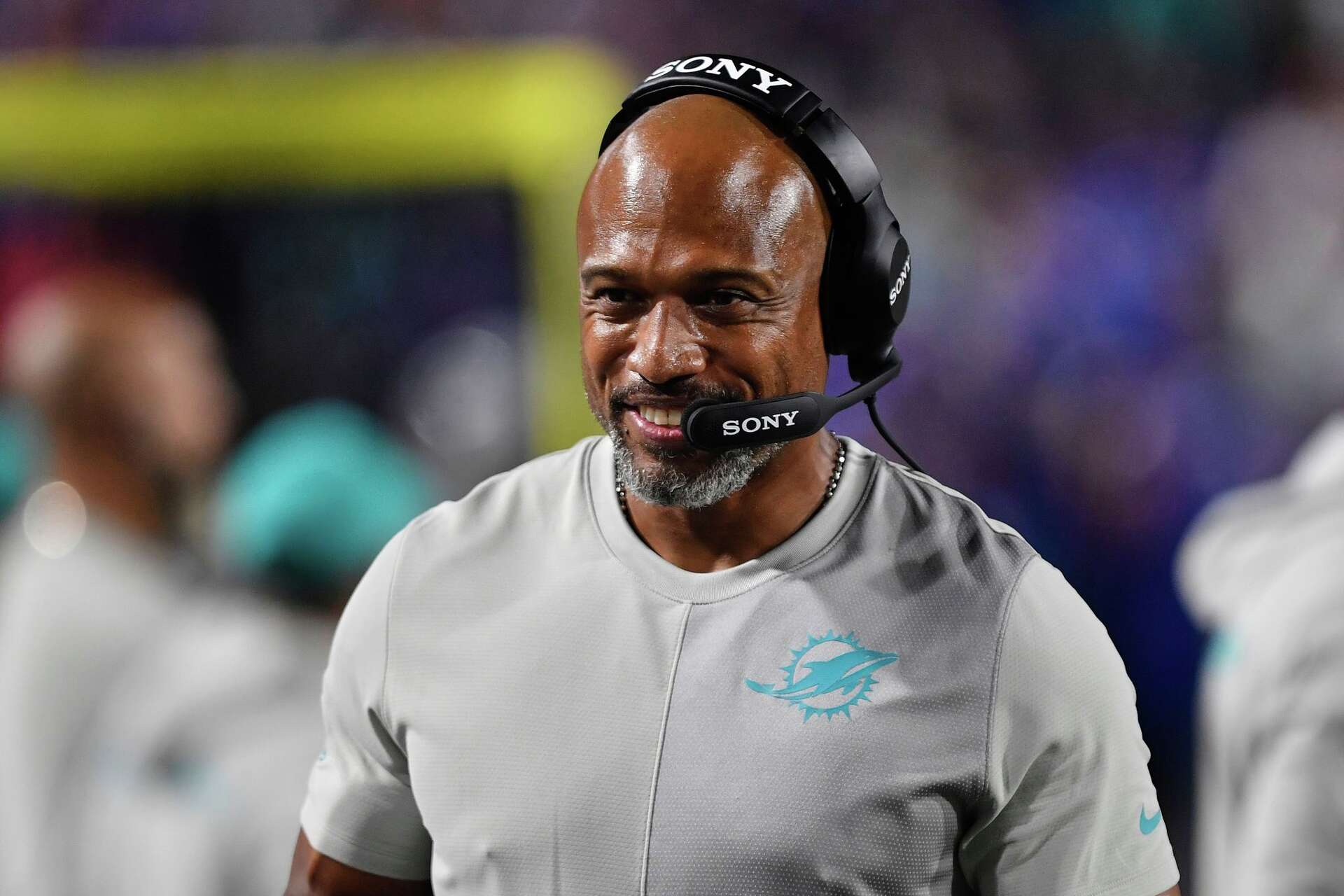
Anthony Weaver has an estimated net worth between $5 million and $8 million. His financial profile is built on a dual-track career in professional football, spanning seven seasons as an NFL defensive lineman and over fifteen years as an NFL coach, culminating in his role as the Defensive Coordinator for the Miami Dolphins.
Estimated Net Worth and Summary Breakdown
Evaluating the financial trajectory of professional sports figures requires looking at both on-field playing contracts and subsequent coaching salaries. Unlike star quarterbacks or high-profile head coaches whose multi-million dollar annual contracts are fully public, assistant coaches and defensive coordinators occupy a middle tier of NFL compensation. Anthony Weaver's net worth reflects a steady accumulation of wealth generated through major NFL player contracts in the mid-2000s, followed by more than a decade of high-level coaching roles.
| Financial Parameter | Estimated Figure / Range | Primary Source of Revenue |
|---|---|---|
| Estimated Total Net Worth | $5 Million – $8 Million | NFL Player Contracts & Coaching Salaries |
| NFL Player Career Earnings | ~$14 Million – $16 Million | Baltimore Ravens & Houston Texans Contracts |
| Estimated Annual DC Salary | $1.5 Million – $2.5 Million | Miami Dolphins Coaching Contract |
| Playing Career Duration | 2002–2008 (7 Seasons) | Baltimore Ravens, Houston Texans |
| Coaching Career Duration | 2010–Present | College (UF, UNT) & NFL (NYJ, BUF, CLE, HOU, BAL, MIA) |
Weaver’s wealth accumulated through distinct financial eras. During his playing career from 2002 to 2008, he earned significant multi-million dollar payouts, including a major free-agent deal with the Houston Texans in 2006. After retiring as a player, Weaver chose to enter coaching, securing continuous employment across seven distinct college and NFL organizations. This sustained presence in the NFL coaching ecosystem has provided a consistent income stream, shielding his retirement wealth while adding to his long-term financial portfolio.
Playing Career and Early Financial Foundation (2002–2008)
Anthony Weaver entered the National Football League in 2002 after an outstanding collegiate career as a defensive end at the University of Notre Dame. Selected by the Baltimore Ravens in the second round (52nd overall) of the 2002 NFL Draft, Weaver immediately signed a multi-year rookie contract typical for second-round picks in that era.
The Baltimore Ravens Era (2002–2005)
During his four-year tenure with the Baltimore Ravens, Weaver established himself as a durable, dependable starter on one of the league's most formidable defensive units. His rookie contract provided a solid initial base of wealth, featuring a signing bonus alongside structured base salaries.
Over his four seasons in Baltimore, Weaver logged 57 starts out of 59 games played, recording 14.5 sacks, 156 regular-season tackles, and three interceptions. His physical play as a strong-side defensive end made him a highly valued asset when he hit free agency in 2006.
The Houston Texans Free Agency Deal (2006–2008)
In March 2006, Weaver signed one of the major defensive lineman contracts of that free agency period. The Houston Texans secured Weaver with a five-year contract worth approximately $26 million, which included an $8 million signing bonus.
This contract marked the single largest financial landmark of Weaver’s playing career. Under the structure of NFL contracts in the mid-2000s, signing bonuses provided upfront guaranteed money, protecting players against early termination or injury risks.
Weaver played three seasons under this agreement with Houston:
- 2006 Season: Started 16 games, contributing to Houston's defensive front while receiving his initial signing bonus and base salary installments.
- 2007 Season: Played in 12 games, continuing as a starter despite battling nagging injuries.
- 2008 Season: Appeared in 13 games, bringing his total career starts to 98 across seven NFL seasons.
Following the 2008 season, lingering injuries led to Weaver's departure from active play. Over his seven-year NFL playing career, Weaver accumulated gross pre-tax earnings estimated between $14 million and $16 million.
Wealth Retention and Post-Tax Realities
While gross career earnings for NFL players appear substantial, net wealth retention is governed by several overhead costs:
- Federal and State Income Taxes: As an athlete playing games in multiple states, Weaver was subject to the "jock tax," requiring income tax filings in every state where games were played, alongside federal top-bracket tax rates (which averaged 35% during that era).
- Agent and Professional Fees: NFL Players Association (NFLPA) certified agents typically charge between 1.5% and 3% of contract value, while financial advisors and legal counsel take additional cuts.
- Living Expenses and Training Costs: Offseason training, medical rehabilitation, and lifestyle expenses during active playing years consume a portion of gross earnings.
Taking these factors into account, a player with $15 million in career gross earnings historically retains roughly 45% to 55% in net liquid assets, forming a post-playing career foundation of approximately $6 million to $8 million before accounting for long-term investments and ongoing lifestyle costs.
Transition to Coaching and Earnings Expansion (2010–2026)
Transitioning from active player to professional coach is a path chosen by many former NFL players, but few maintain an unbroken fifteen-plus year trajectory in the coaching ranks like Anthony Weaver. Entering coaching allows former players to maintain active participation in the league while earning salaries that preserve their accumulated player wealth.
- 2002-2008: NFL Player Career
- Baltimore Ravens (2002-2005) | Houston Texans (2006-2008)
- Gross Earnings: ~$14M - $16M
- 2010-2011: Collegiate Coaching
- University of Florida (GA) | University of North Texas (LB Coach)
- 2012-2019: NFL Assistant & DL Coach
- NY Jets (2012)
- BUF Bills (2013)
- CLE Browns (2014-15)
- HOU Texans (2016-19)
- 2020-2023: Senior Coaching Roles
- HOU Texans DC (2020)
- BAL Ravens Asst. Head Coach / DL (2021-2023)
- 2024-Present (2026): Miami Dolphins DC
- Defensive Coordinator | Estimated Annual Salary: $1.5M - $2.5M
Collegiate and Entry-Level NFL Roles (2010–2015)
Weaver began his coaching journey at the collegiate level, serving as a graduate assistant at the University of Florida in 2010 under Urban Meyer, followed by a season as the linebackers coach at the University of North Texas in 2011. Entry-level college coaching positions offer modest stipends (often $30,000 to $70,000 annually), serving primarily as training grounds to build coaching credentials.
In 2012, Weaver made the jump to the NFL coaching ranks:
- New York Jets (2012): Assistant Defensive Line Coach under Head Coach Rex Ryan.
- Buffalo Bills (2013): Defensive Line Coach, following Rex Ryan's defensive scheme influence.
- Cleveland Browns (2014–2015): Defensive Line Coach under Head Coach Mike Pettine.
At the NFL position-coach level during the 2010s, assistant coaches earned annual salaries ranging from $300,000 to $600,000, establishing a consistent secondary revenue stream that sustained Weaver's financial profile.
Defensive Coordinator and Assistant Head Coach Roles (2016–2023)
Weaver returned to the Houston Texans in 2016 as the Defensive Line Coach, a position he held for four seasons. His reputation for developing line talent led to his promotion to Defensive Coordinator for the Texans in 2020 under Head Coach Bill O'Brien.
Promotions to coordinator roles bring substantial salary increases. NFL defensive coordinators typically command salaries between $1 million and $2.5 million annually, depending on experience and organizational pay structures.
Following organizational changes in Houston, Weaver joined John Harbaugh’s staff with the Baltimore Ravens in 2021 as the Defensive Line Coach and Run Game Coordinator. In 2022, the Ravens expanded his responsibilities by naming him Assistant Head Coach.
During his three-year tenure in Baltimore (2021–2023), Weaver was compensated at the upper tier for NFL assistant head coaches, earning an estimated $1.2 million to $1.8 million per year. His dual responsibilities in scheme design and personnel management positioned him as one of the premier head-coaching candidates in the league.
Miami Dolphins Defensive Coordinator (2024–Present)
In February 2024, Miami Dolphins Head Coach Mike McDaniel hired Anthony Weaver as the team’s Defensive Coordinator, replacing Vic Fangio.
As a coordinator leading an NFL defense, Weaver's contract reflects current market standards for elite defensive coordinators. In the NFL's contemporary compensation structure, top coordinators earn between $1.5 million and $3 million per year, backed by multi-year guaranteed coaching contracts.
Detailed Financial Comparison: Player vs. Coach Earnings
To understand how Anthony Weaver built and preserved his net worth, it is helpful to contrast the compensation structures of his playing career against his long-term coaching tenure.
| Career Phase | Primary Roles Held | Duration | Est. Gross Compensation Range | Key Financial Characteristics |
|---|---|---|---|---|
| NFL Player | DE (Ravens, Texans) | 7 Seasons (2002–2008) | $14,000,000 – $16,000,000 | Large upfront bonuses, high physical risk, shorter career window, heavy tax burden. |
| College Assistant | GA (Florida), LB Coach (UNT) | 2 Seasons (2010–2011) | $50,000 – $100,000 | Low entry pay; investment period to build credentialing and network. |
| NFL Position Coach | DL Coach (Jets, Bills, Browns, Texans) | 8 Seasons (2012–2019) | $2,500,000 – $4,500,000 | Steady salary growth ($300k–$600k/yr); established financial stability without player body wear. |
| NFL DC & Asst. HC | DC (Texans), Asst. HC/DL (Ravens), DC (Dolphins) | 6+ Seasons (2020–2026) | $8,000,000 – $14,000,000 | High-tier coaching contracts ($1.5M–$2.5M+/yr); multi-year guaranteed structures. |
Key Takeaways from the Financial Comparison:
- Longevity vs. Peak Earnings: While playing contracts provided Weaver's single largest single-year payouts (such as his $8 million signing bonus in 2006), his coaching career has delivered higher cumulative gross income over a broader 15+ year period.
- Wealth Preservation: Coaching income covers living costs and ongoing investments, allowing former players to avoid liquidating their original playing career capital or principal investments.
Strategic Factors Impacting Anthony Weaver's Financial Outlook
Several specific factors shape Anthony Weaver's financial standing and future growth potential in professional sports management:
1. The Market for NFL Defensive Coordinators
NFL assistant coach salaries have surged over the past decade, driven by exploding league revenues, media rights deals, and rising salary caps for players. Highly regarded defensive coordinators who manage modern, complex schemes are paid top-tier salaries. Weaver's position with the Miami Dolphins provides guaranteed financial security under a multi-year contract structure.
2. Potential Head Coaching Advancement
The primary catalyst for exponential net worth growth for an NFL coordinator is securing an NFL Head Coach position. Modern NFL head coaches earn between $4 million and $15+ million annually, often with fully guaranteed 4- to 6-year contracts. Having interviewed for multiple head coaching vacancies in recent hiring cycles, Weaver remains on the short track for future head-coaching opportunities. Securing a head coaching post would instantly multiply his lifetime career earnings trajectory.
3. Investment Management and Asset Allocation
Former professional athletes who transition directly into high-paying coaching roles avoid the common financial traps associated with abrupt retirement. By maintaining continuous high-tier employment:
- Capital accumulated during his playing years remains invested in real estate, index funds, or private holdings.
- Continuous employment provides access to employer-sponsored retirement plans, NFL coaching pension plans, and health benefits, lowering out-of-pocket medical and retirement expenses.
Frequently Asked Questions
What is Anthony Weaver's net worth?
Anthony Weaver’s estimated net worth is between $5 million and $8 million. This balance is derived from his seven-year NFL playing career—which generated roughly $14 million to $16 million in gross earnings—and more than fifteen years of continuous NFL and college coaching compensation.
How much did Anthony Weaver make as an NFL player?
During his seven seasons as an NFL defensive end for the Baltimore Ravens (2002–2005) and Houston Texans (2006–2008), Weaver earned an estimated $14 million to $16 million in gross salaries and signing bonuses. His largest individual deal was a five-year, $26 million contract signed with Houston in 2006, which featured an $8 million signing bonus.
What is Anthony Weaver's salary as the Miami Dolphins Defensive Coordinator?
While exact coaching contracts are kept private by NFL teams, modern NFL defensive coordinators earn between $1.5 million and $2.5 million per year. Given Weaver's senior experience as a former Assistant Head Coach and Defensive Coordinator, his salary fits within this upper coordinator tier.
Where did Anthony Weaver play college football?
Anthony Weaver played college football at the University of Notre Dame from 1998 to 2001. He was a standout defensive lineman and team captain, which led to his selection by the Baltimore Ravens in the second round of the 2002 NFL Draft.
Has Anthony Weaver been interviewed for NFL Head Coach positions?
Yes, Anthony Weaver has participated in head coaching interviews with multiple NFL franchises, including the Atlanta Falcons and Washington Commanders during recent hiring cycles. His leadership as an Assistant Head Coach in Baltimore and Defensive Coordinator in Miami has kept him on candidate lists for future head coaching openings.
Financial Summary and Outlook
Anthony Weaver’s financial profile represents a model of long-term stability within professional football. By pairing an early, lucrative playing career with a long-tenured coaching trajectory, Weaver has secured a solid financial base while positioning himself for potential head-coaching roles that could substantially elevate his career net worth in the years ahead.