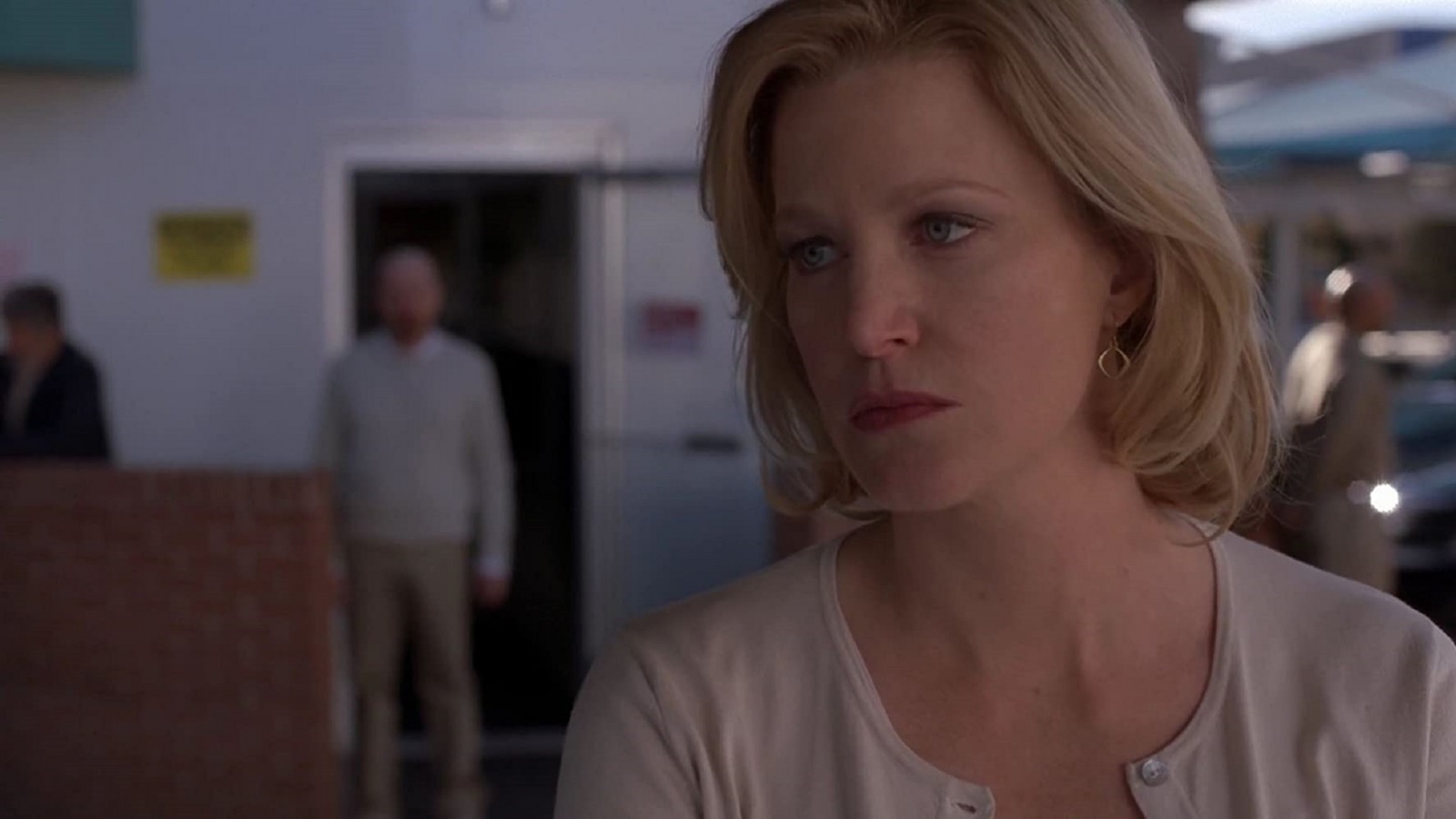
Before achieving global acclaim for her iconic portrayal of Skyler White in the critically acclaimed AMC drama Breaking Bad, Anna Gunn spent the 1990s steadily building a diverse and formidable foundation in American television and theater. During this decade, she transitioned from regional theater stages to prominent guest-starring roles on major network television programs, laying the groundwork for a prolific career characterized by dramatic intensity and precision.
The Theatrical Roots and Transition to Screen
Long before her face became familiar to millions of households through television, Anna Gunn honed her craft on the stage. A graduate of Northwestern University’s prestigious theatre program in 1987, she spent her formative post-collegiate years deeply immersed in the Chicago and Los Angeles theater communities. During the late 1980s and early 1990s, stage work was not merely a stepping stone for Gunn; it was a rigorous testing ground that refined her vocal control, emotional availability, and character dissection.
Her early transition into screen acting coincided with a booming era for episodic television in the United States. In the early 1990s, the television landscape was shifting. The dominance of the major traditional networks was beginning to face competition from cable and syndication, creating an immense volume of episodic content. Casting directors frequently scoured regional theaters for classically trained actors who could anchor single-episode dramas with theatrical gravitas. Gunn fit this profile perfectly, allowing her to secure foundational television roles soon after relocating to Los Angeles.
Early Television Appearances and Guest Star Arc
Gunn’s television debut on screen occurred at the start of the decade, paving the way for a steady stream of procedural and dramatic guest appearances. In 1992, she made an appearance in the television film Indictment: The McMartin Trial (though her most prominent breakthrough film work came slightly later) and secured roles that established her versatility across genres.
Her ability to convey intellectual sharpness, vulnerability, and moral complexity made her a favorite for casting directors handling complex narrative arcs. During the mid-1990s, episodic television operated largely on the "guest star of the week" format, where actors had to establish high-stakes chemistry with permanent ensemble casts within a matter of days. Gunn excelled in this high-pressure environment.
Notable 1990s Television Credits
| Year / Era | Program / Project | Role Type | Significance to Career |
|---|---|---|---|
| 1992 | Quantum Leap | Guest Star (Clara) | Demonstrated adaptability in science-fiction and episodic adventure frameworks. |
| 1992–1993 | Down the Shore | Recurring / Supporting | Offered valuable experience in a recurring ensemble comedy-drama setting. |
| 1993 | Seinfeld | Guest Star (Amy) | Appeared in the memorable season 4 episode "The Glasses," showcasing comedic timing. |
| 1994 | NYPD Blue | Guest Star (Kimmy) | Established credibility in gritty, urban police dramas, aligning with prestige television trends. |
| 1995–1996 | The Drew Carey Show | Guest Star | Continued to expand her range into multi-camera network sitcom environments. |
| 1997 | The Practice | Guest Star (Jean Ward) | Featured in David E. Kelley’s legal drama, highlighting her capacity for intense courtroom-adjacent storytelling. |
Cultivating a Reputation for Dramatic Versatility
A defining characteristic of Anna Gunn’s 1990s resume is its refusal to stay pigeonholed into a single genre. While many young actors were typecast based on their physical look or initial breakout role, Gunn balanced appearances in lightweight sitcoms with heavy dramatic turns.
Her 1993 appearance in Seinfeld as Amy—Jerry's girlfriend who uses a toothbrush after dropping it in the toilet—remains a trivia favorite for sitcom enthusiasts. Yet, the same era saw her taking on intense roles in procedural giants like Law & Order (appearing as Sally in 1992) and NYPD Blue. This stylistic range demonstrated to showrunners that she possessed the emotional architecture required for serialized television drama long before the "Golden Age of Television" made complex anti-hero stories the industry standard.
Furthermore, her participation in theater productions during this decade kept her artistic roots grounded. She performed in regional productions, including work with the Old Globe Theatre in San Diego, ensuring that her technique remained sharp between television casting calls.
Transition Toward Recurring and Main Cast Roles
As the 1990s drew to a close, Gunn’s industry profile shifted from one-off guest appearances to substantial recurring characters and regular supporting roles. This evolution culminated in her late-90s and early-2000s work, which included significant arcs on programs like The Practice and Judging Amy, as well as a pivotal recurring role as Jean Ward.
These roles served as a direct bridge to her future career milestones. The procedural and legal dramas of the late 1990s demanded actors who could handle dense, expository dialogue while maintaining psychological realism. Gunn’s performances during this period signaled to creators like Vince Gilligan and David Milch that she was fully equipped to handle multi-season character arcs requiring immense psychological depth.
Frequently Asked Questions
What was Anna Gunn's first major television appearance in the 1990s?
Anna Gunn made several notable television guest appearances in the early 1990s, including roles in Quantum Leap and Law & Order in 1992, which helped establish her presence in Los Angeles television casting circles.
Did Anna Gunn appear in any sitcoms during the 1990s?
Yes. While she is primarily known for dramatic work, Gunn demonstrated strong comedic timing with appearances in major 1990s sitcoms, most notably playing Amy in the 1993 Seinfeld episode "The Glasses," as well as roles in The Drew Carey Show.
How did her theater background influence her 1990s screen career?
A Northwestern University theater graduate, Gunn utilized her classical stage training to master complex scripts and deliver rapid, high-stakes performances required by 1990s episodic television guest-star formats.
What distinguishes Anna Gunn's early career from her later work in Breaking Bad?
Her 1990s career was characterized by an episodic, genre-spanning portfolio of guest roles in procedurals, comedies, and dramas, whereas her later career focused heavily on deep, multi-season character development in serialized prestige television.
Next Actions and Further Exploration
For those interested in exploring the evolution of contemporary television acting, reviewing Gunn’s episodic work from the 1990s offers a fascinating study in character-building under tight production constraints. Viewers can track her stylistic trajectory by examining her guest spots on foundational 90s networks dramas, noting the technical precision and emotional gravity she brought to the screen long before her Emmy-winning performances.