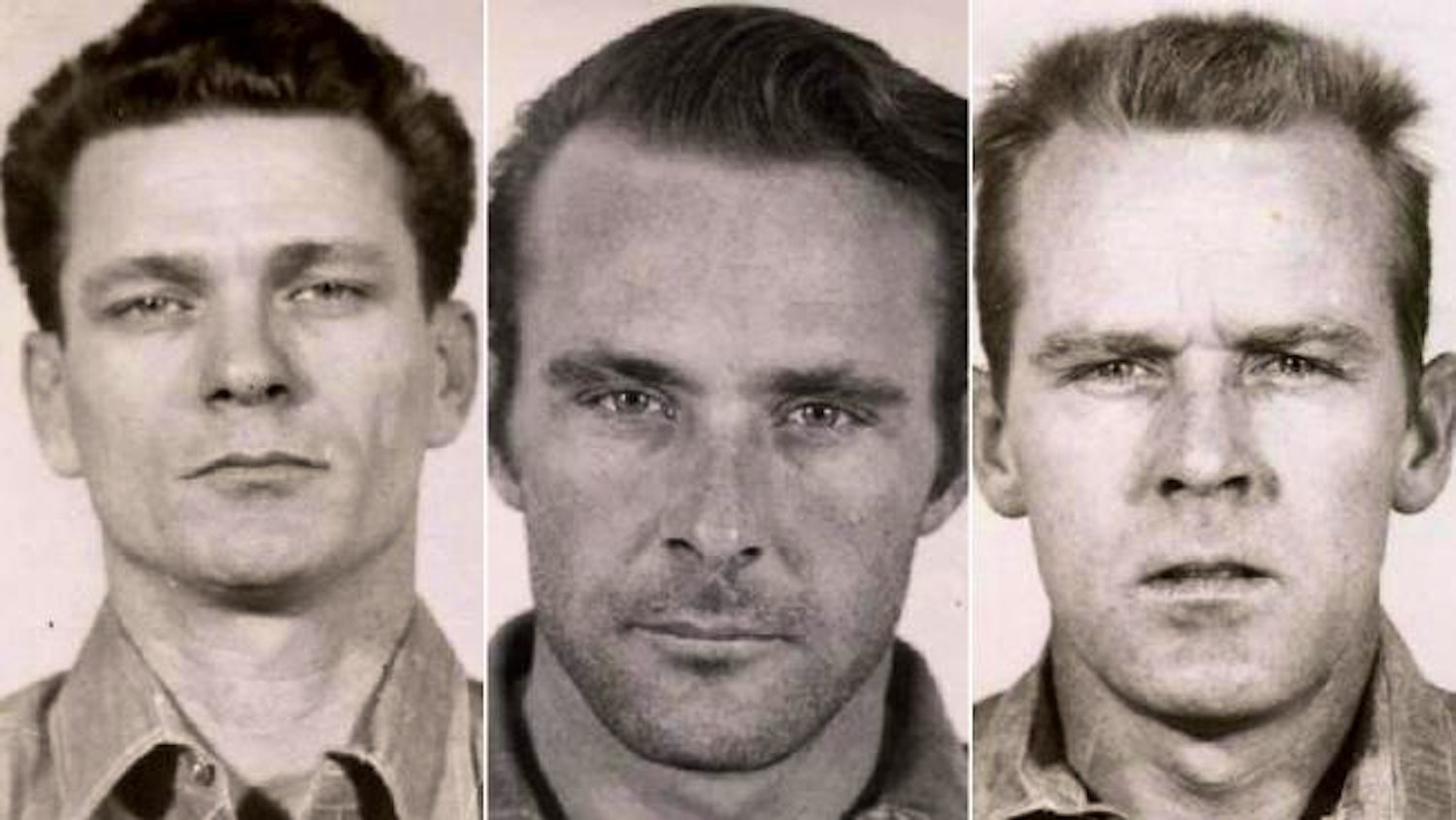
One of the most persistent legends surrounding the famous June 1962 escape from Alcatraz Federal Penitentiary is that John and Clarence Anglin secretly attended their mother’s funeral in 1978. According to family members and local reports, two tall individuals dressed in female attire and wearing heavy makeup or veils appeared at the service in Florida, giving rise to long-standing speculation that the fugitive brothers successfully outwitted federal agents one final time.
The 1962 Alcatraz Escape: Setting the Stage
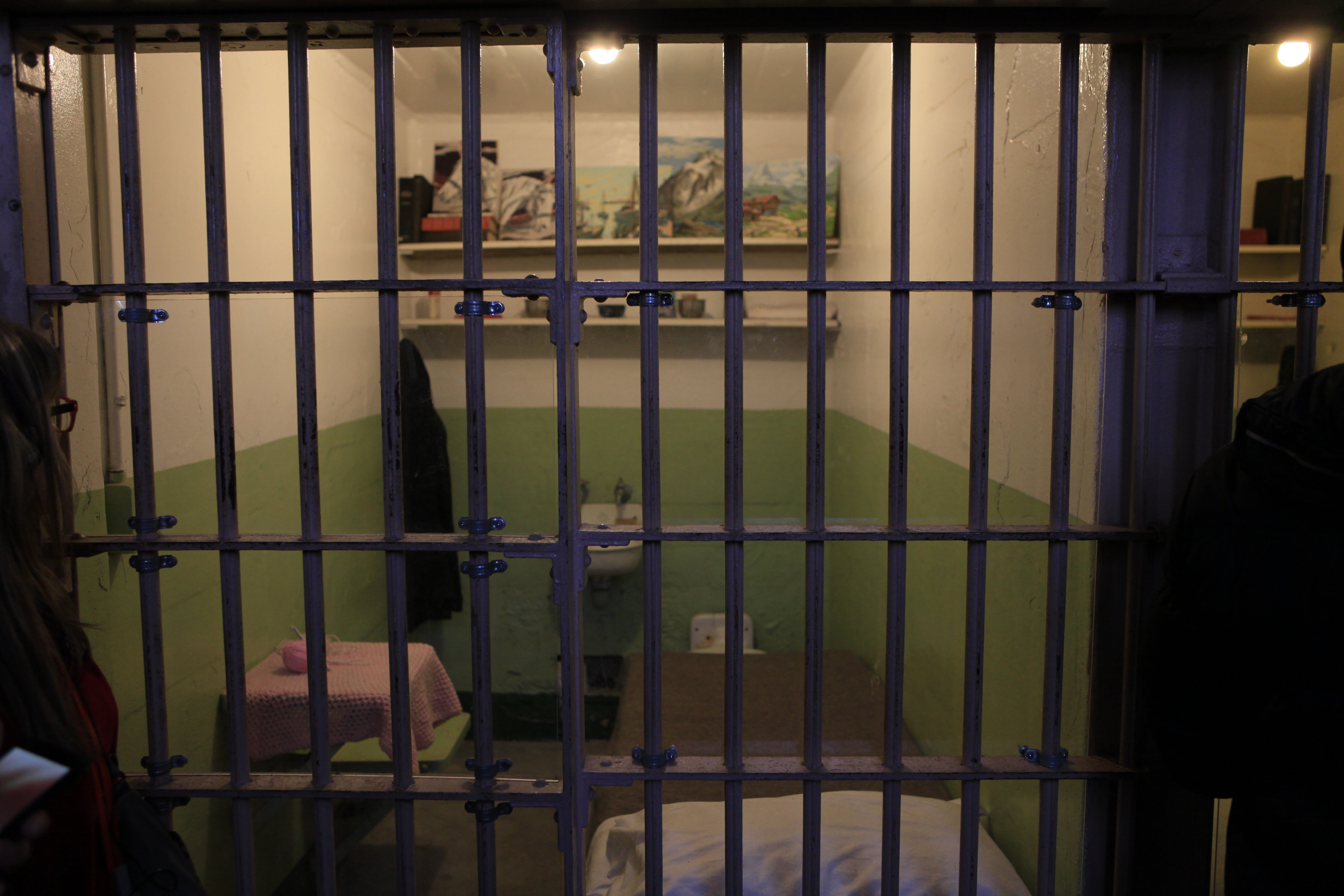
On the night of June 11, 1962, three inmates—brothers John and Clarence Anglin alongside fellow prisoner Frank Morris—executed one of the most intricate prison breaks in American history. Operating from inside the high-security Alcatraz Federal Penitentiary, located on an island in San Francisco Bay, the men spent months preparing for their flight. Using sharpened spoons, a homemade drill fashioned from a vacuum cleaner motor, and improvised tools, they chipped away at the aging concrete around the air vents in their cell walls.
Their plan required extraordinary deception. To delay discovery during routine night counts, the men constructed detailed papier-mâché dummy heads using soap, toilet paper, real human hair gathered from the prison barbershop, and paint. These realistic decoys were placed in their cots, tucked beneath blankets. Once out of their cells, the men climbed an utility corridor, reached the roof, descended a stovepipe, and navigated past armed towers to reach the cold shoreline of the bay.
To cross the treacherous waters of San Francisco Bay, the escapees built an inflatable raft and makeshift life vests out of more than 50 stolen rubberized raincoats, sealed together with heat from steam pipes. They launched into the water late at night, targeting Angel Island or the Marin County shoreline.
Escape Timeline Overview (June 1962)
- Cell Vent Excavation
- Dummy Heads Placed
- Roof Access via Utility Corridor
- Roof Exit
- Stovepipe Descent
- Bay Shoreline Launch
When guards discovered the dummy heads the following morning, a massive land, air, and sea search ensued. FBI agents, Coast Guard personnel, and local authorities scoured San Francisco Bay and the surrounding terrain. Despite finding bits of raincoat material, a waterproof bag containing personal photographs and letters belonging to the Anglins, and a single homemade life vest washed ashore on Angel Island, no human remains or definitive proof of life were recovered.
The Federal Bureau of Investigation (FBI) officially closed its investigation in 1979, transferring jurisdiction to the U.S. Marshals Service. While the FBI concluded that the men likely drowned due to the freezing water temperatures, swift tides, and lack of ocean-going equipment, the U.S. Marshals have maintained an open warrant for each man, treating the escapees as active fugitives.
The Death of Rachael Anglin and the 1978 Funeral
The Anglin family was exceptionally close-knit. Raised in a large farming family of 14 children, John and Clarence Anglin grew up moving between Georgia and Florida, working seasonal agricultural jobs alongside their siblings. Their parents, George Robert Anglin and Rachael Miller Anglin, instilled deep family bonds, and the brothers were known to keep in touch with their relatives despite their turbulent criminal lives.
Rachael Anglin passed away in November 1978 in Florida. By that time, 16 years had elapsed since the daring escape from Alcatraz. Because law enforcement agencies knew that escapees frequently attempt to contact family members during major life events—such as weddings, serious illnesses, or deaths—the U.S. Marshals Service and local law enforcement monitored the family closely surrounding the funeral service in Ruskin, Florida.
Key Anglin Family Milestones
- 1930 & 1931: Births of John and Clarence Anglin
- June 1962: Escape from Alcatraz Federal Penitentiary
- November 1978: Death of mother Rachael Miller Anglin
- 1978 Funeral: Reported sighting of disguised mourners
Federal agents conducted discrete surveillance on the funeral home and the burial site. Authorities anticipated that if John and Clarence were alive, they might attempt to pay their final respects. Despite this heightened security posture, no arrests were made, and no men identifying themselves as John or Clarence were apprehended at the scene.
However, the absence of an arrest did not end the speculation. Immediately following the services, rumors began circulating within the local community and among family members that the brothers had indeed managed to attend the ceremony without being captured by the watching federal agents.
The Disguised Mourners: Accounts and Witness Testimony
The claim that John and Clarence Anglin attended Rachael Anglin’s funeral rests primarily on statements made by family members and observers present during the 1978 service. Over the decades, several Anglin siblings—most notably their brother Robert Anglin and sister Marie Anglin Mears—publicly shared accounts detailing unusual occurrences at the funeral home.
According to these accounts, two tall women wearing heavy makeup, elaborate dresses, and wide-brimmed hats with veils arrived at the funeral home to view Rachael Anglin's body. Witnesses noted several physical characteristics that seemed unusual:
- Height and Stature: The two individuals were unusually tall for women of that era, matching the physical height profiles of John (5'10") and Clarence (5'11").
- Heavy Disguises: Both attendees wore thick, opaque makeup and veils that obscured their facial features, making close visual identification difficult for onlookers.
- Brief Presence: The individuals arrived toward the end of the viewing, spent a brief period near the casket, offered condolences without speaking extensively, and departed before law enforcement officers could approach or question them.
Family members later asserted that the two "women" were actually John and Clarence disguised in drag to bypass the FBI and U.S. Marshals agents watching the venue. Relatives suggested that the family recognized the brothers but intentionally remained silent to protect them from law enforcement.
From a investigative standpoint, federal authorities examined these claims thoroughly. U.S. Marshals investigators acknowledged receiving reports about disguised attendees, but they were unable to confirm the identities of the veiled women. Without physical evidence, fingerprints, or clear photographic documentation from the day of the funeral, the incident remains classified by law enforcement as an unverified sighting rather than definitive proof of survival.
Key Claims and Evidence Surrounding Survival
The funeral incident is not the only piece of lore suggesting that the Anglin brothers survived their ordeal in San Francisco Bay. Over the past six decades, multiple bits of evidence and witness testimony have surfaced, creating a complex web of claims that continue to challenge the official drowning theory.
1. Signed Christmas Cards
For several years following the 1962 escape, Rachael Anglin received anonymous Christmas cards signed with the names "John" and "Clarence." The cards contained no return address, but handwriting experts examined the signatures on multiple occasions. While some examinations proved inconclusive due to the brevity of the writing, family members remained convinced the handwriting matched that of the brothers.
2. The 1975 Brazil Photograph
In 2015, the History Channel broadcast a documentary featuring a photograph allegedly taken in Brazil in 1975 by a family friend named Fred Brizzi. The photograph depicts two tanned men with sunglasses standing near a dirt road alongside large termite mounds.
Members of the Anglin family provided the photograph to investigators, claiming Brizzi had encountered the brothers working as farmers in South America. Facial recognition experts tasked with analyzing the image concluded that the facial structures of the men in the 1975 photograph were consistent with John and Clarence Anglin, though the analysis could not serve as absolute legal proof.
1975 Brazil Photo Evidence Analysis
- Physical Matching
- Facial structure aligns with mugshots
- Height ratio between men is consistent
- Examined by facial identification experts
- Contextual Limits
- Wearers wearing dark sunglasses
- Impossible to extract DNA from photo
- Origin of photo unverified by court
3. The 2013 Letter to San Francisco Police
In 2018, news outlets revealed that the San Francisco Police Department had received a letter in 2013 claiming to be written by John Anglin. The author stated:
"My name is John Anglin. I escape [sic] from Alcatraz in June 1962 with my brother Clarence and Frank Morris. I'm 83 years old and in bad shape. I have cancer. Yes we all made it that night but barely!"
The letter claimed that Frank Morris died in 2008 and Clarence Anglin died in 2011. The writer offered to surrender in exchange for medical treatment, stating he was living in Southern California. The Federal Bureau of Investigation analyzed the document for latent fingerprints, DNA, and handwriting comparison. The official FBI analysis was inconclusive, and no subsequent arrest was made.
4. Forensic DNA Analysis of Human Remains
Over the years, human bones have washed ashore around San Francisco Bay. In one prominent instance, remains discovered near Mt. Tamalpais in 1963 were suspected to belong to one of the escapees. However, modern DNA testing conducted on the remains—using reference samples provided by the Anglin family—conclusively ruled out both John and Clarence Anglin, proving the bones belonged to an unrelated individual.
Fact vs. Myth: Analyzing the Evidence Matrix
To evaluate the credibility of the primary claims surrounding the Anglin brothers' post-escape activities, it is helpful to contrast the family's assertions against the findings of law enforcement agencies.
| Event / Claim | Primary Source / Origin | Strengths of Evidence | Weaknesses / Law Enforcement Stance |
|---|---|---|---|
| Funeral Attendance in Disguise (1978) | Anglin family members & local witnesses | Multiple consistent eyewitness statements describing tall, veiled women. | No photographic evidence, fingerprints, or positive identification by federal agents on scene. |
| Signed Christmas Cards | Rachael Anglin / Family archives | Received for years after 1962; family recognized handwriting. | Inconclusive forensic handwriting analysis; missing postmarks or return addresses. |
| 1975 Brazil Photo | Fred Brizzi / History Channel (2015) | Modern forensic facial recognition indicated high structural similarity. | Photo age and origin hard to verify legally; subjects wear sunglasses obscuring eyes. |
| 2013 Hand-Written Letter | SFPD / Public disclosure (2018) | Detailed knowledge of the escape details; direct claim of survival. | FBI handwriting and DNA tests were inconclusive; author never established verified contact. |
| 1963 Bay Remains DNA | San Francisco Coroner | Initial physical location aligned with potential drift patterns. | Refuted: Modern DNA testing positively excluded both John and Clarence Anglin. |
Law Enforcement Position and Case Status
As of 2026, the U.S. Marshals Service continues to hold active arrest warrants for John Anglin, Clarence Anglin, and Frank Morris. Under federal law enforcement guidelines, fugitive cases involving prison escapes remain open until the individuals are confirmed dead by verified forensic evidence, or until they reach an age where survival is medically impossible.
The U.S. Marshals Service policy dictates that age-progressed drawings and updated facial profiles are generated periodically to assist law enforcement worldwide. If the Anglin brothers were alive today, they would be well past 90 years of age (John Anglin was born May 2, 1930, and Clarence Anglin was born May 11, 1931).
U.S. Marshals Investigative Protocol
- Active Fugitive Warrants Maintained
- Age-Progressed Imagery Updated Periodically
- Lead Verification via National Crime Information Center (NCIC)
- Case Remains Open Until Definitive Forensic Proof of Death (or Age Limit Reached)
Investigative agencies maintain that while the bay’s environmental conditions—specifically the 50°F (10°C) water temperature, strong ebb tides, and darkness—heavily favored drowning, the complete absence of bodies prevents the government from closing the file officially. Supervisory Deputy U.S. Marshal records indicate that leads, including historical sightings such as the 1978 funeral story, remain part of the master investigative record maintained in federal archives. For interested researchers, historical records of the federal investigation can be reviewed through the National Archives Alcatraz Files.
Common Misconceptions About the Alcatraz Escape
Given the decades of media coverage, documentaries, and cinematic adaptations—most notably the 1979 film Escape from Alcatraz starring Clint Eastwood—several misconceptions persist regarding the escapees and their post-1962 activities.
Misconception 1: The FBI Proved the Men Drowned Immediately
While the FBI's official narrative leaned heavily toward drowning, the Bureau never asserted it had concrete physical proof of death. The official decision to close the FBI investigation in 1979 was driven primarily by administrative transfer rules, handing long-term fugitive sweeps over to the U.S. Marshals Service rather than a definitive finding of mortality.
Misconception 2: The Funeral Story Was Created for Television
The account of the disguised mourners at Rachael Anglin's funeral was not an invention of modern cable television. Local law enforcement logs and family interviews from late 1978 confirm that rumors and witness statements existed at the time of the funeral. Federal agents were positioned at the funeral precisely because the hypothesis was taken seriously by investigators prior to any modern media dramatizations.
Misconception 3: No Gear from the Escape Was Ever Found
Federal investigators recovered several artifacts shortly after the escape. A waterproof bag containing personal photographs, names, and addresses of the Anglins' acquaintances was recovered from the water. Additionally, an improvised life jacket made from raincoat material was found washed up near Angel Island, alongside remnants of wood used for paddles. What was never recovered were the physical bodies of the three men.
Artifact Identification & Recovery (June 1962)
- Recovered: Waterproof bag (Personal letters, family photos)
- Recovered: Improvised rubber life vest (Angel Island)
- Recovered: Remnants of makeshift wooden paddle
- UNRECOVERED: Human remains of John Anglin, Clarence Anglin, or Frank Morris
Researching Federal Cold Cases and Historical Archives
For historians, criminologists, and true crime enthusiasts seeking to examine primary source documents related to the 1962 Alcatraz escape and subsequent lead reports, official government databases offer public access under the Freedom of Information Act (FOIA).
- FBI Vault Archives: The Bureau maintains digitized copies of the original 1962–1979 investigative files. Readers can inspect raw field notes, interview summaries of family members, and agent logs detailing early search efforts via the FBI Vault Records.
- U.S. Marshals Service Files: Case updates, age-progressed sketches, and official press announcements regarding active escapee warrants are cataloged through the Department of Justice public media portals.
- National Archives and Records Administration (NARA): NARA holds extensive records from the Bureau of Prisons (Record Group 129), including inmate behavioral files, cell inspection logs, and internal incident reports generated by Alcatraz wardens following the discovery of the dummy heads.
Frequently Asked Questions
Did law enforcement arrest anyone at Rachael Anglin's funeral in 1978?
No. While federal agents and local officers monitored the funeral service in Florida due to tips that the Anglin brothers might attempt to attend, no individuals were arrested or formally identified as John or Clarence Anglin during the proceedings.
Why didn't federal agents stop the disguised women at the funeral?
Agents on scene lacked immediate probable cause or positive identification to detain attendees without proof. The veiled individuals arrived late, remained brief in their visit, and departed quickly, preventing law enforcement from verifying their identities or conducting fingerprints at the location.
What happened to Frank Morris during the escape?
Frank Morris escaped alongside the Anglin brothers on the night of June 11, 1962. Like John and Clarence, his body was never recovered from San Francisco Bay, and his ultimate fate remains unknown. He also remains on the active fugitive list of the U.S. Marshals Service.
Is the 1975 Brazil photo considered solid proof of survival?
While facial identification experts concluded that the physical features of the men in the 1975 photograph closely match John and Clarence Anglin, the photograph alone does not meet the legal threshold of proof required by federal courts to close the case.
Why is the Alcatraz escape case still open today?
The U.S. Marshals Service keeps fugitive cases open until the subject is proven dead or reaches an age where survival is physically impossible (typically set at 100 years of age). Because no bodies were ever recovered, the warrants remain active.
Summary and Key Takeaways
The account of John and Clarence Anglin attending their mother's funeral in 1978 remains one of the most compelling chapters of the Alcatraz escape saga. While law enforcement authorities classify the sighting as unverified due to a lack of physical evidence or arrests, detailed witness testimonies from family members and local observers continue to sustain the narrative. Combined with signed Christmas cards, the 1975 Brazil photograph, and unresolved forensic leads, the funeral story highlights why the 1962 escape from "The Rock" remains America’s most famous cold case.
For those interested in exploring historical federal records or reviewing official escape reports, consulting primary sources at the National Archives or the U.S. Marshals Service provides direct access to the evidence that keeps this historical mystery alive.
EDITORIAL CATEGORY METADATA: