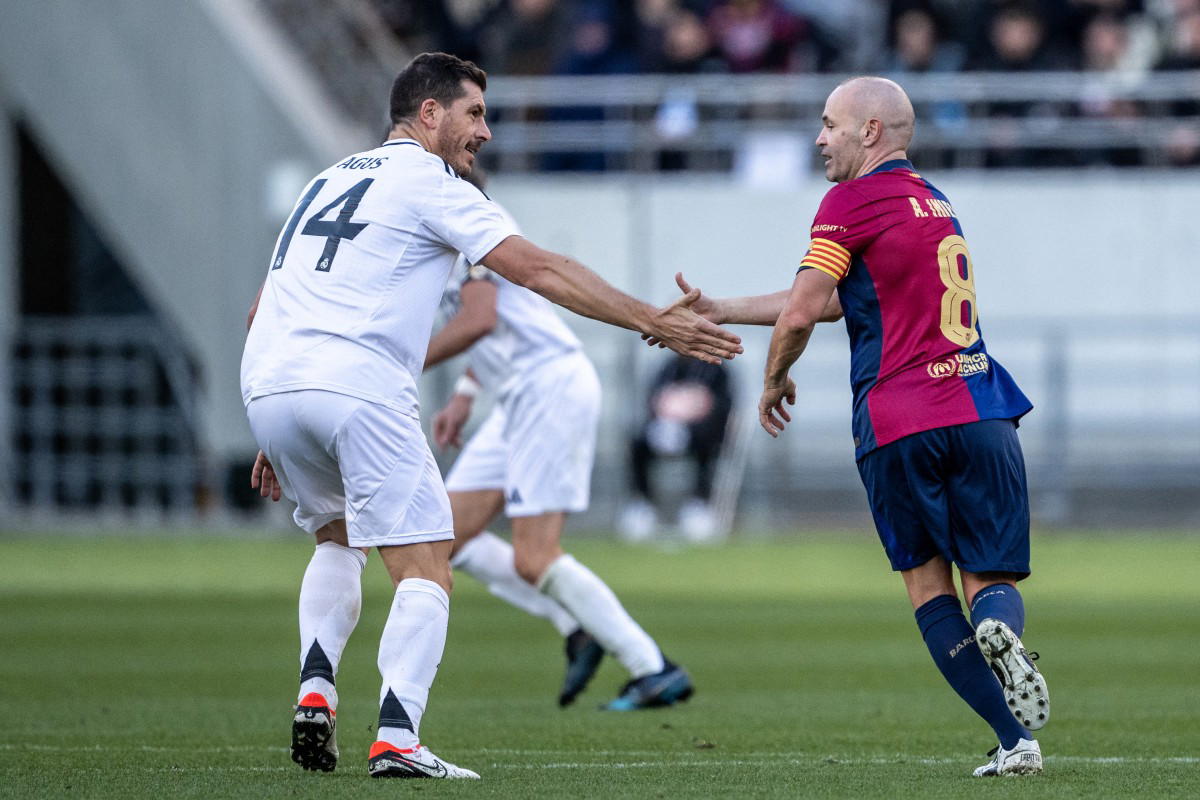
Andrés Iniesta is a retired Spanish professional footballer widely regarded as one of the greatest midfielders in the history of the sport. His career is defined by a 22-year tenure at FC Barcelona, where he secured 32 major trophies, and an iconic international career with Spain, highlighted by his winning goal in the 2010 FIFA World Cup Final.
The Foundations of Greatness: La Masia and Early Development
The story of Andrés Iniesta began in the small village of Fuentealbilla, but his footballing identity was forged in La Masia, FC Barcelona’s world-renowned youth academy. At the age of 12, after an impressive performance for Albacete at a youth tournament, Iniesta moved to Barcelona. This transition was famously difficult for him; he was a shy child who suffered immensely from homesickness, a period he later described as one of the hardest of his life.
However, his technical prowess was undeniable. While playing for the Under-15s, he caught the eye of then-first-team captain Pep Guardiola. Legend has it that Guardiola turned to Xavi Hernandez and said, "You will retire me, but this kid (Iniesta) will retire us both." This prediction underscored the unique profile Iniesta possessed: a blend of balance, vision, and an almost supernatural ability to retain possession under pressure.
By 2002, Iniesta made his first-team debut under Louis van Gaal in a Champions League match against Club Brugge. While he initially served as a versatile utility player, appearing as a winger or an attacking midfielder, his destiny lay in the heart of the pitch. His early years were a period of physical maturation and tactical education, as he learned to navigate the high-intensity environment of La Liga while refining the "tiki-taka" style that would soon define a generation.
The Barcelona Golden Era: Dominance and Tiki-Taka
Between 2004 and 2018, Andrés Iniesta became the heartbeat of an FC Barcelona side that many consider the greatest club team ever assembled. Under managers like Frank Rijkaard and, most notably, Pep Guardiola, Iniesta formed a telepathic partnership with Xavi Hernandez and Sergio Busquets. This midfield trio revolutionized football, prioritizing positional play, short passing, and geometric precision over brute strength.
The Guardiola Revolution (2008–2012)
The appointment of Pep Guardiola in 2008 catalyzed Iniesta’s transformation from a world-class talent to a global icon. In the 2008-2009 season, Barcelona achieved an unprecedented sextuple, winning all six trophies available in a single calendar year. Iniesta’s contribution was epitomized by the "Iniestazo"—his stunning last-minute goal against Chelsea at Stamford Bridge that sent Barcelona to the Champions League final.
During this period, Iniesta became synonymous with "La Pausa," the ability to momentarily stop or slow down the game to wait for a teammate's run or to draw a defender out of position. His dribbling was not characterized by explosive speed, but by croqueta—a lightning-fast shift of the ball from one foot to the other—which allowed him to glide through congested midfields as if the opposition were statues.
Continued Success and the 2015 Treble
Even after Guardiola's departure, Iniesta remained a vital pillar of the team. Under Luis Enrique in 2015, he captained the side to another historic treble. By this stage of his career, he had transitioned into a more senior leadership role, mentoring younger players while still delivering "Man of the Match" performances in major finals, including the 2015 Champions League final against Juventus.
International Glory: The Soul of the Spanish National Team
While his club achievements were staggering, Iniesta’s legacy is perhaps most firmly cemented by his performances for the Spanish national team. He was the central figure in Spain’s "Triple Crown"—winning Euro 2008, the 2010 World Cup, and Euro 2012.
The 2010 FIFA World Cup Final
The pinnacle of his career occurred on July 11, 2010, in Johannesburg. In the 116th minute of a grueling World Cup final against the Netherlands, Iniesta received a pass from Cesc Fàbregas and struck a half-volley into the far corner of the net. Beyond the importance of the goal, his celebration became legendary; he removed his jersey to reveal a shirt dedicated to his late friend Dani Jarque, a gesture of humility and humanity that earned him the respect of football fans worldwide, including those of rival teams.
Euro 2012 and Individual Recognition
In Euro 2012, Iniesta was named the UEFA Player of the Tournament. Despite the presence of high-scoring forwards, Iniesta’s influence was so profound that his ability to dictate the rhythm of matches was deemed more valuable than goals or assists. He finished his international career in 2018 with 131 caps, having never received a red card in professional football—a testament to his discipline and sportsmanship.
The Global Ambassador: Vissel Kobe and the UAE
In 2018, after 674 appearances for Barcelona, Iniesta moved to the Japanese J1 League to join Vissel Kobe. This move was not merely a "retirement tour"; Iniesta took his role seriously, helping the club win the Emperor's Cup in 2019 and the Japanese Super Cup in 2020. His presence significantly raised the profile of Asian football, bringing European tactical standards to the J-League.
After five successful seasons in Japan, Iniesta moved to the United Arab Emirates in 2023 to play for Emirates Club. Even in his late 30s, his technical quality remained intact. His time in the UAE allowed him to further his business interests and football academies, focusing on the development of youth players in the Middle East before officially announcing his retirement from professional football in October 2024.
Technical Analysis: The Anatomy of Iniesta’s Style
To understand Iniesta's career, one must analyze the technical attributes that made him an anomaly in a sport increasingly dominated by physical powerhouses.
- Close Control and Dribbling: Iniesta utilized a low center of gravity and impeccable touch to shield the ball. He rarely "beat" players with pace; instead, he used feints and body shifts to make defenders commit to the wrong direction.
- Spatial Awareness: He possessed a 360-degree vision of the pitch. He often knew his next three passes before the ball even reached his feet, a trait developed through years of Rondo drills at La Masia.
- Versatility: While best known as an interior (central midfielder), he was equally effective as a "false winger." On the left flank, he would drift inside to create overloads in the midfield, a tactical hallmark of the Barcelona system.
- Big Game Temperament: Iniesta was famously "clutch." He reserved his best performances for finals, winning the Man of the Match award in the finals of the World Cup, the Champions League, and the European Championship.
Career Statistics and Honors Summary
The following table outlines the major honors and career milestones achieved by Andrés Iniesta across his club and international career.
| Category | Achievement / Detail |
|---|---|
| Total Professional Appearances | Over 900 (Club and Country) |
| FC Barcelona Trophies | 32 (including 9 La Liga, 4 Champions League) |
| International Trophies | 1 World Cup (2010), 2 European Championships (2008, 2012) |
| Individual Awards | UEFA Player of the Tournament (2012), 3x IFFHS World's Best Playmaker |
| Ballon d'Or Standing | 2nd Place (2010), 3rd Place (2012) |
| Vissel Kobe Honors | Emperor's Cup (2019), J1 League (2023 - part-season) |
| Disciplinary Record | Zero Red Cards in his entire professional career |
Post-Retirement and the 2026 Perspective
As of 2026, Andrés Iniesta has transitioned fully into his role as a global football ambassador and entrepreneur. His brand, Never Say Never (NSN), continues to manage talent and sports marketing, while his winery, Bodega Iniesta, remains a successful venture in his hometown.
His retirement in late 2024 marked the end of an era for the "midfield architect" archetype. In 2026, football coaching philosophies continue to cite Iniesta’s career as the blueprint for developing technical midfielders. He is frequently seen at FIFA and UEFA events, often rumored to be pursuing his coaching badges to eventually return to the FC Barcelona dugout in a technical capacity.
Frequently Asked Questions
Why didn't Andrés Iniesta ever win the Ballon d'Or?
Andrés Iniesta came closest in 2010, finishing second to his teammate Lionel Messi. The primary reason he never won the award was the sheer statistical dominance of Messi and Cristiano Ronaldo, who scored 40–60 goals per season. However, many pundits and players, including France Football (the organizers of the award), have expressed that his contribution to the game deserved the trophy, particularly after his World Cup-winning performance.
How many goals did Iniesta score in his career?
Iniesta was never a high-volume goalscorer, finishing his career with approximately 80–90 goals across all competitions. His value was measured in "pre-assists" and the creation of goal-scoring opportunities. He famously stated that he preferred the feeling of a perfect pass to a goal, though he developed a reputation for scoring vital goals in the most important moments.
What is Andrés Iniesta doing now in 2026?
In 2026, Iniesta is focused on his international football academies and his sports management company, NSN. He is also a prominent figure in the preparation for upcoming major tournaments, acting as an ambassador for Spanish football. He remains active in the business world, overseeing his vineyard and various tech investments related to sports performance.
What was the "Iniestazo"?
The "Iniestazo" refers to the dramatic goal Iniesta scored against Chelsea in the 93rd minute of the 2009 Champions League semi-final. With Barcelona on the verge of elimination, his curling shot from outside the box secured a place in the final, which Barcelona ultimately won. This moment is often cited by fans as the catalyst for the "Pep Team" era.
Was Iniesta ever sent off?
No. One of the most remarkable statistics of Andrés Iniesta’s career is that he never received a red card in over 900 professional matches for club and country. This record reflects his composure and his focus on technical play rather than physical confrontation.
Future Recommendations for Aspiring Midfielders
For players looking to emulate Iniesta’s success, the focus should not be on physical strength but on cognitive development. Studying Iniesta's career highlights provides a masterclass in "scanning"—the act of constantly looking over one's shoulder to assess the positions of teammates and opponents.
Modern training should prioritize ball retention in tight spaces and the development of a "first touch" that sets up the next action immediately. As football continues to become more athletic in 2026, the "Iniesta model" remains the gold standard for how technical intelligence can overcome physical disadvantages on the pitch.