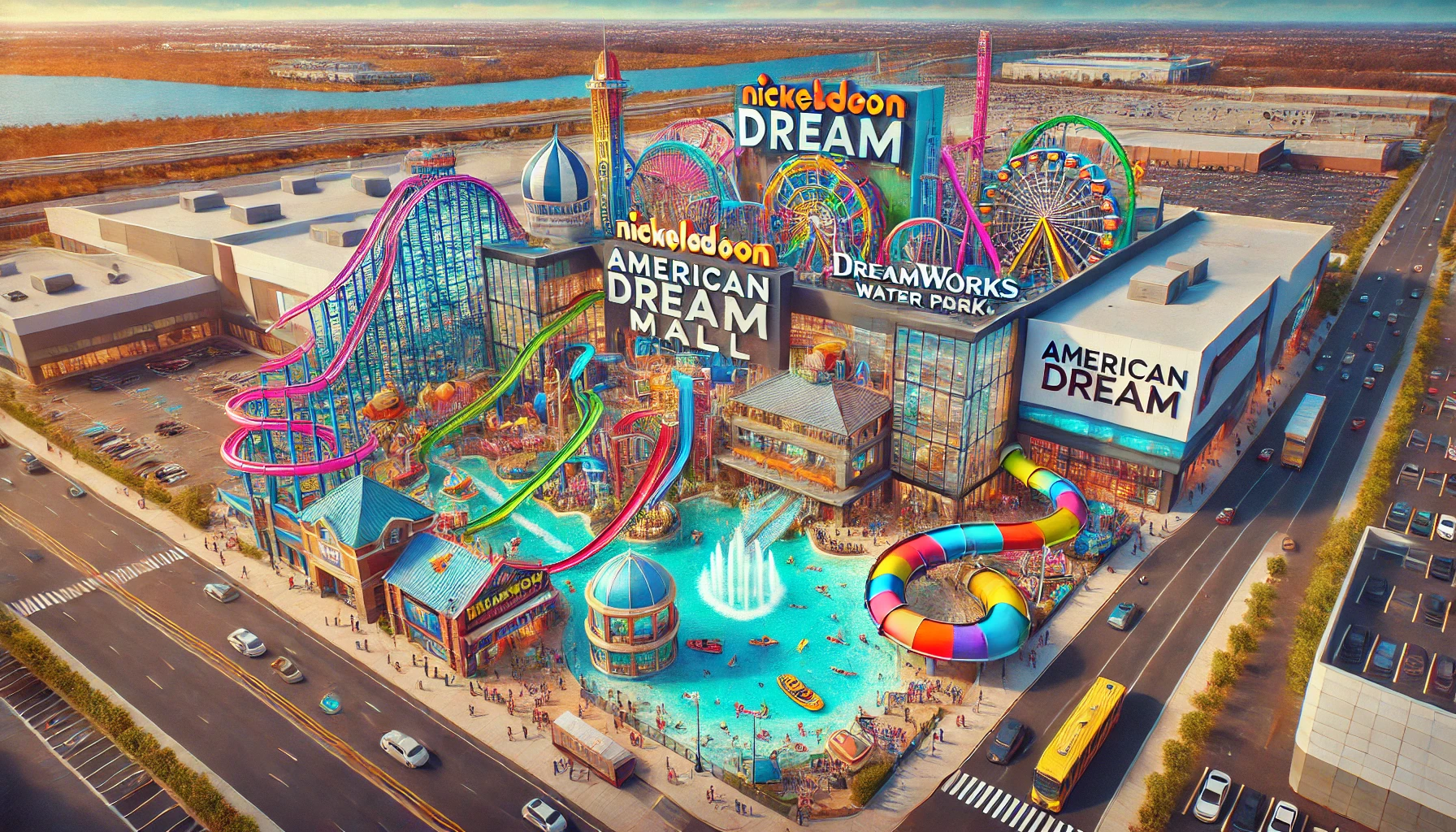
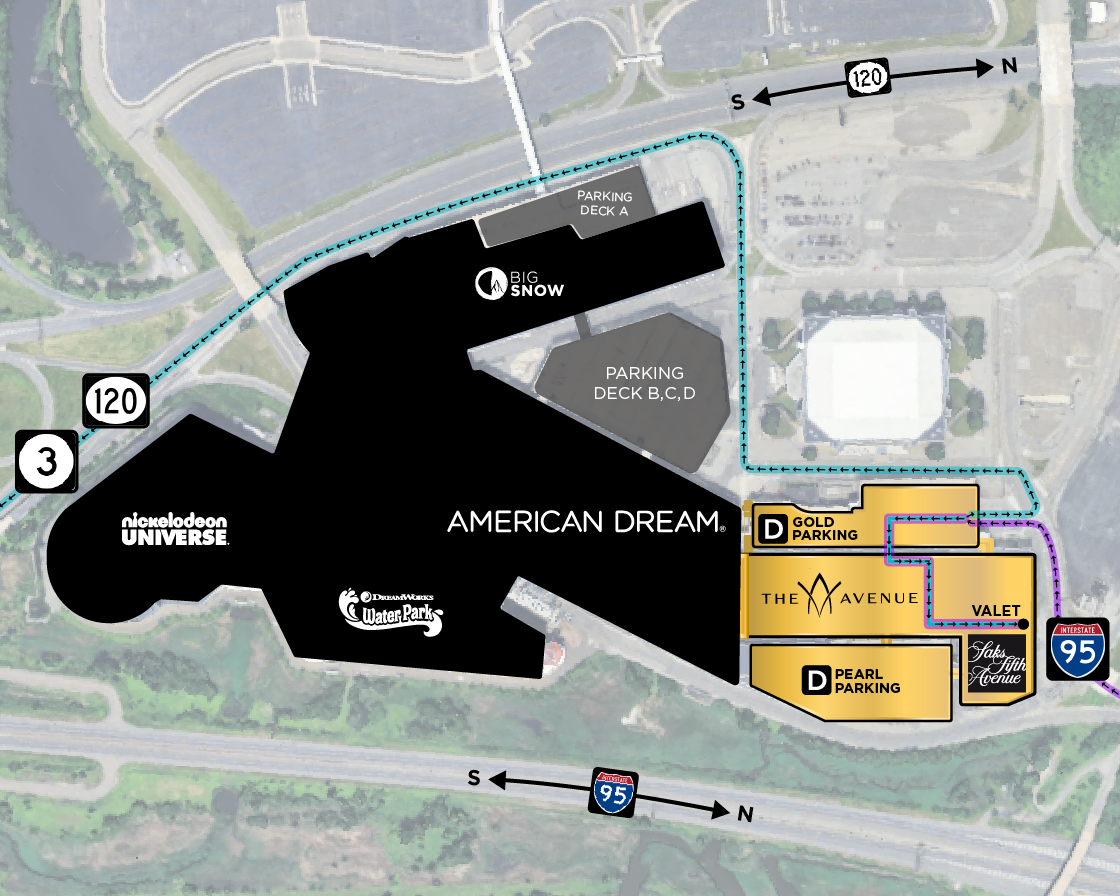
As of 2026, the American Dream mega-complex in East Rutherford, New Jersey, maintains an estimated enterprise valuation between $3.2 billion and $4.1 billion. Current annual gross revenue has stabilized at approximately $620 million, supported by a unique 50/50 revenue split between luxury retail sales and high-margin entertainment attractions like Nickelodeon Universe and DreamWorks Water Park.
The Evolution of the American Dream Economic Model
The American Dream complex, owned and operated by the Triple Five Group, represents one of the most ambitious and financially complex real estate projects in North American history. Originally conceived as "Xanadu" in the early 2000s, the project underwent multiple ownership changes and radical redesigns before Triple Five took control in 2011. By 2026, the transition from a traditional shopping mall to a "global destination for entertainment and retail" is complete, though the financial legacy of its development remains a central pillar of its valuation snapshot.
The "American Dream Corporation"—often referred to in financial filings via its primary operating entity, Ameream LLC—operates on a scale that defies standard retail metrics. Unlike a conventional regional mall that relies on anchor department stores for 70% of its footprint, American Dream allocates roughly 51% of its 3 million square feet to entertainment and dining. This strategic pivot was designed to insulate the property from the "retail apocalypse" and the rise of e-commerce, creating a "moat" based on physical experiences that cannot be replicated online.
Historical Context and Development Costs
To understand the 2026 valuation, one must look at the capital infusion required to bring the project to fruition. The total construction cost exceeded $5 billion, funded through a volatile mix of private equity, senior construction loans, and approximately $1.1 billion in municipal bonds. These bonds are divided into two primary categories: those backed by the project’s Payment in Lieu of Taxes (PILOT) agreement and those backed by state sales tax grants.
The early years following the 2019 opening were marred by the global pandemic, which forced a total shutdown only months after the initial launch. However, the subsequent years (2022–2025) saw a methodical restructuring of debt. By 2026, the corporation has moved past the immediate "default" anxieties of the early 2020s, having successfully renegotiated terms with major lenders including JPMorgan Chase and Goldman Sachs.
2026 Revenue Snapshot: Breaking Down the Income Streams
Revenue at American Dream is bifurcated into two distinct but synergistic streams: Attractions & Entertainment and Retail & Dining. In the 2026 fiscal year, the synergy between these two sectors has reached a point of equilibrium that many analysts previously thought impossible for a Meadowlands-based project.
The Entertainment Engine: High-Margin Performance
The entertainment division remains the primary driver of foot traffic and high-margin revenue. Unlike retail, where the landlord typically collects a base rent plus a percentage of sales, the entertainment venues are largely owned and operated by the corporation itself, allowing for the capture of full ticket prices, concessions, and merchandise margins.
- DreamWorks Water Park: This remains the crown jewel of the complex. With a consistent climate-controlled environment, it draws visitors year-round. In 2026, average daily attendance has stabilized, with premium "Skybox" rentals contributing significantly to the average revenue per user (ARPU).
- Nickelodeon Universe: As the largest indoor theme park in the Western Hemisphere, its revenue is bolstered by seasonal events and tiered pass pricing. The park’s integration with popular IP (Intellectual Property) ensures a steady stream of family-oriented visitors from the tri-state area and international tourists.
- Big SNOW American Dream: The indoor ski slope serves a niche but loyal market. Beyond recreational skiing, its 2026 revenue model includes professional training partnerships and corporate teambuilding events, making it a reliable contributor to the bottom line.
Retail and "The Avenue": The Luxury Pivot
The retail component of American Dream in 2026 is dominated by The Avenue, a luxury wing that houses brands such as Hermès, Tiffany & Co., and Saks Fifth Avenue. This segment has outperformed the broader retail market by focusing on "ultra-luxury" consumers who are less sensitive to economic volatility.
The revenue from retail is structured through complex lease agreements. While base rents provide a floor for the corporation’s income, the "percentage rent" clauses have become increasingly lucrative as gross sales per square foot have risen to approximately $900 across the luxury wing. This is a significant increase from the $600-$700 seen in the early 2020s.
Enterprise Valuation: Methodology and Market Realities
Valuing a property like American Dream in 2026 requires a multi-disciplinary approach. Standard "comparable sales" models fail because there are no direct peers of this scale in the United States. Instead, appraisers utilize a combination of the Income Capitalization Approach and the Discounted Cash Flow (DCF) method.
The Income Capitalization Approach
This method focuses on the Net Operating Income (NOI) produced by the complex. By 2026, the project has achieved an occupancy rate of approximately 88%. When applying a capitalization rate (Cap Rate) that reflects the unique risks and rewards of a "mega-mall," the valuation sits in the $3.5 billion range.
The "risk premium" remains high due to the property's massive overhead and energy costs. Operating a 3-million-square-foot indoor facility with an indoor water park and ski slope requires enormous utility expenditures, which are factored into the NOI before the valuation is finalized.
The 2026 Valuation Range
| Component | Estimated Value (Low) | Estimated Value (High) | Valuation Driver |
|---|---|---|---|
| Retail Real Estate | $1.8 Billion | $2.2 Billion | Occupancy and Luxury PSF Sales |
| Attractions & IP | $1.1 Billion | $1.4 Billion | Ticket Yields and Brand Partnerships |
| Parking & Ancillary | $300 Million | $500 Million | Daily Rates and Event Pricing |
| Total Enterprise Value | $3.2 Billion | $4.1 Billion | Stabilized 2026 Cash Flow |
Note: These figures are estimates based on reported 2024-2025 growth trajectories and current 2026 market conditions.
Debt Structure and Financial Health
The primary headwind facing the American Dream Corporation in 2026 is its debt service. While revenue is robust, the cost of servicing over $2.7 billion in total debt consumes a significant portion of the gross income.
PILOT Bonds and Municipal Obligations
The $800 million in PILOT bonds are a unique feature of this valuation. These bonds are technically a debt of the New Jersey Sports and Exposition Authority (NJSEA), but they are serviced by payments made by the developer. In 2026, these payments are a fixed cost that reduces the "Free Cash Flow" available for reinvestment. Investors and bondholders monitor the "Debt Service Coverage Ratio" (DSCR) closely; as of mid-2026, the ratio has improved to roughly 1.15x, indicating that the project generates enough cash to cover its interest and principal payments with a small buffer.
The Role of Triple Five Group
The valuation is also influenced by the financial health of the parent company, Triple Five Group. As a private entity, Triple Five does not disclose its full balance sheet, but its ability to cross-collateralize American Dream with other assets (like Mall of America) has been a double-edged sword. In 2026, the "contagion risk" from other properties has lessened as the retail sector has stabilized globally.
Operational Costs and the Impact of Inflation
By 2026, inflationary pressures on labor and energy have become a permanent fixture of the operational landscape. For American Dream, these costs are particularly acute:
- Energy Consumption: Maintaining a tropical 84-degree environment for the water park and a 26-degree environment for the ski slope simultaneously is an engineering and financial challenge. The corporation has invested in on-site renewable energy offsets to mitigate these costs, which has slightly improved the valuation by lowering long-term OpEx (Operating Expenses).
- Labor Markets: The complex requires thousands of employees ranging from specialized ride technicians to luxury retail specialists. In 2026, rising wage floors in New Jersey have pushed the corporation to implement more automation in ticketing and guest services to maintain margins.
Market Positioning and Competition
The 2026 snapshot shows American Dream occupying a unique market position. It is no longer just a "New Jersey mall"; it is a regional destination that competes more with Broadway and Manhattan museums than with local shopping centers.
- Tourism Impact: Approximately 25% of the 2026 revenue is derived from international and out-of-state tourists. The proximity to MetLife Stadium—especially following the global attention of the 2026 FIFA World Cup hosted in the Meadowlands—provided a massive one-time revenue spike that helped the corporation solidify its 2026 valuation.
- Digital Integration: The "American Dream App" has become a significant data asset. By 2026, the corporation monetizes guest data through targeted advertising and personalized retail offers, adding a "tech-multiple" to the valuation that was absent during the initial opening phases.
Frequently Asked Questions
Is the American Dream Corporation publicly traded?
No, the American Dream complex is privately owned by the Triple Five Group, a Canadian conglomerate. There is no public stock ticker for American Dream. Financial performance is primarily tracked through municipal bond disclosures and periodic reports from the New Jersey Sports and Exposition Authority (NJSEA).
How did the 2026 World Cup affect the corporation's revenue?
The 2026 FIFA World Cup, with matches held at the adjacent MetLife Stadium, served as a historic catalyst for revenue. Foot traffic during the tournament month increased by over 300%, leading to record-breaking sales in the dining and entertainment sectors. This event is credited with providing the liquidity needed for the corporation's 2026 debt-service reserves.
What is the current occupancy rate of the retail space?
As of 2026, the occupancy rate is approximately 88%. While some smaller units in the "bridge" sections of the mall experience turnover, the high-profile "Avenue" and the major entertainment anchors remain 100% occupied under long-term leases.
Does American Dream make a profit?
In 2026, the complex is "cash-flow positive" on an operational basis, meaning its revenue exceeds its daily operating expenses. However, after accounting for the massive interest payments on its $2.7 billion debt stack, the "net profit" is modest. The primary goal of the current management is debt reduction and long-term asset appreciation.
What is the biggest risk to the 2026 valuation?
The primary risk remains interest rate volatility and the potential for a localized economic downturn in the tri-state area. Because the "experience economy" relies on discretionary spending, any contraction in middle-class or luxury consumer confidence directly impacts the revenue generated by the parks and high-end retail stores.
Final Recommendation and Next Actions
For investors, bondholders, and market analysts, the 2026 snapshot of the American Dream Corporation suggests a transition from a "high-risk development project" to a "stabilized institutional asset." While the debt load remains significant, the proven resilience of the entertainment-retail hybrid model provides a blueprint for future mega-developments.
Next Actions for Stakeholders:
- Monitor EMMA Disclosures: Investors should regularly check the Electronic Municipal Market Access (EMMA) system for updated financial disclosures regarding the PILOT bonds.
- Assess Tourism Trends: Keep a close eye on NYC tourism recovery statistics, as international visitors represent the highest-spending demographic for the complex.
- Evaluate Energy Costs: For a technical valuation, analyze the impact of New Jersey’s 2026 energy mandates on the facility's massive HVAC and water filtration requirements.
The American Dream's journey from a "white elephant" to a multibillion-dollar revenue engine serves as a testament to the power of the experience economy in the mid-2020s.