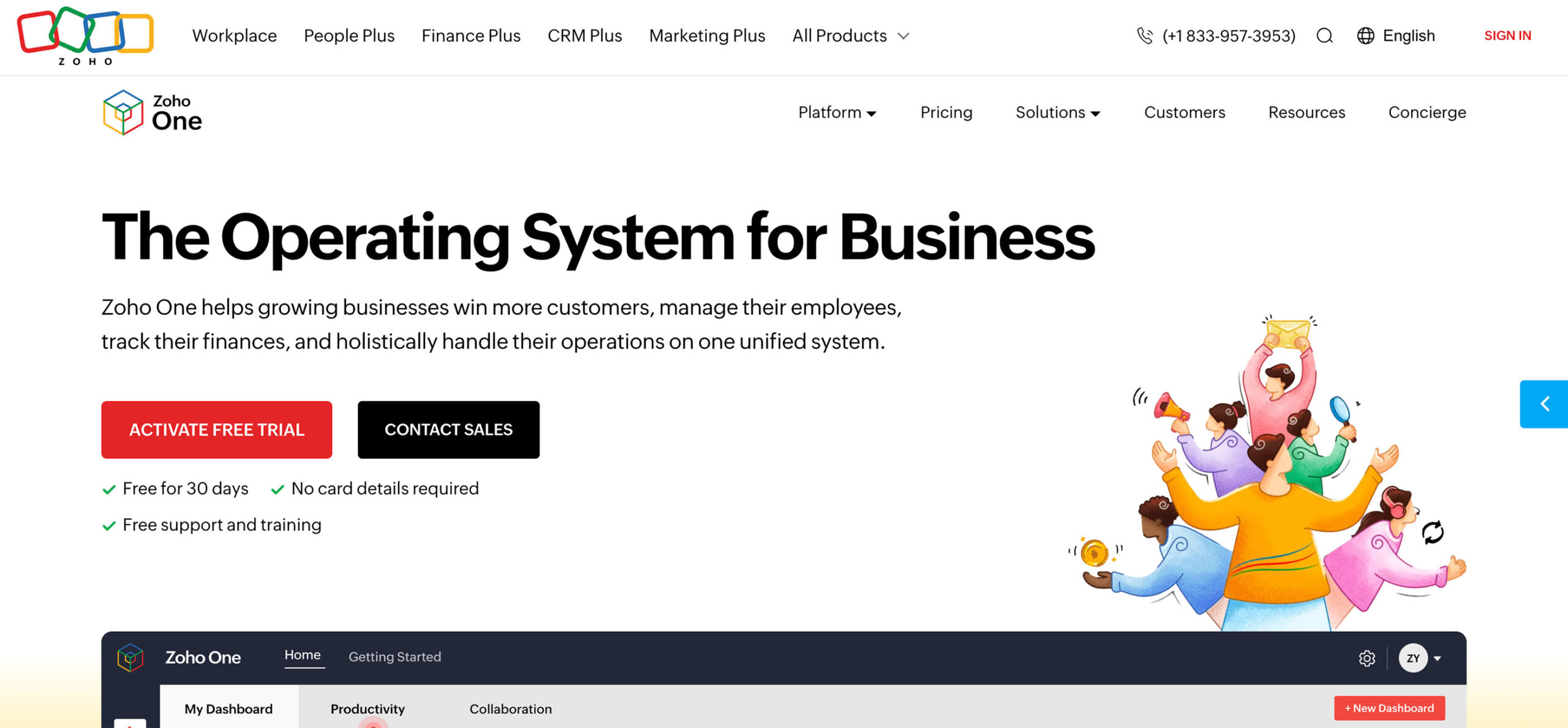
Choosing an alternative to Zoho depends on whether you need a replacement for the entire Zoho One suite or a specific application like Zoho CRM, Books, or Projects. Top alternatives in 2026 include HubSpot for integrated marketing and sales, Microsoft 365 for enterprise-grade productivity, and Monday.com for highly customizable workflow management and team collaboration.
Selecting the right software ecosystem is one of the most consequential decisions a business leader makes. Zoho has long been a dominant player due to its "operating system for business" model, offering over 50 integrated applications. However, as we navigate 2026, many organizations find that Zoho’s breadth sometimes comes at the expense of depth, user interface consistency, and ease of deployment. Whether you are outgrowing Zoho’s CRM or finding the inter-app integrations too rigid, several specialized and suite-based platforms offer compelling advantages.
Why Businesses Seek an Alternative to Zoho in 2026
The primary driver for moving away from Zoho is often the "Jack of all trades, master of none" phenomenon. While Zoho One provides incredible value on a per-app basis, the individual modules can feel disjointed. In 2026, the demand for seamless User Experience (UX) and advanced Artificial Intelligence (AI) integration has shifted the landscape.
Fragmented User Interface
Zoho’s massive expansion over the last two decades resulted in a suite where different apps often have different navigation logic and design languages. Users moving from Zoho Desk to Zoho Inventory might feel like they are switching platforms entirely. Modern alternatives like HubSpot or Monday.com prioritize a unified design system that reduces the learning curve for employees.
Complexity of Customization
Zoho’s Deluge scripting language is powerful but requires specialized knowledge. Many small to medium-sized businesses (SMBs) prefer "no-code" or "low-code" environments where managers can build automations without hiring a dedicated developer. Platforms that offer visual automation builders—such as ClickUp or Salesforce—have gained significant ground by making complex logic accessible to non-technical users.
Integration Latency
While Zoho apps integrate with each other, syncing data with third-party tools outside the Zoho ecosystem can sometimes be cumbersome. In an era where businesses use a "best-of-breed" stack (e.g., using Slack for chat, Zoom for video, and QuickBooks for accounting), platforms that offer native, high-speed connectors are often preferred over Zoho's more closed-loop ecosystem.
Top CRM Alternatives to Zoho
The CRM is the heart of most Zoho implementations. If Zoho CRM feels too cluttered or if your sales team finds the lead management process unintuitive, these are the primary contenders in 2026.
HubSpot: The Leader in User Adoption
HubSpot remains the strongest alternative for companies prioritizing ease of use and inbound marketing. Unlike Zoho, which grew through acquisition and rapid internal builds, HubSpot was built on a single codebase. This ensures that data flows perfectly between sales, marketing, and service hubs.
- Strengths: Exceptional UI, powerful free tier, and industry-leading educational resources (HubSpot Academy).
- Best For: Companies that want their sales and marketing teams working in total synchronization without technical friction.
Salesforce: The Enterprise Standard
For large organizations with complex, multi-layered sales cycles, Salesforce is the definitive step up from Zoho. Its 2026 "Data Cloud" capabilities allow for real-time data processing that Zoho’s analytics engine struggles to match at scale.
- Strengths: Infinite scalability, massive third-party AppExchange, and robust AI forecasting (Einstein).
- Best For: Enterprises needing deep customization and those with the budget for dedicated Salesforce administrators.
Pipedrive: Focused Sales Excellence
If your team finds Zoho CRM "too much," Pipedrive offers a streamlined, activity-based approach. It focuses entirely on the sales pipeline, removing the distractions of integrated support or accounting tools found in Zoho.
- Strengths: Visual pipeline management, low barrier to entry, and excellent mobile app performance.
- Best For: Small sales teams that need to focus on closing deals rather than managing a complex database.
Productivity and Collaboration Alternatives
Zoho Workplace (Mail, Writer, Sheet, Show) competes directly with the giants of office productivity. If your organization requires better document co-authoring or more reliable email deliverability, the choice usually narrows down to two industry leaders.
Microsoft 365
Microsoft 365 is the most common destination for businesses leaving Zoho. In 2026, the integration of Microsoft Copilot across Word, Excel, and Teams has redefined productivity. Zoho’s Zia AI, while capable, often lacks the deep contextual understanding of business data that Microsoft’s ecosystem provides.
- Key Advantage: Industry-standard compatibility. Almost every professional environment operates on Excel and Word, making external collaboration seamless.
Google Workspace
For teams that value real-time collaboration and a cloud-native environment, Google Workspace is the premier alternative. While Zoho Sheet and Writer have improved, Google’s collaborative features remain the benchmark for speed and simplicity.
- Key Advantage: Superior search functionality and a simpler pricing structure for growing teams.
Project Management and Work OS Alternatives
Zoho Projects is a functional tool, but it often feels dated compared to the "Work OS" category that has matured significantly by 2026.
Monday.com
Monday.com has evolved from a simple project tracker into a full Work OS. It allows users to build custom applications for HR, Sales, and Operations on top of a highly visual board system.
- Why it beats Zoho Projects: The level of visual customization is far superior. Monday.com allows for "Views" (Gantt, Kanban, Workload, Map) that are more responsive and easier to configure than Zoho’s relatively rigid layout.
ClickUp
ClickUp positions itself as the "one app to replace them all," much like Zoho, but with a modern, unified interface. It integrates tasks, docs, goals, and chat into a single screen.
- Why it beats Zoho Projects: ClickUp offers more "out of the box" features in its free and mid-tier plans, such as native Mind Maps and Whiteboards, which require separate (and often less capable) apps in the Zoho suite.
Financial and Accounting Alternatives
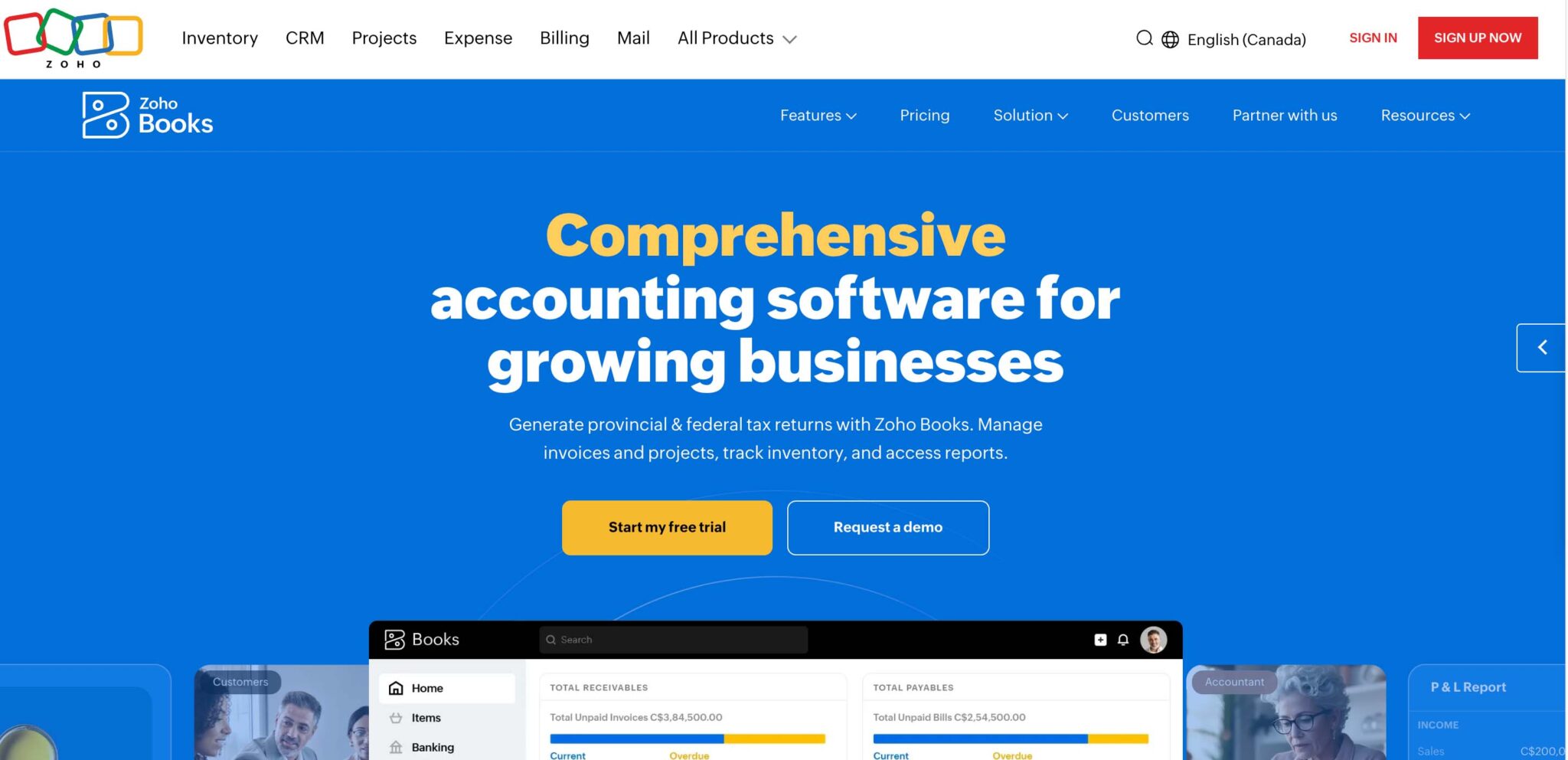
Zoho Books is highly regarded, but it may not always meet the localized compliance needs or the preferences of external accountants.
| Feature | Zoho Books | QuickBooks Online | Xero |
|---|---|---|---|
| Accountant Preference | Moderate | High (Industry Standard) | High (International) |
| Inventory Depth | Strong (via Zoho Inventory) | Moderate | Moderate |
| Automation Level | High (Deluge required) | Very High (Native) | High (Marketplace) |
| Bank Feeds | Good | Excellent | Excellent |
| 2026 Pricing Trend | Value-oriented | Premium | Mid-range |
QuickBooks Online
QuickBooks is the most widely used accounting software for small businesses in North America. The primary reason for switching from Zoho Books to QuickBooks is the ecosystem of accountants; almost every professional bookkeeper is trained in QuickBooks, which simplifies tax season and auditing.
Xero
Xero is a formidable alternative, particularly for businesses with international operations. Its multi-currency handling and vast "App Store" make it more flexible than Zoho Books for companies that use specialized third-party software for payroll or e-commerce.
Selecting an Alternative Based on Business Size
The "right" alternative is often dictated by your current organizational scale and your projected growth over the next three years.
- Solopreneurs and Micro-businesses: If Zoho is too complex, look at Canva (for marketing), Tally (for forms), and FreshBooks (for simple invoicing). These tools prioritize speed over deep integration.
- Scaling SMBs (10-100 employees): This is the sweet spot for HubSpot and Monday.com. At this size, the cost of Zoho’s complexity (in terms of training and support) often outweighs its lower licensing fees.
- Mid-Market to Enterprise (100+ employees): Organizations at this level typically move toward Salesforce for CRM and NetSuite for ERP. Zoho’s performance can sometimes degrade when handling millions of records or highly complex permission hierarchies.
Migration Strategy: Moving Away from Zoho
Migrating your data is the most risky part of switching to an alternative. Zoho makes it relatively easy to export data, but mapping that data to a new system requires careful planning.
- Audit Your Usage: Before switching, identify which Zoho apps you actually use. Many Zoho One subscribers only use 3 or 4 apps out of the 50+ available. You may only need to replace those specific functions rather than finding another massive suite.
- Data Mapping: Ensure that custom fields in Zoho CRM or Zoho Books have a direct home in the new system. Use tools like Zapier or Make.com to bridge the gap during the transition period.
- API Verification: Check the API limits of your new choice. Zoho is quite generous with API calls; platforms like Salesforce or HubSpot may have stricter limits that could affect your existing integrations.
- User Training: Plan for a 30-day overlap where both systems are active. This allows your team to get comfortable with the new UI without the pressure of a "hard cutover" on day one.
FAQ
Is there a free alternative to Zoho?
Yes, HubSpot offers a robust free version of its CRM, marketing, and service tools that often exceeds the capabilities of Zoho's free tiers. For project management, ClickUp and Asana offer comprehensive free versions for small teams. However, for a full "suite" replacement, there is rarely a completely free option that matches Zoho's breadth.
Which alternative is best for privacy-conscious businesses?
If data sovereignty and privacy are your primary concerns, Nextcloud is a powerful open-source alternative. It allows you to self-host your files, mail, and calendars, providing a level of control that proprietary platforms like Zoho or Google cannot match.
Can I use multiple alternatives instead of one suite?
Absolutely. In 2026, the trend has shifted toward "composable stacks." Instead of using Zoho One, a business might use Slack for communication, Airtable for data management, and Webflow for their website. Modern integration platforms make these disparate tools work together almost as well as a native suite.
How does the cost of HubSpot compare to Zoho in 2026?
HubSpot generally has a higher "floor" for its paid tiers than Zoho. While Zoho CRM is affordable for very small teams, HubSpot's pricing scales more aggressively as you add features like advanced reporting or predictive lead scoring. However, many businesses find the return on investment (ROI) higher with HubSpot due to better user adoption rates.
Does Microsoft 365 replace Zoho CRM?
Microsoft 365 includes basic contact management through Outlook and Business Contact Manager, but it is not a direct replacement for a full CRM like Zoho CRM. To get comparable CRM functionality within the Microsoft ecosystem, you would need to add Dynamics 365, which is a significantly more expensive and complex enterprise solution.
Summary and Next Steps
If you find Zoho’s interface cluttered or its integrations limited, the best path forward is to identify your most critical business function. For sales-heavy organizations, migrating to HubSpot offers immediate improvements in team efficiency. For those focused on operational excellence and project delivery, Monday.com provides a more modern and flexible workspace.
Begin your transition by running a 14-day trial of your top two contenders using real data. This "sandboxing" phase is essential to ensure that the alternative not only checks the feature boxes but also fits your team's specific workflow and culture.